
计算溶液所需的质量、体积或浓度。
为什么选择此级别
,适用于对基线干扰要求严格的色谱和分析工作流程。
储存与运输
-80℃储存。特低温运输 。请查阅批次 COA 获取详细规格。
质量文档
SDS、COA、产品数据表及规格说明书均可下载。可通过批号查询获取批次 COA。
文献证明
在色谱分析、有机合成和交叉偶联反应领域已被 0 篇同行评审文献引用。
概述
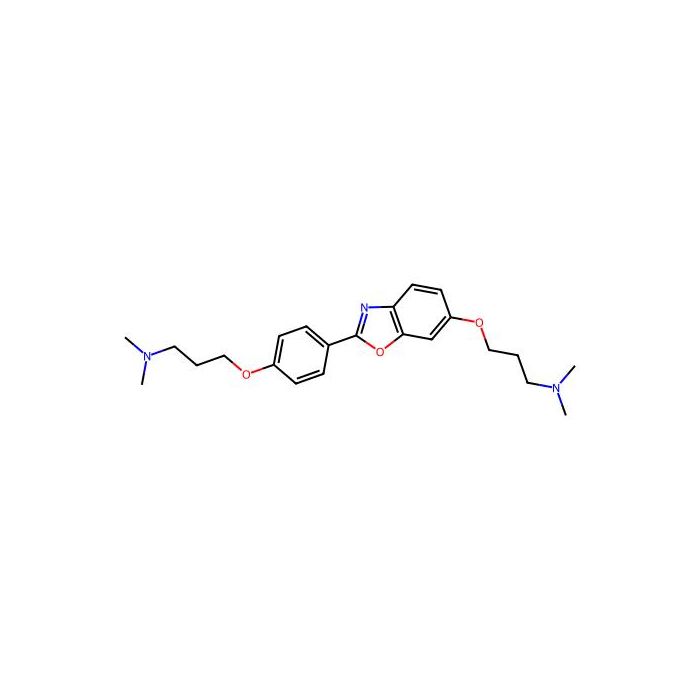
AT791 is a potent and orally bioavailable TLR7 and TLR9 inhibitor. AT791 inhibits TLR7 and 9 signaling in a variety of human and mouse cell types and inhibits DNA-TLR9 interaction in vitro
In Vitro
AT791 potently suppresses DNA stimulation of HEK:TLR9 cells, with IC 50 of 0.04 μM and is significantly less effective at suppressing R848 stimulation of HEK:TLR7 cells (IC 50 = 3.33 μM). AT7916 suppresses TLR9-DNA interaction in vitro, with an IC 50 in the 1 to10 μM range. AT791 and E6446 are typical of “lysosomotropic”compounds in that they are lipophilic and contain weak base amines. At neutral pH, such compounds are nonpolar and can penetrate lipid membranes, but within low pH vesicles they become protonated and are trapped (de Duve et al., 1974). Capillary electrophoresis showed that AT791 has pK a s of 7.9 and 6.1, and E6446 has pK a s of 8.6 and 6.5, indicating they would be more highly protonated in endolysosomal compartments compared with cytoplasm. MCE has not independently confirmed the accuracy of these methods. They are for reference only.
In Vivo
Short-term induction of serum interleukin-6 in mice by CpG1668 DNA is effectively suppresses by pretreatment with AT791 (20 mg/kg; p.o.) . MCE has not independently confirmed the accuracy of these methods. They are for reference only.
IC50& Target:TLR7 3.33 μM (IC 50 ) TLR9 0.04 μM (IC 50 )
规格
规格或纯度
10mM in DMSO
英文名称
AT791
生化机理
AT791 是一种口服生物活性强的 TLR7 和 TLR9 抑制剂。AT791 可抑制多种人类和小鼠细胞类型中的 TLR7 和 9 信号传导,并可抑制 DNA 与 TLR9 在体外的相互作用。
储存条件
-80℃储存
运输条件
特低温运输
作用类型
抑制剂
名称和识别符
分子类型
小分子
Isomeric SMILES
CN(C)CCCOC1=CC=C(C=C1)C2=NC3=C(O2)C=C(C=C3)OCCCN(C)C
PubChem CID
分子量
397.51
技术文档
高级数据
质检证书(CoA,COO,BSE/TSE 和分析图谱)
C of A & Other Certificates(BSE/TSE, COO):
输入批号以搜索分析图谱:
溶液计算器
产品仅提供给经过验证的企业、机构和合格的专业人员用于研发。不适用于人类、动物、诊断或治疗。
Copyright © 2023至今 上海阿拉丁生化科技股份有限公司 SSE:688179 保留所有权利。


 危险品化学品经营许可证(带存储)