
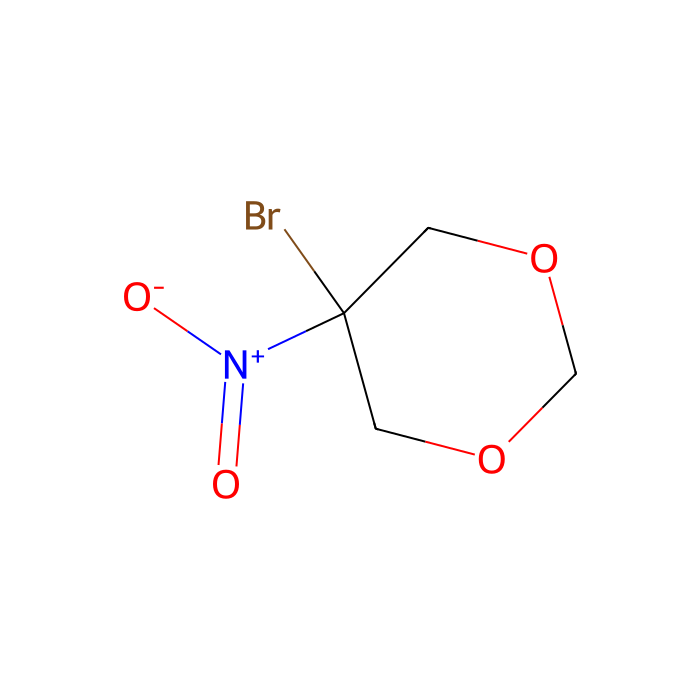
 I2617693
计算溶液所需的质量、体积或浓度。
为什么选择此级别
,适用于对基线干扰要求严格的色谱和分析工作流程。
储存与运输
避光,室温,充氩。常规运输 。请查阅批次 COA 获取详细规格。
质量文档
SDS、COA、产品数据表及规格说明书均可下载。可通过批号查询获取批次 COA。
文献证明
在色谱分析、有机合成和交叉偶联反应领域已被 0 篇同行评审文献引用。
概述
应用
BND-10体外诊断试剂专用抑菌剂,主要成分是10%的5-溴-5-硝基-1,3-二恶烷丙二 醇溶液(5-Bromo-5-Nitro-1,3-Dioxane),产品为无色或淡黄色透明液体,有特殊溴气味,
是一种高效的可用于临床血细胞分析、生化分析和免疫分析试剂的抑菌剂,包含用于各种 试剂、质控品、校准品、稀释液、清洗液和缓冲液等。由于该产品具有广泛的抑制微生物
生长的效果、极佳的相容性和稳定性、低毒并可生物降解,BND-10抑菌剂成为一种 理想的,可替代叠氮钠(易燃易爆剧毒品)、硫柳汞(含汞有机物)和庆大霉素(易产生
耐药性)等传统抑菌剂的新型抑菌产品。BND-10抑菌剂能抑制细菌、真菌、酵母 菌生长,从而使诊断试剂具有更长的有效期和开瓶有效期,良好的水溶性帮助在体外诊断 试剂中的广泛应用。尤其值得一提的是,BND-10抑菌剂不影响大多数酶的活性,也 不影响反应体系中抗体结合,同时也不影响反应中指示物质吸光度的变化,其吸收峰在 214nm左右。
产品特点
BND-10体外诊断试剂专用抑菌剂以其广谱活性、优越的兼容性和稳定性及其在使 用浓度下的低毒性,成为体外诊断试剂中的理想高效防腐剂。含溴化合物作为抑菌剂是上
个世纪七十年代抗菌物质的重要发现,最出名的是新洁而灭(溴苄烷胺)和布罗波尔(溴硝 醇),这些产品既是杀菌剂也是离子表面活性剂,兼有去垢功能,作为消毒剂和抑菌剂大
量使用于医疗场所或化妆品生产,虽然抑菌效果好,但这些化合物因为在水性溶液中会沉淀,易变色并且容易产生泡沫而,一般不能作为抑菌剂用于大多数体外诊断试剂,并且布
罗波尔还会释放甲醛。通过把布罗波尔杂环化形成5-溴-5-硝基-1,3-二恶烷(简称溴硝二恶烷),不光提高抑菌能力,增加在碱性条件下的稳定性,减少变色而且不再释放甲醛,使
溴硝二恶烷成为一种优秀的体外诊断试剂抑菌剂。晶茂生物使用重结晶方法生产高纯度溴硝二恶烷,再复配成10%的丙二醇溶液,易于添加在各种体外诊断试剂中,并且可以和牛
莎®PC异噻唑啉酮系列抑菌剂形成协同抑菌效果。它的特点与优点包含但不限于:
对细菌、霉菌及酵母菌均有较好的抑制效果
广谱抑菌剂,能快速消除微生物的活性,消除生物膜。
使用剂量低,低成本,对试剂的颜色无干扰。
在试剂中比较稳定,同时也是一种表面活性剂
适用pH范围广,与各种酶的可兼容性,不抑制抗体结合
具有良好的生物降解能力,不会对环境造成污染。
临床血细胞分析系统在医院的使用过程中试剂管道直接接触血样,比较容易染菌,形成生 物膜,使用该抑菌剂(BND-10)在稀释液和清洗液中对抗链球菌污染和奇异变形杆菌的
污染有特别的作用,对开瓶有效期的延长效果明显, 在免疫分析系统中,由于可供选用的 其他抑菌剂较少,BND-10抑菌剂是构建抑菌系统的首选产品。
BND-10体外诊断试剂专用抑菌剂是传统抑菌剂叠氮钠的主要替代品。叠氮钠曾经是体外诊断试剂中最常用的防腐剂之一,在多数(碱性)情况下有较好的抑菌效果,但叠
氮钠会抑制辣根过氧化物酶(HRP)、超氧化物歧化酶等多种酶的活性,所以含有辣根过氧化物酶的二抗中不可加入叠氮钠。同时,叠氮钠受热,接触明火、或受到摩擦、震动、
撞击时可发生爆炸;能与酸类剧烈反应产生爆炸性的叠氮酸,能与重金属及其盐类形成十分敏感的化合物。叠氮钠和氰化物具有相似毒性,对细胞色素氧化酶和其它酶有抑制作
用,并能使体内氧合血红蛋白形成受阻,导致死亡。由于叠氮钠易燃易爆和剧毒性双重性质作为危险化学,其采购,仓储,使用等环节国家都有特殊的监管要求,其使用范围越来
越受限。 BND-10体外诊断试剂专用抑菌剂也用于替代硫柳汞,硫柳汞曾广泛应用于体外诊断试剂,它对革兰阳性和阴性菌均有很强的抑菌能力,为广谱抑菌剂,由于少量
有机汞在理论上具有神经毒性,因此硫柳汞的使用安全问题深受人们的关注。
抑菌原理
BND-10体外诊断试剂专用抑菌剂是一种广谱抑菌剂,主要化合物分子中缺电子的 氧化性溴原子氧化细菌酶中巯基,抑制脱氢酶的活性从而导致细胞膜不可逆转的损害,同
时活化溴与细胞膜蛋白质结合,形成氮一溴化合物,从而干扰了细胞代谢,达到抑菌效果。
抑菌浓度
BND-10体外诊断试剂专用抑菌剂在蛋白含量小于10%的配方中,能起极好的防腐作用,其最小抑菌浓度(MIC)见下表。该产品可用于含有机物、非离子或阴阳离子表面
活性剂、抗原抗体的体外诊断试剂中,上述组分不影响的抑菌效果,也不会彼此产生拮抗作用。可与大多数表面活性剂配伍,但当在产品中含有-SH基团的物质,如半胱氨酸等,
会降低抑菌活性。在体外诊断试剂中一般添加浓度0.1-0.5%(1000L试剂中约添加1L- 5L)。1000L试剂中添加1L (相当于添加浓度0.1%),以BND-10溶液算浓度含量等于
1000ppm, 以 活 性 物 质 ( A.I. ) 算 等 于 100ppm 。

应用案例
BND-10体外诊断试剂专用抑菌剂直接投加在试剂中,可以在各个生产环节投加,
推荐在生产的开始环节添加,可以和其它抑菌剂联合使用形成双抑菌系统(推荐和PC-
150、PC-300合用)。在高温(>40oC)和碱性(pH>9)环境下不稳定,在阳光下颜色容易变
深,建议的pH应用范围在5~8.5之间。
瑞士罗氏诊断公司(Roche Diagnostics) 98系列988系列电解质分析仪用定标液A/B(BP0936/BP0937),抑菌剂使用了0.2%同等产品。
美国美德声公司(Ani Labsystems) 肺炎支原体IgM检测试剂盒(酶联免疫法),抑菌剂使用了0.2%同等产品。
法国生物梅里埃公司(Murex Biotech Ltd)人类免疫缺陷病毒抗体(HIV 1+2)及抗原(HIV1 P24)联合检测试剂盒(酶联免疫法)冲洗液1瓶 (GE41/7G79-01),抑菌剂
使用了0.2%同等产品。
美国雅培诊断公司(Abbott Diagnostics) 乙肝表面抗原(HBsAG)检测试剂盒(酶联免疫法)冲洗液,阴性对照和阳性对照中抑菌剂使用了0.5%同等产品。
血细胞分析公司(HEMO analysis) 专用稀释液(Diluent)和清洗液(Cleaning Agent) , 抑菌剂使用了0.1%同等产品。
产品存储
BND-10体外诊断试剂专用抑菌剂的储存温度范围为15至40ºC, 产品有效期两年,如条件许可,最好储存在20~30度。储存和运输过程中温度低于15oC时溴硝二恶烷会结晶
析出,需要在25oC以上40oC以下温房(温箱)中复溶24小时,复溶摇匀后不影响使用。容器保持密闭,避免阳光直射,打开了的容器必须仔细重新封口并保持竖放位置。该产品
Application
BND-10 preservative is designed for controlling microorganisms in biological media for in vitro diagnostic (IVD) products. The product contained 10% of
5-Bromo-5- Nitro-1,3-Dioxane in propylene glycol solution, colorless or light-yellow transparent liquid, with special bromine odor, which is a highly efficient biocide can be
used for Hematology analysis, Chemistry analysis and Immunoassay analysis reagent as preservative, which is applied to all kinds of reagents including, controls, calibrators,
diluent, system cleaning and buffer etc. Since the product has a wide range of the effect of inhibiting microbial growth, excellent compatibility and stability, low toxicity and
biodegradability, BND-10 preservative as one of option, can replace Sodium Azide, Thimerosal and Gentamycin. BND-10 preservative can inhibit the growth
of bacteria, fungi, yeasts in reagents for prolonged periods, thereby increasing a product’s shelf life and open vial stability. The water solubility permits easy incorporation
into IVD reagents. Further, BND-10 preservative does not affect the functionality of most enzyme- or antibody-linked reactions, and will not interfere with assay indicators, the material absorption peak at about 214 nm.
Advantage
BND-10 preservative has broad spectrum activity, excellent compatibility and stability, in the use of concentrations of low toxicity, became the ideal efficient antiseptic
in vitro diagnostic (IVD) reagents. As one of important invention, Bromine related compounds had been developed as antimicrobial agents in the last seventy’s, especially
Benzalkonium Bromide and Bronopol, these products are both biocide and surfactant with detergent function, as a disinfectant and preservative cosmetics production and
extensive use in medical, although bacteriostatic effect is good, but because these compounds in aqueous solution can be precipitated, easy to change color and prone to
bubbles, generally cannot be used as preservative in most of the in vitro diagnostic (IVD) reagent. The formation of 5-bromo-5-nitro-1,3-dioxane (BND) can not only improve the
bacteriostatic ability, but also increase the stability under alkaline conditions, reduce discoloration and no longer release formaldehyde. BND-10 which is 10% propylene
glycol solution, easily applied into various kinds of in vitro diagnostic reagent, and can work with ® PC series Preservatives like Isothiazolinone. Its features and
advantages include but are not limited to:
Against bacteria, fungi and yeast all have better inhibition effect.
Broad-spectrum and quickly eliminate the activity of microorganism and biofilm.
Low concentration, low cost, no interference to the color of the reagent.
Stable, at the same time worked as surfactant
Suitable for a wide range of pH, compatibility with enzymes and antibodies
Environment friendly, biodegradability Clinical Hematology analysis system in the hospital could be contaminated easily as the reagent pickup
systems or pipeline direct contact with blood, in the analysis process, which generated biofilm easily. To use BND-10 as antibacterial agent against streptococcus pneumoniae
in diluent and cleaning solution has special effect to extend the shelf life and open shelf life stability. In the IA analysis, BND-10 Preservative as one of first choice applied to
most of reagents.BND-10 Preservative can replace Sodium Azide (NaN3) which widely applied to in vitro diagnostic reagents. In most cases (alkaline), Sodium Azide has a good antibacterial effect, but Sodium Azide can inhibit the activities of horseradish peroxidase (HRP), superoxide dismutase and other enzymes, so Sodium Azide cannot be added to the secondary antibody containing horseradish peroxidase. At the same time, Sodium Azide has the risks of explosion, very sensitive compounds with heavy metals and the risk of
toxicity, inhibit cytochrome oxidase and other enzymes, and can block the formation of oxyhemoglobin in the body, leading to death. Due to the inflammable, explosive and
highly toxic nature of Sodium Azide as a dangerous chemical, its procurement, storage, use and other links of the state have special regulatory requirements, its use is
increasingly limited. BND-10 Preservative can also replace Thimerosal, which was widely applied to in vitro diagnostic reagent, it for both gram positive and negative of
strong antibacterial ability, as the broad-spectrum antibacterial agent, because a small amount of organic mercury in theory has the nerve toxicity, so the use of thimerosal
security issues by the attention of people.
Mechanism of Action
BND-10 Preservative is a kind of broad spectrum antibacterial agent, main compound molecules electron-deficient oxidation of bromine atoms thiol oxidation
bacteria enzyme, inhibit the activity of dehydrogenase causing irreversible damage to cell membrane, activation of bromine and cell membrane proteins at the same time, form
a bromine compounds, nitrogen to interfere with the cell metabolism, bacteriostatic effect.
MIC
BND-10 Preservative showed excellent anti-corrosion effect, its minimum inhibition concentration (MIC) as shown in the table below when the protein content of the reagents/solution is less than 10% of the formula,. The product can be used for in vitro diagnostic reagents containing organic compounds, non-ionic or anionic surfactants and antigenic antibodies. The above components do not affect the antibacterial effect, nor do they produce antagonistic effects on each other. Compatible with most surfactants, but substances containing -SH groups, such as cysteine, can reduce the antibacterial activity. In vitro diagnostic reagents were generally added with a concentration of 0.1-0.5% (about 1-5L was added in 1000L reagents). 1L (equivalent to 0.1%) was added to 1000L of reagent, and the concentration was calculated as 1000ppm in BND-10 solution, and 100ppm in
active substance (A.I.).
Case Study
BND - 10 Preservative can be added into IVD reagents during production process, but recommended in the beginning of the production, which can be used in combination with other bacteriostatic agent as double bacteriostatic system (recommended worked with NeoCide PC-150 or PC-300). The application is fit for pH range between 5 to 8.5. When the temperature higher than 40 oC and/or alkaline (pH > 9) environment which is not stable.
Roche Diagnostics 98 series
988 series electrolyte analyzer used as calibration solution A/B (BP0936/BP0937), and 0.2% of the bacteriostatic agent was used.
Mycoplasma pneumoniae IgM test kit (elisa) from Ani Labsystems used 0.2% of the antimicrobial equivalent.
BioMeriuex Elisa (GE41/7G79-01) containing human immunodeficiency virus antibody (HIV1 +2) and antigen (HIV1 P24) fromBioMeriuex (France) was used 0.2% of the antimicrobial agent.
Abbott Diagnostics Hepatitis B surface antigen (HBsAG) test kit (Elisa) washing solution, with 0.5% of the antibacterial agent used in the negative control and positive control.
Hematology analyzer Diluent and Cleaning Agent, using 0.1% the same product.
Storage
BND-10 Preservative storage temperature range of 15 to 40 oC for two years, if conditions permit, best stored in 20 to 30 degrees. In the process of storage and
transportation, when the temperature is lower than 15oC, Bromonitrodioxane will crystallize and precipitate out. It needs to be remolded in a warm room (a warm box)
above 25oC and below 40oC for 24 hours. After being remolded, it will not affect the use. Containers must be kept closed to avoid direct sunlight. Containers that have been
opened must be carefully re-sealed and placed upright.
规格
别名
5-溴-5-硝基-1,3-二噁烷
英文别名
1,3-Dioxane, 5-bromo-5-nitro- | B3769 | 5-BROMO-5-NITRO-1,3-DIOXANE [INCI] | FT-0620143 | Bronidox L | EN300-7381687 | DTXCID9024560 | XVBRCOKDZVQYAY-UHFFFAOYSA-N | 5-Brom-5-nitro-1,3-dioxan [German] | 5-Bromo-5-nitro-m-dioxane | Bronidox | U184I9QBNM | 5
规格或纯度
10%溶液在丙二醇中
英文名称
5-Bromo-5-nitro-1,3-dioxane
储存条件
避光,室温,充氩
运输条件
常规运输
名称和识别符
PubChem SID
EC号
250-001-7
分子类型
小分子
IUPAC Name
5-bromo-5-nitro-1,3-dioxane
INCHI
1S/C4H6BrNO4/c5-4(6(7)8)1-9-3-10-2-4/h1-3H2
InChi Key
XVBRCOKDZVQYAY-UHFFFAOYSA-N
Smiles
C1C(COCO1)([N+](=O)[O-])Br
Isomeric SMILES
C1C(COCO1)([N+](=O)[O-])Br
UN Number
Packing Group
III
分子量
212
Reaxy-Rn
4668673
Reaxys-RN link address
https://www.reaxys.com/reaxys/secured/hopinto.do?context=S&query=IDE.XRN=4668673&ln=
技术文档
高级数据
系统学分类
分类树(Taxonomy Tree)
| 界(kingdom) | 有机化合物 |
|---|---|
| 超类(Superclass) | 有机杂环化合物 |
| 类(Class) | 二恶烷 |
| 亚类(Subclass) | 1,3-二恶烷 |
| 中间层级节点(Intermediate Tree Nodes) | 暂无 |
| 直接上位类(Direct Parent) | 1,3-二恶烷 |
| 其他上位类(Alternative Parents) | C-硝基化合物 炔丙基型1,3-偶极有机化合物 氧环化合物 有机氧氮化合物 缩醛 有机光子化合物 有机氮化合物 有机溴化物 有机氧化物 碳氢化合物衍生物 烷基溴 |
| 分子骨架(Molecular Framework) | 脂肪族杂单环化合物 |
| 取代基(Substituents) | 乙醛酸 - 脂肪族杂单环化合物 - 烷基溴化物 - 烷基溴化物 - 烯丙基硫醚 - C-硝基化合物 - 烃衍生物 - 邻二氧杂环戊烷 - 有机1,3-双极性化合物 - 有机硝基化合物 - 有机硝基化合物 - 有机氧化物 - 有机氧氮化合物 - 有机氧化合物 - 有机硒化合物 - 有机卤化物 - 有机氮化合物 - 有机氧化合物 - 有机氮化合物 - 氧杂环 - 丙炔型1,3-双极性有机化合物 |
| 描述(Description) | 该化合物属于有机化合物中的1,3-二氧六环类。这类化合物含有1,3-二氧六环结构,即环位1和3处各含一个氧原子的脂肪族六元环。 |
| 外部描述符(External Descriptors) | 暂无 |
三维结构
交互式化学结构模型
化学和物理性质
密度
1.08~1.09
敏感性
对光线、空气、热敏感
折光率
1.435~1.437
熔点
61°C
分子量
212.000 g/mol
XLogP3
0.300
氢键供体数Hydrogen Bond Donor Count
0
氢键受体数Hydrogen Bond Acceptor Count
4
可旋转键计数Rotatable Bond Count
0
精确质量Exact Mass
210.948 Da
单同位素质量Monoisotopic Mass
210.948 Da
拓扑极表面积Topological Polar Surface Area
64.300 Ų
重原子数Heavy Atom Count
10
形式电荷Formal Charge
0
复杂度Complexity
139.000
同位素原子数Isotope Atom Count
0
定义的原子立体中心计数Defined Atom Stereocenter Count
0
未定义的原子立体中心计数Undefined Atom Stereocenter Count
0
定义的键立体中心计数Defined Bond Stereocenter Count
0
未定义的键立体中心计数Undefined Bond Stereocenter Count
0
所有立体化学键的总数The total count of all stereochemical bonds
0
共价键合单元计数Covalently-Bonded Unit Count
1
安全和危险性(GHS)
信号词
危险
危险声明
H302: 吞食有害
H314: 造成严重的皮肤灼伤和眼睛损伤
H315: 引起皮肤刺激
H317: 可能引起皮肤过敏反应
H318: 造成严重的眼睛损伤
H373: 通过长时间或反复暴露对器官造成损害
H400: 对水生生物有剧毒
H410: 对水生生物有剧毒并具有长期持续影响
预防措施声明
P260: 不要吸入灰尘/烟雾/气体/雾/蒸汽/喷雾。
P261: 避免吸入灰尘/烟雾/气体/雾/蒸汽/喷雾
P264: 处理后要彻底洗手。
P270: 使用本产品时,请勿进食、饮水或吸烟。
P272: 被污染的工作服不允许离开工作场所
P273: 避免释放到环境中。
P280: 戴防护手套/穿防护服/戴防护眼罩/戴防护面具。
P321: 特殊处理(请参阅此标签上的...)。
P330: 漱口
P363: 再次使用之前,请清洗受污染的衣物。
P391: 收集溢出物
P301+P330+P331: 如误吞咽:漱口。不要诱导呕吐。
P302+P352: 如皮肤沾染:用水充分清洗。
P304+P340: 如误吸入:将人转移到空气新鲜处,保持呼吸舒适体位。
P333+P313: 如发生皮肤刺激或皮疹:求医/就诊。
P362+P364: 脱掉沾污的衣服,清洗后方可重新使用。
P405: 密闭存放
P501: 将内容物/容器处理到。。。
P264+P265: 处理后彻底洗手[和…]。不要触摸眼睛。
P301+P317: 如果被吞咽:请寻求医疗帮助。
P305+P354+P338: 如果进入眼睛:立即用水冲洗几分钟。取下隐形眼镜(如果有的话),并且操作简单。继续冲洗。
P317: 寻求紧急医疗救助。
P332+P317: 如果出现皮肤刺激:请寻求医疗帮助。
P302+P361+P354: 如果接触皮肤:立即脱掉所有被污染的衣服。立即用水冲洗几分钟。
P316: 立即寻求紧急医疗救助。
P319: 如果你感到不适,请寻求医疗帮助。
WGK Germany
3
RTECS
JG9650000
Class
8
个人防护装备
dust mask type N95 (US),Eyeshields,Faceshields,Gloves
质检证书(CoA,COO,BSE/TSE 和分析图谱)
溶液计算器
产品仅提供给经过验证的企业、机构和合格的专业人员用于研发。不适用于人类、动物、诊断或治疗。
Copyright © 2023至今 上海阿拉丁生化科技股份有限公司 保留所有权利。


 危险品化学品经营许可证(带存储)