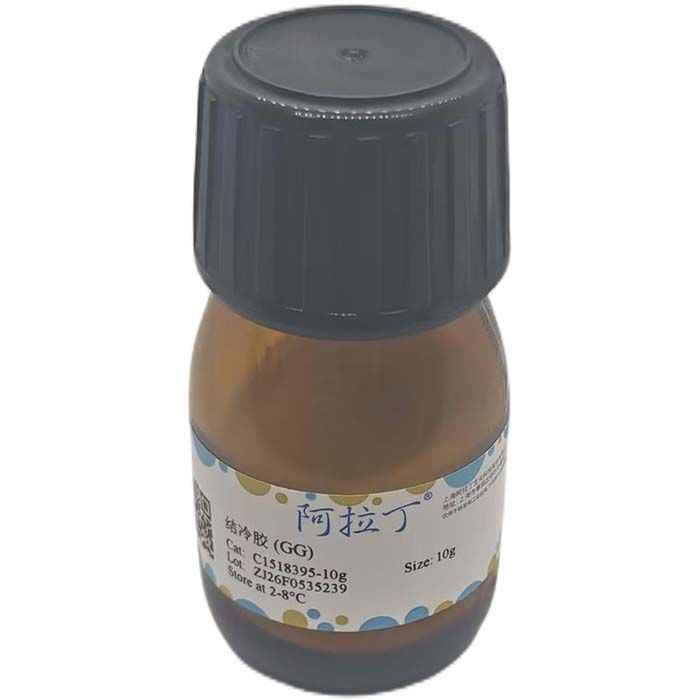
Gellan gum is a linear polysaccharide derived from the fermentation of Sphingomonas and a major component of its extracellular polymeric matrix. The repeating unit of gellan gum mainly consists of four monosaccharide segments in a linear structure: two units of β-D-glucose, one unit of β-D-glucuronic acid, and one unit of α-L-rhamnose. Gellan gum molecules exist as random coils at high temperatures and as double helices at low temperatures. After gelation, the internal polysaccharide chains exist as a solid with triple coaxial double helices. Due to its gelling ability at low concentrations (0.05%), biodegradability, non-toxicity, and high water content, gellan gum has become one of the most extensively studied natural polysaccharides.
Product Applications
1. Microbial culture media
2. Bioprinting suspensions
3. Cell encapsulation
Product Specifications
Item
Standard
Description
White or off-white powder, odorless
Loss on Drying
≤15.0%
pH Value
5.0 – 8.0
Transmittance
≥78%
Dynamic Viscosity
10-50 mPa·s
Gel Strength
≥800 g/cm²
Heavy Metals
≤10 ppm
Lead
≤2 ppm
Ethanol Residue
≤0.5%
Microbial Limits
Total aerobic microbial count<10⁴ cfu/g; total yeast and mold count<400 cfu/g
Note: All the above indicators comply with the requirements of the Chinese Pharmacopoeia. All products are manufactured under GMP conditions with strict quality control.

 ZJ26F0838318


 危险品化学品经营许可证(带存储)