本试剂盒采用SDS和碱裂解法,同时采用特殊的 Buffer P4 和过滤柱GS,结合玻璃纤维素膜特异性吸附溶液中DNA的方法,可有效地去除内毒素、蛋白等杂质,适合从5-15mL细菌培养物中提取质粒DNA。Buffer P1 添加有指示剂,可以通过颜色的变化,指示裂解和中和是否充分,保证提取质量,实现可视化操作。纯化的质粒DNA可适用于各种常规操作,包括转染一些常规的传代细胞、酶切、PCR、测序、连接、转化、文库筛选和体外翻译等。本试剂盒对 Buffer P2 进行了优化,可以避免菌量极少时或者菌液过度老化时可能出现的单链质粒DNA,同时对 Buffer P4 进行了优化,可以有效避免因SDS残留导致的酶切不完全或弥散、转染效率低等情况。
组分与储存:
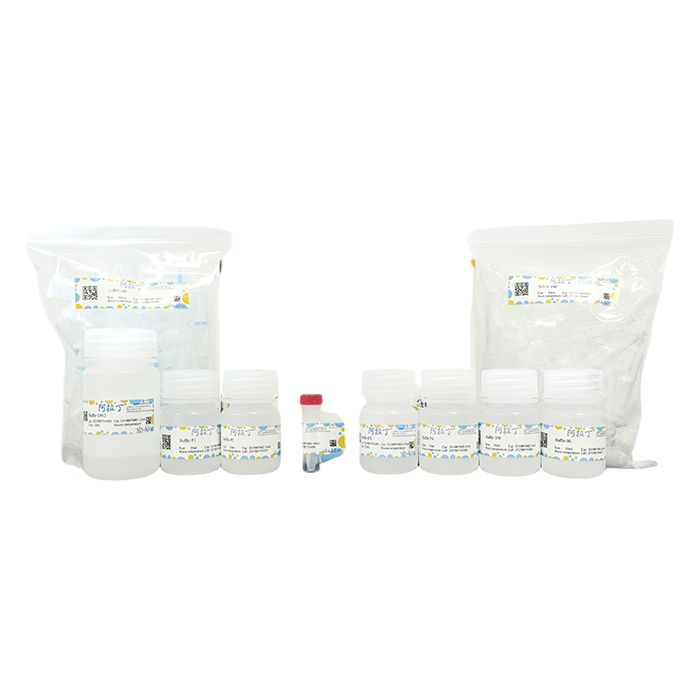
| 组分货号 | 组分名称 | 物理外观 | 50 T | 储存 |
| D1088768A | Buffer BL | 液体 | 30 ml | RT |
| D1088768B | Buffer P1 | 液体 | 30 ml | RT |
| D1088768C | Buffer P2 | 液体 | 30 ml | RT |
| D1088768D | Buffer P4 | 液体 | 30 ml | RT |
| D1088768E | Buffer PW | 液体 | 38 ml | RT |
| D1088768F | Buffer PW2 | 液体 | 15 ml | RT |
| D1088768G | Buffer EB | 液体 | 15 ml | RT |
| D1088768H | RNase A (10 mg/ml) | 液体 | 300 μl | RT |
| D1088768I | 吸附柱 PBF (含2mL收集管) | / | 50 个 | RT |
| D1088768J | 过滤柱 GS (含2mL收集管) | / | 50 个 | RT |
储存条件:
本试剂盒置于室温干燥条件下保存15个月。低温下 Buffer P2 会有沉淀形成,使用前需在37℃孵育5-10min重新溶解,摇匀后使用。当 RNase A 加入 Buffer P1 后,可在2-8℃保存6个月。
注意事项:
请务必在使用本试剂盒之前阅读此注意事项。
1. 试剂盒中提供有 RNase A,简短离心,然后将所有 RNase A 溶液加入 Buffer P1,混匀后置于2-8℃保存。
2. 如果提取质粒为低拷贝质粒时,应加大菌体使用量,同时按比例增加 Buffer P1、Buffer P2 和 Buffer P4 用量,其他步骤相同。
操作步骤:
使用前,向15mL Buffer PW2 中加入60mL 无水乙醇。
1. 柱平衡步骤:向吸附柱PBF中 (吸附柱放入收集管中) 加入500μL的 Buffer BL,12,000rpm (13,680×g) 离心 30sec,倒掉收集管中的废液,将吸附柱放回收集管中 (请使用当天处理过的柱子)。
2. 取5-15mL过夜培养的菌液,加入离心管中,12,000rpm (13,680×g) 离心1min,倒弃培养基,然后将离心管在吸水纸上轻轻拍打去尽残液。
3. 向留有菌体沉淀的离心管中加入500μL Buffer P1 (使用前请先加入 RNase A),使用涡旋振荡器彻底悬浮细菌沉淀。
注意:1) Buffer P1 含有指示剂,为澄清的红色溶液。将 Buffer P1 加入到收集好的菌体中彻底混匀,由于菌体的存在,混匀后的溶液为浑浊的红色。
2) 菌体完全重悬后,应立即进行后续操作,否则会造成菌体成团,裂解不充分,影响提取性能。
4. 向离心管中加入500μL Buffer P2,温和地上下颠倒混匀8-10次使菌体充分裂解。
注意:1) 温和地混匀,不要剧烈振荡,以免造成基因组DNA污染。此时菌液应变得清亮粘稠,操作时间不应超过3min,以免破坏质粒。
2) 加入 Buffer P2 彻底混匀后,溶液的颜色为澄清的紫色。如果在紫色中混杂有浑浊的红色,则说明裂解不充分,继续混匀直至溶液颜色完全变为澄清的紫色。
5. 向离心管中加入 500μL Buffer P4,立即温和地上下颠倒混匀8-10次,充分混匀,此时将出现白色絮状沉淀,室温放置5min,然后12,000rpm (13,680×g) 离心5min,此时在离心管底部形成沉淀。
注意:溶液由紫色变为淡黄色,表明中和完全,避免出现大量聚团沉淀,否则会影响提取产量和离心后移液操作。离心后上清应为澄清状,若上清液面漂有微小白色沉淀,不影响后续操作。
6. 将上一步收集的上清液分次加入过滤柱GS (过滤柱放入收集管中),12,000 rpm (13,680×g) 离心1min,然后将滤液转移至干净的2mL离心管中 (自备)。
7. 向滤液中加入0.3倍滤液体积的异丙醇 (加入异丙醇过多容易导致RNA污染),上下颠倒混匀后转移到吸附柱PBF中。
注意:过滤后滤液会损失,根据损失的不同请加入不同体积的异丙醇。吸附柱的最大容积为700μL,所以需要分次过柱。
8. 12,000 rpm (13,680×g) 离心 30sec,弃废液,将吸附柱放回收集管中。
9. 向吸附柱中加入700μL Buffer PW,12,000rpm (13,680×g) 离心30sec,弃废液,将吸附柱放回收集管中。
10. 向吸附柱中加入700μL Buffer PW2 (使用前请先加入60mL无水乙醇),12,000 rpm (13,680×g) 离心30sec,弃废液,将吸附柱放回收集管中。
11. 重复步骤10。
12. 12,000 rpm (13,680×g) 离心 2min。
13. 将吸附柱转入一个新的1.5mL离心管中,开盖晾干2min,以彻底挥发乙醇。向吸附膜中间部位悬空滴加50-100μL Buffer EB,室温放置1min,12,000rpm (13,680×g) 离心30sec,将DNA溶液收集在离心管中。
注意:1) 为了提高质粒的回收效率,可将得到的溶液重新加入到吸附柱中,室温放置2-5min,12,000rpm (13,680×g) 离心 1min,将质粒溶液收集到离心管中。
2) 质粒拷贝数较低或>10kb时,将 Buffer EB 加入吸附柱,65℃恒温金属浴加热2-3min,可以提高提取效率。
This kit employs the SDS and alkaline lysis method. It uses special Buffer P4 and Filter Column GS, combined with the specific adsorption of DNA in solution by glass cellulose membranes, to efficiently remove impurities such as endotoxins and proteins. It is suitable for plasmid DNA extraction from 5–15 mL bacterial cultures. Buffer P1 contains an indicator, which shows whether lysis and neutralization are sufficient via color changes to guarantee extraction quality and enable visual operation. The purified plasmid DNA is compatible with various routine applications, including transfection of common adherent cell lines, restriction digestion, PCR, sequencing, ligation, transformation, library screening, and in vitro translation. Buffer P2 in this kit has been optimized to prevent the generation of single-stranded plasmid DNA that may occur with extremely low bacterial loads or over-aged bacterial cultures. Meanwhile, optimized Buffer P4 effectively resolves incomplete digestion, smearing, low transfection efficiency and other issues caused by residual SDS.
Contents & Storage:
Component No.
| Component Name
| Appearance
| 50 T | Storage
|
| D1088768A | Buffer BL | Liquid
| 30 ml | RT |
| D1088768B | Buffer P1 | Liquid
| 30 ml | RT |
| D1088768C | Buffer P2 | Liquid
| 30 ml | RT |
| D1088768D | Buffer P4 | Liquid
| 30 ml | RT |
| D1088768E | Buffer PW | Liquid
| 38 ml | RT |
| D1088768F | Buffer PW2 | Liquid
| 15 ml | RT |
| D1088768G | Buffer EB | Liquid
| 15 ml | RT |
| D1088768H | RNase A (10 mg/ml) | Liquid
| 300 μl | RT |
| D1088768I | Adsorption Column PBF (with 2 mL Collection Tube)
| / | 50 EA | RT |
| D1088768J | Filter Column GS (with 2 mL Collection Tube)
| / | 50 EA | RT |
Storage conditions:
The kit can be stored at room temperature in a dry environment for 15 months. Precipitate may form in Buffer P2 under low temperature. Incubate at 37 °C for 5–10 min to redissolve before use, and mix well prior to application. After RNase A is added into Buffer P1, the mixture can be stored at 2–8 °C for 6 months.
Precautions:
Please read these notes carefully before using this kit.
1. RNase A is supplied with the kit. Briefly centrifuge, then transfer all RNase A solution into Buffer P1. Mix thoroughly and store at 2–8 °C.
2. When extracting low-copy plasmids, increase the amount of bacterial pellet used. Meanwhile, proportionally increase the volumes of Buffer P1, Buffer P2 and Buffer P4. Keep other steps unchanged.
Operating Protocol:
Before use, add 60 mL of absolute ethanol to 15 mL Buffer PW2.
1. Column equilibration: Add 500 μL Buffer BL into Adsorption Column PBF (the column is placed in a collection tube). Centrifuge at 12,000 rpm (13,680×g) for 30 sec. Discard the waste liquid in the collection tube and place the adsorption column back into the collection tube. (Use columns treated on the same day.)
2. Transfer 5–15 mL overnight bacterial culture into a centrifuge tube. Centrifuge at 12,000 rpm (13,680×g) for 1 min. Discard the medium, then gently tap the tube on absorbent paper to remove residual liquid.
3. Add 500 μL Buffer P1 (RNase A must be added before use) to the centrifuge tube containing bacterial pellet. Vortex thoroughly to resuspend the bacterial pellet.
Notes: 1) Buffer P1 contains an indicator and is a clear red solution. After adding Buffer P1 to the collected pellet and mixing thoroughly, the solution will appear turbid red due to bacterial cells.
2) Proceed immediately after complete resuspension. Otherwise, bacterial clumping and insufficient lysis will occur, compromising extraction performance.
4. Add 500 μL Buffer P2 to the centrifuge tube. Gently invert the tube 8–10 times to mix well for full bacterial lysis.
Notes: 1) Mix gently; do not vortex vigorously to avoid genomic DNA contamination. The lysate should turn clear and viscous. Complete this step within 3 min to prevent plasmid damage.
2) After thorough mixing with Buffer P2, the solution becomes clear purple. If turbid red remains mixed within the purple solution, lysis is incomplete. Continue mixing until the solution turns fully clear purple.
5. Add 500 μL Buffer P4 to the centrifuge tube. Immediately invert gently 8–10 times to mix thoroughly. White flocculent precipitate will form. Incubate at room temperature for 5 min, then centrifuge at 12,000 rpm (13,680×g) for 5 min. A pellet will form at the bottom of the tube.
Note: A color change from purple to pale yellow indicates complete neutralization. Avoid massive aggregated precipitates, which reduce yield and hinder pipetting after centrifugation. The supernatant after centrifugation should be clear. Tiny white precipitates floating on the supernatant do not interfere with subsequent operations.
6. Load the supernatant from the previous step in aliquots into Filter Column GS (placed in a collection tube). Centrifuge at 12,000 rpm (13,680×g) for 1 min. Transfer the filtrate to a clean 2 mL centrifuge tube (user-supplied).
7. Add isopropanol equal to 0.3 times the volume of the filtrate (excess isopropanol may cause RNA contamination). Invert to mix and transfer the mixture into Adsorption Column PBF.
Note: Filtrate volume decreases after filtration; adjust isopropanol volume accordingly based on volume loss. The maximum loading volume of the adsorption column is 700 μL, so load in multiple aliquots.
8. Centrifuge at 12,000 rpm (13,680×g) for 30 sec. Discard waste liquid and replace the adsorption column into the collection tube.
9. Add 700 μL Buffer PW to the adsorption column. Centrifuge at 12,000 rpm (13,680×g) for 30 sec. Discard waste liquid and replace the adsorption column into the collection tube.
10. Add 700 μL Buffer PW2 (60 mL absolute ethanol must be added before use) to the adsorption column. Centrifuge at 12,000 rpm (13,680×g) for 30 sec. Discard waste liquid and replace the adsorption column into the collection tube.
11. Repeat Step 10.
12. Centrifuge at 12,000 rpm (13,680×g) for 2 min.
13. Transfer the adsorption column into a new 1.5 mL centrifuge tube. Open the lid and air-dry for 2 min to fully evaporate ethanol. Add 50–100 μL Buffer EB dropwise onto the center of the adsorption membrane without touching the membrane. Incubate at room temperature for 1 min, then centrifuge at 12,000 rpm (13,680×g) for 30 sec to collect DNA solution in the tube.
Notes: 1) To improve plasmid recovery, reload the eluate back onto the adsorption column, incubate at room temperature for 2–5 min, and centrifuge at 12,000 rpm (13,680×g) for 1 min to collect plasmid solution.
2) For low-copy plasmids or plasmids >10 kb, add Buffer EB to the column and heat at 65 °C in a heat block for 2–3 min to enhance extraction efficiency.

 ZJ25F0724521


 危险品化学品经营许可证(带存储)