
计算溶液所需的质量、体积或浓度。
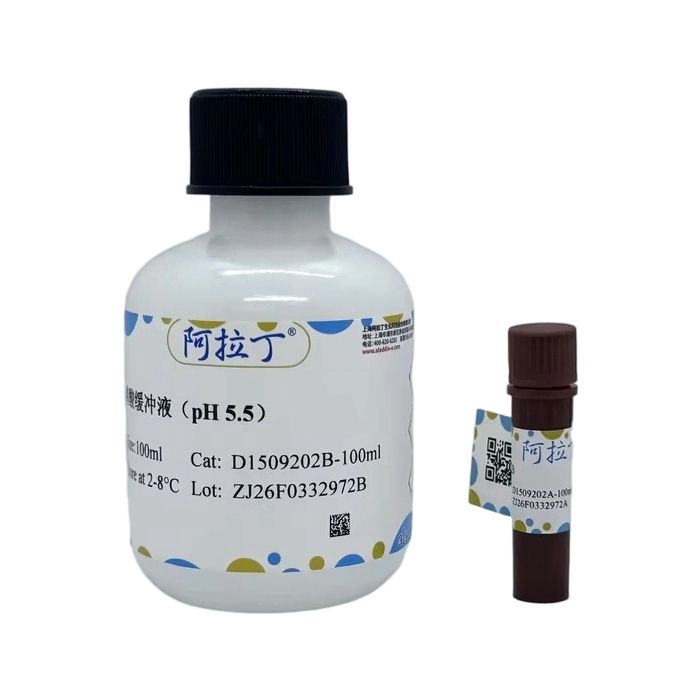
DAB染色液(1.0 mg/mL, pH5.5, 植物用)
有货
BioReagent,生物染色剂 级 ,适用于对基线干扰要求严格的色谱和分析工作流程。
2-8°C储存,避光。低温运输 。请查阅批次 COA 获取详细规格。
SDS、COA、产品数据表及规格说明书均可下载。可通过批号查询获取批次 COA。
在色谱分析、有机合成和交叉偶联反应领域已被 0 篇同行评审文献引用。
植物组织在胁迫环境条件下会产生多种活性氧(ROS),ROS活性非常大且极其不稳定,因此ROS的检测通常因其最终产物而定。过氧化氢是活性氧的一种。在过氧化氢酶的催化下,过氧化氢能与DAB(3,3-二氨基联苯胺四盐酸盐)迅速反应生成棕红色化合物,从而定位组织中的过氧化氢。
Aladdin DAB染色液(1mg/mL, pH5.5)由DAB和磷酸盐组成,用于植物活组织中的过氧化氢染色。一般应用于较嫩的根尖、叶片等的整体染色,染色后有过氧化氢聚集的部位呈棕色至深棕色。该产品仅用于科研领域,不用于临床诊断或其他用途。
自备材料
1、新鲜的植物叶片或根、自来水、蒸馏水、95%乙醇
2、超声波、磁力搅拌器、电子天平、量筒、滤纸、照相机
3、DAB染色样本保存液(可选)
操作步骤(仅供参考)
1、试剂准备:将100mg DAB加入到100mL 磷酸缓冲液中充分溶解,即得DAB染色工作液,4℃避光保存,一周内有效;-20℃保存,可适当延长保质期。
注:DAB对光敏感,溶解过程需要避光,如果较难溶解,可通过超声、磁力搅拌等方法促溶。
2、样本准备:采集经胁迫(例如重金属)的植物幼苗或根尖,自来水稍洗净,置于滤纸上吸干多余的水分。
3、染色:将植物幼苗或根尖浸没在DAB染色工作染液中,常温避光染色2~6h,至阳性部位出现深棕色,其余部位近无色或者呈植物本身的颜色即可。(根据植物幼嫩程度和显色程度调整染色时间。)
4、脱色:用镊子将植株幼苗或者叶片小心取出,浸入蒸馏水中来回漂洗3~5次,置于滤纸上吸干多余水分后,浸入95%乙醇中40℃处理3~16h,目的是脱去植株幼苗或者叶片本身的叶绿素,脱色期间可多次更换新鲜的95%乙醇。
5、观察:用镊子取出植株幼苗或者叶片,浸入蒸馏水中来回漂洗3~5次,置于滤纸上吸干多余水分后,拍照。(吸干水分后可将样本转入DAB染色样本保存液中浸泡30min,样本可置于该保存液中常温保存一周。)
注意事项
1、DAB染色工作液配制好以后需4℃避光保存,一周内使用。存放时间过久,会影响显色。
2、因过氧化氢容易分解,且任何外在因素都可能刺激植物应激产生过氧化氢,因此植物样本需要新鲜采集,并尽快完成染色。建议做阴性及阳性空白对照组。
3、样本染色完成后尽快拍照保存结果。
4、DAB可能具致癌性,请小心操作,避免直接接触。
5、染色和脱色步骤也可参考如下建议操作:组织放入染液中,抽真空,-0.1MPa保持负压20~30min,再于室温下静置染色60min,弃染色液;加入95%乙醇,于70~80℃水浴锅脱色,每隔10min换一次95%乙醇,待样品绿色全部褪去后可停止脱色。
6、为了您的安全和健康,请穿实验服并戴一次性手套操作。
7、试剂开封后请尽快使用,以防影响后续实验效果。
附表
不同pH值的DAB染色工作液的区别
| pH 3.8 | pH 5.5 | |
| 反应条件 | 酸性条件有助于DAB与过氧化物酶的反应,生成的沉淀物颜色更深,对比度更高。适用于需要高灵敏度和清晰对比度的实验。 | 相对中性,可能更适合某些特定的组织或细胞类型,减少非特异性染色,提高染色的特异性。 |
| 染色效果 | 在酸性条件下,DAB反应生成的沉淀物通常呈棕褐色,染色效果较为明显,适合用于检测低水平的过氧化物酶活性。 | 在近中性条件下,DAB反应生成的沉淀物颜色相对较浅,但染色更为均匀,适合用于检测高水平的过氧化物酶活性或需要精细分辨的样本。 |
| 实验应用 | 常用于植物组织中过氧化氢含量的定量测定,特别是在叶片等部位的检测中表现出较高的灵敏度。 | 可能更适用于某些动物组织或细胞的染色,尤其是在需要减少背景染色的情况下。 |
| 注意事项 | 酸性较强,操作时需要注意防护,避免试剂与皮肤和眼睛接触。 | 相对温和,但仍需遵循实验室安全规范,佩戴适当的防护装备。 |
Under environmental stress conditions, plant tissues generate various reactive oxygen species (ROS). ROS are highly active and unstable, so their detection is often based on their end products. Hydrogen peroxide (H₂O₂) is one type of ROS. Catalyzed by peroxidase, hydrogen peroxide can rapidly react with DAB (3,3-diaminobenzidine tetrahydrochloride) to produce a brown-red precipitate, thereby localizing hydrogen peroxide in the tissue.
Aladdin DAB Staining Solution (1 mg/mL, pH 5.5) is composed of DAB and phosphate buffer, used for hydrogen peroxide staining in living plant tissues. It is generally applied for whole-mount staining of tender tissues like root tips and leaves. After staining, areas with hydrogen peroxide accumulation appear brown to dark brown. This product is for research use only, not for clinical diagnosis or other purposes.
Reagents, consumables and Equipments not provided
Procedure (For Reference Only)
1. Reagent Preparation: Fully dissolve 100 mg of Component D1509202A (DAB) into 100 mL of Component D1509202B (Phosphate Buffer) to obtain the DAB staining working solution. Store at 4°C protected from light; it is stable for one week. Storage at -20°C can appropriately extend the shelf life.
Note: DAB is light-sensitive. The dissolving process must be protected from light. If dissolution is difficult, methods like sonication or magnetic stirring can be used to promote dissolution.
2. Sample Preparation: Collect stressed (e.g., by heavy metals) plant seedlings or root tips. Rinse briefly with tap water and place on filter paper to absorb excess moisture.
3. Staining: Immerse the plant seedlings or root tips in the DAB staining working solution. Stain at room temperature protected from light for 2 to 6 hours, until positive areas turn deep brown and other areas are nearly colorless or show the plant's natural color. (Adjust staining time based on tissue tenderness and degree of color development.)
4. Decolorization: Carefully remove the seedlings or leaves with forceps. Rinse by immersing in distilled water 3-5 times. Place on filter paper to absorb excess moisture, then immerse in 95% ethanol and treat at 40°C for 3 to 16 hours. The purpose is to remove the plant's own chlorophyll. Replace with fresh 95% ethanol several times during decolorization.
5. Observation: Remove the seedlings or leaves with forceps. Rinse by immersing in distilled water 3-5 times. Place on filter paper to absorb excess moisture, then photograph. (After absorbing moisture, samples can be transferred into DAB staining sample preservation solution, soaked for 30 minutes, and then stored in this solution at room temperature for up to one week.)
Precautions
1. The prepared DAB working solution must be stored at 4°C in the dark and used within one week. Prolonged storage affects chromogenic performance.
2. Since hydrogen peroxide decomposes easily and any external factors may stimulate plants to produce it stressfully, plant samples must be freshly collected and stained as soon as possible. It is recommended to include negative and positive blank control groups.
3. Photograph the stained samples promptly to preserve results.
4. DAB is potentially carcinogenic. Handle with care and avoid direct contact.
5. An alternative for staining and decolorization: Place tissue in staining solution, apply vacuum (-0.1 MPa, maintain negative pressure for 20-30 min), then let stand at room temperature for 60 min. Discard staining solution. Add 95% ethanol and decolorize in a 70-80°C water bath, changing the 95% ethanol every 10 minutes until the sample's green color is completely removed.
6. For your safety and health, please wear a lab coat and disposable gloves during operation.
7. After opening the reagent, please use it as soon as possible to prevent affecting subsequent experimental results.
Appendix: Differences Between DAB Working Solutions at Different pH Values
| Feature | pH 3.8 | pH 5.5 |
| Reaction Condition | The acidic condition favors the DAB-peroxidase reaction, producing a darker precipitate with higher contrast. Suitable for experiments requiring high sensitivity and clear contrast. | Relatively neutral; may be more suitable for certain specific tissues or cell types, reducing non-specific staining and improving specificity. |
| Staining Effect | Under acidic conditions, the DAB reaction precipitate is typically brown, with a more pronounced staining effect, suitable for detecting low levels of peroxidase activity. | Under near-neutral conditions, the DAB reaction precipitate color is relatively lighter but more uniform, suitable for detecting high levels of peroxidase activity or samples requiring fine resolution. |
| Experimental Application | Commonly used for quantitative determination of hydrogen peroxide content in plant tissues, especially showing high sensitivity in detection of leaves and other parts. | May be more applicable for staining certain animal tissues or cells, especially when background staining reduction is needed. |
| Notes | Highly acidic; requires caution during operation to avoid contact with skin and eyes. | Relatively mild, but still follow lab safety rules and wear appropriate protective equipment. |
| D1509202 | Component | 100 mL | Storage |
| D1509202A | DAB | 100 mg | 2-8℃. Store in the dark. |
| D1509202B | 磷酸缓冲液(pH 5.5) | 100 mL | 2-8℃. |
| pH | 5.5 |
|---|
通过匹配包装上的批号来查找并下载产品的 COA,每批产品都进行了严格的验证,您可放心使用!
| 批号(Lot Number) | 证书类型 | 货号 |
|---|---|---|
 ZJ26F0332972 |
分析证书 | D1509202 |


 危险品化学品经营许可证(带存储)