
计算溶液所需的质量、体积或浓度。
有货
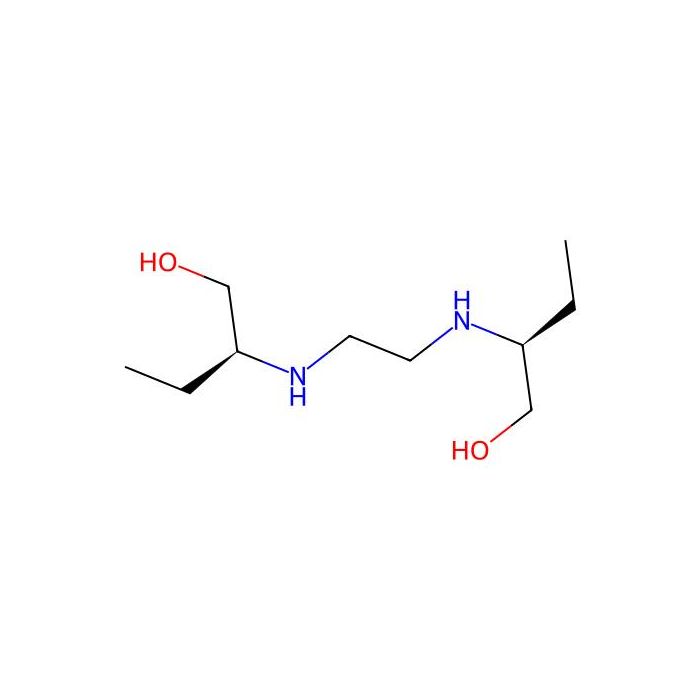
Ethambutol is a bacteriostatic antimycobacterial agent, which obstructs the formation of cell wall by inhibiting arabinosyl transferases .Target: Antibacterial Ethambutol directly affects two polymers , arabinogalactan (AG) and lipoarabinomannan (LAM) in Mycobacterium smegmatis. In M. smegmatis, Ethambutol inhibits synthesis of arabinan completely and inhibits AG synthesis most likely as a consequence of this; more than 50% of the cell arabinan is released from the bacteria following Ethambutol treatment, whereas no galactan is released. Ethambutol main targets against embB gene product in M. avium. Ethambutol induces 60% changes in the embB gene in M. tuberculosis resistant mutantsEthambutol is potency against M. tuberculosis (H37Rv) with MIC of 0.5 μg/mL in vitro . Ethambutol is efficient on treatment of mycobacterial-infected macrophages. When M. tuberculosis infected macrophages are treated with 6 μg/mL Ethambutol, the log CFUs following treatment for 3 days is 4.17, while value in control group is 4.8. The MICs for M. avium (MTCC 1723) and M. smegmatis (MTCC 6) are 15 μg/mL and 0.18 μg/mL, respectively. Ethambutol is efficient in animal model. 100 mg/kg Ethambutol given orally 15 days post i.v. infection 1 ×/week for 5 weeks, induces a lower log CFU compared with untreatment (4.59 vs 5.07) .
| pKa值 | pKa: 9.59 (Predicted) |
|---|---|
| IC50 | Mycobacterium smegmatis: IC₅₀= 3.2 μM; Mycobacterium tuberculosis H37Rv: IC₅₀= 4 ug.mL-1; Vero: IC₅₀= >62.5 ug.mL-1 (Chlorocebus aethiops) |


 危险品化学品经营许可证(带存储)