
计算溶液所需的质量、体积或浓度。
为什么选择此级别
,适用于对基线干扰要求严格的色谱和分析工作流程。
储存与运输
干燥,-80℃储存。特低温运输 。请查阅批次 COA 获取详细规格。
质量文档
SDS、COA、产品数据表及规格说明书均可下载。可通过批号查询获取批次 COA。
文献证明
在色谱分析、有机合成和交叉偶联反应领域已被 0 篇同行评审文献引用。
概述
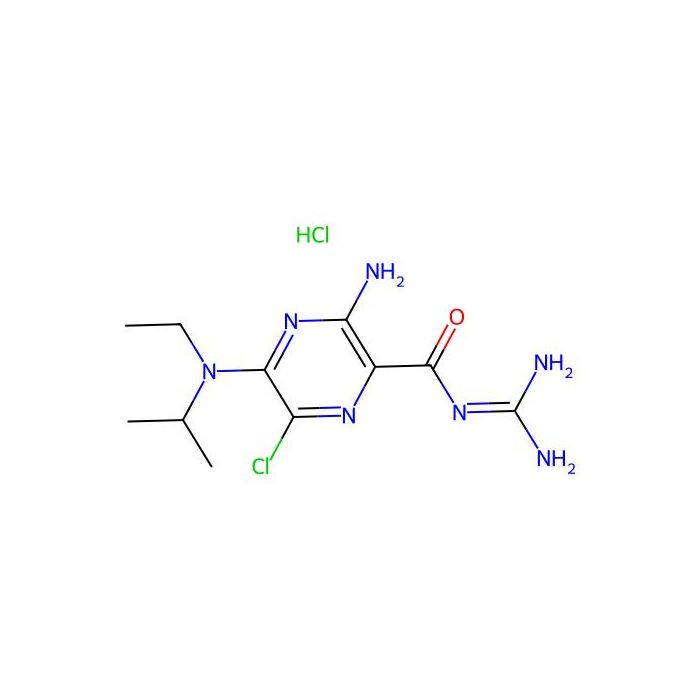
EIPA (L593754) hydrochloride is an orally active TRPP3 channel inhibitor with an IC 50 of 10.5 μM. EIPA hydrochloride also enhances autophagy by inhibiting Na + /H + -exchanger 3 ( NHE3 ). EIPA hydrochloride inhibits macropinocytosis as well. EIPA hydrochloride can be used in the research of inflammation and cancers, such as gastric cancer , colon carcinoma, pancreatic carcinoma.
In Vitro
EIPA hydrochloride (100 μM, 30 min) suppresses TRPP3-mediated Ca 2+ uptake in X. laevis oocytes. EIPA hydrochloride (10-100 μM) reversibly inhibits the basal Na + current (IC 50 : 19.5 μM). EIPA hydrochloride (300 μM, 6h) enhances autophagy through NHE3 (Na + /H + -exchanger 3) in IEC-18 cells. EIPA hydrochloride (20 μM, 2 h) blocks macropinocytosis-mediated uptake of CA-PZ massively entry in HT-29 cells and MIA PaCa-2 cells. EIPA hydrochloride (30 μM, 3h) attenuates Zinc/Kainate toxicity by decreasing Zn 2+ entry in cerebellar granule neurons . EIPA hydrochloride (5-100 μM, 48h) suppresses proliferation of MKN28 cells through up-regulation of p21 expression . EIPA hydrochloride (3 μM, 6 h) inhibits the LPS-induced increase in the level of COX-2 protein. MCE has not independently confirmed the accuracy of these methods. They are for reference only. Cell Proliferation Assay Cell Line: MKN28 cells Concentration: 5, 10, 25, 50, and 100 μM Incubation Time: 48 h Result: Inhibited cell proliferation in a dose- and time-dependent manner. Western Blot AnalysisCell Line: IEC-18 cells Concentration: 300 μM Incubation Time: 6 h Result: Increased total LC3-II protein levels and P62 flux. Increased ATG5, 7, 12 and P62 expression.
In Vivo
EIPA hydrochloride (Intravenous injection, 1 mg/kg) dose-dependently attenuates the I/R (Ischemia/reperfusion)-induced renal dysfunction in ddY strain mice . EIPA hydrochloride (oral administration, 10 mg/kg) inhibits LPS-induced inflammation in air pouch-type LPS-induced inflammation model. MCE has not independently confirmed the accuracy of these methods. They are for reference only. Animal Model: Male ddY strain mice Dosage: 1 mg/kg Administration: Intravenous injection Result: Attenuated histologic renal damage, and imprved the I/R-induced increases in renal ET-1 contents. Animal Model: Air pouch-type LPS-induced inflammation model Dosage: 10 mg/kg Administration: Oral administration Result: Inhibited the LPS-induced infiltration of leukocytes into the pouch. Inhibited the amount of PGE2 in the pouch fluid.
规格
别名
乙氧基丙基异丙基苯胺盐酸盐
规格或纯度
10mM in DMSO
英文名称
EIPA hydrochloride
生化机理
EIPA(L593754)盐酸盐是一种口服活性 TRPP3 通道抑制剂,其 IC 50 为 10.5 μM。EIPA 盐酸盐还能通过抑制 Na + /H + -exchanger 3 ( NHE3 ) 增强自噬作用。EIPA 盐酸盐还可抑制大蛋白细胞增多。盐酸 EIPA
储存条件
干燥,-80℃储存
运输条件
特低温运输
作用类型
激活剂
名称和识别符
分子类型
小分子
Isomeric SMILES
CCN(C1=NC(=C(N=C1Cl)C(=O)N=C(N)N)N)C(C)C.Cl
PubChem CID
分子量
336.22
技术文档
高级数据
质检证书(CoA,COO,BSE/TSE 和分析图谱)
C of A & Other Certificates(BSE/TSE, COO):
输入批号以搜索分析图谱:
溶液计算器
产品仅提供给经过验证的企业、机构和合格的专业人员用于研发。不适用于人类、动物、诊断或治疗。
Copyright © 2023至今 上海阿拉丁生化科技股份有限公司 SSE:688179 保留所有权利。


 危险品化学品经营许可证(带存储)