Formaldehyde is a reactive compound that non-specifically reacts with proteins, nucleic acids, and lipids, and is highly toxic to all organisms. Formaldehyde dehydrogenase, a member of the zinc-containing medium-chain alcohol dehydrogenase (ADH) family, is widely present in prokaryotes and eukaryotes. This enzyme utilizes NAD⁺ as a cofactor to oxidize toxic formaldehyde and is a key enzyme in the formaldehyde oxidation pathway.
Determination Principle: Formaldehyde dehydrogenase catalyzes the reaction between formaldehyde and NAD⁺ to produce NADH, resulting in an increase in absorbance at 340 nm. The activity of formaldehyde dehydrogenase can be calculated by measuring the change in absorbance at 340 nm.


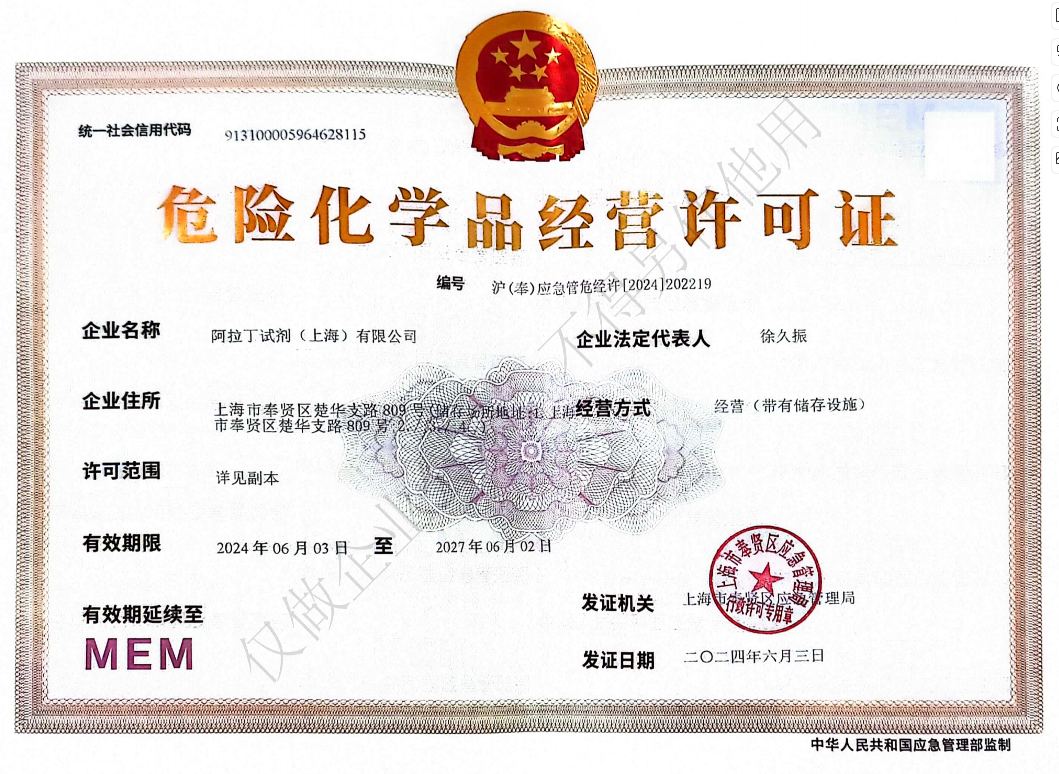 危险品化学品经营许可证(带存储)