Analysis of Hydrolyzed Pearl as a Cosmetic Raw Material: Preparation Process, Active Components, and Skincare Formulation Applications
Analysis of Hydrolyzed Pearl as a Cosmetic Raw Material: Preparation Process, Active Components, and Skincare Formulation Applications
1. Definition and Skincare Positioning of Hydrolyzed Pearl
1.1 What Is Hydrolyzed Pearl?
Hydrolyzed Pearl refers to a pearl hydrolysate obtained from natural pearls or nacre through processes such as acid hydrolysis, enzymatic hydrolysis, or combined acid-enzyme hydrolysis. Its main feature is that the originally insoluble and difficult-to-release organic matrix in pearls is converted into small-molecule peptides, free amino acids, and certain soluble mineral components that are easier to dissolve or disperse in skincare formulation systems.
In cosmetic raw material classification, Hydrolyzed Pearl is mainly used as a skin-conditioning agent. Its core value lies in supporting daily skincare through moisturization, antioxidant assistance, skin tone conditioning, and improvement of skin feel.
1.2 The Essential Difference Between Hydrolyzed Pearl and Ordinary Pearl Powder
The main component of pearls is calcium carbonate, with the chemical formula CaCO₃. Pearls also contain a small amount of organic matrix, including proteins, polypeptides, glycoproteins, amino acids, trace elements, and other components. Pearls and nacre can generally be regarded as an “inorganic mineral–organic matrix” composite structure, in which calcium carbonate forms the main body, while the organic matter content is relatively low but of considerable value for skincare research.
Ordinary pearl powder is produced by grinding pearls into smaller particles. In essence, it remains primarily an insoluble mineral powder. Hydrolyzed Pearl, by contrast, releases the organic matrix in pearls through hydrolysis, converting it into small-molecule components that are more suitable for skincare formulations.
Comparison Dimension | Traditional Pearl Powder | Hydrolyzed Pearl |
Raw material form | Solid powder | Liquid or soluble powder |
Main component state | Mainly calcium carbonate particles | Small-molecule peptides, amino acids, and soluble mineral components |
Formulation suitability | More suitable for visual modification in powders, color cosmetics, creams, and pastes | More suitable for aqueous systems such as serums, toners, masks, and lotions |
Skincare action logic | Soft-focus effect, coverage, and instant brightening | Moisturization, dullness conditioning, antioxidant assistance, and improved skin feel |
Core limitations | Strong insolubility and limited release of active components | Efficacy depends on the degree of hydrolysis, molecular weight, purification quality, and formulation design |
2. Process Logic from Solid Pearl to Hydrolyzed Pearl
2.1 Why the Pearl Structure Requires Hydrolysis
Natural pearls have a stable layered mineral structure. Calcium carbonate crystals form a hard skeleton, while the organic matrix is distributed between the crystals. This structure gives pearls their luster and hardness, but it also makes the proteins, peptides, and amino acids inside them difficult to release directly. The goal of hydrolysis is to break the encapsulation of the organic matrix by the mineral structure through physical, chemical, and enzymatic treatment, thereby converting pearl proteins into smaller peptides and amino acids that are easier to formulate.
2.2 The Four-Step Process for Hydrolyzed Pearl
The preparation of Hydrolyzed Pearl can be summarized into four core steps: pretreatment, decalcification, enzymatic hydrolysis, and purification/finished product processing.
Schematic Process Flow of Hydrolyzed Pearl Preparation
Selected pearls
↓
Cleaning, crushing, and micronization
↓
Decalcification: reducing the encapsulation of the organic matrix by CaCO₃
↓
Enzymatic hydrolysis: pearl proteins → small-molecule peptides + free amino acids
↓
Enzyme inactivation: stopping the hydrolysis reaction and controlling molecular size
↓
Filtration, centrifugation, desalting, concentration, and sterilization
↓
Hydrolyzed Pearl liquid / Hydrolyzed Pearl powder
2.3 Functions of the Four Core Steps in Hydrolyzed Pearl Preparation
2.3.1 Pretreatment: Opening the Structure and Improving Reaction Efficiency
Pearls are first selected, cleaned, crushed, or micronized. The purpose of this step is to increase the reaction surface area, allowing subsequent decalcification and enzymatic hydrolysis to proceed more thoroughly.
2.3.2 Decalcification: Reducing the Calcium Carbonate Barrier and Releasing the Organic Matrix
Pearls contain a high level of calcium carbonate, which directly affects protein release. Decalcification can reduce the encapsulation of the organic matrix by insoluble calcium carbonate, making pearl proteins more accessible for the hydrolysis stage.
The basic decalcification reaction can be expressed as:
CaCO₃ + 2H⁺ → Ca²⁺ + CO₂↑ + H₂O
The focus of this process is not to completely remove all minerals, but to reduce the obstruction caused by the insoluble mineral structure to the release of organic components. Some mineral elements, such as calcium, magnesium, and zinc, may remain in the final product in soluble forms.
2.3.3 Enzymatic Hydrolysis: Converting Macromolecular Pearl Proteins into Small-Molecule Peptides and Amino Acids
Proteases can cleave peptide bonds in pearl proteins, converting macromolecular proteins into polypeptides, oligopeptides, and free amino acids.
The basic process of peptide bond hydrolysis can be expressed as:
—CO—NH— + H₂O → —COOH + —NH₂
2.3.4 Enzyme Inactivation and Purification: Controlling Molecular Weight and Obtaining a Stable Raw Material
After enzymatic hydrolysis is completed, the enzyme must be inactivated, for example by heating, to prevent further hydrolysis. Subsequent processes such as filtration, centrifugation, desalting, concentration, sterilization, drying, or filling are then carried out to obtain Hydrolyzed Pearl in liquid or powder form.
The degree of hydrolysis directly affects the performance of the raw material. Insufficient hydrolysis may limit solubility and usability, while excessive hydrolysis may overly disrupt peptide structures. High-quality Hydrolyzed Pearl raw materials require a balance among solubility, molecular weight distribution, retention of active components, and formulation stability.
3. Core Active Components of Hydrolyzed Pearl
The skincare value of Hydrolyzed Pearl mainly comes from three categories of components: bioactive peptides, free amino acids, and trace minerals.
3.1 Bioactive Peptides
After hydrolysis, pearl proteins form peptide fragments of different lengths. Small-molecule peptides generally have good water solubility and can participate in moisturization, conditioning, and antioxidant support on the skin surface.
In studies on Hydrolyzed Conchiolin Protein, or HCP, HCP has shown potential in inhibiting melanin production by reducing the expression of proteins related to melanin synthesis, including MITF, or Microphthalmia-Associated Transcription Factor; TYR, or Tyrosinase; and TRP-2, or Tyrosinase-Related Protein-2. This indicates that peptide components in Hydrolyzed Pearl have a research basis for participating in skin tone conditioning.
It should be noted that HCP is a specific hydrolysate derived from pearl or nacre organic proteins and should not be fully equated with all Hydrolyzed Pearl raw materials. Different Hydrolyzed Pearl raw materials may vary in peptide content, molecular weight distribution, and amino acid composition. Therefore, specific efficacy should still be evaluated in combination with raw material specifications, testing data, and formulation validation.
3.2 Free Amino Acids
Hydrolyzed Pearl can release various free amino acids. Different pearl sources and processing methods can affect the final amino acid composition. More than 17 amino acids can often be detected in high-quality Hydrolyzed Pearl raw materials. Pearls and nacre themselves contain various amino acids, peptides, and trace elements, providing a material basis for obtaining a complex amino acid composition after hydrolysis. The general structure of amino acids is as follows:
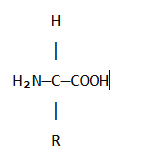
In this structure, R represents different side chains. Different amino acids vary in hydrophilicity, charge, and spatial structure, and therefore play different roles in moisturization, buffering, skin feel conditioning, and maintenance of the stratum corneum environment.
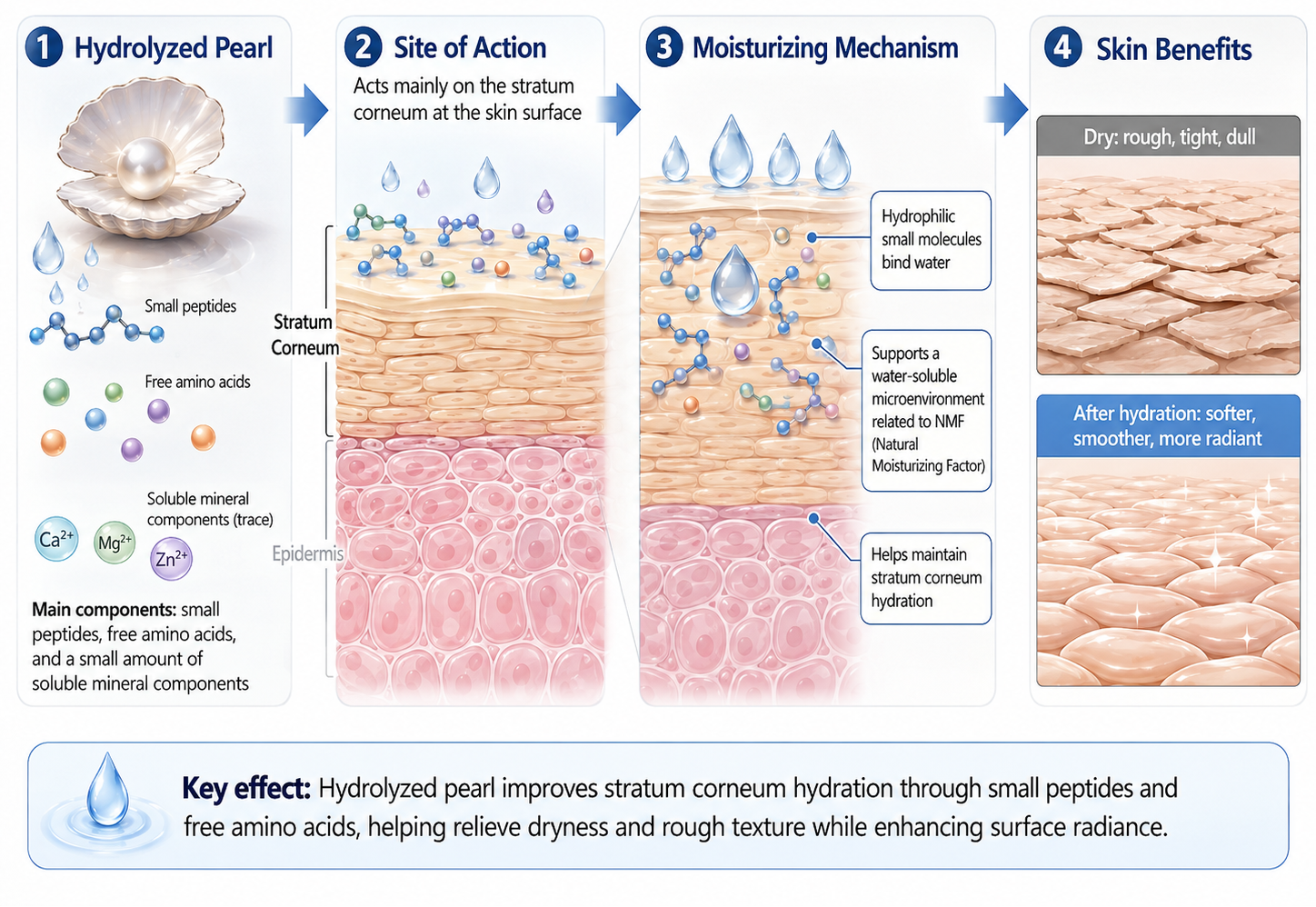
Free amino acids are closely related to the skin’s Natural Moisturizing Factor, or NMF. NMF is a group of low-molecular-weight, water-soluble moisturizing substances in the stratum corneum, including amino acids, PCA, or Pyrrolidone Carboxylic Acid, lactic acid, urea, and inorganic salts. NMF is highly important for maintaining the water content, softness, and barrier condition of the stratum corneum. The moisturizing logic of Hydrolyzed Pearl is that amino acids and small-molecule peptides help the stratum corneum maintain a more stable hydrated state.
3.3 Trace Minerals
Pearls contain mineral components mainly composed of calcium, and may also contain trace elements such as magnesium, zinc, copper, selenium, and manganese. After hydrolysis and purification, some minerals may exist in soluble forms. Minerals in Hydrolyzed Pearl are auxiliary components. Their main significance lies in helping condition the microenvironment on the skin surface and potentially serving as cofactors for certain enzyme systems.
4. Skincare Mechanisms of Hydrolyzed Pearl
4.1 Moisturization: Supporting the Natural Moisturizing System of the Stratum Corneum
The outermost layer of the skin is the stratum corneum. When the water content of the stratum corneum is insufficient, the skin is prone to dryness, tightness, roughness, more visible fine lines, and dullness. NMF is an important factor in maintaining the hydrated state of the stratum corneum, and amino acids are one of its important components.
The free amino acids and small-molecule peptides in Hydrolyzed Pearl are hydrophilic and can help maintain a moist environment on the skin surface. They are more suitable for synergistic use with moisturizing ingredients such as hyaluronic acid, glycerin, betaine, and panthenol, jointly helping improve dryness-induced dullness and roughness.
The schematic diagram of the moisturizing mechanism of Hydrolyzed Pearl is shown below:
4.2 Brightening: Participating in the Regulation of Melanin Production
Melanin production is associated with multiple enzymes and signaling pathways. Among them, TYR is a key enzyme in melanin synthesis, while MITF is an important transcription factor that regulates the expression of proteins related to melanin production.
Related studies on hydrolyzed conchiolin protein / hydrolyzed nacre protein HCP suggest that HCP may reduce the expression of melanin production-related proteins by regulating pathways associated with PKA/CREB, or Protein Kinase A / cAMP Response Element-Binding Protein, and MEK/ERK, or Mitogen-Activated Protein Kinase Kinase / Extracellular Signal-Regulated Kinase, thereby showing potential to reduce melanin synthesis.
The auxiliary conditioning pathway of Hydrolyzed Pearl can be summarized as follows:
Ultraviolet radiation, inflammation, and oxidative stress → enhanced melanin production signals → upregulation of MITF → increased expression of TYR, TRP-1, and TRP-2 → increased melanin synthesis → aggravated skin dullness and pigmentation
HCP / pearl hydrolyzed peptides → regulation of PKA/CREB- and MEK/ERK-related signals → reduced expression of MITF, TYR, and TRP-2 → research potential for reducing melanin production → auxiliary improvement of dullness and support for skin tone conditioning

Note: The above figures are schematic explanation of the possible mechanisms associated with Hydrolyzed Pearl. It is intended to support understanding of its potential skincare pathways and formulation logic, and should not be interpreted as the actual efficacy of any specific product. Actual performance should be assessed based on raw material specifications, use level, the complete formulation, and relevant efficacy evaluation results.
4.3 Antioxidant Support: A Supplementary Pathway in Comprehensive Antioxidant Care
When the skin is exposed for long periods to ultraviolet radiation, pollution, staying up late, or inflammatory irritation, excessive ROS, or Reactive Oxygen Species, can easily be generated. ROS can aggravate lipid oxidation, protein damage, and collagen degradation, and can also affect melanin production.
The peptides and amino acids in Hydrolyzed Pearl have a certain research basis for antioxidant activity. Studies on enzymatic hydrolysates of nacre have shown that some pearl-derived peptides possess tyrosinase-inhibitory and antioxidant activities. Such effects are more suitable as an auxiliary part of daily antioxidant skincare, rather than as a replacement for established antioxidant systems such as vitamin C, vitamin E, and ferulic acid.
5. Pairing Hydrolyzed Pearl with Common Skincare Ingredients
5.1 Hydrolyzed Pearl + Vitamin C: Synergy in Antioxidant Care and Brightening
VC, or Vitamin C, is a classic antioxidant and brightening ingredient. It can scavenge free radicals, participate in collagen synthesis, and contribute to skin tone conditioning by affecting tyrosinase activity. When Hydrolyzed Pearl is paired with vitamin C, their functional roles are relatively clear:
Ingredient | Main Function |
Vitamin C | Antioxidant activity, auxiliary inhibition of melanin production, and improvement of dullness |
Hydrolyzed Pearl | Provides small-molecule peptides and amino acids, enhancing moisturization, softness, and skin tone conditioning |
This combination is suitable for people with dull skin tone, grayish skin after staying up late, or a desire to improve skin radiance. For sensitive skin, when using low-pH pure vitamin C products, the frequency of use should be reduced to avoid stinging and redness.
5.2 Hydrolyzed Pearl + Hyaluronic Acid: Synergy in Hydration and Stratum Corneum Water Balance
HA, or Hyaluronic Acid, is a classic moisturizing ingredient with strong water-binding capacity. The amino acids and small-molecule peptides in Hydrolyzed Pearl are closer to the low-molecular-weight moisturizing system of the stratum corneum. The combination of hyaluronic acid and Hydrolyzed Pearl is suitable for dry, rough skin, seasonal tightness, and dryness-related dullness.
The moisturizing synergy between hyaluronic acid and Hydrolyzed Pearl can be expressed as:
Hyaluronic acid binds water + Hydrolyzed Pearl provides amino acids and small-molecule peptides → improved hydration of the stratum corneum → enhanced skin softness, smoothness, and radiance
5.3 Hydrolyzed Pearl + Retinol: Synergy in Anti-Aging, Soothing, and Moisturization
Retinol, also known as vitamin A alcohol, is a commonly used anti-aging ingredient. It can promote epidermal renewal and improve the appearance of fine lines, roughness, uneven skin tone, and signs of photoaging. However, retinol may also cause dryness, peeling, stinging, and redness. Hydrolyzed Pearl does not reduce the intrinsic irritation mechanism of retinol, nor does it enhance retinol conversion efficiency. It is more suitable as a moisturizing and repairing support ingredient, helping improve dryness and roughness during retinol use through amino acids and small-molecule peptides.
6. Selection and Precautions for Hydrolyzed Pearl
6.1 Suitable Skin Needs
Hydrolyzed Pearl is suitable for the following skin needs:
Skin Need | Use Value |
Dryness and roughness | Amino acids and small-molecule peptides help improve hydration of the stratum corneum |
Dullness after staying up late | Antioxidant support and moisturization help improve a grayish, dull-looking complexion |
Uneven skin tone | Participates in melanin production regulation and supports a more even skin tone |
Dryness, sensitivity-prone skin, or periods of unstable barrier condition | Can serve as an auxiliary moisturizing and conditioning ingredient; recommended for use with barrier-supporting systems such as panthenol, ceramides, cholesterol, and fatty acids |
During retinol or vitamin C use | Provides moisturizing support and helps reduce dryness-related discomfort |
6.2 Safety Precautions
Hydrolyzed Pearl is generally mild, but caution is needed in the following situations:
Situation | Recommendation |
Sensitivity to shellfish, marine-derived proteins, or pearl-derived ingredients | Perform a local patch test before use |
Obvious dermatitis, damaged skin, or exudation is present | Suspend the use of functional products and prioritize medical consultation or basic barrier care |
The product also contains acids, retinol, or high-concentration vitamin C | Reduce the frequency of use according to the overall formulation |
Persistent stinging, erythema, or itching after use | Stop use and observe; consult a dermatologist if necessary |
The mildness of Hydrolyzed Pearl comes from its ingredient characteristics, but the final irritation potential still depends on the complete formulation, including fragrance, preservatives, alcohol, pH value, and other active ingredients.
6.3 How to Determine Whether a Hydrolyzed Pearl Product Is Worth Choosing
6.3.1 Check the Ingredient Name
Products with ingredient lists that clearly indicate Hydrolyzed Pearl, Hydrolyzed Conchiolin Protein, or similar Hydrolyzed Pearl-derived ingredients are preferred. If the ingredient list only contains Pearl Powder, its main function is more inclined toward powder-based visual modification and should not be equated with Hydrolyzed Pearl.
6.3.2 Check the Formulation Combination
Hydrolyzed Pearl is suitable as a synergistic ingredient in compound formulations. Reasonable combinations include:
Skincare Goal | Recommended Combination |
Moisturizing and barrier support | Hydrolyzed Pearl + hyaluronic acid + panthenol + ceramides |
Antioxidant care and brightening | Hydrolyzed Pearl + vitamin C + vitamin E + niacinamide |
Improvement of dullness | Hydrolyzed Pearl + niacinamide + tranexamic acid + hyaluronic acid |
During retinol care | Hydrolyzed Pearl + retinol + panthenol + ceramides |
7. Representative Chemical Classifications and Application Tables Related to Hydrolyzed Pearl
Table 1. Pearl Structure References, Protein Hydrolysate References, and Aqueous-Phase Formulation Carriers
Category | CAS No. | Aladdin Catalog No. | Name | Specification or Purity | Product Features and Applications |
Pearl mineral structure reference | 471-34-1 | Calcium Carbonate | Anhydrous grade, ACS, ≥99% | Reference for the mineral main body of pearl powder; used for pearl decalcification reactions, evaluation of calcium carbonate removal rate, and studies on the differences between traditional pearl powder and Hydrolyzed Pearl | |
Protein hydrolysate reference | 73049-73-7 | Yeast Peptone | Suitable for microbiology, CellNourish™ Basic | Reference for protein hydrolysate mixtures; used for comparison of peptide and amino acid release characteristics and studies on hydrolysate composition | |
Aqueous-phase moisturizing solvent | 107-88-0 | 1,3-Butanediol | Anhydrous grade, ≥99% | Used as a solvent, moisturizer, and skin-feel modifier in Hydrolyzed Pearl liquid raw materials, serums, and toner systems | |
Aqueous-phase moisturizing solvent | 57-55-6 | 1,2-Propanediol | ACS, ≥99.5% | Used in Hydrolyzed Pearl aqueous systems for dissolution, moisturization, stability, and preservative-synergy experiments | |
Aqueous-phase moisturizing solvent | 5343-92-0 | 1,2-Pentanediol | ≥98% | Used in Hydrolyzed Pearl serums, mask essences, and clear aqueous systems for moisturization, preservative synergy, and formulation stability studies | |
Aqueous-phase moisturizing solvent | 6920-22-5 | 1,2-Hexanediol | ≥98% | Used in Hydrolyzed Pearl liquid formulations for moisturization, preservative synergy, skin-feel adjustment, and microbial control system studies | |
Basic polyol moisturizer | 56-81-5 | Glycerol | Anhydrous grade, UltraBio™, molecular biology grade, ≥99.5% (GC) | Basic moisturizer used in Hydrolyzed Pearl moisturizing systems, stratum corneum hydration evaluation, and serum/lotion formulation research |
Table 2. Natural Moisturizing Factor-Related Components and Amino Acid Moisturizing Systems
Category | CAS No. | Aladdin Catalog No. | Name | Specification or Purity | Product Features and Applications |
Core salt of Natural Moisturizing Factor | 28874-51-3 | Sodium L-Pyrrolidone-5-Carboxylate | Oily, 50% | Representative component of the stratum corneum Natural Moisturizing Factor; used for studies on Hydrolyzed Pearl amino acid moisturizing synergy, stratum corneum water content, and dryness improvement | |
Natural Moisturizing Factor precursor-related component | 98-79-3 | L-Pyroglutamic Acid | UltraBio™, ultrapure grade | Pyrrolidone carboxylic acid-related component; used for studies on Natural Moisturizing Factor composition, stratum corneum hydration, and amino acid conversion | |
Nitrogen-containing moisturizer in Natural Moisturizing Factor | 57-13-6 | Urea | UltraBio™, molecular biology grade, ≥99.5% (T) | Representative Natural Moisturizing Factor component; used for stratum corneum hydration, dry skin models, and Hydrolyzed Pearl moisturizing combination studies | |
Organic acid salt in Natural Moisturizing Factor | 72-17-3 | DL-Sodium Lactate Solution | 73% in water | Used for stratum corneum moisturization, Natural Moisturizing Factor combinations, Hydrolyzed Pearl moisturizing systems, and skin water content evaluation | |
Organic acid in Natural Moisturizing Factor | 50-21-5 | DL-Lactic Acid | AR, 85–90% | Used for stratum corneum hydration, pH adjustment, mild keratin conditioning, and Hydrolyzed Pearl aqueous system research | |
Osmoregulating moisturizer | 107-43-7 | Betaine, Anhydrous | Moligand™, ultrapure grade, ≥99% | Used for moisturization, osmotic regulation, dry-environment stress, and Hydrolyzed Pearl soothing formulation research | |
Anti-dryness moisturizer | 99-20-7 | D-Trehalose, Anhydrous | ≥99% | Used for anti-dryness effects, cellular water protection, moisturizing synergy, and Hydrolyzed Pearl moisturizing system studies | |
High-molecular hydration ingredient | 9067-32-7 | Sodium Hyaluronate | European Pharmacopoeia (Ph. Eur.) | Used for synergy with Hydrolyzed Pearl small-molecule moisturizing systems, skin hydration, serum moisturization enhancement, and mask essence moisturizing research | |
Polar amino acid | 56-45-1 | L-Serine | Animal-origin-free, USP, Moligand™, European Pharmacopoeia (Ph. Eur.), ≥98.5% | Amino acid composition reference for pearl hydrolysates; used for Natural Moisturizing Factor, stratum corneum hydration, and amino acid moisturizing studies | |
Small-molecule amino acid | 56-41-7 | L-Alanine | UltraBio™, ultrapure grade, ≥99.5% (NT) | Amino acid composition reference for pearl hydrolysates; used for amino acid profile analysis, moisturizing combinations, and evaluation of protein hydrolysis degree | |
Small-molecule amino acid | 56-40-6 | Glycine | UltraBio™, molecular biology grade, ultrapure grade, ≥99% (NT) | Small-molecule amino acid used for Natural Moisturizing Factor models, skin hydration experiments, and amino acid composition analysis of pearl hydrolysates | |
Imino acid | 147-85-3 | L-Proline | UltraBio™, ≥99.5% | Amino acid related to the stratum corneum Natural Moisturizing Factor; used for Hydrolyzed Pearl moisturization, skin hydration, and peptide-fragment composition studies | |
Acidic amino acid | 56-84-8 | L-Aspartic Acid | UltraBio™, ultrapure grade, ≥99.5% (T) | Acidic amino acid reference for pearl hydrolysates; used for amino acid quantification, moisturizing factor models, and formulation buffer system studies | |
Acidic amino acid | 56-86-0 | L-Glutamic Acid | Ultrapure grade, ≥99.5% (NT) | Amino acid composition reference for pearl hydrolysates; used for amino acid moisturization, Natural Moisturizing Factor models, and hydrolysate analysis | |
Basic amino acid | 71-00-1 | L-Histidine | UltraBio™, ≥99.5% (NT) | Used for amino acid composition of pearl hydrolysates, skin buffer systems, and Natural Moisturizing Factor-related studies | |
Basic amino acid | 74-79-3 | L-Arginine | Moligand™, ≥99% (HPLC) | Used for Hydrolyzed Pearl amino acid profile analysis, moisturizing combinations, pH adjustment, and skin-conditioning formulation research | |
Basic amino acid | 56-87-1 | L-Lysine | Moligand™, ≥98%, metals <500 ppm | Used for amino acid composition of pearl hydrolysates, peptide-fragment analysis, stratum corneum moisturization, and skin-conditioning research | |
Branched-chain amino acid | 61-90-5 | L-Leucine | UltraBio™, ultrapure grade, ≥99.5% (NT) | Amino acid composition reference for pearl protein hydrolysates; used for amino acid profiles, peptide-fragment composition, and hydrolysis degree analysis | |
Branched-chain amino acid | 73-32-5 | L-Isoleucine | UltraBio™, ≥99.5% (NT) | Used for amino acid composition of pearl hydrolysates, branched-chain amino acid quantification, and protein hydrolysate analysis | |
Branched-chain amino acid | 72-18-4 | L-Valine | Moligand™, ≥99% | Used for amino acid profiling of pearl hydrolysates, peptide-fragment composition, and small-molecule nutrient-type raw material research | |
Polar essential amino acid | 72-19-5 | L-Threonine | UltraBio™, ultrapure grade, ≥99.5% (NT) | Used for amino acid composition of pearl hydrolysates, Natural Moisturizing Factor-related analysis, and moisturizing combination studies | |
Aromatic amino acid | 60-18-4 | L-Tyrosine | Animal-origin-free, ≥99%, fermentation-derived | Reference substrate for melanin synthesis; used for tyrosinase reactions, melanin production models, and experiments on the brightening mechanism of pearl | |
Aromatic amino acid | 63-91-2 | L-Phenylalanine | Moligand™, ≥99% | Used for amino acid composition of pearl hydrolysates, aromatic amino acid quantification, and protein hydrolysate analysis | |
Aromatic amino acid | 73-22-3 | L-Tryptophan | UltraBio™, ≥99.5% (NT) | Used for amino acid profiling of pearl hydrolysates, protein hydrolysate analysis, and amino acid composition studies | |
Sulfur-containing amino acid | 56-89-3 | L-Cystine | Moligand™, ultrapure grade, ≥99.5% | Used for amino acid composition of pearl protein hydrolysates, sulfur-containing amino acid detection, and redox-related studies | |
Sulfur-containing amino acid | 63-68-3 | L-Methionine (H-Met-OH) | Moligand™, ≥99% | Used for amino acid profiling of pearl protein hydrolysates, peptide-fragment composition analysis, and antioxidant-related studies |
Table 3. Brightening, Antioxidant, and Melanin Production Regulation Systems
Category | CAS No. | Aladdin Catalog No. | Name | Specification or Purity | Product Features and Applications |
Water-soluble antioxidant | 50-81-7 | L-Ascorbic Acid | Anhydrous grade, Moligand™, ACS, ≥99% | Used for Hydrolyzed Pearl-assisted brightening, free radical scavenging, tyrosinase-related experiments, and antioxidant evaluation | |
Water-soluble antioxidant | 70-18-8 | Glutathione, Reduced | PharmPure™, European Pharmacopoeia (Ph. Eur.) | Used for oxidative stress models, skin tone conditioning, construction of reduction systems, and studies on antioxidant synergy with pearl peptides | |
Lipid-soluble antioxidant | 59-02-9 | D-α-Tocopherol | Moligand™, ≥97% (GC) | Used for skin lipid antioxidation, free radical scavenging, vitamin antioxidant combinations, and Hydrolyzed Pearl cream system research | |
Lipid-soluble antioxidant | 7695-91-2 | DL-α-Tocopheryl Acetate | PharmPure™, European Pharmacopoeia (Ph. Eur.) | Stable vitamin E derivative used for antioxidant creams, serum oils, skin-feel adjustment, and lipid protection experiments | |
Phenolic acid antioxidant | 1135-24-6 | Ferulic Acid | Moligand™, ≥99% | Used for antioxidant combinations, photo-oxidation protection, stability of vitamin systems, and antioxidant research on pearl peptides | |
Vitamin C derivative | 86404-04-8 | 3-O-Ethyl-L-Ascorbic Acid | Moligand™, ≥98% (HPLC) (T) | Used for stable brightening, antioxidant care, skin tone evenness, and Hydrolyzed Pearl brightening combinations | |
Vitamin C derivative | 113170-55-1 | L-Ascorbic Acid 2-Phosphate Sesquimagnesium Salt Hydrate | Moligand™, ≥98% (HPLC) | Used for mild antioxidant care, brightening formulations, pigmentation conditioning, and Hydrolyzed Pearl synergy studies | |
Vitamin C derivative | 129499-78-1 | 2-O-α-D-Glucopyranosyl-L-Ascorbic Acid | ≥98% (HPLC) | Used for stable brightening formulations, antioxidant evaluation, skin tone evenness, and pearl hydrolyzed peptide combinations | |
Vitamin C derivative | 66170-10-3 | Trisodium L-Ascorbyl-2-Phosphate | ≥96% | Used for aqueous antioxidant serums, assisted brightening, melanin production studies, and Hydrolyzed Pearl combination experiments | |
Pigment transfer and barrier conditioning | 98-92-0 | Niacinamide | PharmPure™, USP | Used for skin tone evenness, barrier support, dullness improvement, sebum conditioning, and Hydrolyzed Pearl brightening and repair systems | |
Pigmentation-conditioning ingredient | 1197-18-8 | Tranexamic Acid (TXA) | Moligand™, ≥98% | Used for post-inflammatory dullness, uneven skin tone, pigmentation conditioning, and Hydrolyzed Pearl-assisted brightening formulation research | |
Tyrosinase-related ingredient | 497-76-7 | Arbutin | Moligand™, ≥98% | Used for tyrosinase-related experiments, melanin production models, and Hydrolyzed Pearl brightening synergy studies | |
Tyrosinase-related ingredient | 501-30-4 | Kojic Acid | ≥99% | Used for tyrosinase activity evaluation, melanin synthesis models, brightening mechanisms, and pearl peptide combination studies | |
Resorcinol-type brightening ingredient | 18979-61-8 | 4-Butylresorcinol | ≥98% (GC) | Used for melanin production regulation, tyrosinase-related research, skin tone-evening formulations, and Hydrolyzed Pearl combination experiments | |
Resorcinol-type brightening ingredient | 85-27-8 | 4-(α-Methylbenzyl)resorcinol | ≥98% | Used for pigmentation pathway research, skin tone evenness, dullness improvement, and development of Hydrolyzed Pearl brightening systems |
Table 4. Vitamin A, Anti-Aging Peptides, and Cell-Conditioning Systems
Category | CAS No. | Aladdin Catalog No. | Name | Specification or Purity | Product Features and Applications |
Vitamin A-type skin renewal ingredient | 68-26-8 | Retinol | Moligand™, ≥95% | Used for skin renewal, fine line care, skin texture improvement, and Hydrolyzed Pearl moisturizing-buffer anti-aging formulation research | |
Vitamin A-type skin renewal ingredient | 116-31-4 | All-trans-Retinal | Moligand™, ≥98% | Used for vitamin A active ingredient research, photoaging, texture improvement, and pearl peptide repair combination experiments | |
Vitamin A-type skin renewal ingredient | 79-81-2 | Vitamin A Palmitate | 1,700,000 USP units/g | Used for vitamin A ester formulations, skin renewal, anti-aging creams, and Hydrolyzed Pearl repair synergy studies | |
Cell-conditioning anti-wrinkle ingredient | 58-61-7 | Adenosine | PharmPure™, USP, endotoxin <1000 EU/g; microbial limit ≤100 cfu/g | Used for fine line care, skin conditioning, anti-wrinkle evaluation, and Hydrolyzed Pearl anti-aging compound formulation research | |
Signal peptide ingredient | 147732-56-7 | Palmitoyl Tripeptide-1 | ≥97% | Used for collagen care, elasticity improvement, anti-aging serums, and Hydrolyzed Pearl peptide combination research | |
Signal peptide ingredient | 221227-05-0 | Pal-Gly-Gln-Pro-Arg-OH, free form | ≥98% | Used for anti-aging peptide research, collagen-related studies, skin elasticity care, and pearl hydrolyzed peptide synergy experiments | |
Expression line care peptide | 616204-22-9 | Acetyl Hexapeptide | ≥98% | Used for expression line care, anti-wrinkle peptide combinations, Hydrolyzed Pearl peptide combinations, and anti-aging formulation development |
Table 5. Barrier Lipids, Soothing Repair, and Emollient Water-Locking Systems
Category | CAS No. | Aladdin Catalog No. | Name | Specification or Purity | Product Features and Applications |
Stratum corneum barrier lipid | 178436-06-1 | Ceramide 3B | ≥95% | Stratum corneum barrier lipid component used for improvement of dryness and roughness, barrier repair, and Hydrolyzed Pearl repair system research | |
Stratum corneum barrier lipid | 100403-19-8 | Ceramide Mixture | ≥95% | Complex ceramide raw material used for barrier lipid supplementation, moisturizing repair, and pearl peptide compound formulation experiments | |
Stratum corneum barrier lipid | 57-88-5 | C432975 | Cholesterol, from Lanolin | PharmPure™, JP, BP, European Pharmacopoeia (Ph. Eur.), NF, ultrapure grade | Component of stratum corneum lipids; used for ceramide combinations, barrier structure simulation, and Hydrolyzed Pearl repair formulation research |
Sphingoid-type barrier precursor | 554-62-1 | Phytosphingosine | ≥98% | Sphingoid-related barrier component used for ceramide metabolism, stratum corneum lipid models, and Hydrolyzed Pearl barrier repair research | |
Emollient water-locking ingredient | 111-01-3 | Squalane | ≥98% | Used for reducing dryness and roughness, improving skin feel, reducing water loss, and Hydrolyzed Pearl cream system research | |
Moisturizing and repairing ingredient | 81-13-0 | D-Panthenol | ≥98% | Used for moisturizing repair, dryness relief, buffering during retinol use, and Hydrolyzed Pearl soothing formulation research | |
Moisturizing and repairing ingredient | 16485-10-2 | DL-Panthenol | ≥99% | Used for barrier care, dryness improvement, soothing moisturization, and Hydrolyzed Pearl repair combinations | |
Anti-dryness protective ingredient | 96702-03-3 | Ectoin | ≥99% | Used for dry-environment stress, moisturizing and soothing, barrier support, and Hydrolyzed Pearl protective formulation research | |
Soothing and repairing ingredient | 97-59-6 | Allantoin | ≥98% | Used for dryness and roughness, redness-related discomfort, mild repair, and Hydrolyzed Pearl sensitive-skin care systems | |
Soothing and repairing ingredient | 68797-35-3 | Dipotassium Glycyrrhizinate Hydrate | ≥75% (HPLC) | Used for redness soothing, irritation buffering, inflammation-related dullness care, and Hydrolyzed Pearl brightening and repair combinations |
Note: The products listed above are examples of selected Aladdin products related to scientific research and formulation studies. They are provided for raw material understanding, ingredient comparison, and experimental selection reference. Product specifications, purity, grade, and applicable scope may vary. Before actual use, it is recommended to consider the specific research or formulation requirements and refer to the latest information on the Aladdin website, as well as the product COA and SDS. More information on product specifications, grades, and COA documents can be confirmed on the Aladdin website by searching “product name / CAS / catalog number.”
For more related articles, please see below:
Analytical Basis, Methodological Systems, and Quality Control for Vitamin C Content Determination
How to decipher the whitening code?
Niacin (Vitamin B3): Structural Features, Metabolic Roles, and Application Landscape
The "Six Key Checkpoints" of Skin Lightening
Tyrosinase: a key regulatory enzyme in melanin synthesis and its biological and applied significance
Enzymatic Hydroxylation Mechanism of Salicylate Conversion to Catechol


 危险品化学品经营许可证(带存储)