
Regulatory Mechanisms of 5mC DNA Methylation
Regulatory Mechanisms of 5mC DNA Methylation
DNA methylation is an important epigenetic regulatory mechanism in mammals, among which 5-methylcytosine (5mC) is the major form studied. 5mC is established and maintained by the DNMT family, and after sequential oxidation by the TET family, it can be removed through replication-dependent dilution or the TDG-BER pathway. Together with methylation reader proteins, histone modifications, and chromatin states, 5mC regulates gene expression and genomic stability.
Keywords: DNA methylation; 5mC; DNMT; TET; 5hmC; UHRF1; TDG; epigenetics
1 Formation and Functional Positioning of 5mC
1.1 Chemical Modification Characteristics of 5mC
5mC is a DNA modification formed by introducing a methyl group at the C5 position of the cytosine pyrimidine ring. Cytosine methylation in the mammalian genome mainly occurs at CpG dinucleotides, in which the “p” represents the phosphate linkage between cytosine and guanine. In addition to 5mC, DNA base modifications such as 4-methylcytosine (4mC) and N6-methyladenine (6mA) also exist in biological systems, but in mammalian epigenetic research, 5mC and its oxidized derivatives 5hmC, 5fC, and 5caC remain the major research targets.
1.2 Methylation Characteristics of Different Genomic Regions
The function of DNA methylation is highly dependent on its genomic location and cannot simply be equated with transcriptional repression. Hypermethylation of promoter CpG islands is generally associated with reduced transcriptional activity; gene-body methylation can occur in actively transcribed genes and is associated with transcriptional stability and suppression of aberrant transcription initiation; repetitive sequences and transposable elements usually maintain relatively high methylation levels, which are important for restricting aberrant transcription, suppressing transposon activity, and maintaining genomic stability.
Table 1 Major Functional Characteristics of DNA Methylation in Different Genomic Regions
Genomic Region | Typical Methylation Characteristics | Major Functional Associations |
Promoter CpG islands | Active genes usually maintain low methylation | Hypermethylation is often associated with transcriptional repression |
Gene bodies | Some active genes have relatively high methylation | Transcriptional stability and suppression of aberrant transcription initiation |
Enhancers | Methylation status shows marked dynamic changes | Cell-type-specific transcriptional regulation |
Repetitive sequences | Usually maintain relatively high methylation | Transposable-element suppression and genomic stability |
Imprinting control regions | Parent-of-origin-specific methylation | Genomic imprinting |
X-chromosome-associated regions | Region-specific methylation | Regulation associated with X-chromosome inactivation |
2 DNMT-Mediated Establishment of DNA Methylation
2.1 DNA Methyltransferase Reaction
DNA methyltransferases (DNMTs) use S-adenosyl-L-methionine (SAM) as the methyl donor to transfer a methyl group to the C5 position of cytosine to form 5mC, while generating S-adenosyl-L-homocysteine (SAH). Mammalian DNA methylation mainly includes de novo methylation and post-replication maintenance methylation, with DNMT3A/DNMT3B and DNMT1 serving as the respective core enzymes.
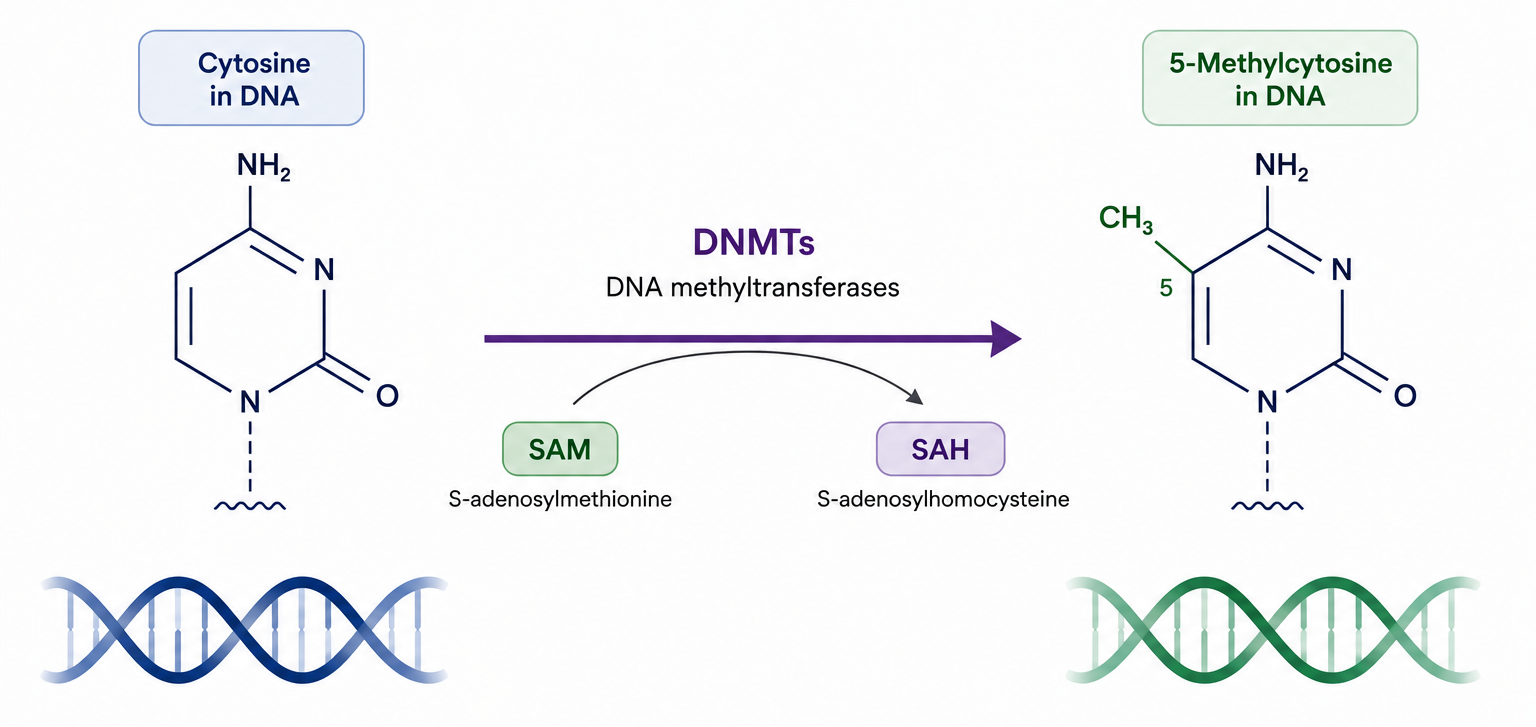
Figure 1. DNMT-mediated C5 methylation of cytosine in DNA
2.2 DNMT3A- and DNMT3B-Mediated De Novo Methylation
DNMT3A and DNMT3B are de novo DNA methyltransferases that can establish new 5mC in DNA regions where stable methylation patterns have not previously been established. Both participate in embryonic development, germ-cell epigenetic reprogramming, cell differentiation, and establishment of tissue-specific methylation patterns. Their activity and chromatin localization are also regulated by histone modifications, accessory proteins, and local chromatin structure.
2.3 Accessory Function of DNMT3L
DNMT3L is structurally related to DNMT3A and DNMT3B but lacks complete classical DNA methyltransferase catalytic activity. It mainly acts as a regulatory factor involved in DNMT3 complex formation and regulation of de novo methylation and is particularly associated with establishment of methylation patterns in germ cells and imprinted regions. Therefore, the major functional positioning of DNMT3L is as an accessory regulatory protein of the DNMT3 family rather than an independently catalytic DNA methyltransferase.
3 DNMT1-UHRF1-Mediated Maintenance of Methylation
3.1 Formation of Hemimethylated CpG
After semiconservative DNA replication, the parental strand retains the original 5mC, whereas the newly synthesized strand initially lacks the corresponding methylation, thereby forming hemimethylated CpG. If methylation on the newly synthesized strand is not restored in time, the original 5mC pattern will gradually be diluted through successive cell divisions. Therefore, restoration of methylation after replication is an important step in the stable transmission of DNA methylation information.
3.2 Maintenance Methylation Function of DNMT1
DNMT1 is the major maintenance DNA methyltransferase and shows a pronounced substrate preference for hemimethylated CpG. It can re-establish 5mC on the corresponding cytosine of the newly synthesized strand. DNMT1 does not act absolutely only on hemimethylated DNA. Therefore, mechanistic descriptions should emphasize its preferential recognition and catalytic characteristics toward hemimethylated CpG rather than defining it as acting only on hemimethylated substrates.
3.3 UHRF1-Mediated Replication-Coupled Localization
UHRF1 is an important regulatory factor in the DNMT1 maintenance methylation system. Its SRA domain can recognize hemimethylated CpG, while other domains participate in recognition of histone states and chromatin binding. Through processes such as histone ubiquitination, UHRF1 promotes recruitment of DNMT1 to replication regions, linking hemimethylated DNA recognition, DNMT1 localization, and methylation of the newly synthesized strand into a continuous replication-coupled mechanism.
Table 2 Core Proteins Involved in the Establishment and Maintenance of DNA Methylation
Protein | Major Function | Key Characteristics | Major Research Process |
DNMT1 | Maintenance of DNA methylation | Prefers hemimethylated CpG | Post-replication methylation inheritance |
DNMT3A | De novo DNA methylation | Establishes new methylation patterns | Development, differentiation, and disease-associated mutations |
DNMT3B | De novo DNA methylation | Establishment of regional methylation | Development and repetitive-sequence regulation |
DNMT3L | DNMT3 regulatory factor | Lacks complete independent catalytic activity | Germ-cell and imprinting-associated methylation |
UHRF1 | DNMT1 recruitment and localization | SRA domain recognizes hemimethylated CpG | Replication-coupled methylation maintenance |
4 TET-Mediated Oxidation of 5mC
4.1 Catalytic Characteristics of the TET Family
TET1, TET2, and TET3 are Fe²⁺- and α-ketoglutarate (α-KG)-dependent dioxygenases that can sequentially oxidize 5mC to 5-hydroxymethylcytosine (5hmC), 5-formylcytosine (5fC), and 5-carboxylcytosine (5caC). TET-mediated reactions involve stepwise oxidation of 5mC rather than direct cleavage of the carbon-carbon bond on 5mC to remove the methyl group.
5mC → 5hmC → 5fC → 5caC
4.2 Functional Positioning of 5hmC
5hmC is both an important intermediate state in the further demethylation of 5mC and a relatively stable DNA modification, especially abundant in tissues such as the nervous system. Therefore, increased 5hmC levels cannot alone be interpreted as enhanced DNA demethylation and should be evaluated together with 5mC, 5fC, 5caC levels, and TET activity.
4.3 Effects of Metabolic State on TET Activity
TET catalysis depends on α-KG, Fe²⁺, and oxygen and is regulated by cellular redox status and related metabolites. Insufficient α-KG supply or accumulation of competitive metabolites can alter TET activity, thereby affecting the conversion of 5mC to 5hmC and subsequent oxidized products and directly linking cellular metabolic state with regulation of DNA methylation.
5 DNA Demethylation Pathways
5.1 Passive DNA Demethylation
Passive demethylation mainly depends on DNA replication. When the DNMT1-UHRF1 maintenance methylation system is inhibited or functionally insufficient, newly synthesized DNA strands cannot efficiently restore the parental methylation pattern, and 5mC levels gradually decrease over successive cell divisions. Some oxidized cytosines formed by TET may also reduce the efficiency of post-replication methylation maintenance, thereby promoting replication-dependent dilution of the modifications.
5.2 TDG-BER-Mediated Active Demethylation
(1) Excision of 5fC and 5caC
After TET-mediated sequential oxidation generates 5fC and 5caC, Thymine DNA Glycosylase (TDG) can recognize and excise these oxidized modified bases, forming an abasic site (AP site), thereby removing the modified cytosine from the DNA strand.
(2) Base Excision Repair
The AP site subsequently enters the Base Excision Repair (BER) process and is processed by repair components including AP endonuclease, DNA polymerase, and DNA ligase, after which an unmodified cytosine is reinserted. Therefore, classical active DNA demethylation can be summarized as “TET sequential oxidation-TDG excision-BER repair.”
Table 3 Major Mechanisms of DNA Demethylation
Regulatory Mode | Core Process | DNA Replication Dependence | Final Result |
Insufficient maintenance methylation | Reduced DNMT1/UHRF1 function | Yes | Progressive dilution of 5mC |
Replication-dependent dilution after TET oxidation | Conversion of 5mC into oxidized derivatives | Yes | Reduction of modifications during replication |
TET-TDG-BER | Oxidation, base excision, and repair | No | Restoration of unmodified cytosine |
6 Reading of DNA Methylation
6.1 MBD Family
Proteins such as MeCP2, MBD1, and MBD2 contain a Methyl-CpG-Binding Domain (MBD), which can recognize specific methylated DNA environments and recruit HDACs and other chromatin-regulatory complexes, further converting DNA methylation signals into changes in histone modifications, nucleosome states, and transcriptional activity.
6.2 UHRF Family
UHRF1 has both methylation-reading and maintenance functions. Its SRA domain can recognize hemimethylated CpG, while other chromatin-recognition domains integrate DNA and histone information. UHRF2 also has DNA-modification recognition ability, but its functional positioning in replication-coupled maintenance methylation is not completely the same as that of UHRF1.
6.3 Methylation-Sensitive Zinc-Finger Proteins
Zinc-finger proteins such as Kaiso, ZBTB4, and ZBTB38 can recognize specific methylated DNA sequences and participate in transcriptional regulation. Different reader proteins have different preferences for DNA sequence, CpG density, and local chromatin environment. Therefore, the functional output of 5mC is jointly determined by the modification position, reader proteins, and chromatin state.
7 DNA Methylation and Histone Modifications
7.1 H3K4 Methylation and DNMT3 Regulation
ADD structural modules associated with DNMT3A, DNMT3B, and DNMT3L can sense the methylation state of H3K4. Active promoters are usually enriched in H3K4me3, and this state is unfavorable for DNMT3-associated complexes to establish new DNA methylation. When H3K4 is unmethylated, binding of the ADD domain to Histone H3 is more favorable and promotes formation of the DNMT3-associated catalytic state.
7.2 H3K36 Methylation and DNA Methylation Localization
The PWWP domains of DNMT3A and DNMT3B participate in recognition of chromatin environments associated with H3K36 methylation. H3K36me2 and H3K36me3 can differentially influence the chromatin localization of DNMT3A and DNMT3B in distinct genomic regions, allowing DNA methylation patterns to be coordinately regulated with pre-existing histone-modification states.
7.3 Cooperative Establishment of Repressive Chromatin
Methylated DNA can recruit HDACs and other corepressor complexes through MBD-type reader proteins, reduce histone acetylation, and promote formation of a repressive chromatin environment. DNA methylation can also cooperate with repressive histone marks such as H3K9me2/3, but the specific combination patterns differ among genomic regions. DNA methylation status therefore cannot be inferred from a single histone mark.
8 Abnormal DNA Methylation in Cancer
8.1 Aberrant Hypermethylation of Promoter CpG Islands
Cancer cells can develop aberrant hypermethylation at specific promoter CpG islands. If tumor suppressor genes, DNA damage-repair genes, or cell-differentiation-associated genes are involved, transcription of the corresponding genes may decrease and contribute to abnormal cellular phenotypes. Therefore, changes in promoter methylation need to be interpreted together with gene expression and the associated chromatin state.
8.2 Global DNA Hypomethylation
Cancer genomes can simultaneously exhibit DNA hypomethylation in repetitive sequences, transposable elements, and large genomic regions, thereby affecting transposable-element repression, chromosomal stability, and aberrant transcription. Therefore, cancer-associated DNA methylation remodeling usually manifests as coexistence of local aberrant CpG-island hypermethylation and widespread hypomethylation rather than a unidirectional change in genome-wide methylation levels.
8.3 DNMT and TET Abnormalities and Methylation Remodeling
Genetic variants or functional abnormalities in epigenetic regulatory proteins such as DNMT3A and TET2 can directly alter 5mC and 5hmC homeostasis. Hypomethylating nucleoside analogs such as Decitabine and 5-Azacytidine can reduce DNA methylation by interfering with DNMT-dependent methylation maintenance, and their effects show clear dependence on dose, exposure time, and cellular metabolism. Prolonged low-dose exposure to Decitabine can produce DNA hypomethylation, while 5-Azacytidine and Decitabine differ in nucleic acid metabolic pathways and transcriptional responses and can produce different early transcriptional changes even when equitoxic doses are used .
9 Products Related to 5mC Methylation Research
9.1 5mC and Oxidized-Derivative Standards
Product Name | CAS No. | Major Research Use |
5-Methylcytosine | Research on the chemical properties and analysis of 5mC | |
5-Hydroxymethylcytosine | Research on 5hmC and TET oxidation | |
5-Formylcytosine | Research on the 5fC oxidation intermediate | |
5-Methyl-2'-deoxycytidine | Quantitative standard for 5mC nucleosides in DNA | |
5-Hydroxymethyl-2'-deoxycytidine | Quantification of 5hmC nucleosides in DNA | |
2'-Deoxycytidine | Unmodified DNA nucleoside control | |
Cytosine | Unmodified base control |
9.2 Compounds Related to DNMT and TET Regulation
Product Name | CAS No. | Major Research Use |
Decitabine | DNMT inhibition and DNA hypomethylation research | |
5-Azacytidine | DNA/RNA metabolism and DNMT-related research | |
Zebularine | DNMT-related methylation-regulation research | |
RG108 | Mechanistic research on non-nucleoside DNMT inhibition | |
SGI-1027 | Research on DNMT-related inhibitory mechanisms | |
α-Ketoglutaric Acid | Research on TET dioxygenase cosubstrates | |
L-Ascorbic Acid | Research on TET activity and 5mC oxidation | |
EDTA | Metal-dependence control |
9.3 Auxiliary Materials for Methyltransferase and TET Reactions
Product Name | CAS No. | Major Research Use |
S-Adenosyl-L-Methionine | DNMT methyl donor | |
S-Adenosyl-L-Homocysteine | Methyltransferase reaction product and regulatory research | |
L-Methionine | SAM metabolism and methyl-donor-cycle research | |
α-Ketoglutaric Acid | TET catalytic cosubstrate | |
Ferrous Sulfate Heptahydrate | Fe²⁺ source for TET reaction systems | |
Sodium Bisulfite | Research related to chemical conversion of DNA cytosines |
5mC homeostasis is jointly determined by DNMT-mediated de novo establishment and replication-coupled maintenance, TET-mediated sequential oxidation, and TDG-BER-mediated removal of modified cytosines. Elucidating these regulatory processes and their coordination with chromatin states helps clarify the role of DNA methylation in normal epigenetic homeostasis and disease-associated remodeling.
References
[1] Issa JP, et al. Phase 1 study of low-dose prolonged exposure schedules of the hypomethylating agent 5-aza-2'-deoxycytidine (decitabine) in hematopoietic malignancies. Blood. 2004;103(5):1635-1640.
[2] Christman JK. 5-Azacytidine and 5-aza-2'-deoxycytidine as inhibitors of DNA methylation: mechanistic studies and their implications for cancer therapy. Oncogene. 2002;21(35):5483-5495.
[3] Qiu X, et al. Equitoxic doses of 5-azacytidine and 5-aza-2'-deoxycytidine induce diverse immediate and overlapping heritable changes in the transcriptome. PLoS One. 2010;5(9):e12994.
For more related articles, please see below:
[3] Noncanonical Functions of Epigenetic Enzymes and Regulation of Mitochondrial Metabolism


 危险品化学品经营许可证(带存储)