
计算溶液所需的质量、体积或浓度。
| 活性类型 | 活性值-log(M) | 作用机制 | 期刊 | 参考文献(PubMed IDs) |
|---|
,适用于对基线干扰要求严格的色谱和分析工作流程。
避光,干燥,-80℃储存。特低温运输 。请查阅批次 COA 获取详细规格。
SDS、COA、产品数据表及规格说明书均可下载。可通过批号查询获取批次 COA。
在色谱分析、有机合成和交叉偶联反应领域已被 0 篇同行评审文献引用。
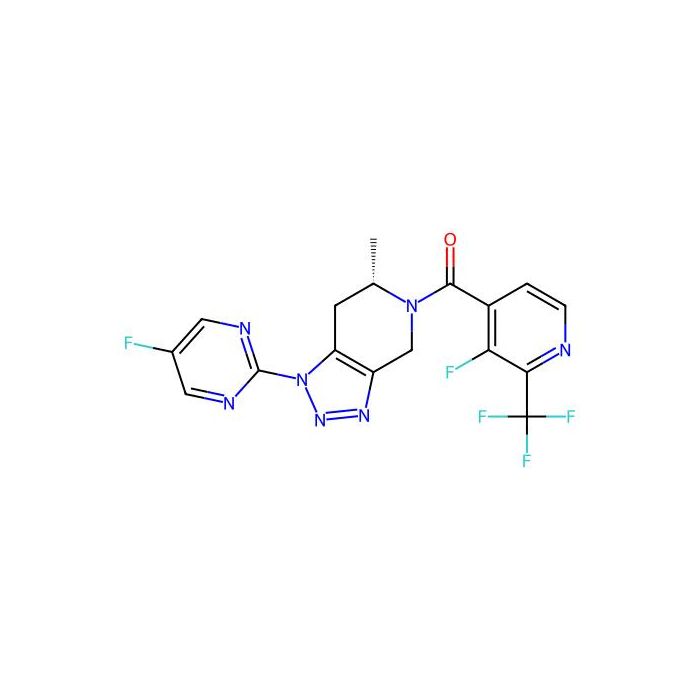
JNJ-55308942 is a high-affinity, selective, brain-penetrant P2X7 functional antagonist (hP2X7: IC 50 =10 nM, K i =7.1 nM; rP2X7: IC 50 =15 nM, K i =2.9 nM). JNJ-55308942 is orally bioavailable, binds to brain P2X7 and blocks IL-1β release from adult rodent brain.
In Vitro
JNJ-55308942 shows pK i s of 8.1and 8.5 for recombinant human and rat P2X7 channels, respectively. In human blood and in mouse blood and microglia, JNJ-55308942 attenuates IL-1β release in a potent and concentration-dependent manner. MCE has not independently confirmed the accuracy of these methods. They are for reference only.
In Vivo
JNJ-55308942 (30 mg/kg; p.o.) attenuates LPS-induced microglial activation in mice. In a model of Bacillus Calmette-Guerin (BCG)-induced depression, JNJ-55308942 dosed orally (30 mg/kg), reversed the BCG-induced deficits of sucrose preference and social interaction. After oral dosing, the compound exhibited both dose and concentration-dependent occupancy of rat brain P2X7 with an ED 50 of 0.07 mg/kg. The P2X7 antagonist (3 mg/kg, oral) blocked Bz-ATP-induced brain IL-1β release in conscious rats, demonstrating functional effects of target engagement in the brain. JNJ-55308942 (5 mg/kg; p.o.) shows the F, V ss , CL, C max and AUC 24h values are 81%, 1.7 L/kg, 3.7 mL min/kg, 1747 ng/mL, and 17549 (ng/mL) h, respectively . MCE has not independently confirmed the accuracy of these methods. They are for reference only. Animal Model: Sixteen male C57/BL6J miceDosage: 30 mg/kg Administration: P.o. (after an i.p. injection of LPS (0.8 mg/kg, i.p.)) Result: Significantly attenuated the effect of LPS on FSC, CD45 surface expression and CD11b surface expression. Animal Model: Rat Dosage: P.o. (Pharmacokinetic Analysis) Administration: 5 mg/kg Result: The F, V ss , CL, C max and AUC 24h were 81%, 1.7 L/kg, 3.7 mL min/kg, 1747 ng/mL, and 17549 (ng/mL) h, respectively.


 危险品化学品经营许可证(带存储)