

 C2316187
计算溶液所需的质量、体积或浓度。
为什么选择此级别
,适用于对基线干扰要求严格的色谱和分析工作流程。
储存与运输
2-8°C储存,避光。低温运输 。请查阅批次 COA 获取详细规格。
质量文档
SDS、COA、产品数据表及规格说明书均可下载。可通过批号查询获取批次 COA。
文献证明
在色谱分析、有机合成和交叉偶联反应领域已被 0 篇同行评审文献引用。
概述
一、产品属性
保质期: 36个月
标记酶: 碱性磷酸酶(AP)
反应时间: 较短(20-25°C下,可达20分钟)
批间差: 肉眼不可见
沸点:100℃
酸碱度范围: 9.5-9.9
密度(20℃):1.007 g/cm³
溶解性:易溶于水
外观:黄色液体
气味:无味
Light sensitive 对光线敏感
Heat sensitive 对热敏感
二、保存及运输条件:
1. 保持容器密闭
2. 储存温度2 °C - 8 °C,避光
3. 不与氧化剂一起储存
4. 在环境温度不超过 30 °C,运输时间应少于一周。
5. 在储存过程中,自发反应可能会产生细小的暗沉淀。这不会影响性能。
6.过期后,溶液仍可使用,但是产品活性可能会降低;
7. 从损坏的瓶子中污染或泄漏的基质溶液不可再使用,须销毁。
三、有效成分及生化机理
Tris -缓冲液(pH 9.7)缓冲体系含有以下有效成分:
5‑Brom‑4‑chlor‑3‑indolylphosphate (0.5 mM),缩写为 BCIP
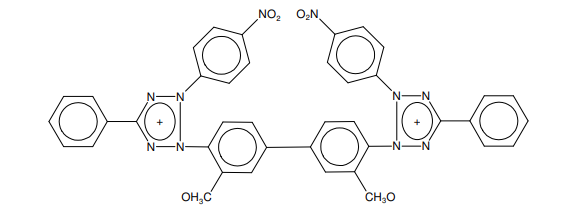
Nitrotetrazoliumblue (1.0 mM),缩写为 NBT
碱性磷酸酶水解BCIP的磷酸残基。
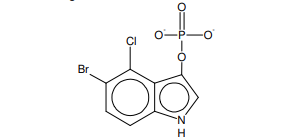
剩余吲哚基残基为还原剂。在与周围空气中的氧气接触时,它二聚形成一种浅蓝色的复合体。这种反应是不需要的。在黄色NBT的存在下,它被还原并在环结构打开后形成深紫色甲臜染料。
四、生物安全信息
根据法规(EC) No 1272/2008,本产品不属于危险类别;
五、主要优点
1. 由于高活性而快速形成沉淀
2. 非常低的背景有助于形成高度的对比
3. 暗紫色沉淀
4. 反应停止后无明显褪色
六、使用说明
关于分装的建议
•在没有灰尘和黑暗的房间工作。
•注意溶液不要接触到仪器金属部件(导致催化) ,硅管的封闭系统是有利的。
•仔细清洁所有的仪器和容器。
•不要用裸露的手触摸与溶液接触的仪器部分。戴无粉手套。
•立即关闭瓶子,尽量减少光线和灰尘的影响。
•使用由高密度聚乙烯或聚丙烯制成的不透光的瓶子。
七、使用的一般说明
只有熟悉免疫学方法基础的合格实验室工作人员才能使用该产品。
本产品适用于具有视觉解释的印迹反应体系。在规定的条件下,可进行密度测量。
根据系统的不同,在与结合物孵育后,在转移到底物溶液中之前充分清洗测试条。条带通过在轨道振荡器上移动而显影,直到出现明显的颜色(10‑20 分钟)。
大多数商业膜都可以清洗和干燥。在干燥的条带上可以看到最佳的颜色对比。干燥的条状可用于记录。 (注意:某些胶体会破坏有色沉淀物。)
1、Product attribute
Shelf life: 36 months
Marker enzyme: alkaline phosphatase (AP)
Reaction time:short (up to 20 minutes) at 20-25°C
Lot-to-lot variation:not visible by naked eye
Boiling point : 100℃
pH-Value (at 20 °C): 9.5-9.9
Density (20℃) : 1.007 g/cm³
Water solubility: easily soluble
Appearance: yellow liquid
Odour: odourless
Light sensitive
Heat sensitive
2、Requirements for storage rooms and vessels
1.Keep container tightly closed.
2.Keep cool. protected from light
3.Do not store together with: Oxidizing agent.
4. It is possible to transport the solution at ambient temperature, unless it does not exceed 30 °C. The transport should take less than one week.
5.During storage a fine dark precipitation may occur by spontaneous reaction. This does not affect the performance.
6.The solution still works even beyond the expiry date, but a lower activity has to be taken in account.
7. Contaminated or leaked out substrate solution from damaged bottles should not be used anymore and has to be destroyed.
3、Effective Components and Principle of Function
A Tris – buffer (pH 9.7) system contains the following effective components:
5-Brom-4-chlor-3-indolylphosphate (0.5 mM), abbreviated BCIP
Nitrotetrazoliumblue (1.0 mM), abbreviated NBT
Alkaline Phosphatase hydrolyses the phosphate residue from BCIP. The remaining Indoxyl residue is a reducing agent. In contact with oxygen from surrounding air it dimerises to a light-blue coloured complex. This reaction is not desired. In presence of the yellow NBT,this is reduced and forms a dark purple formazan dye after opening of the ring structure.
4、Biosafety information
This mixture is not classified as hazardous in accordance with Regulation (EC) No 1272/2008;
5、Advantage
1. Rapid precipitate formation due to high activity
2. Very low background contributes to a high contrast
3. Dark purple precipitates
4. No significant fading after reaction stop
6、Instruction for usage
For bottling consider the following instructions:
• Work in a dust free and darkened room.
• Pay attention that the solution has no contact with metal parts (leading to catalysis) of your instruments. Closed systems of silicon tubes are favoured.
• Clean all instruments and vessels very carefully.
• Never touch parts of the instruments that are in contact with the solution with the naked hand. Wear powder free gloves.
• Close the bottles immediately to minimize the influence of light and dust.
• Use bottles that are not permeable to light, made from HDPE or PP.
7、 General Instructions for the Use in Blotting Systems
Only qualified laboratory staff, who are familiar with the basics of immunological methods, are allowed to use this solution.
The substrate solution is intended for the use in blotting systems with visual interpretation. Under defined conditions a densitometric measurement is possible.
Depending on the system it is sufficient to wash the test strips after incubation with conjugate prior to transfer into the substrate solution. The strips are developed by movement on an orbital shaker until a distinct colour appears (10-20 minutes).
Most commercial membranes are allowed to be washed and dried. The best colour contrast is visible on dry strips. The dried strips may be stored for documentary purposes. (Pay attention: some kinds of glue destroy the coloured precipitate.)
规格
别名
膜基材
规格或纯度
Dark purple precipitates (AP)
英文名称
Membran Substrate
储存条件
2-8°C储存,避光
运输条件
低温运输
产品线
生物产品
名称和识别符
分子类型
小分子
技术文档
高级数据
产品属性
| pH | 9.5-9.9 |
|---|
化学和物理性质
溶解性
易溶于水
敏感性
对光线&热敏感
质检证书(CoA,COO,BSE/TSE 和分析图谱)
技术文档和文章
溶液计算器
常见问题
本产品应如何储存?
请于2–8 °C、避光条件下保存。本品对光敏感,请保存在原始的避光或棕色容器中。
本产品如何运输?
本产品采用湿冰冷藏运输。收货后请立即拆包,并按上述储存条件保存。
如何获取批次专用COA?
每个订单都会随附分析证书(COA),您也可以从账户订单历史中下载。如需订购前的COA,请联系您的客户代表,或使用PDP上的"申请COA"按钮——我们将提供代表性批次的COA。
产品仅提供给经过验证的企业、机构和合格的专业人员用于研发。不适用于人类、动物、诊断或治疗。
Copyright © 2023至今 上海阿拉丁生化科技股份有限公司 保留所有权利。


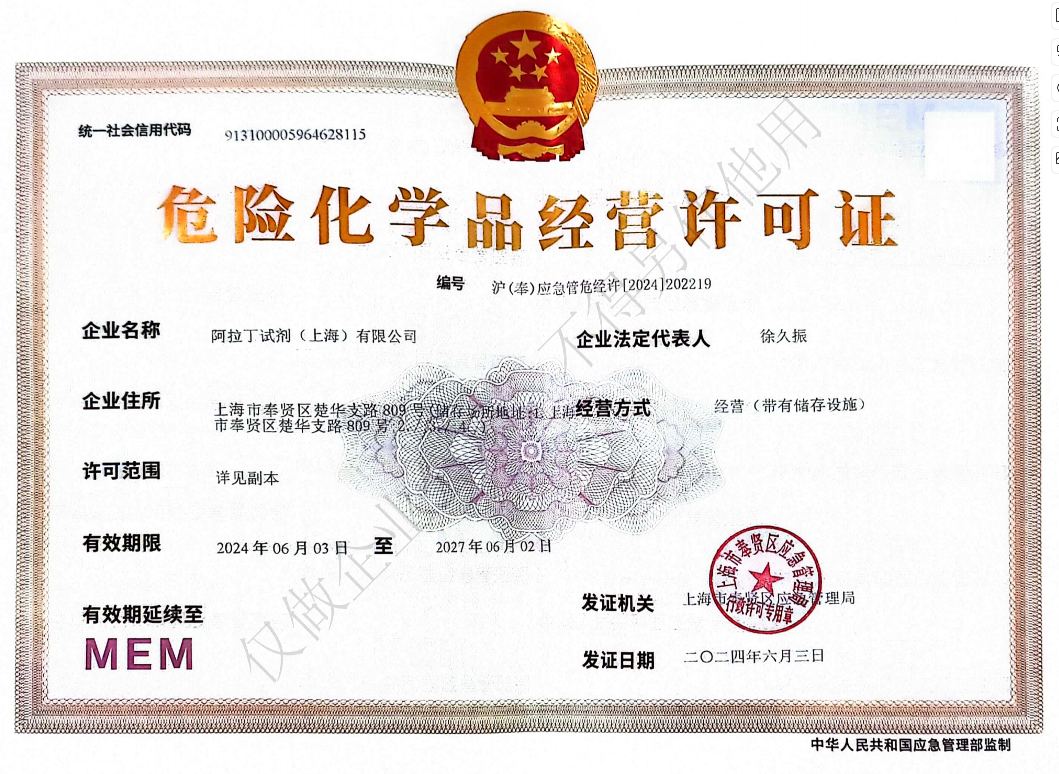 危险品化学品经营许可证(带存储)