
计算溶液所需的质量、体积或浓度。
为什么选择此级别
,适用于对基线干扰要求严格的色谱和分析工作流程。
储存与运输
室温。常规运输 。请查阅批次 COA 获取详细规格。
质量文档
SDS、COA、产品数据表及规格说明书均可下载。可通过批号查询获取批次 COA。
文献证明
在色谱分析、有机合成和交叉偶联反应领域已被 0 篇同行评审文献引用。
概述
|
产品简介
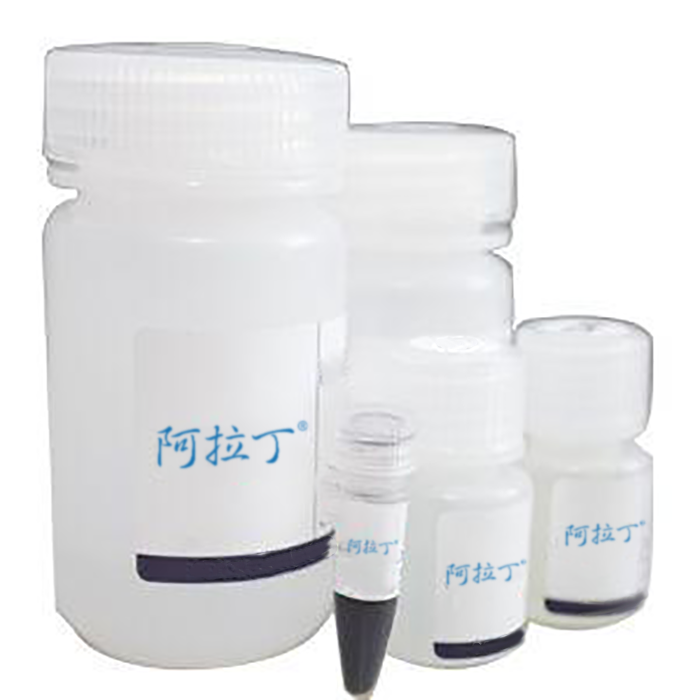
该产品提供了一种简单、快速、高效的血液DNA提取方法,适用于从0.3-1.0 mL 的抗凝血中提取DNA。在高盐存在时, DNA结合与硅基包被的磁珠表面。漂洗后,高 纯度的DNA被洗脱于Buffer EB或去离子水中。 DNA的得率与样品的类型,储存条件、 时间以及样品中白细胞的含量有很大关系,从1 mL血液中通常可以提取得到10-50 ug DNA。纯化得到的DNA纯度好(A260/280在1.7-1.9之间, A260/230大于2.0),完整度高 ,可用于二代测序、芯片检测和定量PCR等下游实验。
该试剂盒可与液体工作站和磁棒法磁珠自动提取系统匹配使用,简单、快速地进 行大规模的提取,大大降低了实验者的工作量和实验中的人为误差。
自备仪器、试剂
1 .手动单管操作:
1)恒温混匀仪
2)2/15 ml磁力架
3)异丙醇、无水乙醇
2 . 自动提取系统:
1)全自动核酸提取仪
2)恒温混匀仪
3)异丙醇、无水乙醇
实验前准备及重要注意事项
1 . 向25 mg Proteinase K中加入1.25 mL Proteinase K Storage Buffer使其溶解,之后 -20℃保存。配置好的Proteinase K溶液勿长时间室温放置,避免反复冻融,以免 影响其活性。
2 . Magbeads严禁冰冻、高速离心。冰冻和高速离心可能会对Magbeads造成不可逆 的损害。
3 . 第一次使用前应按照试剂瓶标签在Buffer GW1和Buffer GW2中加入无水乙醇并做 好标记。
4 . 样品应避免反复冻融或长时间室温放置,否则会导致DNA片段较小且提取得率低。 5 . 如Buffer ML中出现沉淀,请在56℃水浴锅中重新溶解,摇匀后即可使用。
6 . 实验过程中,磁珠在溶液中的充分混匀对提取的得率与纯度都有很大的影响。实验 过程中务必使磁珠与溶液充分混匀。不同厂家生产的恒温混匀仪效果有一定差异, 实验过程中请注意观察磁珠状态。如出现磁珠贴壁等未充分混匀的现象,请用移液 器吹吸混匀或调整震荡频率。
操作步骤(手动单管操作)
1 . 向2.0 ml的离心管中加入0.3-1 mL血液和1.0 mL的Buffer FG1,颠倒混匀10次后室 温静置10分钟。
2 .将离心管放入离心机中16,000×g离心1分钟,之后去除上清液,保留白细胞沉淀。
3 . 向离心管中加入1.0 mL Buffer FG1,涡旋震荡至沉淀块消失后将离心管放入离心机 中16,000×g离心1分钟。
4. 将离心管从离心机中取出,去除溶液后将离心管倒扣于干净的吸水纸上静置1分 钟。期间避免沉淀块从管底脱落。
5. 向离心管中加入20μL Proteinase K和200μL Buffer WL,涡旋震荡10秒钟后将离心 管放于56℃、 1600 rpm的恒温混匀仪上震荡裂解20分钟或放于56℃水浴锅中孵育 20分钟直至沉淀块消失(孵育期间,每个5分钟涡旋震荡10秒钟)。
6. 将离心管从水浴锅中取出,加入200μL Buffer ML后涡旋混匀10秒钟。之后室温静 置5分钟。
7. 向离心管中加入320μL充分混匀的异丙醇(300μL)与Magbeads(20μL)混合 物,涡旋震荡5秒钟后立即放于25℃、 1600 rpm的恒温混合仪上震荡混匀2分钟或 连续颠倒混匀5分钟。
8. 将离心管放于磁力架上静置1分钟,待Magbeads吸附于离心管侧壁后彻底弃去溶 液(保持离心管固定于磁力架上)。
9. 将离心管从磁力架上取下,加入750μL Buffer GW1(加入前请检查是否已加入无 水乙醇)后涡旋点震1分钟或涡旋点震5秒钟后放于25℃、 1600 rpm的恒温混合仪 上震荡混匀2分钟。之后将离心管放于磁力架上静置1分钟,待Magbeads吸附于离 心管侧壁后轻轻颠倒磁力架将离心管盖上的杂质洗落后充分弃去溶液(保持离心管 固定于磁力架上)。
10. 将离心管从磁力架上取下,加入750μL Buffer GW2(加入前请检查是否已加入无 水乙醇)后涡旋点震1分钟或涡旋点震5秒钟后放于25℃、 1600 rpm的恒温混合仪 上震荡混匀2分钟。之后将离心管放于磁力架上静置1分钟,待Magbeads吸附于 离心管侧壁后轻轻颠倒磁力架将离心管盖上的杂质洗落后充分弃去溶液(保持离 心管固定于磁力架上)。
11. 选择步骤:
1)保持离心管固定于磁力架上,用移液器取出离心管管底和管盖上的溶液,之后 室温放置5-10分钟使乙醇充分挥发干净。如离心管侧壁上有液珠,可向离心管中加 入750μL无水乙醇。盖盖后颠倒离心管,之后充分弃去溶液。
2)保持离心管固定于磁力架上,向离心管中加入750μL Buffer MW3,待悬起的磁 珠重新吸附于离心管侧壁后立即充分弃去溶液。
12.将离心管从磁力架上取下,加入100-200μL Buffer EB。涡旋震荡使磁珠充分悬浮于 洗脱液中后将其放于56℃、 1600 rpm的恒温混合仪上震荡洗脱10分钟,或将离心 管在56℃水浴锅中孵育10分钟,期间每隔3分钟涡旋震荡10秒钟。
13.将离心管放于磁力架上静置2分钟,待Magbeads充分吸附于离心管侧壁后用移液器 将溶液转移至新的离心管中-20℃保存备用。
操作步骤(全自动核酸提取仪与磁珠法血液DNA小量提取试剂盒匹配)
1 . 向2.0 mL的离心管中加入0.3-1 mL血液和1.0 mL的Buffer FG1,颠倒混匀10次后室 温静置10分钟。
2 .将离心管放入离心机中16,000×g离心1分钟,之后去除上清液,保留白细胞沉淀。
3 . 向离心管中加入1.0 mL Buffer FG1,涡旋震荡至沉淀块消失后将离心管放入离心机 中16,000×g离心1分钟。
4 .将离心管从离心机中取出,去除溶液后将离心管倒扣于干净的吸水纸上静置1分 钟。 期间避免沉淀块从管底脱落。
5 . 向离心管中加入20μL Proteinase K和200μL Buffer WL,涡旋震荡10秒钟后将离心 管放于56℃、 16000 rpm的恒温混匀仪上震荡裂解20分钟或放于56℃水浴锅中孵育 20分钟直至沉淀块消失(孵育期间,每个5分钟涡旋震荡10秒钟)。
6 .将离心管从水浴锅中取出,加入200μL Buffer ML后涡旋混匀10秒钟。之后室温静 置5分钟,形成Lysate。
7 . 按下表向96 DW深孔板中加入相应试剂。
|
8 .将加入试剂的96 DW深孔板放入仪器中,之后将磁棒套固定在磁棒套架上。
9 . 运行CW2517-Cowin Blood 200程序,约23分钟后程序运行结束,取出磁套和深孔板。
注意:建议先取出深孔板,再取出磁棒套。
10.将深孔板6&12列中的洗脱产物转移至1.5mL离心管中低温保存。
|
Product Introduction
This product provides a simple, fast, and efficient method for extracting blood DNA, suitable for extracting DNA from 0.3-1.0 mL of anticoagulant. In the presence of high salt, DNA binds to the surface of silicon coated magnetic beads. After rinsing, high-purity DNA is eluted in Buffer EB or deionized water. The yield of DNA is closely related to the type of sample, storage conditions, time, and the content of white blood cells in the sample. Typically, 10-50 μ g of DNA can be extracted from 1 mL of blood. The purified DNA has good purity (A260/280 between 1.7-1.9, A260/230 greater than 2.0) and high integrity, and can be used for downstream experiments such as second-generation sequencing, chip detection, and quantitative PCR.
This reagent kit can be matched with liquid workstations and magnetic bead automatic extraction systems, allowing for simple and rapid large-scale extraction, greatly reducing the workload of experimenters and human errors in experiments.
Self provided instruments and reagents
1. Manual single tube operation:
1) Constant temperature mixer
2) 2/15 ml magnetic frame
3) Isopropanol and anhydrous ethanol
2. Automatic extraction system:
1) Fully automatic nucleic acid extractor
2) Constant temperature mixer
3) Isopropanol and anhydrous ethanol
Preparation and important precautions before the experiment
1. Add 1.25 mL Protein K Storage Buffer to 25 mg Protein K to dissolve it, then store at -20 ℃. The prepared Protein K solution should not be left at room temperature for a long time to avoid repeated freeze-thaw cycles, which may affect its activity.
2.Magheads are strictly prohibited from freezing and high-speed centrifugation. Freezing and high-speed centrifugation may cause irreversible damage to Magheads.
3.Before the first use, anhydrous ethanol should be added to Buffer GW1 and Buffer GW2 according to the label of the reagent bottle and labeled accordingly.
4. The sample should avoid repeated freeze-thaw or long-term room temperature storage, otherwise it may result in small DNA fragments and low extraction rate.
5. If sediment appears in the Buffer ML, please dissolve it again in a 56 ℃ water bath, shake well, and then use it.
6.During the experiment, the thorough mixing of magnetic beads in the solution has a significant impact on the extraction yield and purity. During the experiment, it is essential to thoroughly mix the magnetic beads with the solution. There are certain differences in the effectiveness of constant temperature mixers produced by different manufacturers. Please pay attention to the state of the magnetic beads during the experiment. If there is insufficient mixing such as magnetic beads sticking to the wall, please use a pipette to blow and suck the mixture or adjust the oscillation frequency.
Operation steps (manual single tube operation)
1. Add 0.3-1 mL of blood and 1.0 mL of Buffer FG1 to a 2.0 ml centrifuge tube, invert and mix 10 times, then let it stand at room temperature for 10 minutes.
2. Put the centrifuge tube into a centrifuge with a volume of 16000 × g and centrifuge for 1 minute, then remove the supernatant and retain the white blood cell precipitate.
3. Add 1.0 mL of Buffer FG1 to the centrifuge tube, vortex until the precipitate blocks disappear, and then place the centrifuge tube in a 16000 × g centrifuge for 1 minute.
4. Remove the centrifuge tube from the centrifuge, remove the solution, and then invert the centrifuge tube onto clean absorbent paper and let it stand for 1 minute. During this period, avoid settling blocks falling off the bottom of the pipe.
5. Add 20 to the centrifuge tube μ L Protein K and 200 μ L Buffer WL, vortex oscillate for 10 seconds, then place the centrifuge tube on a constant temperature mixer at 56 ℃ and 1600 rpm for shaking and cracking for 20 minutes, or incubate in a 56 ℃ water bath for 20 minutes until the precipitate blocks disappear (vortex oscillate for 10 seconds every 5 minutes during incubation).
6. Remove the centrifuge tube from the water bath and add 200 μ Mix the L Buffer ML vortex for 10 seconds. Afterwards, let it stand at room temperature for 5 minutes.
7. Add 320 to the centrifuge tube μ L Fully mixed isopropanol (300 μ L) Compared to Magheads (20 μ L) Mix the mixture, vortex for 5 seconds, and immediately place it on a constant temperature mixer at 25 ℃ and 1600 rpm to shake and mix for 2 minutes or continuously invert and mix for 5 minutes.
8. Place the centrifuge tube on a magnetic stand and let it stand for 1 minute. After Magheads are adsorbed on the side wall of the centrifuge tube, completely discard the solution (keep the centrifuge tube fixed on the magnetic stand).
9. Remove the centrifuge tube from the magnetic frame and add 750 μ L Buffer GW1 (please check if anhydrous ethanol has been added before adding), vortex point shake for 1 minute or vortex point shake for 5 seconds, then place it on a constant temperature mixer at 25 ℃ and 1600 rpm, shake and mix for 2 minutes. Afterwards, place the centrifuge tube on a magnetic frame and let it stand for 1 minute. After Magheads are adsorbed on the side wall of the centrifuge tube, gently invert the magnetic frame to wash the impurities on the centrifuge tube cover and completely discard the solution (keep the centrifuge tube fixed on the magnetic frame).
10. Remove the centrifuge tube from the magnetic frame and add 750 μ L Buffer GW2 (please check if anhydrous ethanol has been added before adding), vortex point shake for 1 minute or vortex point shake for 5 seconds, then place it on a constant temperature mixer at 25 ℃ and 1600 rpm, shake and mix for 2 minutes. Afterwards, place the centrifuge tube on a magnetic frame and let it stand for 1 minute. After Magheads are adsorbed on the side wall of the centrifuge tube, gently invert the magnetic frame to wash the impurities on the centrifuge tube cover and completely discard the solution (keep the centrifuge tube fixed on the magnetic frame).
11. Selection steps:
1) Keep the centrifuge tube fixed on the magnetic frame, use a pipette to remove the solution from the bottom and cover of the centrifuge tube, and then leave it at room temperature for 5-10 minutes to allow the ethanol to evaporate completely. If there are liquid droplets on the side wall of the centrifuge tube, 750 can be added to the centrifuge tube μ L anhydrous ethanol. After covering, invert the centrifuge tube and discard the solution thoroughly.
2) Keep the centrifuge tube fixed on the magnetic frame and add 750 to the centrifuge tube μ L Buffer MW3, after the suspended magnetic beads reattach to the side wall of the centrifuge tube, immediately discard the solution thoroughly.
12. Remove the centrifuge tube from the magnetic frame and add 100-200 μ L Buffer EB. Vortex oscillation causes the magnetic beads to fully suspend in the eluent, and then place them on a constant temperature mixer at 56 ℃ and 1600 rpm to shake and wash for 10 minutes, or incubate the centrifuge tube in a 56 ℃ water bath for 10 minutes, with vortex oscillation every 3 minutes for 10 seconds.
13. Place the centrifuge tube on a magnetic stand and let it stand for 2 minutes. After Magheads are fully adsorbed on the side wall of the centrifuge tube, use a pipette to transfer the solution to a new centrifuge tube and store it at -20 ℃ for later use.
Operation steps (matching the fully automatic nucleic acid extractor with the magnetic bead method blood DNA small extraction reagent kit)
1. Add 0.3-1 mL of blood and 1.0 mL of Buffer FG1 to a 2.0 mL centrifuge tube, invert and mix 10 times, then let it stand at room temperature for 10 minutes.
2. Put the centrifuge tube into a centrifuge with a volume of 16000 × g and centrifuge for 1 minute, then remove the supernatant and retain the white blood cell precipitate.
3. Add 1.0 mL of Buffer FG1 to the centrifuge tube, vortex until the precipitate blocks disappear, and then place the centrifuge tube in a 16000 × g centrifuge for 1 minute.
4. Remove the centrifuge tube from the centrifuge, remove the solution, and then invert the centrifuge tube onto clean absorbent paper and let it stand for 1 minute. During this period, avoid settling blocks falling off the bottom of the pipe.
5. Add 20 to the centrifuge tube μ L Protein K and 200 μ L Buffer WL, vortex oscillate for 10 seconds, then place the centrifuge tube on a constant temperature mixer at 56 ℃ and 16000 rpm for shaking and cracking for 20 minutes, or incubate in a 56 ℃ water bath for 20 minutes until the precipitate blocks disappear (vortex oscillate for 10 seconds every 5 minutes during incubation).
6. Remove the centrifuge tube from the water bath and add 200 μ Mix the L Buffer ML vortex for 10 seconds. Afterwards, let it stand at room temperature for 5 minutes to form Lysate.
7. Add the corresponding reagents to the 96 DW deep well plate according to the table below.
|
8. Place the 96 DW deep well plate containing the reagent into the instrument, and then fix the magnetic rod sleeve onto the magnetic rod sleeve holder.
9. Run the CW2517 Cooling Blood 200 program, and after about 23 minutes, the program ends. Remove the magnetic sleeve and deep hole plate.
Attention: It is recommended to remove the deep hole plate first before removing the magnetic rod sleeve.
10. Transfer the elution products from columns 6 and 12 of the deep well plate to a 1.5mL centrifuge tube for low-temperature storage.
规格
规格或纯度
0.3-1.0 ml
英文名称
Magbead Blood DNA Mini Kit
储存与运输
储存条件
室温
运输条件
常规运输
技术文档
高级数据
质检证书(CoA,COO,BSE/TSE 和分析图谱)
C of A & Other Certificates(BSE/TSE, COO):
输入批号以搜索分析图谱:
溶液计算器
常见问题
本产品应如何储存?
请于室温条件下保存。
本产品如何运输?
本产品按常温标准条件运输,无需温控包装。
如何获取批次专用COA?
每个订单都会随附分析证书(COA),您也可以从账户订单历史中下载。如需订购前的COA,请联系您的客户代表,或使用PDP上的"申请COA"按钮——我们将提供代表性批次的COA。
试剂盒包含哪些组分?
完整组分列表见PDP和试剂盒说明书。个别组分的替换品可单独订购——请联系您的客户代表。
产品仅提供给经过验证的企业、机构和合格的专业人员用于研发。不适用于人类、动物、诊断或治疗。
Copyright © 2023至今 上海阿拉丁生化科技股份有限公司 保留所有权利。


 危险品化学品经营许可证(带存储)