
计算溶液所需的质量、体积或浓度。
为什么选择此级别
,适用于对基线干扰要求严格的色谱和分析工作流程。
储存与运输
室温。 。请查阅批次 COA 获取详细规格。
质量文档
SDS、COA、产品数据表及规格说明书均可下载。可通过批号查询获取批次 COA。
文献证明
在色谱分析、有机合成和交叉偶联反应领域已被 0 篇同行评审文献引用。
概述
Information
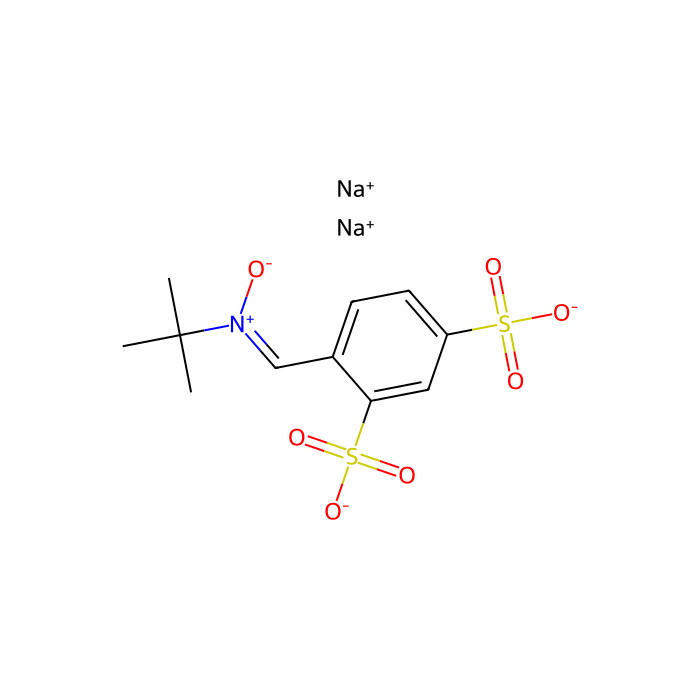
NXY-059 (Cerovive, Disufenton Sodium) is a novel nitrone, shows efficacious neuroprotective effects. Phase 3.
In vitro
NXY-059 is more soluble than the spin trapping agent α-phenyl-N-tert-butyl nitrone (PBN). In an in vitro blood-brain barrier (BBB) model, 250 mM of NXY-059 administered at the onset or up to 4 h after oxygen glucose deprivation (OGD) produces a significant reduction in the increased BBB permeability caused by OGD. Furthermore, OGD produces a huge influx of tissue plasminogen activator across the BBB, which is substantially reduced by NXY-059. [2]
In vivo
NXY-059 reduces infarct volume in rats subjected to 2 hours of middle cerebral artery occlusion in a dose-dependent manner. At equimolar doses (3.0 mg/kg for NXY-059 and 1.4 mg/kg for PBN), NXY-059 is more efficacious than PBN. Similar results are obtained when a recovery period of 7 days is allowed. The window of therapeutic opportunity for NXY-059 is 3 to 6 hours after the start of recirculation. NXY-059, a free radical-trapping agent, has a substantial protective effect, lessening the disability caused by an experimentally induced stroke in a primate species. NXY-059 treatment reduces the overall amount of brain damage by >50% of saline-treatment values, with similar levels of protection afforded to both white and gray matter. Treatment with NXY-059 (50 mg/kg subcutaneous plus 8.8 mg/kg/h for 3 days subcutaneous delivered via implanted osmotic pumps) significantly decreases neurological impairment following intracerebral hemorrhage in rat, and reduces the neutrophil infiltrate observed 48 hours post-hemorrhage in the vicinity of the hematoma, and the number of TUNEL-positive cells 48 hours post-hemorrhage at the hematoma margin.
规格
别名
NXY-059(地舒芬顿钠)
英文别名
Cerovive | Disufenton Sodium
英文名称
NXY-059 (Disufenton sodium)
储存条件
室温
名称和识别符
分子类型
小分子
Smiles
[Na+].[Na+].CC(C)(C)/[N+]([O-])=C/C1=CC=C(C=C1[S]([O-])(=O)=O)[S]([O-])(=O)=O
技术文档
高级数据
质检证书(CoA,COO,BSE/TSE 和分析图谱)
C of A & Other Certificates(BSE/TSE, COO):
输入批号以搜索分析图谱:
溶液计算器
产品仅提供给经过验证的企业、机构和合格的专业人员用于研发。不适用于人类、动物、诊断或治疗。
Copyright © 2023至今 上海阿拉丁生化科技股份有限公司 保留所有权利。


 危险品化学品经营许可证(带存储)