Triticum vulgaris lectin or Wheat germ agglutinin (WGA) is isolated from Triticum vulgaris (Wheat germ) and purified by affinity chromatography. The lectin has two subunits and a molecular weight of 36 kDa. WGA selectively binds to N-Acetyl glucosamine (GlcNAc) and to N-acetylneuraminic acid (sialic acid) residues of glycoproteins and glycolipids, which are often found on cell membranes.
WGA is commonly used to label glycoproteins for imaging of the plasma membrane in live or fixed cells, for staining of tissue sections, or for western blotting. WGA can be used as a gram stain to fluorescently label gram bacteria but not gram- bacteria. WGA also binds to the bud scars on budding yeast such as Saccharomyces cerevisiae.
Biotinylated WGA has an appropriate number of biotins bound to provide the optimum staining characteristics for this lectin. This conjugate is supplied essentially free of unconjugated biotins. This biotinylated lectin is an ideal intermediate for examining glycoconjugates using the Biotin-Streptavidin System.
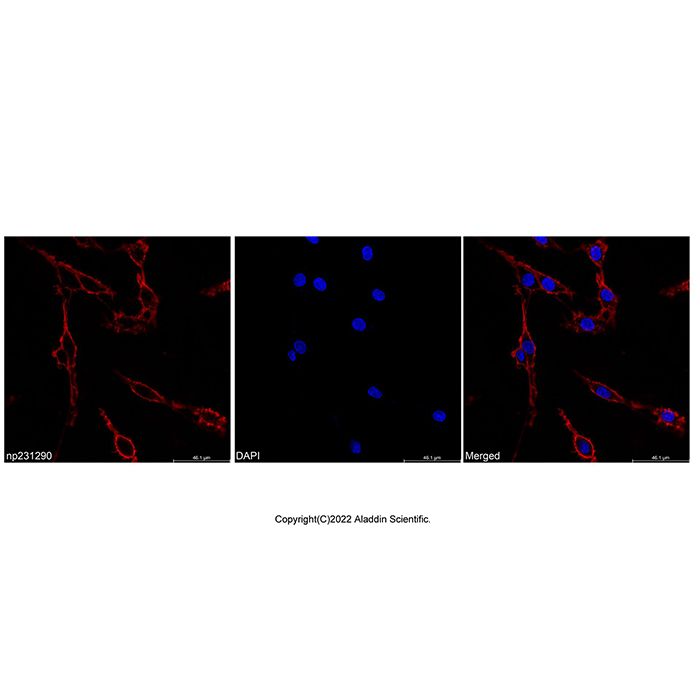
HeLa cells were fixed with 4% Paraformaldehyde Fix Solution (P395744) for 15 minutes, and blocked with 5% BSA for 1 hour at room temperature. Cells were stained with Wheat Germ Agglutinin (WGA), Biotin conjugate (np231290) (red) at 1/200 dilution in blocking buffer overnight at 4°C and then incubated with Recombinant Streptavidin Protein (APC) (rp169048) at a dilution of 1/1000 for 1 hour at room temperature in the dark. Cells were counterstained with DAPI (blue). Images were taken on the confocal laser scanning microscope.

 ZJ26F1039904


 危险品化学品经营许可证(带存储)