
 A2613011
计算溶液所需的质量、体积或浓度。
为什么选择此级别
,适用于对基线干扰要求严格的色谱和分析工作流程。
储存与运输
室温。常规运输 。请查阅批次 COA 获取详细规格。
质量文档
SDS、COA、产品数据表及规格说明书均可下载。可通过批号查询获取批次 COA。
文献证明
在色谱分析、有机合成和交叉偶联反应领域已被 0 篇同行评审文献引用。
概述
主要用途
各种洗涤剂原料、纸用药剂(脱墨剂、沥青控制剂)、颜料分散剂、水处理剂(水垢分散剂)、磨料分散剂、电镀添加剂。
产品详情
聚乙烯亚胺乙氧基化物是一种非离子型水溶性聚合物,具有以下优点,用途和使用领域广泛。
- 向各种粒子赋予分散性
- 阴离子表面活性剂的提升效果(降CMC,促吸附)
- 在金属表面的配位吸附能力
- 在各种有机溶剂中具有高溶解性
- 与各种表面活性剂的混合稳定性高
- 支链结构对粘度影响小

用途示例

<向粒子赋予分散性>
聚乙烯亚胺乙氧基化物
( PN-100 )具有向各种粒子赋予分散性的效果。
作为例子,我们总结了泥浆和滑石(硅酸镁)的分散性评估结果。

评估方法
1.通过添加定量天然泥、表面活性剂和聚合物制成泥水后搅拌。
2.将泥水倒入试管,静置一定时间。
3.然后测量吸光度。
评估条件
表面活性剂量0或1250ppm,聚合物量40ppm,硬度15dH,温度25℃
表面活性剂:直链烷基苯磺酸钠

评估方法
1.对定量颗粒和聚合物进行混合并搅拌。
2.将试验溶液倒入试管,将其摇匀分散,静置一定时间。
3.然后测量吸光度。
评估条件
颗粒量500ppm,聚合物量10ppm,Ca浓度200ppm,温度25℃
<阴离子表面活性剂的提升效果>
只要在阴离子表面活性剂溶液中添加少量聚乙烯亚胺乙氧基化物(PN-100),就可以改善表面活性剂的界面性质。
这样可以减少表面活性剂的使用量并提高其性能。

评估方法
通过平板法测量各表面活性剂浓度下的表面张力。
评估条件
表面活性剂量 0.1 – 10 mmol/dm³,聚合物量 8.3ppm,温度 25℃
通过添加聚乙烯亚胺乙氧基化物,可以降低表面活性剂的临界胶束浓度。由于表面活性剂的各种性能(清洁、渗透等)在临界胶束浓度上下有很大差别,预计可以减少表面活性剂的使用量。
添加聚乙烯亚胺乙氧基化物后,吉布斯吸附能(ΔG abs)下降,由于可以看出,聚乙烯亚胺乙氧基化物促进了表面活性剂对疏水表面的吸附。
<用于洗衣粉时的防止再污染能力>
聚乙烯亚胺乙氧基化物的最终用途之一就是洗衣粉。
在该用途中,大大改善了防止泥渍再污染(洗涤过程中已去除的污渍又重新附着的现象)的能力。

评估方法
放入天然泥污布和白布(用于判断再污染的布)进行清洗。
然后用色差计评估白布的污染程度。
共实施3次评估。
白布可反复使用。
评估条件
评估设备targot-o-meter,表面活性剂量250ppm,聚合物量8.3ppm,硬度15dH,温度25℃,浴比30
*LAS: 直链烷基苯磺酸钠
*PAE: 脂肪醇聚氧乙烯醚
从防止泥渍再污染的角度看,也可以大幅度减少表面活性剂的使用量。在本试验中我们发现,通过添加PN-100,即使减少一半表面活性剂,也具备同等性能。

评估方法
放入天然泥和白布(用于判断再污染的布)进行清洗。
然后用色差计评估白布的污染程度。
共实施3次评估。
白布可反复使用。
评估条件
评估设备targot-o-meter,表面活性剂量125或250ppm(LAS:PAE=1:1),聚合物量8.3ppm,硬度15dH,温度25℃,浴比30
*LAS: 直链烷基苯磺酸钠
*PAE: 脂肪醇聚氧乙烯醚
Main Applications
Raw material for various detergents, Papermaking agents (deinking, pitch control), Pigment dispersant, Water treatment agents (scale inhibitor), Abrasive grains dispersant, Plating additives.
Product Details
Polyethyleneimine ethoxylate is a non-ionic and water-soluble polymer, with various features as listed below. It has a wide range of applications and is suitable for use in various fields.
- High dispersibility of various types of particles
- Booster for anionic surfactants (lowering CMC, promoting adsorption)
- Coordination adsorption capability to metal surfaces
- High solubility in many kinds of solvents
- High compatibility with various types of surfactants
- Low effect on viscosity due to its highly-branched structure
Examples of Applications

<Dispersibility of Particles>
Polyethyleneimine Ethoxylate(
PN-100 ) has high dispersibility of various types of particles.
For example, below are charts showing the dispersibility of natural clay and talc (magnesium silicate).
Evaluation Method
Clay water containing a predetermined amount of natural clay, surfactants and polymers is prepared and stirred.
The clay water is transferred to a test tube, and left to stand for the prescribed time. Then the absorbance is measured.
Evaluation Method
Surfactant (LAS): 0 or 1,250 ppm, Polymer: 40 ppm, Water hardness: 15 dH, Temperature: 25°C
Evaluation Method
Talc particle water containing a predetermined amount of talc and polymers is prepared and stirred.
The talc water is transferred to a test tube and shaken for even dispersion, and left to stand for a predetermined time.
Then the absorbance is measured.
Evaluation Method
Talc: 500 ppm, Polymer: 10 ppm, Ca concentration: 200 ppm, Temperature: 25°C
<Booster for Anionic Surfactants>
Adding a small amount of Polyethyleneimine Ethoxylate to anionic surfactant solution can improve the interfacial properties of anionic surfactants. This effect helps to reduce the usage amount of surfactants and improve their performance.

Evaluation Method
The Wilhelmy method is used to measure the surface tension at various surfactant concentrations.
Evaluation Conditions
Surfactant: 0.1 – 10 mmol/dm³, Polymer: 8.3 ppm, Temperature: 25°C
Adding PN-100 to surfactant solution can reduce the critical micelle concentration (CMC).
PN-100 can potentially reduce the amount of surfactant used; this is because various functions (cleaning, penetration, etc.) of the surfactant substantially change around the CMC.
Adding PN-100 to surfactant solution reduces the adsorption Gibbs energy (ΔG abs). This suggests that PN-100 promotes the adsorption of surfactants to hydrophobic surfaces.
<Anti-redeposition Ability in Laundry Detergents>
The final application of PN-100 we will introduce here is its usage as a raw material in laundry detergents.
PN-100 can substantially improve the anti-redeposition ability in laundry detergents, by preventing the redeposition of dirt (phenomenon when dirt that is washed off during a wash cycle then reattaches to the clothing).
Evaluation Method
A cloth soiled with natural clay and a white cloth (control cloth for redeposition) are put into a bathtub and cleaned together.
After the cleaning is complete, a color difference meter is used to evaluate the degree of soiling of the white cloth.
The evaluation is done a total of three times.
The white cloth is used repeatedly.
Evaluation Conditions
Equipment: Targotometer, Surfactant: 250 ppm, Polymer: 8.3 ppm, Water hardness: 15 dH, Temperature: 25°C, Bath ratio: 30
*LAS: Linear alkylbenzene sulfonate
*PAE: Polyoxyethylene alkyl ether
In terms of anti-redeposition ability as well, PN-100 can substantially reduce the amount of surfactant used in laundry detergents.
This experiment shows that adding PN-100 can halve the amount of surfactant used in laundry detergents with the same performance.
Evaluation Method
Natural clay and a white cloth (control cloth for redeposition) are put into a bathtub and cleaned together.
After the cleaning is complete, a color difference meter is used to evaluate the degree of soiling of the white cloth.
The evaluation is done a total of three times.
The white cloth is used repeatedly.
Evaluation Conditions
Equipment: Targotometer, Surfactant: 125 or 250 ppm (LAS:PAE = 1:1), Polymer: 8.3 ppm, Water hardness: 15 dH, Temperature: 25°C, Bath ratio: 30
*LAS: Linear alkylbenzene sulfonate
*PAE: Polyoxyethylene alkyl ether
规格
别名
PN-100
英文别名
PN-100
规格或纯度
M.W.13000,80%(solids)
英文名称
Polyethyleneimine Ethoxylate
储存条件
室温
运输条件
常规运输
法律信息
PN-100 is a registered trademark of Japanese Nippon Shokubai.
名称和识别符
分子类型
未知
IUPAC Name
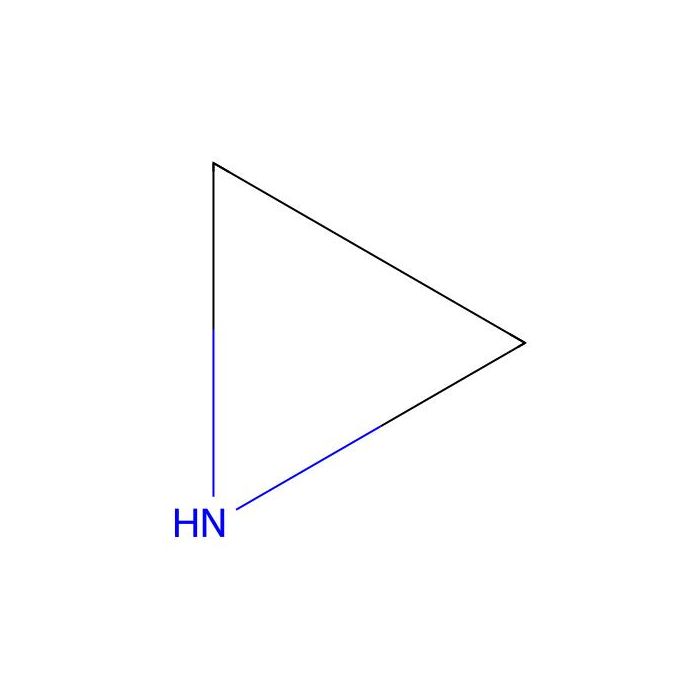
aziridine
INCHI
1S/C2H5N/c1-2-3-1/h3H,1-2H2
InChi Key
NOWKCMXCCJGMRR-UHFFFAOYSA-N
Smiles
C1CN1
Reaxy-Rn
102380
Reaxys-RN link address
https://www.reaxys.com/reaxys/secured/hopinto.do?context=S&query=IDE.XRN=102380&ln=
技术文档
高级数据
系统学分类
分类树(Taxonomy Tree)
| 界(kingdom) | 有机化合物 |
|---|---|
| 超类(Superclass) | 有机杂环化合物 |
| 类(Class) | 氮丙啶类 |
| 亚类(Subclass) | 暂无 |
| 中间层级节点(Intermediate Tree Nodes) | 暂无 |
| 直接上位类(Direct Parent) | 氮丙啶类 |
| 其他上位类(Alternative Parents) | 二烷基胺 氮杂环化合物 有机光子化合物 碳氢化合物衍生物 |
| 分子骨架(Molecular Framework) | 脂肪族杂单环化合物 |
| 取代基(Substituents) | 脂肪族杂单环化合物 - 氨基酸 - 氮杂环 - 吡啶烷 - 烃衍生物 - 有机硝基化合物 - 有机氮化合物 - 有机氮化合物 - 二级脂肪胺 - 醛基 |
| 描述(Description) | 该化合物属于吡啶类有机化合物。这类化合物含有饱和三元杂环结构,包含一个氨基和两个亚甲基。 |
| 外部描述符(External Descriptors) | azacycloalkane - saturated organic heteromonocyclic parent - aziridines |
三维结构
交互式化学结构模型
安全和危险性(GHS)
象形图
信号词
警告
危险声明
H315: 引起皮肤刺激
H319: 引起严重眼睛刺激
H335: 可能引起呼吸道刺激
预防措施声明
P280: 戴防护手套/穿防护服/戴防护眼罩/戴防护面具。
P305+P351+P338: 如进入眼睛:用水小心冲洗几分钟。如戴隐形眼镜并可方便地取出,取出隐形眼镜。继续冲洗。
P405: 密闭存放
P501: 将内容物/容器处理到。。。
质检证书(CoA,COO,BSE/TSE 和分析图谱)
溶液计算器
产品仅提供给经过验证的企业、机构和合格的专业人员用于研发。不适用于人类、动物、诊断或治疗。
Copyright © 2023至今 上海阿拉丁生化科技股份有限公司 保留所有权利。


 危险品化学品经营许可证(带存储)