
 I2130082
计算溶液所需的质量、体积或浓度。
为什么选择此级别
,适用于对基线干扰要求严格的色谱和分析工作流程。
储存与运输
2-8°C储存。低温运输 。请查阅批次 COA 获取详细规格。
质量文档
SDS、COA、产品数据表及规格说明书均可下载。可通过批号查询获取批次 COA。
文献证明
在色谱分析、有机合成和交叉偶联反应领域已被 3 篇同行评审文献引用。
概述
葡聚糖凝胶是一种珠状的凝胶,含有大量的羟基,很容易在水中和电解质溶液中溶胀。亲水基质使其非特异性吸附最小化,并在生物分子分离期间得到较高的回收率。G 型的葡聚糖凝胶有各种不同的交联度,因此它们的溶胀度和分级分离范围也有所不同。葡聚糖凝胶的溶胀度基本上不因盐和洗涤剂的存在而受影响。
添加使用说明:以干粉形式存在,使用前必须溶胀,在膨胀期间应避免过度搅拌,因为它可能破坏填料,不要使用磁力搅拌器。
一、 填料的准备
(1)将填料在过量去离子水或缓冲液中,室温条件下膨胀 24 小时,或用热水膨胀 1 小时(不要水浴!)。
洗脱缓冲液不应含有高粘度的试剂。溶胀过程中,如果上层有漂浮物,请去除。
(2)将溶胀好的填料,所有的缓冲液等材料平衡至实验操作温度,对所有的缓冲液进行脱气处理。
二 装柱
(1)检查层析柱所有部件,特别是过滤网,密封圈,螺旋塞是否紧密,玻璃管是否干净和完整。
(2)将柱内及柱子底端用水或缓冲液润湿并保持一小段液位,务必使底端无气泡。
(3)用玻璃棒引导匀浆沿着柱内壁一次性倒入柱内,注意勿使产生气泡。打开柱子出液口,使凝胶
在柱内自由沉降,连结好柱子顶端柱头。
(4)打开蠕动泵,让缓冲液用使用时流速的 1.33 倍的流速流过,使柱床稳定(注意压力不要超过填
料最大耐压)。
三 平衡
上样前平衡层析柱至少 5-10 个柱体积直到记录仪基线变得平稳为止(流出液的 pH 值和电导值等于
上柱的 Buffer 的 pH 值和电导值)。
四 上样
样品一定要离心或过滤后(0.45um 滤膜)上样。
凝胶过滤的上样量一般为不大于 5%的柱床体积,我们建议初次上样控制在 1-2%的柱床体积,视分
离情况可以调整;脱盐时上样量可以达到 20%的柱床体积,柱高的选择也与分离要求相关,柱子越高,分
离效果相应越好,但是,柱高过高的凝胶柱会引起较大的反压,也应当尽可能避免。难分离物质要有一定
柱高和流速控制,脱盐时高径比为 5:1 即可。
五 洗脱方法
可以用无盐水,也可以采用上柱时的缓冲液洗脱。
六 在位清洗(CIP)
凝胶使用十次后作一次 CIP,目的是去除柱床内沉淀的及顽固残留的蛋白。方法是用 0.1 M 氢氧化
钠洗 2 个柱体积,再以至少 10 个柱体积平衡缓冲液再生。
添加注意事项:
(1)上样之前,样品必须经过膜过滤及去除色素,否则杂质及色素会被吸附到填料上,影响填料的
正常使用。所有的缓冲液均需要用 0.45um 的过滤器过滤。
(2)在使用过程中,避免使用高浓度的强酸强碱,酸和碱的浓度应低于 0.1 摩尔。碱会使流速变慢。
(3)不同的样品,吸附和洗脱方法不相同,可以根据相关的文献进行。
保存注意事项:
未处理的填料,室温密闭保存。使用完的填料,用纯水将盐分彻底冲洗,最后保存在 20%乙醇中,4℃
保存。
Dextran gel is a kind of bead gel, which contains a lot of hydroxyl groups and swells easily in water and electrolyte solution. Hydrophilic matrix minimizes its non-specific adsorption, and achieves high recovery rate during biomolecule separation. G-type dextran gels have different crosslinking degrees, so their swelling degree and fractionation range are also different. The swelling degree of dextran gel is basically unaffected by the presence of salt and detergent.
Instructions for use: exist in the form of dry powder, which must be swelled before use. Excessive stirring should be avoided during swelling, because it may damage the filler. Do not use magnetic stirrer.
I. Preparation of filler
(1) expand the filler in excess deionized water or buffer solution at room temperature for 24 hours, or expand it with hot water for 1 hour (do not take a water bath! )。
Elution buffer should not contain high viscosity reagents. If there are floating objects on the upper layer during swelling, please remove them.
(2) Balance the swelling filler, all buffers and other materials to the experimental operating temperature, and degas all buffers.
Two-pack column
(1) check whether all components of the chromatographic column, especially the filter screen, sealing ring and screw plug are tight, and whether the glass tube is clean and complete.
(2) Wet the column and the bottom of the column with water or buffer and keep the liquid level for a short period of time, so that there is no bubble at the bottom.
(3) Use a glass rod to guide the homogenate to be poured into the column at one time along the inner wall of the column, taking care not to generate bubbles. Open the liquid outlet of the column to make gel
Settle freely in the column, and connect the top stigma of the column.
(4) Open the peristaltic pump, and let the buffer flow through at a flow rate which is 1.33 times of the flow rate when in use, so as to stabilize the column bed (pay attention not to exceed the filling pressure)
Material maximum pressure resistance).
Three equilibria
Balance the chromatographic column at least 5-10 column volumes before loading until the baseline of the recorder becomes stable (pH value and conductance value of effluent are equal to
PH value and conductance value of Buffer on the upper column).
Four samples
Samples must be centrifuged or filtered (0.45um filter membrane).
Generally, the loading amount of gel filtration is not more than 5% of the column bed volume, and we suggest that the initial loading should be controlled at 1-2% of the column bed volume, depending on the score
From the situation can be adjusted; When desalting, the loading amount can reach 20% of the column bed volume, and the selection of column height is also related to the separation requirements. The higher the column, the higher the separation
The better the separation effect is, however, the gel column with too high column height will cause large back pressure, which should be avoided as much as possible. Difficult to separate substances must have certain
Column height and flow rate are controlled, and the ratio of height to diameter during desalination is 5: 1.
Five elution methods
It can be eluted with saline-free solution or buffer solution during column loading.
Six cleaning in place (CIP)
CIP is performed once after the gel is used ten times, in order to remove the precipitated and stubborn residual protein in the column bed. The method is to oxidize with 0.1 M hydrogen
2 column volumes were washed with sodium, and then regenerated with at least 10 column volumes of equilibrium buffer.
Add notes:
(1) before loading, the sample must be filtered by membrane and pigment removed, otherwise impurities and pigment will be adsorbed on the filler and affect the filler
Normal use. All buffers need to be filtered with a 0.45um filter.
(2) Avoid using strong acid and alkali with high concentration, and the concentration of acid and alkali should be lower than 0.1 mol. Alkali slows down the flow rate.
(3) Different samples have different adsorption and elution methods, which can be carried out according to relevant literatures.
Save notes:
Untreated filler shall be sealed at room temperature. After using the filler, wash the salt thoroughly with pure water, and finally store it in 20% ethanol at 4℃
Save.
规格
规格或纯度
40-120μm,分离范围3000-120000(球蛋白)
英文名称
Dextran Gel
应用
用于生化研究
储存条件
2-8°C储存
运输条件
低温运输
名称和识别符
分子类型
聚合物
技术文档
高级数据
化学和物理性质
敏感性
对湿度敏感
闪点(℃)
38 °C
安全和危险性(GHS)
预防措施声明
P264: 处理后要彻底洗手。
质检证书(CoA,COO,BSE/TSE 和分析图谱)
技术文档和文章
此产品的引用文献
溶液计算器
常见问题
本产品应如何储存?
请于2–8 °C条件下保存。需冷藏保存以维持规定的有效期。
本产品如何运输?
本产品采用湿冰冷藏运输。收货后请立即拆包,并按上述储存条件保存。
本产品的 CAS 号、分子式和分子量是多少?
本产品的 CAS 号为 9050-94-6。
如何获取批次专用COA?
每个订单都会随附分析证书(COA),您也可以从账户订单历史中下载。如需订购前的COA,请联系您的客户代表,或使用PDP上的"申请COA"按钮——我们将提供代表性批次的COA。
产品仅提供给经过验证的企业、机构和合格的专业人员用于研发。不适用于人类、动物、诊断或治疗。
Copyright © 2023至今 上海阿拉丁生化科技股份有限公司 保留所有权利。


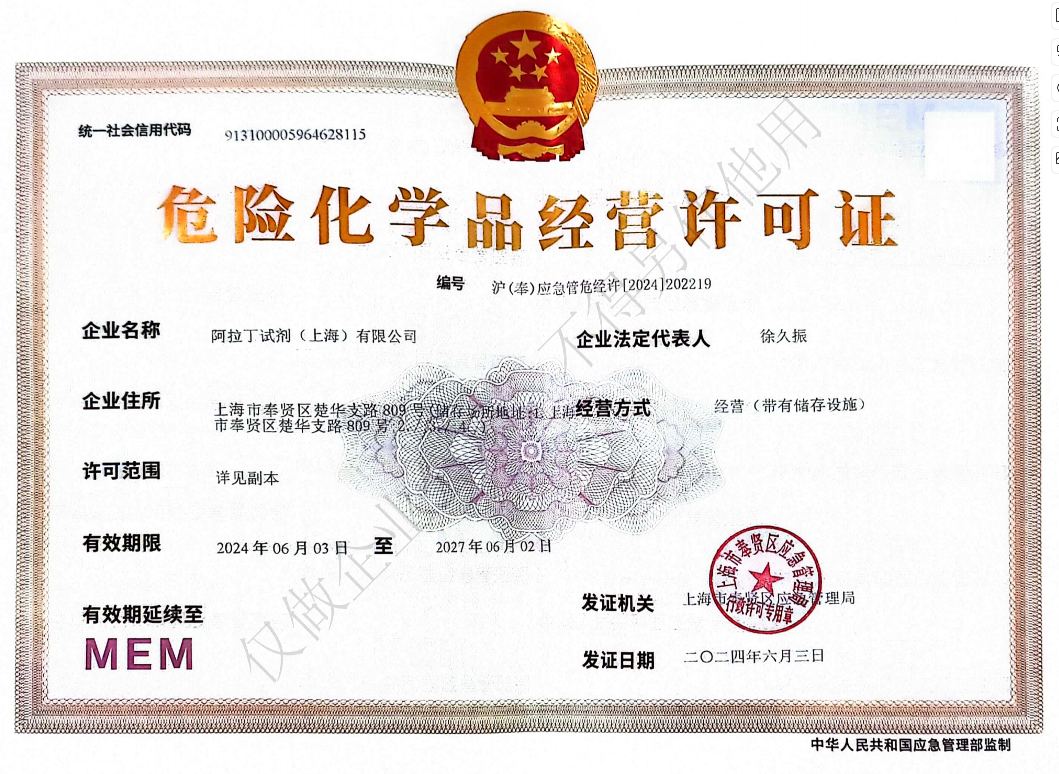 危险品化学品经营许可证(带存储)