
计算溶液所需的质量、体积或浓度。
为什么选择此级别
,适用于对基线干扰要求严格的色谱和分析工作流程。
储存与运输
-80℃储存。特低温运输 。请查阅批次 COA 获取详细规格。
质量文档
SDS、COA、产品数据表及规格说明书均可下载。可通过批号查询获取批次 COA。
文献证明
在色谱分析、有机合成和交叉偶联反应领域已被 0 篇同行评审文献引用。
概述
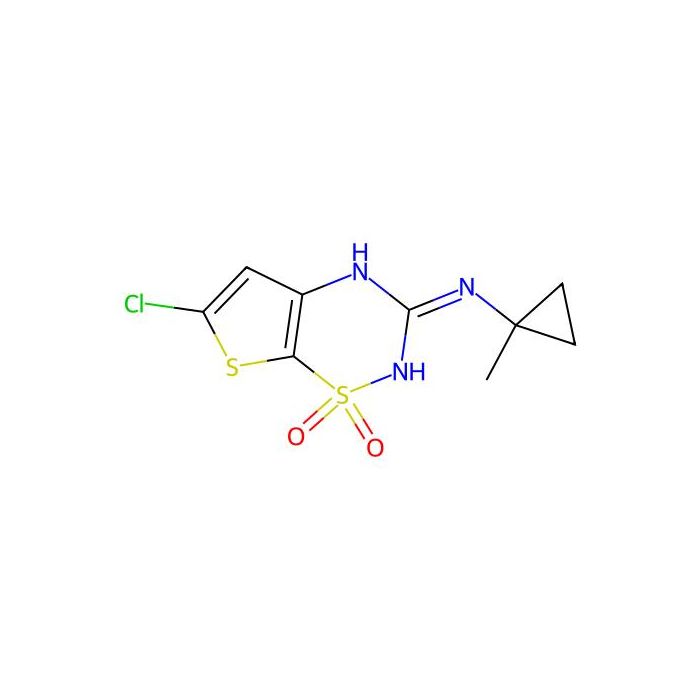
Tifenazoxide (NN414) is a potent, orally active and SUR1/Kir6.2 selective K ATP channels opener. Tifenazoxide has antidiabetic effect, can inhibit glucose stimulated insulin release in vitro and in vivo, and has a beneficial effect on glucose homeostasis
In Vitro
Tifenazoxide (NN414) hyperpolarises βTC3 cell membranes, and inhibits insulin release from βTC6, from isolated rat islets and from human islets at least a 100-fold more potent than Diazoxide. The EC 50 values for Tifenazoxide and diazoxide are 0.45 and 31 µM, respectively in the patch-clamp assay. Tifenazoxide (100 µM) activates Kir6.2/SUR1 channels, but not Kir6.2/SUR2A or Kir6.2/SUR2 channels, expressed in Xenopus oocytes both in whole-cell and inside-out macropatch recordings. Tifenazoxide is a potent inhibitor of glucose stimulated insulin release from βTC6 cells (IC 50 = 0.15 µM). MCE has not independently confirmed the accuracy of these methods. They are for reference only.
In Vivo
Tifenazoxide (NN414; 1.5 mg/kg; oral administration; twice daily; for 3 weeks; male VDF Zucker ( fa/fa ) rat) treatment for 3 weeks in VDF rats reduces basal hyperglycemia, improves glucose tolerance, and reduces hyperinsulinemia during an oral glucose tolerance test (OGTT) and improves insulin secretory responsiveness ex vivo . MCE has not independently confirmed the accuracy of these methods. They are for reference only. Animal Model: Male Vancouver diabetic fatty (VDF) Zucker rat Dosage: 1.5 mg/kg Administration: Oral administration; twice daily; for 3 weeks Result: Basal glucose was significantly reduced with the fall averaging 0.64 mM after 3 weeks of treatment.
IC50& Target:K ATP channels
规格
别名
替芬那嗪
规格或纯度
10mM in DMSO
英文名称
Tifenazoxide
生化机理
替芬那唑(NN414)是一种强效、口服活性和 SUR1/Kir6.2 选择性 K ATP 通道开启剂。替芬那唑具有抗糖尿病作用,能在体外和体内抑制葡萄糖刺激的胰岛素释放,并对糖稳态有益处。
储存条件
-80℃储存
运输条件
特低温运输
名称和识别符
技术文档
高级数据
安全和危险性(GHS)
WGK Germany
3
RIDADR
NONHforallmodesoftransport
质检证书(CoA,COO,BSE/TSE 和分析图谱)
C of A & Other Certificates(BSE/TSE, COO):
输入批号以搜索分析图谱:
溶液计算器
产品仅提供给经过验证的企业、机构和合格的专业人员用于研发。不适用于人类、动物、诊断或治疗。
Copyright © 2023至今 上海阿拉丁生化科技股份有限公司 保留所有权利。


 危险品化学品经营许可证(带存储)