本试剂盒基于离心吸附柱技术,适合于从各种浓度的琼脂糖凝胶中回收 50bp-30Kb DNA 片段。此外,该试剂盒也适合于从 PCR 产物中,酶促反应液中,或由各种方法获得的粗制的DNA(包括基因组 DNA)中回收纯化 DNA。Buffer PB 含有 pH 指示剂,溶液为黄色,方便判断溶液的 pH 值是否适合与 DNA 吸附柱结合。DNA 回收效率可高达 80%,纯化的 DNA 可直接用于测序、连接、酶切、PCR、标记等。
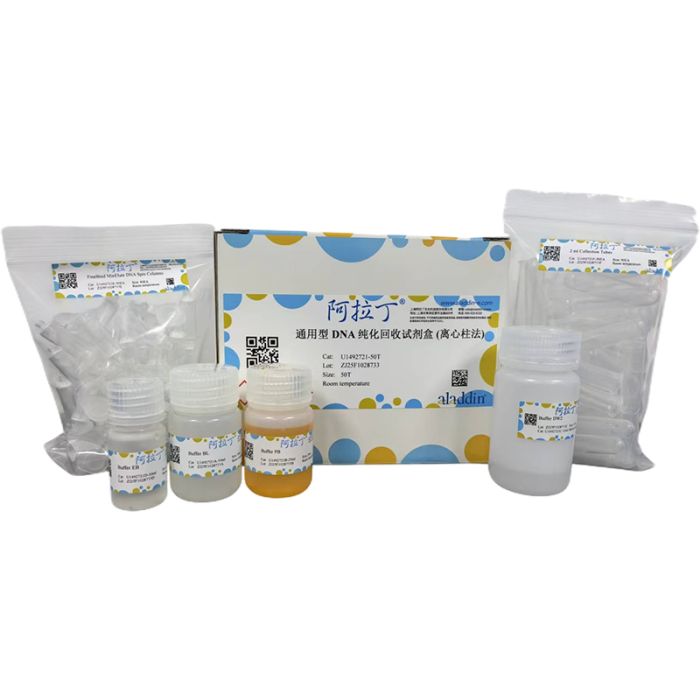
产品组分及储存条件:
U1492721
| Component
| Component
| Storage
|
U1492721A
| Buffer BL
| 30 ml
| RT
|
U1492721B
| Buffer PB
| 25 ml
| RT
|
U1492721C
| Buffer DW2
| 12 ml
| RT
|
U1492721D
| Buffer EB
| 10 ml
| RT
|
U1492721E
| FineBind MinElute DNA Spin Columns
| 50个
| RT
|
U1492721F
| 2 ml Collection Tubes
| 50个
| RT |
储存条件:
该试剂盒置于室温(15°C-25°C)干燥条件下,可保存 12 个月。低温下 Buffer PB 可能会有沉淀形成,使用前需在 37°C水浴中重新溶解,摇匀后使用。
注意事项:
1. Buffer BL 的加入能够改善吸附柱的吸附能力并提高吸附柱的均一性和稳定性,消除高温/潮湿或其他不良环境因素对吸附柱造成的影响。使用前请先检查 Buffer BL 是否出现浑浊,如有混浊现象,可在 37°C水浴中加热几分钟,即可恢复澄清。
2. Buffer PB 含有 pH 指示剂,为黄色,指示 pH≤7.5。
操作步骤:
使用前,向12mL Buffer DW2 中加入48mL无水乙醇。
一、从琼脂糖凝胶中回收 DNA 片段
1. 柱平衡步骤:向吸附柱 FineBind MinElute DNA Spin Columns 中(吸附柱放入收集管中)加入 500 μl Buffer BL,12,000 rpm 离心 1 min,倒掉收集管中的废液,将吸附柱重新放回收集管中。(请使用当天处理过的柱子)
2. 将单一的目的 DNA 条带从琼脂糖凝胶中切下(尽量切除多余部分)放入干净的离心管中,称取重量。
3. 向胶块中加入等倍体积 Buffer PB(如果凝胶重为 0.1 g,其体积可视为 100 μl,则加入100 μl Buffer PB),50°C水浴放置 10 min 左右,其间不断温和地上下翻转离心管,以确保胶块充分溶解。(若胶块的体积过大,可事先将胶块切成碎块)。
注意:对于回收<150 bp 的小片段可将 Buffer PB 的体积增加到 3 倍以提高回收率;胶块完全溶解后最好将溶液温度降至室温再上柱,因为吸附柱在室温时结合 DNA 的能力较强。凝胶完全融解后应呈现黄色,即可进行后续操作。如果胶完全融解后溶液的颜色为桔红色或紫色,请使用 10 μl 3M 乙酸钠(pH 5.0)将溶液的颜色调为黄色后再进行后续操作。(Buffer PB 中含有 pH 指示剂,当 pH≤7.5 时溶液的颜色为黄色,此时 DNA 才能够有效的与膜结合,当 pH 值偏高时溶液的颜色变为桔红色和紫色,需要进行调整。)
4. 将上一步所得溶液加入到吸附柱中(吸附柱放入收集管中),12,000 rpm 离心 30 sec,倒掉收集管中的废液,将吸附柱放入收集管中。
注意:吸附柱容积为 700 μl,若样品体积大于 700 μl 可分次加入。
5. 向吸附柱中加入 500 μl Buffer DW2(使用前请加入无水乙醇),12,000 rpm 离心 30 sec,倒掉收集管中的废液,将吸附柱放入收集管中。
6. 重复操作步骤 5。
7. 12,000 rpm 离心 3 min。
8. 将吸附柱放入一个干净离心管中,向吸附膜的中间部位悬空滴加适量的 Buffer EB(Buffer EB 使用前 65°C加热 3-5min,提前预热),室温放置 1 min。12,000 rpm 离心1 min,收集 DNA 溶液。
注意:洗脱液的体积不应少于 30 μl,体积过少会影响回收的效率。如果下游实验对 pH值敏感,可以用灭菌水洗脱。洗脱液的 pH 值对洗脱效率有很大影响,若用水做洗脱液应保证其 pH 值在 7.0-8.5(可以用 NaOH 将水的 pH 值调到此范围),pH 值低于 7.0时洗脱效率不高。
二、 从 PCR 反应液或酶切反应液中回收 DNA
1. 柱平衡步骤:向吸附柱 FineBind MinElute DNA Spin Columns 中(吸附柱放入收集管中)加入 500 μl Buffer BL,12,000 rpm 离心 1 min,倒掉收集管中的废液,将吸附柱重新放回收集管中。(请使用当天处理过的柱子)
2. 计算 PCR 反应液或酶切反应液的体积,向其中加入等倍体积 Buffer PB,充分混匀(无需去除石蜡油或矿物油)。
注意:对于回收<150 bp的小片段可将Buffer PB的体积增加到3倍以提高回收率;溶液混匀后应呈现黄色,即可进行后续操作。如果溶液的颜色为桔红色或紫色,请使用10μl 3M乙酸钠(pH 5.0)将溶液的颜色调为黄色后再进行后续操作。
3. 将上一步所得溶液加入到吸附柱(吸附柱放入收集管中),室温放置 2 min,12,000 rpm离心 30 sec,倒掉收集管中的废液,将吸附柱放入收集管中。
注意:吸附柱容积为 700 μl,若样品体积大于 700 μl 可分次加入。
4. 向吸附柱中加入 500 μl Buffer DW2(使用前请加入无水乙醇),12,000 rpm 离心 30 sec,倒掉收集管中的废液,将吸附柱放入收集管中。
5. 重复操作步骤 4 一次。
6. 12,000 rpm 离心 3 min。
7. 将吸附柱放入一个干净的离心管中,向吸附膜的中间部位悬空滴加适量的 Buffer EB(Buffer EB 使用前 65°C加热 3-5min,提前预热),室温放置 1 min。12,000 rpm 离心1 min,收集 DNA 溶液。
注意:洗脱液的体积不应少于 30 μl,体积过少会影响回收的效率。如果下游实验对 pH值敏感,可以用灭菌水洗脱。洗脱液的 pH 值对洗脱效率有很大影响,若用水做洗脱液应保证其 pH 值在 7.0-8.5(可以用 NaOH 将水的 pH 值调到此范围),pH 值低于 7.0时洗脱效率不高。
Product Introduction:
This kit is based on spin column adsorption technology and is suitable for recovering 50 bp–30 Kb DNA fragments from agarose gels of various concentrations. In addition, the kit is also suitable for recovering and purifying DNA from PCR products, enzymatic reaction solutions, or crude DNA (including genomic DNA) obtained by various methods. Buffer PB contains a pH indicator, and the solution is yellow, which facilitates judging whether the pH value of the solution is suitable for binding to the DNA adsorption column. The DNA recovery efficiency can be as high as 80%, and the purified DNA can be directly used for sequencing, ligation, restriction enzyme digestion (enzyme digestion), PCR, labeling, and other applications.
Product Components and Storage Conditions:
U1492721
| Component
| Component
| Storage
|
U1492721A
| Buffer BL
| 30 ml
| RT
|
U1492721B
| Buffer PB
| 25 ml
| RT
|
U1492721C
| Buffer DW2
| 12 ml
| RT
|
U1492721D
| Buffer EB
| 10 ml
| RT
|
U1492721E
| FineBind MinElute DNA Spin Columns
| 50个
| RT
|
U1492721F
| 2 ml Collection Tubes
| 50个
| RT |
Storage Conditions:
This kit can be stored for 12 months at room temperature (15°C–25°C) under dry conditions. Precipitation may form in Buffer PB at low temperatures; before use, it is necessary to redissolve the buffer in a 37°C water bath and shake it well before use.
Precautions:
1. The addition of Buffer BL can improve the adsorption capacity of the adsorption column, enhance its uniformity and stability, and eliminate the impact of high temperature/humidity or other adverse environmental factors on the adsorption column. Before use, please check whether Buffer BL is turbid. If turbidity occurs, heat it in a 37°C water bath for a few minutes to restore clarity.
2. Buffer PB contains a pH indicator and is yellow, indicating a pH ≤ 7.5.
Operating Steps:
Before use, add absolute ethanol to Buffer DW2. Please refer to the label on the bottle for the volume to be added.
I. Recovering DNA Fragments from Agarose Gels
1. Column Equilibration Step: Add 500 μl Buffer BL to the adsorption column (FineBind MinElute DNA Spin Columns) placed in a collection tube. Centrifuge at 12,000 rpm for 1 minute, discard the waste liquid in the collection tube, and put the adsorption column back into the collection tube. (Please use columns processed on the same day)
2. Cut the single target DNA band from the agarose gel (remove excess parts as much as possible) and place it in a clean centrifuge tube, then weigh it.
3. Add an equal volume of Buffer PB to the gel block (if the gel weighs 0.1 g, its volume can be regarded as 100 μl, so add 100 μl Buffer PB). Incubate in a 50°C water bath for about 10 minutes, gently inverting the centrifuge tube up and down continuously during this period to ensure the gel block is fully dissolved. (If the volume of the gel block is too large, it can be cut into small pieces in advance.)
Note: For recovering small fragments < 150 bp, the volume of Buffer PB can be increased to 3 times to improve the recovery rate; after the gel block is completely dissolved, it is best to cool the solution to room temperature before loading onto the column, because the adsorption column has a stronger ability to bind DNA at room temperature. The gel should appear yellow after complete dissolution, and then subsequent operations can be performed. If the color of the solution is orange-red or purple after the gel is completely dissolved, use 10 μl of 3M sodium acetate (pH 5.0) to adjust the color of the solution to yellow before proceeding with subsequent operations. (Buffer PB contains a pH indicator. When pH ≤ 7.5, the solution is yellow, and DNA can effectively bind to the membrane. When the pH is high, the solution turns orange-red or purple and needs to be adjusted.)
4. Add the solution obtained in the previous step to the adsorption column (placed in the collection tube), centrifuge at 12,000 rpm for 30 seconds, discard the waste liquid in the collection tube, and put the adsorption column back into the collection tube.
Note: The capacity of the adsorption column is 700 μl. If the sample volume is larger than 700 μl, it can be added in batches.
5. Add 500 μl Buffer DW2 (with absolute ethanol added before use) to the adsorption column, centrifuge at 12,000 rpm for 30 seconds, discard the waste liquid in the collection tube, and put the adsorption column back into the collection tube.
6. Repeat step 5.
7. Centrifuge at 12,000 rpm for 3 minutes.
8. Place the adsorption column into a clean centrifuge tube, 悬空滴加 an appropriate amount of Buffer EB (Buffer EB is heated at 65°C for 3-5 minutes before use, preheated in advance) to the middle part of the adsorption membrane, and let it stand at room temperature for 1 minute. Centrifuge at 12,000 rpm for 1 minute to collect the DNA solution.
Note: The volume of the eluent should not be less than 30 μl; a smaller volume will affect the recovery efficiency. If the downstream experiment is sensitive to pH, sterile water can be used for elution. The pH of the eluent has a great impact on the elution efficiency. If water is used as the eluent, ensure its pH is within 7.0-8.5 (NaOH can be used to adjust the pH of water to this range). The elution efficiency is low when the pH is below 7.0.
II. Recovering DNA from PCR Reaction Solutions or Restriction Enzyme Digestion Solutions
1. Column Equilibration Step: Add 500 μl of Buffer BL to the adsorption column (FineBind MinElute DNA Spin Columns) placed in a collection tube. Centrifuge at 12,000 rpm for 1 minute, discard the waste liquid in the collection tube, and place the adsorption column back into the collection tube. (Please use columns processed on the same day.)
2. Calculate the volume of the PCR reaction solution or restriction enzyme digestion solution, add an equal volume of Buffer PB to it, and mix thoroughly (there is no need to remove paraffin oil or mineral oil).
Note: For recovering small fragments < 150 bp, the volume of Buffer PB can be increased to 3 times to improve the recovery rate; after mixing, the solution should appear yellow before proceeding with subsequent operations. If the solution is orange-red or purple, use 10 μl of 3M sodium acetate (pH 5.0) to adjust the color of the solution to yellow before continuing.
3. Add the solution obtained in the previous step to the adsorption column (placed in the collection tube), let it stand at room temperature for 2 minutes, centrifuge at 12,000 rpm for 30 seconds, discard the waste liquid in the collection tube, and place the adsorption column back into the collection tube.
Note: The capacity of the adsorption column is 700 μl. If the sample volume exceeds 700 μl, add it in batches.
4. Add 500 μl of Buffer DW2 (ensure absolute ethanol is added before use) to the adsorption column, centrifuge at 12,000 rpm for 30 seconds, discard the waste liquid in the collection tube, and place the adsorption column back into the collection tube.
5. Repeat step 4 once.
6.Centrifuge at 12,000 rpm for 3 minutes.
7. Transfer the adsorption column to a clean centrifuge tube, suspend and add an appropriate amount of Buffer EB (preheat Buffer EB by heating at 65°C for 3–5 minutes before use) to the middle of the adsorption membrane, and let it stand at room temperature for 1 minute. Centrifuge at 12,000 rpm for 1 minute to collect the DNA solution.
Note: The volume of the eluent should not be less than 30 μl; a smaller volume will reduce recovery efficiency. If the downstream experiment is sensitive to pH, sterile water can be used as the eluent. The pH of the eluent has a significant impact on elution efficiency. If water is used as the eluent, ensure its pH is within the range of 7.0–8.5 (NaOH can be used to adjust the pH of water to this range); elution efficiency will be low if the pH is below 7.0.

 ZJ25F1028733


 危险品化学品经营许可证(带存储)