班氏试剂又称本氏液、本尼迪克特试剂、本尼迪克试剂、本尼迪克试液或本尼迪特试剂,是一种浅蓝色溶液。该试剂盒采用改良班氏试剂进行检测,其原理是含有醛基的葡萄糖在高热和强碱条件下,能将溶液中蓝色的Cu²⁺还原为黄色至砖红色的氧化亚铜(Cu₂O)沉淀,主要用于定性检测人、动物尿液中葡萄糖含量。该试剂盒仅用于科研领域,不适用于临床诊断或其他用途。
操作步骤(仅供参考)
1、取尿葡萄糖定性试剂1mL置于试管中,加热煮沸1min应不变色;再加入0.5%葡萄糖溶液0.1mL,应呈阳性反应;可进行下列实验,否则应弃用。
2、取尿葡萄糖定性试剂1mL置于试管中,再加入新鲜尿液0.1mL,煮沸1~2min,冷却后观察结果。
结果判断
结果描述 | 判断 | 含糖量(mmol/L) | 试剂不变色,如有较高磷酸盐可呈蓝色浑浊。 | 阴性 (-) | 0.1~1 | 冷却后呈绿色,但无沉淀 | 可疑 (±) | <6 | 呈黄绿色混浊,管底有少量黄色沉淀 | 阳性 (+) | 6~28 | 煮沸1min呈绿色混浊,有较多黄色沉淀 | 阳性 (2+) | 28~55 | 煮沸15s呈黄土色沉淀 | 阳性 (3+) | 55~110 | 煮沸时即呈大量砖红色混浊,并迅速沉淀,上清液无色 | 阳性 (4+) | >110 |
|
参考区间
阴性(含糖量0.1~1mmol/L);当血糖>8.88mmol/L超过肾糖阈,可出现尿糖阳性。
注意事项
1、在酒精灯上加热煮沸,时间不得少于1min。
2、应在煮沸后自然冷却,不应用冷水使其变冷。
3、当含有大量尿酸盐时,应把尿液置于冰箱中待盐类下沉后,取上清做实验。
4、当含有大量铵盐时,应加入过量的碱并煮沸几分钟再做实验。
5、强还原性物质可导致假阳性:维生素 C、含还原性成分的中药(大黄、黄连、连翘等)、乳糖 / 果糖(非葡萄糖类还原性糖)、半胱氨酸、硫代硫酸钠等;高浓度某些代谢物可能干扰:水合氯醛代谢产物、酮体(高酮尿症时,如糖尿病酮症酸中毒)、大量尿酸盐等。
6、为了您的安全和健康,请穿实验服并戴一次性手套操作。
7、试剂开封后请尽快使用,以防影响后续实验效果。
附图


Benedict's reagent, also known as Benedict's solution, Benedict's qualitative reagent, or Benedict's test solution, is a light blue solution. This kit uses a modified Benedict's reagent for detection. The principle is that glucose, containing an aldehyde group, can reduce the blue Cu²⁺ in the solution to a yellow or brick-red precipitate of cuprous oxide (Cu₂O) under conditions of high heat and strong alkalinity. It is primarily used for the qualitative detection of glucose content in human or animal urine. This kit is for research use only and is not suitable for clinical diagnosis or other purposes.
Operating Steps (For Reference Only)
1. Place 1 mL of the Urine Glucose Qualitative Reagent in a test tube and heat to boiling for 1 minute; it should not change color. Then add 0.1 mL of a 0.5% glucose solution; a positive reaction should occur. Proceed with the following test if these conditions are met; otherwise, discard the reagent.
2. Place 1 mL of the Urine Glucose Qualitative Reagent in a test tube, then add 0.1 mL of fresh urine. Boil for 1–2 minutes and observe the results after cooling.
Result Interpretation
Result Description | Interpretation | Glucose Content (mmol/L) | The reagent shows no color change; a blue turbidity may appear if high levels of phosphates are present. | Negative (–) | 0.1~1 | Appears green after cooling, but without precipitate. | Doubtful (±) | <6 | Appears yellow-green and turbid, with a small amount of yellow precipitate at the tube bottom. | Positive (+) | 6~28 | Appears green and turbid after 1 minute of boiling, with considerable yellow precipitate. | Positive (2+) | 28~55 | Appears ochre-colored precipitate after boiling for 15 seconds. | Positive (3+) | 55~110 | Appears heavily brick-red and turbid immediately upon boiling, precipitating rapidly, with a colorless supernatant. | Positive (4+) | >110 |
|
Reference Interval
Negative (glucose content 0.1 – 1 mmol/L). Glycosuria may occur when blood glucose exceeds the renal threshold (> 8.88 mmol/L).
Precautions
1. When heating over an alcohol burner, ensure boiling is maintained for no less than 1 minute.
2. Allow the mixture to cool naturally after boiling; do not cool it rapidly with cold water.
3. If the urine contains a large amount of urates, place the sample in a refrigerator, allow salts to settle, and use the supernatant for testing.
4. If the urine contains a large amount of ammonium salts, add excess alkali and boil for several minutes before performing the test.
5. Strong reducing substances may cause false positives: Vitamin C, traditional Chinese medicines containing reducing components (e.g., rhubarb, coptis, forsythia), lactose/fructose (non‑glucose reducing sugars), cysteine, sodium thiosulfate, etc. High concentrations of certain metabolites may interfere: chloral hydrate metabolites, ketone bodies (in high ketonuria, e.g., diabetic ketoacidosis), large amounts of urates, etc.
6. For your safety and health, please wear a lab coat and disposable gloves during operation.
7. Please use the reagent as soon as possible after opening to avoid affecting subsequent experimental results.
Notes



 ZJ26F0333318

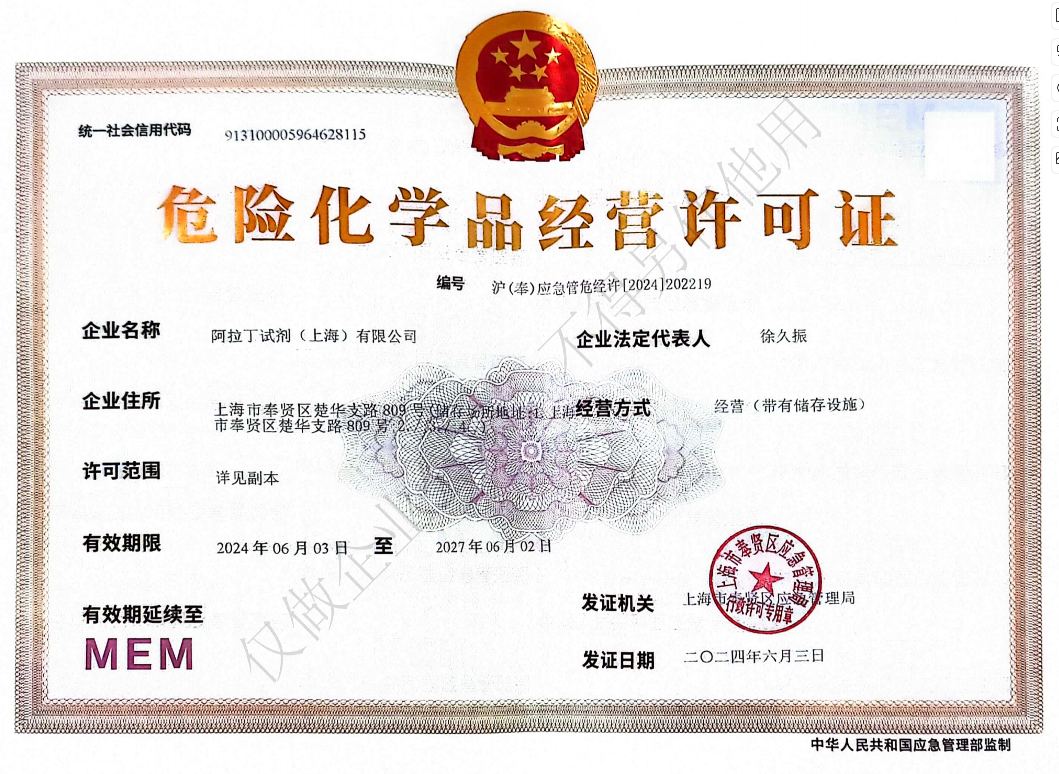 危险品化学品经营许可证(带存储)