同位素标记的化合物越来越多地被用于同位素稀释质谱法(IDMS)中,用于农药的定量分析。采用IDMS技术的主要优势在于,因为同位素标记的化合物具有与未标记的类似物几乎相同的物理特性,因此在后处理和样品制备过程中表现出相同的行为。这有助于克服普通LC-MS / GC-MS分析中通常遇到的可能导致结果偏倚的基质效应问题。通过在后处理前向样品中添加同位素标记的类似物,可以确定并补偿导致基质效应的分析物损失。
Isotope-labeled compounds are increasingly used in isotope dilution mass spectrometry (IDMS) for the quantitative analysis of pesticides. The main advantage of using the IDMS technique is because isotope-labeled compounds have nearly the same physical properties as their non-labeled counterpart analog, and thus show identical behavior during the workup and sample preparation process. This helps in overcoming the problems of matrix effects generally encountered in the usual LC-MS/GC-MS analysis potentially resulting in biased results. By spiking the sample before workup with its isotope labeled analog, the loss of analyte that leads to matrix effects can be determined and compensated.
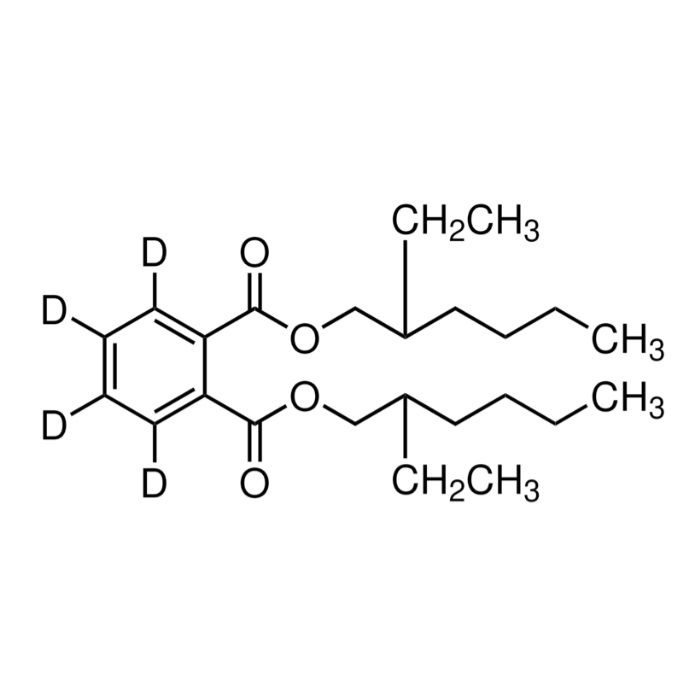
Bis(2-ethylhexyl)phthalate-3,4,5,6-d4 (DEHP-3,4,5,6-d4) is an isotope labeled pesticide standard used for food and environmental analyses.
Isotope-labeled compounds are increasingly used in isotope dilution mass spectrometry (IDMS) for the quantitative analysis of pesticides. The main advantage of using the IDMS technique is because isotope-labeled compounds have nearly the same physical properties as their non-labeled counterpart analog, and thus show identical behavior during the workup and sample preparation process. This helps in overcoming the problems of matrix effects generally encountered in the usual LC-MS/GC-MS analysis potentially resulting in biased results. By spiking the sample before workup with its isotope labeled analog, the loss of analyte that leads to matrix effects can be determined and compensated.

 E2627272


 危险品化学品经营许可证(带存储)