
计算溶液所需的质量、体积或浓度。
为什么选择此级别
,适用于对基线干扰要求严格的色谱和分析工作流程。
储存与运输
室温。 。请查阅批次 COA 获取详细规格。
质量文档
SDS、COA、产品数据表及规格说明书均可下载。可通过批号查询获取批次 COA。
文献证明
在色谱分析、有机合成和交叉偶联反应领域已被 0 篇同行评审文献引用。
概述
各 SWCNT 的平均直径 = 1.4nm ± 0.1nm
应用
在水中分散的方法:固体形式的 SWNT 以宏观粒子的形式高度缠结和结合。这就需要花费很大的力气才能打破这种结合,而使材料形成溶液。将 50mg 材料在 2ml 水中超声处理 30min。之后加入 8ml 水,再超声处理 90min。通常,在此步骤后根据目测所有的材料都完全分散。对于溶解度的定量测定,让分散体在室温下静置过夜。由于浓缩的分散体具有高光密度,因此从研究的分散体上层取出等分试样并稀释 100 倍。稀释液的浓度由记录的近红外光谱估算,其中采用 9750cm-1处吸光度的图线并与标准溶液的浓度进行比较(见参考文献)。
Average diameter of individual SWCNT = 1.4nm ± 0.1nmMethod for dispersing in water: In solid form SWNTs are highly entangled and associated in macroscopic particles. It requires significant effort to break such an association and bring the material in solution. Sonicate 50 mg of material in 2 ml water for 30 min. Add 8 ml of water and sonicate for additional 90 min. Typically, after this procedure all material is completely dispersed according to visual observation. For quantitative measurement of the solubility, allow the dispersion to stand overnight at room temperature. Because of the high optical density of concentrated dispersion, dilute an aliquot from the upper layer of the studied dispersion by a factor of 100. The concentration of the diluted solution is estimated from the recorded NIR spectra using a plot of the absorbance at 9750 cm-1compared to the concentration of a standard solution (see reference).
Preparation instructions
Electric Arc Discharge Method
规格
别名
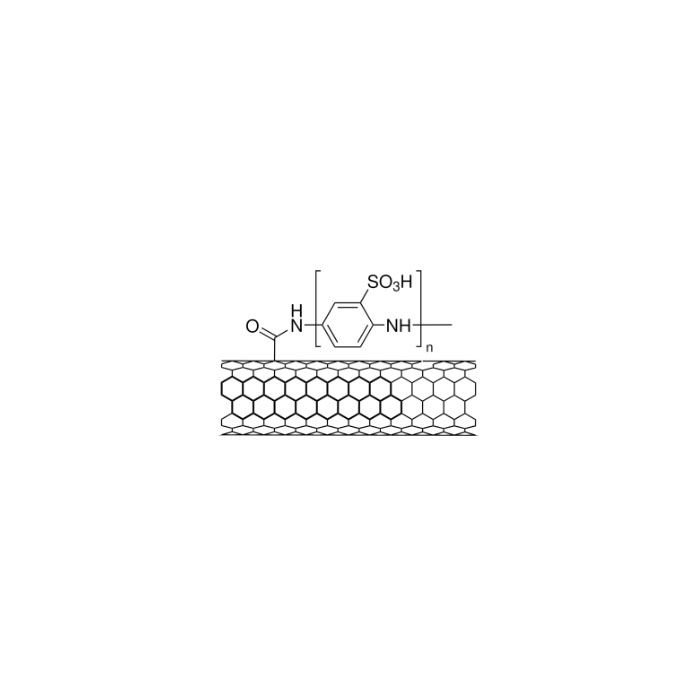
PABS 官能化, 碳纳米管,单壁
英文别名
SWNT, PABS functionalized, Carbon nanotube, single-walled, PABS functionalized
规格或纯度
75-85%碳基,D×L 1.1 nm×0.5-1.0μm,束尺寸
英文名称
Carbon nanotube, single-walled, polyaminobenzene sulfonic acid functionalized
储存条件
室温
名称和识别符
分子类型
聚合物
技术文档
高级数据
化学和物理性质
溶解性
乙醇:0.05mg/mL;DMF:0.1mg/mL;H2O:5.0mg/mL(由近红外吸收光谱确定。)
安全和危险性(GHS)
信号词
警告
危险声明
H319: 引起严重眼睛刺激
H335: 可能引起呼吸道刺激
预防措施声明
P261: 避免吸入灰尘/烟雾/气体/雾/蒸汽/喷雾
P305+P351+P338: 如进入眼睛:用水小心冲洗几分钟。如戴隐形眼镜并可方便地取出,取出隐形眼镜。继续冲洗。
质检证书(CoA,COO,BSE/TSE 和分析图谱)
C of A & Other Certificates(BSE/TSE, COO):
输入批号以搜索分析图谱:
技术文档和文章
溶液计算器
产品仅提供给经过验证的企业、机构和合格的专业人员用于研发。不适用于人类、动物、诊断或治疗。
Copyright © 2023至今 上海阿拉丁生化科技股份有限公司 保留所有权利。


 危险品化学品经营许可证(带存储)