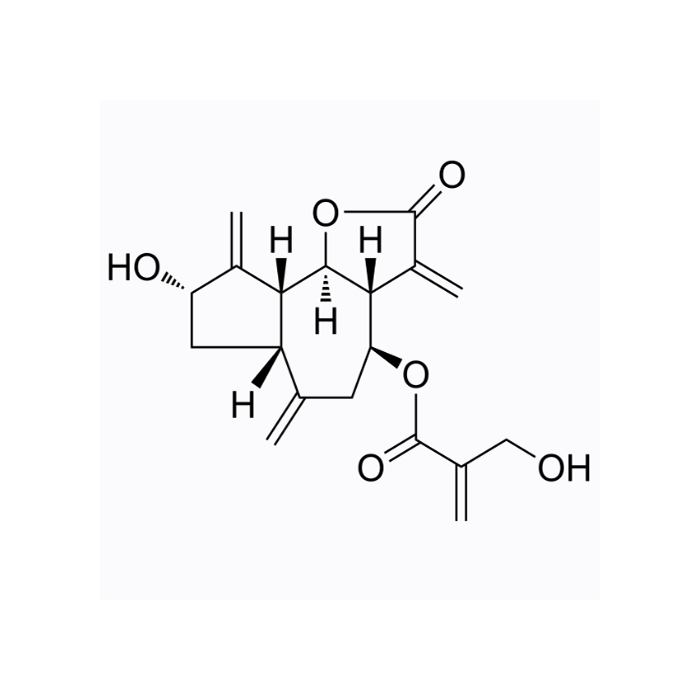
Cynaropicrin is a sesquiterpene lactone which can inhibit tumor necrosis factor (TNF-α) release with IC50s of 8.24 and 3.18 μM for murine and human macrophage cells, respectively. Cynaropicrin also inhibits the increase of cartilage degradation factor (MMP13) and suppresses NF-κB signaling.
Application:
Cynaropicrin is a natural product derived from plant source that finds application in compound screening libraries, metabolomics, phytochemical, and pharmaceutical research.
Cynaropicrin is a potent activator of the AhR-Nrf2-Nqo1 pathway, making it a potential candidate for preventing UVB-induced photoaging. Additionally, it exhibits pro-apoptotic activity, suggesting its potential as an anticancer agent against certain leukocyte cancer cells such as lymphoma or leukemia. Cynaropicrin has demonstrated in vivo activity against Trypanosoma brucei and exhibits immunomodulatory effects by influencing cytokine release and nitric oxide production while also displaying immunosuppressive properties. Moreover, it has anti-inflammatory effects by inhibiting the production of inflammatory mediators and lymphocyte proliferation, which is achieved through conjugation with sulphydryl groups of target protein(s).

 H2513374


 危险品化学品经营许可证(带存储)