
Mechanism of Action of Tranexamic Acid in Pigmentation Care: From the Plasmin System to Regulation of Inflammation-Driven Pro-Melanogenic Signaling
Mechanism of Action of Tranexamic Acid in Pigmentation Care: From the Plasmin System to Regulation of Inflammation-Driven Pro-Melanogenic Signaling
1 Ingredient Properties of Tranexamic Acid and Its Basis for Skincare Application
1.1 Ingredient Identity
Tranexamic acid, abbreviated as TXA, also known as aminomethylcyclohexanecarboxylic acid, is a synthetic lysine analogue originally used in antifibrinolytic therapy. Its classical medical action is to competitively bind to the lysine-binding sites on plasminogen/plasmin, thereby reducing plasmin formation, substrate binding, and enzymatic activity. This helps lower the risk of bleeding caused by excessive activation of the fibrinolytic system.
In skincare and dermatological research, the application of tranexamic acid has focused mainly on melasma. It also has mechanistic support and certain auxiliary application value for post-sun hyperpigmentation, post-inflammatory hyperpigmentation, and some forms of uneven skin tone accompanied by inflammation or redness.
1.2 Molecular Structural Features
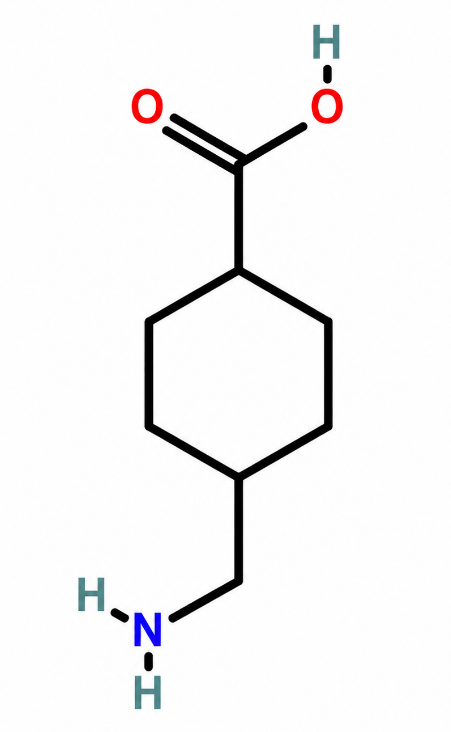
The chemical name of tranexamic acid is trans-4-(aminomethyl)cyclohexanecarboxylic acid, with the molecular formula C8H15NO2. Its molecule contains both an aminomethyl group and a carboxyl group, connected by a relatively stable cyclohexane ring. This spatial arrangement enables it to mimic lysine-related structures and competitively bind to the lysine-binding sites on plasminogen/plasmin.
The simplified structural formula can be represented as:
H2N-CH2-[trans-1,4-cyclohexane]-COOH
2 Discovery of the Depigmenting Effect of Tranexamic Acid and Its Research Direction
The use of tranexamic acid for melasma originated from clinical observation. In 1979, Nijo Sadako accidentally observed improvement in melasma while treating patients with chronic urticaria and reported early experience with tranexamic acid in melasma management.
This finding led to an important understanding: melasma is not caused simply by “overactivity” of melanocytes. Ultraviolet radiation, inflammation, vascular changes, hormonal fluctuations, basement membrane damage, mast cell involvement, and dermal photoaging can all jointly contribute to the persistence and recurrence of pigmentation.
3 How the Plasminogen–Plasmin System Drives Melanin Production
3.1 After Skin Stimulation, Keratinocytes Amplify Pro-Melanogenic Signals
The formation of pigmentation is not driven by melanocytes alone. When the skin is affected by ultraviolet radiation, inflammation, heat, friction, acne, aesthetic procedures, or barrier damage, keratinocytes release various signaling molecules that stimulate melanocytes to increase melanin synthesis.
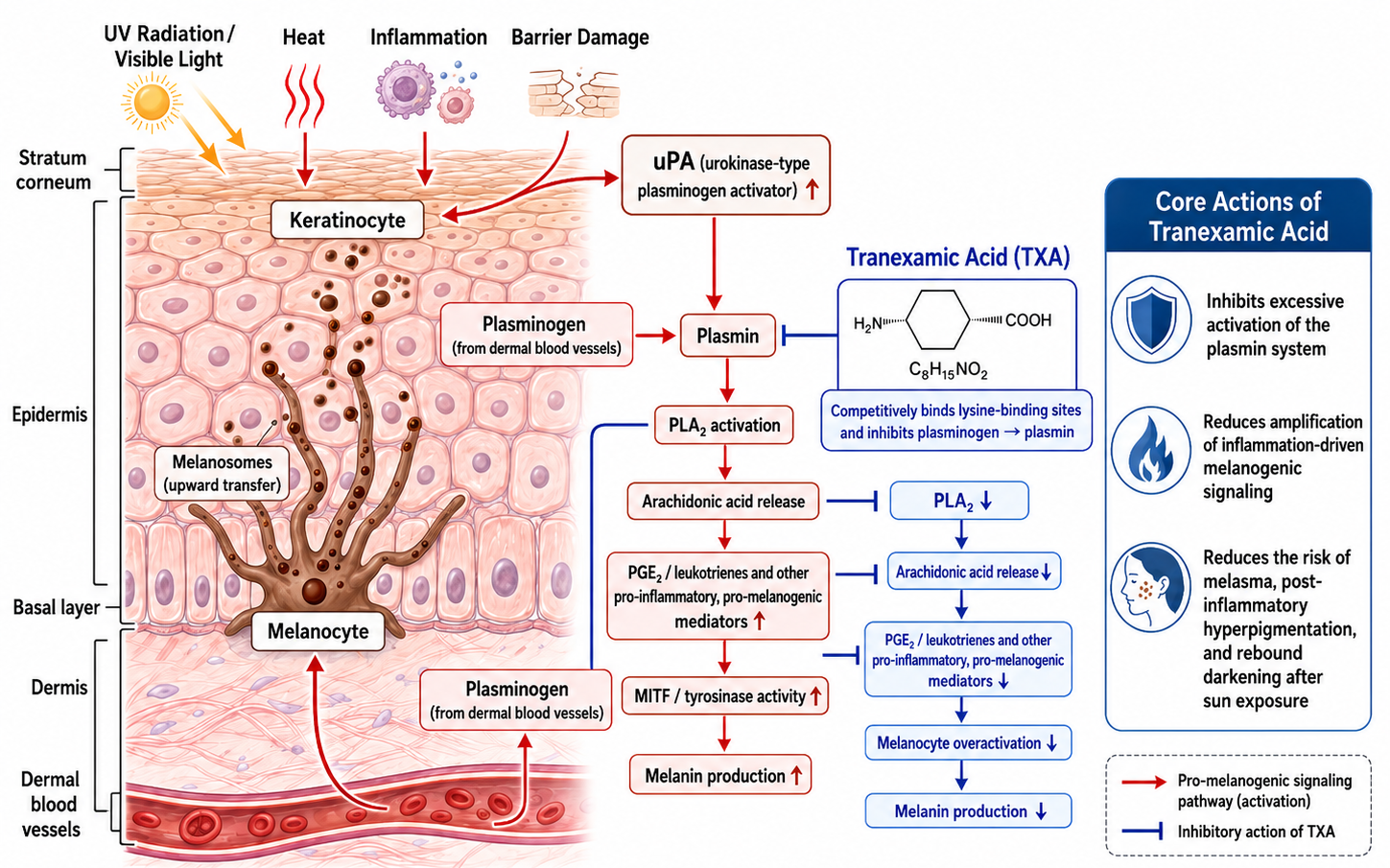
One important pathway is related to urokinase-type plasminogen activator, uPA. Ultraviolet radiation and inflammatory stimulation can induce keratinocytes to produce more uPA. uPA further promotes the conversion of plasminogen into plasmin. When plasmin activity increases, inflammatory mediators and pro-melanogenic mediators are further elevated, making melanocytes more likely to enter a highly reactive state.
3.2 Schematic Mechanism by Which the Plasmin System Participates in Amplifying Pro-Melanogenic Signals
Increased plasmin can promote the activation of phospholipase A2, PLA2, thereby increasing the release of arachidonic acid. Arachidonic acid is further converted into inflammatory mediators such as prostaglandin E2, PGE2, and leukotrienes. These mediators can activate melanocytes and enhance melanogenesis-related signaling.
Melasma lesions often also show vascular changes, inflammatory cell infiltration, increased mast cells, basement membrane abnormalities, and dermal photoaging. These factors keep the local skin environment in a long-term pro-inflammatory, pro-vascular, and pro-melanogenic state, helping explain why melasma is prone to recurrence and is strongly affected by light exposure and heat.
Schematic Mechanism of Melanin Production Driven by the Plasmin System
Ultraviolet radiation / inflammation / heat stimulation / barrier damage / aesthetic procedures
↓
Increased uPA release from keratinocytes
↓
Plasminogen → plasmin
↓
PLA2 activation and arachidonic acid release
↓
Increased PGE2, leukotrienes, and other pro-inflammatory and pro-melanogenic mediators
↓
Melanocyte activation and enhancement of downstream melanogenesis-related pathways, such as MITF- and tyrosinase-related processes
↓
Increased melanin production, leading to deepening or recurrence of pigmentation
Among these factors, microphthalmia-associated transcription factor, MITF, is a key transcriptional regulator in melanocyte differentiation and melanin synthesis. Tyrosinase is the key rate-limiting enzyme in melanin synthesis. Tranexamic acid does not primarily act on these terminal steps; instead, it reduces the sustained upstream pro-melanogenic stimulation that drives them.
The mechanism by which tranexamic acid weakens inflammation-driven pro-melanogenic signaling through inhibition of the plasmin system is shown in the figure below:
This pathway can be understood as a pro-melanogenic signal amplification process from keratinocytes to melanocytes after skin stimulation. The key action point of tranexamic acid lies in the conversion of plasminogen to plasmin and the subsequent release of downstream inflammatory pro-melanogenic mediators.
4 How Tranexamic Acid Exerts Its Depigmenting Effect
4.1 Competitive Inhibition of the Plasmin System
Tranexamic acid uses its lysine-like structure to competitively bind to the lysine-binding sites on plasminogen/plasmin, reducing the binding of plasminogen to the cell surface or related substrates, thereby lowering plasmin formation and enzymatic activity. In the skin, this action weakens the plasmin signaling induced by ultraviolet radiation and inflammation, reducing pro-melanogenic mediators such as arachidonic acid, PGE2, and leukotrienes. As the pro-melanogenic stimulation received by melanocytes decreases, melanogenic activity is also reduced.
4.2 Reducing the Continued Deepening of Post-Inflammatory Hyperpigmentation
Acne, dermatitis, barrier damage, poor tolerance to chemical exfoliation, and rebound pigmentation after laser procedures often share a common pattern: inflammation appears first, followed by worsening local pigmentation. The inflammatory environment stimulates keratinocytes to release pro-melanogenic mediators, thereby increasing melanin production. By inhibiting the plasmin-related inflammatory pathway, tranexamic acid reduces the intensity of inflammation being converted into pigmentation.
This type of action is more suitable for pigmentation that is still deepening or prone to recurrence. For spots that have existed for many years, have clear structural features, involve deeper dermal pigmentation, or resemble age spots, tranexamic acid usually serves only as an auxiliary ingredient and is unlikely to deliver complete improvement when used alone.
4.3 Reducing Rebound Darkening After Light Stimulation
Tranexamic acid cannot block ultraviolet radiation, visible light, or heat stimulation. Reducing light stimulation entering the skin still depends on sunscreens, physical sun protection, and limiting exposure to high-heat environments. For people with melasma or a tendency toward rebound darkening, tinted sunscreens containing iron oxides can enhance visible light protection and are more meaningful for reducing pigmentation recurrence.
Tranexamic acid acts after light stimulation has occurred. It reduces the intensity with which the skin converts ultraviolet radiation, visible light, heat, and inflammatory stimulation into pro-melanogenic signals. Tranexamic acid cannot replace sunscreen, but it can work together with sun protection: sunscreen reduces the input of external stimuli, while tranexamic acid reduces the pro-melanogenic response after stimulation.
5 Types of Pigmentation Problems Suitable for Tranexamic Acid
5.1 Melasma
The formation of melasma involves light exposure, hormones, blood vessels, inflammation, and changes in the dermal microenvironment. By inhibiting the plasmin system, reducing inflammation-driven pro-melanogenic mediators, and potentially influencing vascular-related pro-melanogenic factors, tranexamic acid has a clear rationale for use in melasma.
A randomized study compared a 5% tranexamic acid solution with a 3% hydroquinone cream. Both reduced the Melasma Area and Severity Index, while the tranexamic acid group showed relatively fewer adverse reactions and higher patient satisfaction.
5.2 Post-Sun Hyperpigmentation and Post-Inflammatory Hyperpigmentation
Rebound darkening after sun exposure, acne marks, pigmentation after dermatitis, and localized darkening after irritation are all related to elevated inflammatory mediators and pro-melanogenic signals. Tranexamic acid can reduce the inflammation-driven pro-melanogenic pathway mediated by the plasmin system, making it more targeted for pigmentation that deepens after stimulation.
5.3 Uneven Skin Tone in Sensitive Skin
Sensitive skin often features a weak barrier, redness, stinging, and a low threshold for inflammation. When the skin repeatedly remains in a state of mild inflammation, pigmentation is more likely to occur. Tranexamic acid does not rely on strong exfoliation or a strongly acidic environment. Conventional topical formulations are generally well tolerated, making it suitable for use together with barrier-repair ingredients.
6 Tranexamic Acid, Redness, Inflammation, and Vascular Response
6.1 Auxiliary Improvement of Redness
Tranexamic acid is not a vasoconstrictor and cannot directly eliminate established telangiectasia. Its value for redness mainly comes from anti-inflammatory activity, improvement of barrier function, and reduction of vascular-related inflammatory signals.
A study on rosacea showed that topical 3% tranexamic acid could improve skin barrier function and clinical manifestations, possibly related to inhibition of calcium influx induced by activation of protease-activated receptor-2, PAR-2. Another dermatological review noted that tranexamic acid may provide auxiliary improvement of erythema by reducing the expression of vascular endothelial growth factor, VEGF, and vascular-angiogenic signaling.
6.2 Effects on Inflammatory Mediators
Tranexamic acid can reduce PLA2 activation and arachidonic acid release by inhibiting plasmin activity, thereby lowering the tendency to generate inflammation-driven pro-melanogenic mediators such as PGE2 and leukotrienes. This action differs from the pathway of non-steroidal anti-inflammatory drugs, which directly inhibit cyclooxygenase-2, COX-2. Instead, tranexamic acid reduces the inflammation-driven pro-melanogenic pathway upstream through the plasmin system.
7 Differences Between Tranexamic Acid and Traditional Whitening Ingredients
The difference between tranexamic acid and traditional whitening ingredients mainly lies in the stage of action.
Ingredient Type | Main Action Site | Suitable Concerns | Relationship with Tranexamic Acid |
Tranexamic acid | Plasmin system, inflammation-driven pro-melanogenic signals, vascular-related signals | Melasma, post-inflammatory hyperpigmentation, post-sun darkening | Reduces the upstream source of pro-melanogenic signaling |
Niacinamide | Reduces melanosome transfer to keratinocytes | Uneven skin tone, dullness, pigmentation | Works with tranexamic acid as “signal reduction + transfer reduction” |
Vitamin C and derivatives | Antioxidant activity, reduction of oxidative stress, auxiliary inhibition of melanin production | Photoaging, dullness, oxidative pigmentation | Works with tranexamic acid as “antioxidant support + pro-melanogenic signal regulation” |
Ceramides | Repair the barrier and reduce irritation and inflammatory triggers | Sensitivity, dryness, barrier damage | Reduces sources of inflammation and improves tolerance |
Tyrosinase-inhibiting ingredients | Inhibit key enzymes in melanin synthesis | Active melanogenesis, uneven skin tone | Acts at a different point from tranexamic acid and may provide complementary benefits |
This difference makes tranexamic acid more suitable for inclusion in a comprehensive depigmenting system rather than bearing the entire depigmenting task alone. Melasma, post-inflammatory hyperpigmentation, and pigmentation in sensitive skin often involve light stimulation, inflammation, oxidative stress, barrier damage, and increased melanosome transfer at the same time. A multi-step approach is more consistent with the formation mechanism of these pigmentation concerns than relying on a single high-concentration ingredient.
8 Topical Tranexamic Acid: Concentration, pH, and Delivery Technologies
8.1 Common Concentration Range
In topical studies and commercial skincare formulations, tranexamic acid is commonly used at concentrations of 2%–5%. Among these, 2%–3% is more common in products designed for long-term daily use and sensitive-skin-friendly formulations, while 5% is more often seen in research formulations or high-activity products emphasizing depigmenting efficacy.
Concentration is not the only determining factor. Tranexamic acid is relatively hydrophilic and has limited skin penetration. If the formulation has low delivery efficiency, simply increasing the concentration may not produce a proportional improvement in efficacy and may instead increase the risk of local irritation.
8.2 pH Design
Tranexamic acid does not depend on a low pH as strongly as pure L-ascorbic acid. In daily skincare formulations, pH 5–7.5 is a relatively common, gentle, and compatible range. This range supports tolerance in sensitive skin and also facilitates formulation with niacinamide, ceramides, moisturizers, and some vitamin C derivatives.
8.3 Encapsulation and Delivery Technologies
Tranexamic acid is highly water-soluble and has low lipid solubility, which limits its ability to pass through the stratum corneum. Delivery approaches such as liposomes, vesicles, nanocarriers, microneedles, and esterified prodrugs can improve the penetration and retention of tranexamic acid within the epidermis, thereby enhancing topical efficacy.
One study compared 2% vesicular tranexamic acid/2% niacinamide, 5% conventional tranexamic acid/4% niacinamide, and 4% hydroquinone cream. The results showed that all three groups improved melasma, while the tranexamic acid/niacinamide groups had fewer severe adverse reactions. Vesicular delivery allowed a lower-concentration formulation to achieve improvement close to that of a higher-concentration conventional formulation.
9 Classification Table of Representative Chemicals Related to the Pigmentation-Care Mechanism of Tranexamic Acid
Table 1. Core Mechanistic Pathway of Tranexamic Acid and Plasmin System Research
Category | CAS No. | Aladdin Catalog No. | Name | Specification or Purity | Product Features and Applications |
Core tranexamic acid ingredient | 1197-18-8 | Tranexamic Acid (AMCA) | Moligand™, ≥98% | Used for research on inhibition of the plasminogen–plasmin system, melasma mechanisms, post-inflammatory hyperpigmentation, and rebound darkening after sun exposure | |
Reference compound for lysine-binding sites | 56-87-1 | L-Lysine | Moligand™, ≥98%, Metal<500ppm | Used for studies on lysine-binding sites, plasminogen-binding models, and structural mechanism comparison with tranexamic acid | |
Lysine salt reference compound | 657-27-2 | L-Lysine Hydrochloride | Ultrapure grade, ≥99.5%(AT) | Used as a lysine structural reference, in protein-binding experiments, and for comparing the actions of antifibrinolytic molecules | |
Antifibrinolytic positive reference compound | 60-32-2 | 6-Aminocaproic Acid (EACA) | Suitable for synthesis, Moligand™ | Used as an antifibrinolytic activity control, for structure–activity relationship studies of lysine analogues, and for comparison with the mechanism of tranexamic acid | |
Plasminogen substrate | 9001-91-6 | Plasminogen from Human Plasma | Bioactive, ActiBioPure™, High Performance, EnzymoPure™, ≥95%(SDS-PAGE), ≥120 U/mg protein | Used for plasminogen activation, competitive inhibition by tranexamic acid, and plasmin-generation assays | |
Plasmin activity target | 9001-90-5 | Plasmin from Human Plasma | Natural, EnzymoPure™, ≥90%(SDS-PAGE), ≥15 U/mg protein; Protein concentration: see COA | Used for plasmin activity assays, evaluation of antifibrinolytic inhibition rates, and research on downstream inflammation-driven pro-melanogenic pathways | |
Plasminogen activator | 9039-53-6 | Urokinase | EnzymoPure™, ≥85%, from human urine; potency ≥50000 IU/mg; ≥120000 IU/mg protein | Used to simulate urokinase-type plasminogen activator–mediated plasmin generation and tranexamic acid intervention experiments | |
Precursor of inflammatory lipid mediators | 506-32-1 | Arachidonic Acid (AA) | Moligand™, 1.0 mg/mL in ethanol, certified reference material | Used for studies on the phospholipase A2–arachidonic acid pathway, generation of inflammation-driven pro-melanogenic mediators, and pigmentation mechanisms | |
Prostaglandin E2 reference compound | 363-24-6 | Dinoprostone | Moligand™, ≥98% | Used for validation of inflammation-driven pro-melanogenic mediators, melanocyte stimulation, and downstream mechanisms of tranexamic acid |
Table 2. Melanin Production, Pigment Evaluation, and Pharmacological Controls
Category | CAS No. | Aladdin Catalog No. | Name | Specification or Purity | Product Features and Applications |
Initial substrate for melanin synthesis | 60-18-4 | L-Tyrosine | Animal-origin free, ≥99%, fermentation | Used for tyrosinase activity assays, melanogenesis models, and screening of depigmenting ingredients | |
Tyrosinase reaction substrate | 59-92-7 | Levodopa | Moligand™, ≥99% | Used for DOPA oxidation reactions, tyrosinase activity evaluation, and melanogenesis pathway research | |
Catechol oxidation model substrate | 51-61-6 | Dopamine | Moligand™, ≥98% | Used for oxidative polymerization, formation of melanin-like products, and evaluation of antioxidant activity | |
Melanin model material | 8049-97-6 | Melanin | Moligand™, Synthetic | Used in pigment-deposition models, light-absorption studies, photoprotection evaluation, and antioxidant experiments | |
Traditional depigmenting positive control | 123-31-9 | Hydroquinone | Suitable for synthesis | Used as a positive control for pigmentation inhibition, comparison of tranexamic acid with terminal depigmenting pathways, and regulatory compliance evaluation | |
Pharmacological control for epidermal renewal | 302-79-4 | Tretinoin | Moligand™, ≥98% | Used in epidermal renewal, pigmentation intervention, combination-treatment models for melasma, and pharmacological control studies |
Table 3. Depigmenting Synergy, Antioxidant Brightening, and Tyrosinase-Related Ingredients
Category | CAS No. | Aladdin Catalog No. | Name | Specification or Purity | Product Features and Applications |
Melanosome-transfer regulatory ingredient | 98-92-0 | Niacinamide | ≥99.5%(HPLC) | Used for melanosome-transfer regulation, barrier support, and evaluation of tranexamic acid–based depigmenting combination systems | |
Glycosylation and brightening synergist | 7512-17-6 | N-Acetyl-D-Glucosamine | ≥98% | Used for research on tyrosinase maturation glycosylation, niacinamide-synergistic brightening, and barrier-moisturizing evaluation | |
Reducing antioxidant ingredient | 50-81-7 | L-Ascorbic Acid | Anhydrous grade, Moligand™, ACS, ≥99% | Used in oxidative stress studies, pigmentation after photodamage, tyrosinase-related experiments, and brightening efficacy controls | |
Stable ascorbic acid derivative | 86404-04-8 | 3-O-Ethyl-L-Ascorbic Acid | Moligand™, ≥98%(HPLC)(T) | Used for antioxidant brightening, post-sun dullness, and research on tranexamic acid combination systems | |
Ascorbyl phosphate derivative | 113170-55-1 | L-Ascorbic Acid 2-Phosphate Sesquimagnesium Salt Hydrate | Moligand™, ≥98%(HPLC) | Used for mild antioxidant activity, pigmentation improvement, sensitive-skin brightening, and formulation-stability studies | |
Water-soluble ascorbyl phosphate | 66170-10-3 | L-Ascorbic Acid 2-Phosphate Trisodium Salt | ≥96% | Used for acne-mark hyperpigmentation, oxidative-stress evaluation, and aqueous-phase brightening formulations | |
Ascorbyl glucoside derivative | 129499-78-1 | 2-O-α-D-Glucopyranosyl-L-Ascorbic Acid | ≥98%(HPLC) | Used for long-term brightening, antioxidant studies, and evaluation of mild pigmentation-care systems | |
Polyphenolic antioxidant ingredient | 501-36-0 | Resveratrol | Moligand™, ≥99% | Used for studies on photo-oxidative damage, oxidative pigmentation, inflammatory stress, and antioxidant synergy | |
Phenolic acid antioxidant ingredient | 1135-24-6 | Ferulic Acid | Moligand™, ≥99% | Used for ultraviolet-induced oxidative damage, antioxidant combinations, photostable systems, and brightening research | |
Glycoside-type tyrosinase-related ingredient | 497-76-7 | Arbutin | Moligand™, ≥98% | Used for tyrosinase-related pathways, inhibition of melanin production, and comparison in tranexamic acid combinations | |
Kojic acid–type tyrosinase-related ingredient | 501-30-4 | Kojic Acid | ≥99% | Used for tyrosinase-related evaluation, inhibition of melanin production, and depigmenting activity controls | |
Lipophilic kojic acid derivative | 79725-98-7 | Kojic Acid Dihexadecanoate | ≥98% | Used in oil-phase brightening systems, stability studies of kojic acid derivatives, and pigmentation-inhibition research | |
Alkylresorcinol ingredient | 18979-61-8 | 4-Butylresorcinol | ≥98%(GC) | Used for tyrosinase-related pathways, melasma care, and evaluation of tranexamic acid combinations | |
Alkylresorcinol ingredient | 136-77-6 | 4-Hexylresorcinol | ≥98%(GC) | Used for inhibition of melanin production, oxidative-stress-related pigmentation, and uneven skin tone research | |
Phenethyl resorcinol ingredient | 85-27-8 | 4-(α-Methylbenzyl)resorcinol | ≥98% | Used for tyrosinase-related evaluation, brightening formulation screening, and synergy studies with tranexamic acid | |
Thiazolyl resorcinol ingredient | 1428450-95-6 | N-(4-(2,4-Dihydroxyphenyl)thiazol-2-yl)isobutyramide | ≥98% | Used for tyrosinase pathways, melasma care, pigmentation models, and evaluation of combination efficacy | |
Dicarboxylic acid anti-inflammatory depigmenting ingredient | 123-99-9 | Azelaic Acid | Moligand™, ≥99% | Used for post-acne hyperpigmentation, post-inflammatory hyperpigmentation, keratinization abnormalities, and combination studies with tranexamic acid |
Table 4. Barrier Lipids, Moisturizing Repair, and Soothing Anti-Inflammatory Ingredients
Category | CAS No. | Aladdin Catalog No. | Name | Specification or Purity | Product Features and Applications |
Stratum corneum lipid component | 57-88-5 | Cholesterol | AR, ≥95%(HPLC) | Used for stratum corneum lipid models, ceramide systems, barrier repair, and membrane-structure studies in topical delivery | |
Hyaluronate moisturizing ingredient | 9067-32-7 | Sodium Hyaluronate | ≥95%, molecular weight: 30,000–50,000 | Used for hydration, barrier support, formulation skin feel, and post-irritation repair evaluation | |
Centella glycoside repair ingredient | 34540-22-2 | Madecassoside | Moligand™, ≥98% | Used for post-inflammatory repair, redness care, barrier damage, and pigmentation recovery-phase studies | |
Glycyrrhetinic acid anti-inflammatory ingredient | 471-53-4 | Glycyrrhetinic Acid (β-form) | Moligand™, ≥97% | Used for inflammatory mediator regulation, redness care, barrier stress, and synergy in post-inflammatory hyperpigmentation | |
Anti-stress osmoprotective ingredient | 96702-03-3 | Ectoine | ≥99% | Used for heat stimulation, light stimulation, dryness stress, barrier protection, and sensitive-skin depigmenting systems | |
Vitamin B5 repair ingredient | 81-13-0 | D-Panthenol | ≥98% | Used for moisturization and repair, barrier damage, irritation relief, and evaluation of mild tranexamic acid formulations | |
Purine-metabolism-related soothing ingredient | 97-59-6 | Allantoin | ≥98% | Used for soothing irritation, barrier care, wound-like repair models, and tolerance evaluation of topical formulations | |
Phytosphingosine-type barrier lipid | 554-62-1 | Glycolipid | ≥98% | Used for sphingolipid metabolism, ceramide-related barrier models, sensitive-skin repair, and inflammatory-response studies | |
Hydrocarbon emollient ingredient | 111-01-3 | Squalane | ≥98% | Used for emollient protection, reduction of dryness-related irritation, oil-phase carriers, and skin-feel optimization in depigmenting products | |
Ceramide barrier lipid | 178436-06-1 | Ceramide 3B | ≥95% | Used for stratum corneum lipid replenishment, barrier repair, sensitive-skin care, and tranexamic acid combination studies | |
Glycyrrhizinate soothing ingredient | 68797-35-3 | Dipotassium Glycyrrhizinate Hydrate | ≥75%(HPLC) | Used for inflammatory-response regulation, redness care, irritation relief, and post-inflammatory hyperpigmentation formulations |
Table 5. Delivery Formulations, Solubilization/Emulsification, and Topical Base Materials
Category | CAS No. | Aladdin Catalog No. | Name | Specification or Purity | Product Features and Applications |
Nonionic solubilizing emulsifier | 9005-65-6 | Tween® 80 | Viscous liquid, preservative-free, low peroxide; low carbonyl | Used for solubilization, emulsification, vesicle-system stability, and tranexamic acid combination formulation studies | |
Poly(acrylic acid) gel base | 9003-01-4 | Poly(acrylic acid) (PAA) | Viscosity ≤2000 cP(25℃) | Used for topical gels, viscosity adjustment, skin residence, and active-release behavior studies | |
Poloxamer thermosensitive base | 9003-11-6 | K434429 | Kolliphor® P 407 | Oxyethylene 71.5–74.9% | Used for thermosensitive gels, nanodispersion, topical delivery, and release-system research |
Hydrogenated phospholipid delivery material | 92128-87-5 | Hydrogenated Phospholipids from Non-GMO Soybean | Natural, with 70% phosphatidylcholine | Used for liposomes, lamellar liquid-crystal systems, tranexamic acid encapsulation delivery, and stratum corneum lipid compatibility studies | |
Natural phospholipid delivery material | 8002-43-5 | Phospholipids from Sunflower (Non-GMO) | Natural, with ≥60% phosphatidylcholine | Used for vesicle systems, encapsulation of water-soluble active ingredients, skin retention, and combination delivery studies |
Table 6. Ultraviolet Protection, Visible-Light Protection, and Photoprotection Synergy in Pigmentation Care
Category | CAS No. | Aladdin Catalog No. | Name | Specification or Purity | Product Features and Applications |
Inorganic ultraviolet protective material | 13463-67-7 | T431947 | Titanium(IV) Oxide | Premium grade, ≥99% | Used for ultraviolet scattering, inorganic sunscreen models, light-stimulus control, and pigmentation protection research |
Inorganic ultraviolet protective material | 1314-13-2 | Zinc Oxide | Reagent grade, high purity, ≥99.9% metals basis, powder, <5 μm | Used for ultraviolet protection, inorganic sunscreen systems, photodamage control, and synergy with tranexamic acid in depigmenting systems | |
Iron oxide nanomaterial model | 1317-61-9 | Iron(II,III) Oxide | Nanoparticles, 25 nm average particle size (TEM), 5 mg/mL in H₂O | Used for visible-light absorption models, particle dispersion, pigment systems, and photoprotective material research | |
Yellow iron oxide pigment | 51274-00-1 | Iron Oxide Yellow | Fe2O3≥85% | Used for tinted sunscreens, visible-light shielding, skin-tone correction, and melasma photoprotection research | |
Functionalized black iron oxide particles | 12227-89-3 | Iron Oxide Black | 5 nm avg. part. size (TEM), biotin functionalized, 1 mg/mL Fe in H | Used for iron oxide particle models, visible-light absorption, particle labeling, and dispersion-behavior studies | |
UVA protective filter | 70356-09-1 | 1-(4-tert-Butylphenyl)-3-(4-methoxyphenyl)propane-1,3-dione | ≥98% | Used for long-wave ultraviolet protection, light-stimulus control, melasma photoprotection synergy, and photostability research | |
UVA protective filter | 302776-68-7 | Hexyl 2-[4-(Diethylamino)-2-hydroxybenzoyl]benzoate (DHHB) | ≥98% | Used for long-wave ultraviolet protection, post-sun rebound-darkening control, photoaging-related pigmentation, and oil-phase sunscreen systems | |
UVB protective filter | 88122-99-0 | Ethylhexyl Triazone | ≥98% | Used for short-wave ultraviolet protection, sunscreen formulation evaluation, control of light-stimulus input, and pigmentation prevention research | |
Broad-spectrum ultraviolet protective filter | 187393-00-6 | Bis-Ethylhexyloxyphenol Methoxyphenyl Triazine | ≥98% | Used for UVA and UVB protection, photostable sunscreen systems, melasma photoprotection, and synergy with tranexamic acid |
Note: The products listed in the tables are mainly intended for research, mechanism validation, analytical testing, and formulation studies. They can provide reference support for relevant action pathways and formulation design. Whether the related raw materials are suitable for finished cosmetic products, their specific claimed functions, and their actual effects should be comprehensively assessed based on raw-material grade, target-market regulatory requirements, safety evaluation, use concentration, formulation system, and final-product testing results. More product specifications, grades, and COA information can be searched on the Aladdin website by product name, CAS number, or catalog number.
References
[1] PubChem. Tranexamic Acid. PubChem Compound Summary for CID 5526.
[2] Maeda K. Mechanism of Action of Topical Tranexamic Acid in the Treatment of Melasma and Sun-Induced Skin Hyperpigmentation. Cosmetics. 2022;9(5):108. doi:10.3390/cosmetics9050108.
[3] Sarkar R, Narayan RV, Vinay K, Lakhani R, Sinha S, Mysore V, et al. Prescribing practices of tranexamic acid for melasma: Delphi consensus from the Pigmentary Disorders Society. Indian J Dermatol Venereol Leprol. 2024;90:41–45. doi:10.25259/IJDVL_1157_2022.
[4] Ali L, Al Niaimi F. Pathogenesis of Melasma Explained. International Journal of Dermatology. 2025. doi:10.1111/ijd.17718.
[5] Morgado-Carrasco D, Piquero-Casals J, Granger C, Trullàs C, Passeron T. Melasma: The need for tailored photoprotection to improve clinical outcomes. Photodermatol Photoimmunol Photomed. 2022. doi:10.1111/phpp.12783.
[6] Janney MS, Subramaniyan R, Dabas R, Lal S, Das NM, Godara SK. A randomized controlled study comparing the efficacy of topical 5% tranexamic acid solution versus 3% hydroquinone cream in melasma. J Cutan Aesthet Surg. 2019;12(1):63–67.
[7] Zhong S, Sun N, Liu H, Niu Y, Chen C, Wu Y. Topical tranexamic acid improves the permeability barrier in rosacea. Dermatologica Sinica. 2015;33(2):112–117. doi:10.1016/j.dsi.2015.04.012.
[8] Gaćina K, Krstanović Ćosić A. The use of tranexamic acid in dermatology. Acta Clin Croat. 2023;62(2):368–372. doi:10.20471/acc.2023.62.02.16.
[9] Ghasemiyeh P, Haghighi NF, Dastgheib L, Ranjbar S, Mohammadi-Samani S. Safety and efficacy of niosomal and conventional tranexamic acid/niacinamide vs. hydroquinone creams in melasma: A randomized, double-blind, case-controlled clinical trial. Scientific Reports. 2025;15:42739. doi:10.1038/s41598-025-26693-8.
[10] González-Molina V, Martí-Pineda A, González N. Topical Treatments for Melasma and Their Mechanism of Action. J Clin Aesthet Dermatol. 2022;15(5):19–28.
For more related articles, see below:
Ferulic Acid: Structural Features, Preparation Routes, and Key Points for Research Applications
Role of Sphingolipid Metabolic Remodeling in Apoptotic and Inflammatory Signaling
How to decipher the whitening code?
Niacin (Vitamin B3): Structural Features, Metabolic Roles, and Application Landscape
The "Six Key Checkpoints" of Skin Lightening
Tyrosinase: a key regulatory enzyme in melanin synthesis and its biological and applied significance
Enzymatic Hydroxylation Mechanism of Salicylate Conversion to Catechol


 危险品化学品经营许可证(带存储)