
Mechanistic Analysis of Topical Glutathione in Skincare: Cellular Redox Regulation, Skin Delivery Challenges, and SLN-Based Delivery Strategies
Mechanistic Analysis of Topical Glutathione in Skincare: Cellular Redox Regulation, Skin Delivery Challenges, and SLN-Based Delivery Strategies
1. What Is Glutathione: A Key Molecule in the Cellular Redox System
1.1 Structure and Key Active Site of Glutathione
Glutathione (GSH) is a tripeptide composed of glutamic acid, cysteine, and glycine. It can be simplified as:
GSH = γ-Glu–Cys–Gly
Among these residues, the thiol group (–SH) on the cysteine residue is the key functional site responsible for the reducing activity of GSH. This thiol group can donate electrons to oxidizing substances, thereby reducing peroxides. At the same time, two GSH molecules are converted into oxidized glutathione (GSSG).
1.2 Why GSH Is Referred to as a “Core Antioxidant Molecule”
Glutathione, or GSH, is often referred to as a “core antioxidant molecule” because it participates in a recyclable intracellular antioxidant system. When skin cells are exposed to ultraviolet radiation, pollution, inflammation, or barrier damage, excessive reactive oxygen species (ROS) and reactive nitrogen species (RNS) may be generated within the cells. When these oxidizing molecules exceed the cell’s clearance capacity, they can lead to lipid peroxidation, protein oxidation, mitochondrial dysfunction, and deoxyribonucleic acid (DNA) damage.
The core reactions involving GSH are as follows:
2 GSH + H₂O₂ --GPx--> GSSG + 2 H₂O
2 GSH + ROOH --GPx--> GSSG + ROH + H₂O
Here, H₂O₂ refers to hydrogen peroxide, ROOH refers to lipid hydroperoxides, and GPx refers to glutathione peroxidase (GPx).
After GSH is oxidized to GSSG, it can be converted back into GSH with the participation of glutathione reductase (GR) and reduced nicotinamide adenine dinucleotide phosphate (NADPH):
GSSG + NADPH + H⁺ --GR--> 2 GSH + NADP⁺
Therefore, whether glutathione, or GSH, can continuously exert antioxidant effects does not depend solely on whether “GSH is present” in the skin. It also depends on whether GSH is predominantly maintained in its reduced form, whether the cells have sufficient NADPH to regenerate GSH from GSSG, and whether related enzymatic systems such as GPx and GR are functioning properly. In other words, the activity of GSH relies on an integrated cellular redox balance system rather than the isolated presence of a single molecule.
2. How Glutathione Protects Skin Cells
2.1 Protecting Keratinocytes and Supporting Epidermal Renewal and Repair
Keratinocytes are the major cell type in the epidermis. They continuously proliferate and differentiate, eventually forming the stratum corneum and maintaining the structural integrity of the skin barrier. Cell-based and experimental model studies suggest that when glutathione synthesis or utilization in keratinocytes is impaired, the cells may become more susceptible to oxidative damage, mitochondrial damage, and DNA damage, while cell survival and wound repair capacity may also be affected.
2.2 Reducing Lipid Peroxidation and Limiting Oxidative Damage to Skin Structures
After the skin is exposed to ultraviolet radiation, ROS levels increase, making cellular membrane lipids and stratum corneum lipids more prone to peroxidation. Lipid peroxidation can compromise cell membrane integrity and may also aggravate inflammatory responses and barrier dysfunction.
Through glutathione peroxidase (GPx), GSH participates in the clearance of lipid hydroperoxides, thereby reducing oxidative damage to cell membranes, mitochondria, and epidermal structures. This effect helps reduce the contribution of oxidative damage to the skin aging process.
UV-induced ROS can also activate signaling pathways such as MAPKs, NF-κB, and AP-1, promoting the expression of inflammatory mediators and matrix metalloproteinases (MMPs). MMPs can degrade extracellular matrix components such as collagen, weakening the dermal support structure and contributing to decreased skin elasticity and deeper lines. By participating in peroxide clearance, reducing lipid peroxidation damage, and helping maintain cellular redox balance, GSH may indirectly reduce the promoting effects of oxidative stress on inflammation and matrix degradation.
2.3 Regulation of Melanogenesis by Glutathione
Melanogenesis occurs in melanosomes within melanocytes. The key initial steps are catalyzed by tyrosinase (TYR):
L-tyrosine
──[tyrosinase, TYR]──► L-DOPA
──[tyrosinase, TYR]──► dopaquinone
Dopaquinone is an important branching point in melanin synthesis. The subsequent direction of the reaction depends on the intracellular sulfur-containing compounds, redox status, and the relevant enzymatic and substrate environment. The downstream reactions can generally proceed in two directions:
Pathway A: Eumelanin-Related Pathway
Dopaquinone → Dopachrome → DHI / DHICA → Eumelanin
Pathway B: Pheomelanin-Related Pathway
Dopaquinone + cysteine or GSH → Cysteinyldopa / glutathionyldopa → Pheomelanin-related intermediates → Pheomelanin, a yellow-red sulfur-containing melanin
Here, DHI refers to 5,6-dihydroxyindole, and DHICA refers to 5,6-dihydroxyindole-2-carboxylic acid. Cysteinyldopa and glutathionyldopa are sulfur-containing DOPA derivatives and important intermediates in the pheomelanin pathway.
The influence of glutathione (GSH) on melanogenesis is mainly reflected in three aspects.
① GSH can regulate the redox status within melanocytes. Ultraviolet radiation and inflammation increase ROS, and ROS can promote melanogenesis-related signaling. By participating in peroxide clearance, GSH helps reduce the stimulatory effect of oxidative stress on melanogenesis.
② GSH may influence tyrosinase-related reactions. Tyrosinase is the rate-limiting enzyme in melanogenesis. GSH may affect substrate reactions, the redox status of intermediates, and the melanin polymerization process.
③ GSH can react with melanogenesis intermediates such as dopaquinone to form sulfur-containing DOPA derivatives, shifting the reaction more toward the pheomelanin-related pathway rather than allowing it to proceed solely toward the eumelanin pathway.
GSH is associated with pigment regulation. By modulating the redox environment of melanocytes, influencing tyrosinase-related reactions, and affecting the direction of melanin synthesis, it participates in the regulation of pigment formation. Whether topical GSH can produce a noticeable brightening effect depends on formulation stability, transdermal delivery efficiency, effective concentration, duration of use, and actual supporting data.
3. Why the Effects of Topical Glutathione May Be Limited
3.1 The Stratum Corneum Barrier Limits Skin Delivery of GSH
The primary sites of action for GSH are within viable epidermal cells and dermal cells. However, when skincare products are applied externally, they first encounter the stratum corneum. The stratum corneum is composed of corneocytes and intercellular lipids and is often described as a “brick-and-mortar” structure: corneocytes function like bricks, while the lipid matrix composed of ceramides, cholesterol, and free fatty acids acts like mortar. This structure helps reduce transepidermal water loss and also blocks exogenous substances from entering deeper skin layers.
GSH is a hydrophilic and highly polar molecule, whereas the intercellular lipid environment of the stratum corneum is more lipophilic. Hydrophilic molecules generally have more difficulty passing through this barrier than moderately lipophilic molecules. The hydrophilic nature of GSH and the lipophilic character of the stratum corneum barrier are among the important reasons why topical GSH may have limited effects.
3.2 The Challenges of Topical GSH Go Beyond Hydrophilicity
The performance of topical GSH can be unstable. Common reasons include the following four aspects.
Challenge | Impact on Topical Performance |
Hydrophilic and highly polar | Limited compatibility with the lipid environment of the stratum corneum, resulting in restricted penetration efficiency |
Easily oxidized | The thiol group is prone to oxidation, which affects the effective content of reduced GSH |
Insufficient release from the formulation | The presence of GSH on an ingredient list does not necessarily mean that the skin can access a sufficient amount of the active ingredient |
Limited distribution within the skin | The ingredient may mainly remain in the stratum corneum and may have difficulty reaching the viable epidermis or superficial dermis |
4. SLNs, or Solid Lipid Nanoparticles: Helping Improve Local Skin Delivery of GSH
4.1 What Are SLNs?
Solid lipid nanoparticles (SLNs) are nano-delivery systems composed of a solid lipid core stabilized by surfactants on the surface. They can encapsulate, adsorb, or disperse active ingredients within lipid nanostructures, which can then be incorporated into gels, creams, or other topical bases.
4.2 How SLNs Improve Topical Delivery of GSH
GSH-SLNs can commonly be prepared by the double-emulsion method. Because GSH is a hydrophilic molecule, it is usually first dissolved in the internal aqueous phase. This GSH-containing aqueous phase is then added to the molten lipid phase to form the first W/O, or water-in-oil, primary emulsion. Subsequently, the W/O primary emulsion is further dispersed into an external aqueous phase containing surfactants, forming a W/O/W, or water-in-oil-in-water, double emulsion. After homogenization or ultrasonication, the particle size of the system is further reduced. During cooling, the molten lipid solidifies, forming GSH-loaded solid lipid nanoparticles. Finally, the GSH-SLNs are dispersed into a hydrogel or cream base for local skin delivery.
The key to this process is first placing the hydrophilic GSH in the internal aqueous phase, and then using the lipid phase and surfactants to form a stable nanostructure. Theoretically, this can reduce, to some extent, the direct exposure of GSH to the external oxidative environment while improving its release behavior and local skin delivery. SLNs may improve topical GSH delivery through four main mechanisms:
Mechanism | Rationale for Improvement |
Stability | Lipid carriers can reduce direct exposure of GSH to oxygen, light, and the formulation environment |
Compatibility with the stratum corneum | Lipid nanocarriers can interact more readily with the lipid environment of the stratum corneum |
Sustained release | Reduces burst release and rapid depletion, thereby improving skin residence time |
Local deposition | Increases the opportunity for GSH to deposit in the stratum corneum and the viable skin layers beneath it |
4.3 The Delivery Performance of GSH-SLNs Depends on Formulation Design and Validation Data
Although SLNs can improve topical delivery of GSH, the actual local skin delivery performance is determined by the physicochemical properties of the nanoparticles, the design of the topical base, storage stability, and skin deposition or human testing results.
Key Factor | Impact on the Delivery Performance of GSH-SLNs |
Particle size and particle size distribution | Affect nanoparticle contact with the stratum corneum, skin deposition, and release stability; an overly broad particle size distribution may reduce system consistency |
Polydispersity index (PDI) | Reflects particle size uniformity; a lower PDI generally indicates a more uniform system and is more favorable for stability assessment |
Zeta potential | Affects nanoparticle dispersion stability and may also influence interactions with the skin surface |
Encapsulation efficiency and drug loading | Determine the proportion of GSH actually carried by the nanoparticles and the effective delivery amount |
Lipid type | Affects GSH loading capacity, release rate, lipid solidification behavior, and compatibility with the stratum corneum |
Type and amount of surfactant | Affect nanoparticle formation, dispersion stability, particle size control, and skin tolerability |
Release behavior | Determines whether GSH is released rapidly or in a sustained manner; sustained release is more favorable for prolonging local residence time in the skin |
Topical base | Hydrogel, cream, or serum bases can affect skin residence time, release rate, sensory feel, and use stability |
Packaging and storage conditions | GSH is easily oxidized; protection from light and oxygen, as well as stable pH, is important for maintaining the content of reduced GSH |
Skin deposition or human testing | Used to determine whether the nano-delivery advantages observed in the laboratory can translate into real skin-use performance |
SLNs provide an experimentally supported technical pathway for topical delivery of GSH. They may protect GSH through lipid carriers, improve release behavior, and increase local skin deposition. However, whether a specific product can achieve the desired effects still depends on formulation design quality, stability testing, skin deposition data, and efficacy validation results.
5. GSH and Nrf2: Antioxidant Effector Molecule and Defense Gene Regulatory System
5.1 Nrf2 Regulates the Expression of Cellular Antioxidant and Detoxification Genes
Nuclear factor erythroid 2–related factor 2 (Nrf2) is an important transcription factor involved in cellular responses to oxidative stress and electrophilic stimulation. Under normal conditions, Nrf2 is regulated by Kelch-like ECH-associated protein 1 (KEAP1) and degraded through the ubiquitin-proteasome pathway. When cells are exposed to oxidative or electrophilic stress, KEAP1-mediated inhibition of Nrf2 is weakened. Nrf2 becomes stabilized and translocates into the nucleus, where it binds to antioxidant response elements (AREs) and promotes the expression of antioxidant and detoxification-related genes.
Oxidative stress or electrophilic stimulation → weakened KEAP1-mediated inhibition of Nrf2 → stabilization and nuclear translocation of Nrf2 → binding of Nrf2 to AREs → increased expression of antioxidant and detoxification-related genes
Downstream genes of Nrf2 include glutamate-cysteine ligase catalytic subunit (GCLC), glutamate-cysteine ligase modifier subunit (GCLM), glutathione synthetase (GSS), glutathione S-transferases (GSTs), NAD(P)H quinone oxidoreductase 1 (NQO1), heme oxygenase-1 (HO-1), and solute carrier family 7 member 11 (SLC7A11), among others. Together, these genes participate in GSH synthesis, peroxide clearance, detoxification of electrophilic substances, repair of oxidative damage, and cellular stress tolerance.
5.2 GSH Is an Antioxidant Effector Molecule, While Nrf2 Is an Upstream Regulatory System
GSH and Nrf2 operate at different functional levels. GSH is a small molecule that directly participates in peroxide clearance and redox buffering, whereas Nrf2 is a transcription factor that regulates the expression of antioxidant and detoxification-related genes.
Activation of the Nrf2 pathway → increased expression of GCLC / GCLM / GSS and related genes → enhanced GSH synthesis capacity → improved cellular peroxide clearance and redox buffering capacity
GSH can be regarded as an important effector molecule within the Nrf2-related antioxidant defense network. The Nrf2 pathway, in contrast, enhances the cell’s own capacity to synthesize and mobilize antioxidant defense systems. Whether exogenous GSH further affects the Nrf2 pathway depends on the specific formulation, delivery efficiency, intracellular bioavailable concentration, and experimental validation. To determine whether a formulation acts through Nrf2, it is necessary to assess Nrf2 nuclear translocation, ARE target gene expression, and downstream markers such as GCLC, GCLM, NQO1, and HO-1.
6. How Is GSH Positioned Compared with Vitamin C and Niacinamide?
Glutathione, vitamin C, and niacinamide are all commonly used in antioxidant, brightening, and anti-aging products, but their functional levels are not the same. GSH is more closely associated with the effector level of the intracellular redox balance system. Vitamin C is more oriented toward direct antioxidant activity, support for collagen synthesis, and pigment regulation. Niacinamide is more focused on barrier repair, inflammation regulation, cellular energy metabolism, and melanosome transfer.
Ingredient | Core Mechanism | Advantages | Main Limitations |
Glutathione (GSH) | Participates in the GSH/GSSG redox cycle, helps clear peroxides, maintains cellular redox balance, and participates in redox regulation during melanogenesis | Holds an important position in the cellular antioxidant defense network and can work together with glutathione peroxidase, glutathione reductase, and the NADPH system | Hydrophilic, highly polar, and easily oxidized; ordinary topical formulations have limited delivery efficiency; clinical evidence in topical skincare remains relatively limited |
Vitamin C (L-ascorbic acid) | Directly participates in antioxidant reactions, serves as a cofactor for collagen synthesis-related hydroxylases, and can influence tyrosinase-related oxidative reactions and pigment formation | Relatively well studied in topical use, with more established evidence in antioxidant activity, supportive photoprotection against photoaging, collagen synthesis support, and skin tone improvement | L-ascorbic acid is unstable and easily affected by light, oxygen, temperature, and pH; low-pH formulations may irritate the skin, and vitamin C derivatives vary in conversion efficiency and actual activity |
Niacinamide (NAM) | Participates in nicotinamide adenine dinucleotide (NAD⁺) metabolism, supports barrier lipid synthesis, regulates inflammatory responses, and reduces melanosome transfer to keratinocytes | Good stability and tolerability; suitable for barrier repair, redness, hyperpigmentation, oiliness, uneven skin tone, and related concerns | Its antioxidant effect is mainly indirect rather than based on direct free radical scavenging; at higher concentrations or in more irritating formulations, some individuals may experience stinging, itching, redness, or intolerance |
The three ingredients differ in functional positioning. Vitamin C is mainly used for antioxidant activity, collagen synthesis support, and skin tone improvement. Niacinamide focuses on barrier function, inflammation regulation, sebum regulation, and melanosome transfer. GSH, by contrast, is mainly centered on cellular redox regulation and peroxide clearance.
7. Classification and Application Tables of Representative Chemicals Related to Topical Glutathione Skincare
Table 1. Products Related to the Glutathione System and Endogenous Synthesis
Category | CAS No. | Aladdin Cat. No. | Name | Specification or Purity | Product Features and Applications |
Reduced glutathione active ingredient | 70-18-8 | L-Reduced Glutathione | Moligand™, BioReagent Plus, ≥98% | Used in topical glutathione formulations, evaluation of reduced active ingredients, skin redox balance studies, peroxide clearance, and local delivery research | |
Oxidized glutathione reference compound | 27025-41-8 | L-Oxidized Glutathione | BioReagent, ≥98% | Used for evaluating the oxidation state of glutathione, detecting the GSH/GSSG ratio, oxidative stress models, and antioxidant system control studies | |
Sulfur-containing amino acid precursor | 52-90-4 | L-Cysteine | Moligand™, ≥99% | Used in studies of glutathione synthesis substrates, sulfur-containing amino acid metabolism, sulfur-containing intermediates in melanogenesis, and cellular redox experiments | |
Cysteine donor | 616-91-1 | N-Acetyl-L-cysteine (NAC) | PharmPure™, USP, Moligand™, European Pharmacopoeia (Ph.Eur), ≥98.5% | Used to support glutathione synthesis, oxidative stress intervention, cysteine supply, and antioxidant experiments in skin cells | |
Amino acid substrate for tripeptide synthesis | 56-40-6 | Glycine | Moligand™, molecular biology grade, ≥99% (NT) | Used as a glutathione synthesis substrate, in amino acid-based moisturizing systems, skin cell metabolism studies, and basic formulation research | |
Amino acid substrate for tripeptide synthesis | 56-86-0 | L-Glutamic Acid | Ultra-pure grade, ≥99.5% (NT) | Used as a glutathione synthesis substrate, in amino acid metabolism studies, cellular redox balance research, and skin biology studies |
Table 2. Products Related to Antioxidant Cycling and Synergistic Antioxidant Systems
Category | CAS No. | Aladdin Cat. No. | Name | Specification or Purity | Product Features and Applications |
Water-soluble antioxidant active ingredient | 50-81-7 | L-Ascorbic Acid | Anhydrous grade, Moligand™, ACS, ≥99% | Used in glutathione-related synergistic antioxidant studies, ascorbate regeneration systems, collagen synthesis support, tyrosinase-related reactions, and photoaging research | |
Etherified ascorbic acid derivative | 86404-04-8 | 3-O-Ethyl-L-ascorbic Acid | Moligand™, ≥98% (HPLC) (T) | Used in stable vitamin C formulations, skin tone improvement studies, antioxidant combinations, and topical glutathione system research | |
Ascorbic acid phosphate derivative | 66170-10-3 | L-Ascorbic Acid 2-Phosphate Trisodium Salt | ≥96% | Used in aqueous antioxidant systems, stability studies of vitamin C derivatives, skin cell antioxidant research, and formulation evaluation | |
Ascorbic acid glucoside derivative | 129499-78-1 | 2-O-α-D-Glucopyranosyl-L-ascorbic Acid | ≥98% (HPLC) | Used in research on stable vitamin C derivatives, skin tone improvement formulations, antioxidant combinations, and skincare system evaluation | |
Lipid-soluble antioxidant active ingredient | 59-02-9 | D-α-Tocopherol | Moligand™, ≥97% (GC) | Used in oil-phase antioxidant systems, inhibition of lipid peroxidation, protection of stratum corneum lipids, and glutathione-related synergistic antioxidant research | |
Tocopherol ester derivative | 7695-91-2 | DL-α-Tocopheryl Acetate | PharmPure™, European Pharmacopoeia (Ph.Eur) | Used in vitamin E derivative formulations, oil-phase antioxidant systems, barrier repair, and anti-aging formulation research | |
Mixed tocopherol oil-phase antioxidant | 1406-66-2 | Tocopherols | — | Used for oil-phase antioxidant protection, lipid system stabilization, cream systems, and lipid delivery system research | |
Sulfur-based antioxidant active ingredient | 497-30-3 | L-(+)-Ergothioneine | Moligand™, ≥98% | Used in sulfur-based antioxidant systems, cellular oxidative stress protection, environmental stress skincare research, and glutathione-related synergy studies | |
Disulfide bond-related redox ingredient | 1077-28-7 | DL-Lipoic Acid | ≥99% | Used in redox cycling, synergy between lipid-phase and aqueous-phase antioxidants, skin oxidative stress models, and photoaging research | |
Mitochondria-related lipid-soluble antioxidant ingredient | 303-98-0 | Coenzyme Q10 | ≥98% | Used in lipid-soluble antioxidant systems, mitochondrial function studies, photoaging research, and cream oil-phase systems | |
Phenolic acid antioxidant synergist | 1135-24-6 | Ferulic Acid | Moligand™, ≥99% | Used in synergistic antioxidant studies with vitamins C and E, supportive photoaging protection research, free radical scavenging, and combination stability studies | |
Polyphenolic antioxidant ingredient | 501-36-0 | Resveratrol | Moligand™, ≥99% | Used in polyphenol antioxidant research, inflammation-related oxidative stress studies, photoaging research, and skin cell protection studies | |
Tea polyphenol antioxidant ingredient | 989-51-5 | (-)-Epigallocatechin Gallate | Moligand™, ≥98% | Used in studies of UV-induced oxidative stress, inflammatory responses, free radical scavenging, and soothing systems |
Table 3. Products Related to Melanogenesis, Skin Tone Regulation, and Cellular Defense
Category | CAS No. | Aladdin Cat. No. | Name | Specification or Purity | Product Features and Applications |
Melanosome transfer-regulating ingredient | 98-92-0 | Niacinamide | ≥99.5% (HPLC) | Used in studies of barrier lipid synthesis, inflammation regulation, melanosome transfer, uneven skin tone, and glutathione combination systems | |
Ingredient for post-inflammatory hyperpigmentation research | 1197-18-8 | Tranexamic Acid (TXA/AMCA) | Moligand™, ≥98% | Used in studies of post-inflammatory hyperpigmentation, uneven skin tone, pigment regulation combinations, and brightening system research | |
Tyrosinase-related regulatory ingredient | 497-76-7 | Arbutin | Moligand™, ≥98% | Used in tyrosinase-related reactions, melanogenesis regulation, skin tone improvement formulations, and glutathione synergy studies | |
Tyrosinase copper ion-related regulatory ingredient | 501-30-4 | Kojic Acid | ≥99% | Used in tyrosinase copper ion-related regulation, melanogenesis research, skin tone improvement formulations, and in vitro enzyme activity evaluation | |
Resorcinol-type tyrosinase-regulating ingredient | 18979-61-8 | 4-Butylresorcinol | ≥98% (GC) | Used in tyrosinase-related inhibition, uneven skin tone, hyperpigmentation care, and brightening system research | |
High-activity resorcinol-type pigment-regulating ingredient | 85-27-8 | 4-(α-Methylbenzyl)resorcinol | ≥98% | Used in melanogenesis regulation, tyrosinase-related research, brightening formulations, and efficacy evaluation of combination systems | |
Cellular defense pathway research ingredient | 4478-93-7 | Sulforaphane | Moligand™, ≥95% | Used in oxidative stress response studies, antioxidant defense gene expression, cellular protection mechanisms, and glutathione-related pathway research | |
Plant diterpene antioxidant defense ingredient | 3650-09-7 | Carnosic Acid | Moligand™, ≥96% | Used in plant-derived antioxidant research, cellular defense pathways, inflammation-related oxidative stress, and skin protection studies | |
Osmotic and environmental stress protection ingredient | 96702-03-3 | Ectoine | ≥99% | Used in osmotic protection, environmental stress protection, barrier repair, soothing systems, and antioxidant combination research |
Table 4. Excipients for Lipid Nanodelivery and Local Skin Delivery
Category | CAS No. | Aladdin Cat. No. | Name | Specification or Purity | Product Features and Applications |
Nonionic stabilizer for external aqueous phase | 9005-65-6 | Tween 80 (TWEEN® 80) | PharmPure™, pharmaceutical grade | Used in solid lipid nanoparticles, emulsion systems, active ingredient dispersion, particle size control, and delivery system stability studies | |
Nonionic block copolymer stabilizer for nanoparticles | 9003-11-6 | Poly(ethylene glycol)-block-poly(propylene glycol)-block-poly(ethylene glycol) | Average Mn ~12,600 (EO:PO = 7:3) | Used in nanoparticle stabilization, external aqueous phase dispersion, particle size regulation, and glutathione lipid delivery system research | |
Oil-phase emulsifying stabilizer | 1338-41-6 | Sorbitan Monostearate | ≥99.5% | Used in oil-phase emulsification, lipid nanoparticle formation, cream structure stabilization, and active ingredient loading research | |
Bile salt dispersant | 361-09-1 | Sodium Cholate | Moligand™, ≥98% | Used in lipid dispersion, membrane interaction studies, nanodelivery systems, and penetration-enhancement mechanism research | |
Phospholipid bilayer carrier material | 8002-43-5 | Phospholipids from Sunflower (Non-GMO) | Natural, with ≥60% phosphatidylcholine | Used in liposomes, lamellar lipid structures, nanoemulsions, barrier lipid simulation, and glutathione encapsulation research | |
Liposome membrane-stabilizing ingredient | 57-88-5 | C432975 | Cholesterol from Lanolin | PharmPure™, JP, BP, European Pharmacopoeia (Ph.Eur), NF, ultra-pure grade | Used in liposome stabilization, lamellar lipid structures, stratum corneum lipid simulation, and skin delivery system research |
Core material for solid lipid nanoparticles | 31566-31-1 | Glyceryl Monostearate, Emulsifying Type | ≥99% | Used as a lipid core material for solid lipid nanoparticles, sustained-release loading, emulsion structures, and glutathione delivery system research | |
Hydrophobic core material for solid lipid systems | 540-10-3 | Palmityl Palmitate | ≥98% | Used in solid lipid carriers, oil-phase structures, nanoparticle lipid cores, and local skin delivery system research | |
Long-chain fatty acid lipid material | 57-11-4 | S298767 | Stearic Acid | Moligand™, C18: 98% | Used in lipid carriers, cream structures, solid lipid nanoparticles, and stratum corneum lipid compatibility studies |
Long-chain fatty acid lipid material | 57-10-3 | Palmitic Acid | Stearic acid ≤0.5% | Used in lipid carriers, emulsion systems, barrier lipid simulation, and solid lipid nanoparticle research | |
Oil-phase carrier and emollient lipid | 111-01-3 | Squalane | ≥98% | Used in oil-phase carriers, lipid systems, barrier repair, cream sensory properties, and formulations containing lipid-soluble antioxidant ingredients |
Table 5. Solvents, Gel Bases, Moisturizing Ingredients, and Soothing/Repair Ingredients
Category | CAS No. | Aladdin Cat. No. | Name | Specification or Purity | Product Features and Applications |
Volatile solvent | 64-17-5 | E111989 | Ethanol | Premium grade reagent, water ≤0.3% | Used for active ingredient dissolution, adjustment of formulation volatility, skin delivery experiments, and sample preparation |
Polyol moisturizer | 56-81-5 | Glycerol | Molecular biology grade, ≥99% | Used in aqueous-phase moisturization, skin hydration environments, gel systems, and basic research on topical glutathione formulations | |
Polyol moisturizing solvent | 504-63-2 | 1,3-Propanediol | ≥98% | Used in moisturization, solvent systems, active ingredient dissolution, and serum-type topical formulation research | |
Polyol solvent and penetration-enhancing auxiliary | 57-55-6 | 1,2-Propanediol | ACS, ≥99.5% | Used as a solvent, moisturizer, penetration-enhancing auxiliary, topical formulation component, and active ingredient release research material | |
Solvent and penetration-enhancing auxiliary | 111-90-0 | Ethoxydiglycol (DEGMEE) | ≥99% | Used for dissolving poorly soluble active ingredients, local delivery, penetration enhancement support, and topical formulation research | |
Low-molecular-weight hyaluronic acid moisturizing ingredient | 9067-32-7 | Sodium Hyaluronate | ≥95%, molecular weight: 15,000–30,000 | Used in moisturization, gel sensory properties, skin hydration, barrier support, and serum base research | |
Barrier-repair moisturizing ingredient | 81-13-0 | D-Panthenol | ≥98% | Used in barrier repair, soothing, moisturization, tolerability evaluation of active formulations, and skincare formulation research | |
Skin-protective soothing ingredient | 97-59-6 | Allantoin | ≥98% | Used in soothing systems, skin protection, barrier-repair support, and sensitive-skin formulations | |
Hydrogel thickening base | 9007-20-9 | Carbomer 940 (Carbopol® 940 Polymer) | — | Used in hydrogel bases, thickening of topical systems, enhancement of skin residence time, and glutathione nanoparticle gel research |
Note: The terms “skin tone regulation,” “brightening,” “antioxidant,” “anti-aging,” and “barrier repair” used in this article are intended mainly to describe the application directions of the relevant raw materials in scientific research, formulation development, and experimental studies. They do not indicate that any specific finished product has already demonstrated the corresponding skincare effects. Whether an actual product can achieve these effects should be comprehensively assessed based on the complete formulation, safety, stability, active ingredient content, and practical application testing, and should comply with applicable regulatory requirements. For more product specifications, grades, and COA information, please search by “product name/CAS/Cat. No.” on the Aladdin official website.
For more related articles, please see below:
Role of Sphingolipid Metabolic Remodeling in Apoptotic and Inflammatory Signaling
How to decipher the whitening code?
Niacin (Vitamin B3): Structural Features, Metabolic Roles, and Application Landscape
The "Six Key Checkpoints" of Skin Lightening
Experimental purification of fusion proteins by glutathione agarose affinity chromatography
Expression and purification experiments of glutathione S-transferase fusion protein


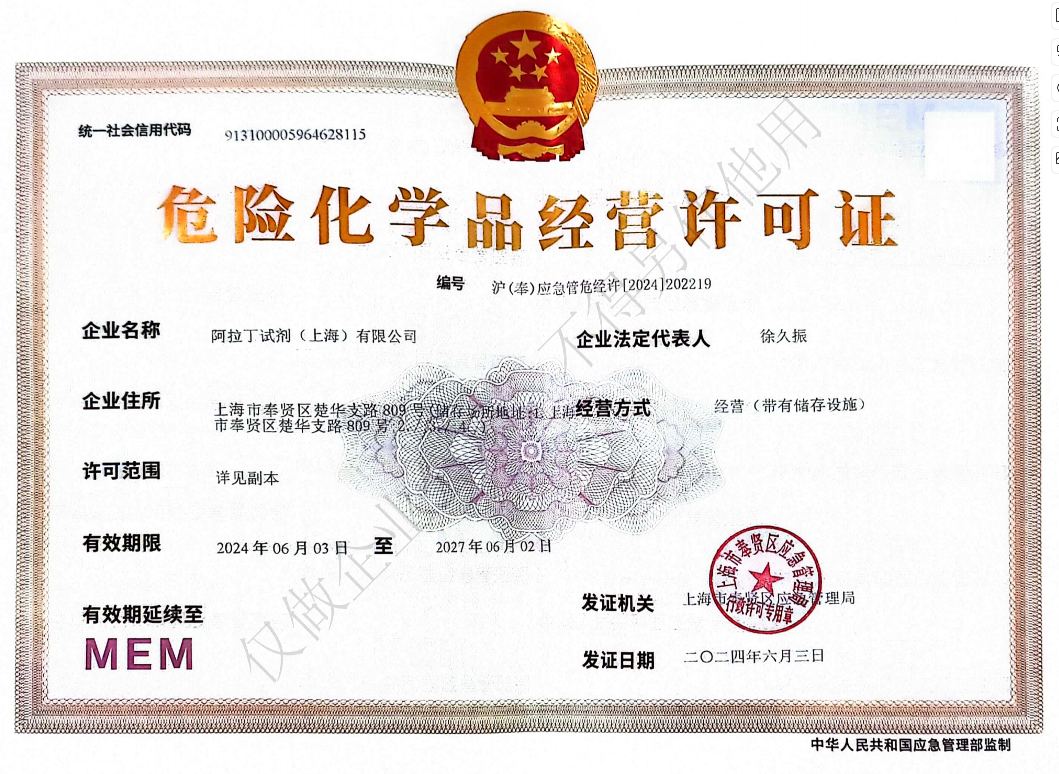 危险品化学品经营许可证(带存储)