
Molecular Characteristics, Major Types, and Development Strategies of Peptide Drugs
Molecular Characteristics, Major Types, and Development Strategies of Peptide Drugs
Peptide drugs consist of specific amino acid sequences and can exert their effects through receptor agonism or antagonism, regulation of enzymes and ion channels, interference with protein-protein interactions, and targeted delivery. Their molecular size lies between that of conventional small-molecule drugs and antibody drugs. Peptides generally exhibit relatively high target selectivity but also face limitations such as low proteolytic stability, rapid in vivo clearance, and poor oral bioavailability.
Keywords: peptide drugs; peptide hormones; natural bioactive peptides; peptide vaccines; peptide-drug conjugates; cell-penetrating peptides; targeted delivery; peptide modification
1 Molecular Characteristics of Peptide Drugs
1.1 Basic Composition of Peptide Drugs
Peptides are molecules formed by amino acids linked through peptide bonds. In drug research, bioactive molecules composed of several to dozens of amino acids and generally having molecular weights below 10 kDa are commonly classified as peptides, although no absolute boundary exists between peptides and proteins. Peptide drugs include endogenous hormones such as insulin, somatostatin, and Oxytocin, as well as natural toxin peptides, receptor ligands, antigenic epitope peptides, cell-penetrating peptides, and targeted delivery peptides. Their pharmacological activity is influenced by amino acid sequence, spatial conformation, disulfide-bond connectivity, and chemical modifications.
1.2 Major Characteristics of Peptide Drugs
(1) Target Selectivity
Peptides can recognize receptors, enzymes, ion channels, or protein-protein interaction regions through relatively large binding interfaces and are suitable for regulating certain targets that are difficult to address using conventional small molecules.
(2) Pharmacological Activity
Many peptides are derived from endogenous ligands or natural bioactive molecules and can produce receptor agonism, receptor blockade, enzyme inhibition, or ion-channel modulation at relatively low concentrations.
(3) Structural Tunability
Peptides can be modified through amino acid substitution, sequence truncation, terminal modification, cyclization, lipidation, and conjugation to regulate stability, target affinity, tissue distribution, and duration of action.
(4) Development Limitations
Unmodified peptides are readily degraded by proteases and rapidly cleared by the kidneys. Their cell-membrane permeability and oral bioavailability are generally low, so they are commonly administered by injection, nasal delivery, pulmonary delivery, or local administration.
Table 1 Major Differences Among Small-Molecule Drugs, Peptide Drugs, and Antibody Drugs
Comparison Item | Small-Molecule Drugs | Peptide Drugs | Antibodies and Therapeutic Proteins |
Molecular size | Relatively small | Intermediate | Relatively large |
Major targets | Enzymes, receptors, and certain intracellular targets | Receptors, enzymes, ion channels, and protein-protein interaction interfaces | Cell-surface or extracellular targets |
Target selectivity | Depends on chemical structure | Generally relatively high | Generally relatively high |
Cell-membrane permeability | Usually relatively good | Usually relatively low | Extremely low |
Oral bioavailability | Relatively good for some compounds | Usually relatively low | Generally unsuitable for oral administration |
In vivo stability | Highly variable | Usually relatively low for unmodified peptides | Generally relatively high |
Major production method | Chemical synthesis | Chemical synthesis or recombinant expression | Cellular expression and purification |
Major limitations | Off-target effects and metabolite-related risks | Enzymatic degradation, rapid clearance, and inconvenient administration | Limited tissue penetration, complex production, and immunogenicity risk |
2 Peptide Hormones and Their Derivatives
2.1 Insulin and Its Analogs
Insulin consists of an A chain and a B chain and maintains its active conformation through intrachain and interchain disulfide bonds. After binding the insulin receptor, it activates PI3K-AKT and related signaling pathways to promote glucose uptake, glycogen synthesis, and lipid metabolism. Insulin Aspart reduces intermolecular aggregation through amino acid substitution and therefore exhibits relatively rapid absorption. Insulin Glargine forms a subcutaneous depot through alteration of its isoelectric properties, whereas Insulin Detemir increases albumin binding through fatty acid modification and thereby prolongs its duration of action.
2.2 Somatostatin and Its Analogs
Somatostatin binds SSTR1-SSTR5 and inhibits the secretion of growth hormone and multiple gastrointestinal and pancreatic hormones. Native somatostatin has a short half-life, whereas Octreotide and Pasireotide improve stability through amino acid substitution, cyclization, and conformational restriction. Different analogs have distinct affinities for SSTR subtypes and therefore differ in their regulation of pituitary and neuroendocrine hormone secretion.
2.3 Other Hormone-Related Peptides
(1) Oxytocin Receptor Agonists and Antagonists
Oxytocin activates the oxytocin receptor and promotes uterine smooth-muscle contraction and milk ejection, whereas Atosiban antagonizes the oxytocin receptor and vasopressin V1A receptor and can inhibit uterine smooth-muscle contraction.
(2) GnRH Agonists and Antagonists
Gonadorelin activates pituitary GnRH receptors and promotes the release of luteinizing hormone and follicle-stimulating hormone. Continuous receptor stimulation by Leuprolide and Goserelin can cause receptor downregulation and reduce sex-hormone levels, whereas Cetrorelix directly antagonizes the GnRH receptor.
(3) Calcitonin Peptides
Calcitonin inhibits osteoclast activity and regulates calcium and phosphate metabolism through the calcitonin receptor. Salmon Calcitonin has relatively strong receptor activity and a prolonged duration of action and can be used in studies of bone resorption and calcium metabolism.
Table 2 Representative Peptide Hormones and Their Major Applications
Category | Representative Drug | CAS No. | Major Target | Main Application or Research Direction |
Insulin | Insulin (human) | Insulin receptor | Insulin signaling, glucose metabolism, and diabetes research | |
Insulin analog | Insulin Glargine | Insulin receptor | Basal insulin action and regulation of glucose metabolism | |
Insulin analog | Insulin Detemir | 169148-63-4 | Insulin receptor | Long-acting insulin effects and diabetes-related research |
Insulin analog | Insulin Aspart | Insulin receptor | Postprandial glucose regulation and rapid-acting insulin research | |
Somatostatin | Cyclic Somatostatin | Somatostatin receptors | Inhibition of hormone secretion and SSTR signaling research | |
Somatostatin analog | Octreotide | 83150-76-9 | Somatostatin receptors | Regulation of growth hormone and neuroendocrine hormone secretion |
Somatostatin analog | Pasireotide | Multiple somatostatin receptor subtypes | Pituitary hormone and neuroendocrine signaling research | |
Oxytocin receptor agonist | Oxytocin | Oxytocin receptor | Uterine smooth-muscle contraction and oxytocin signaling research | |
Oxytocin receptor antagonist | Atosiban | Oxytocin receptor and V1A receptor | Inhibition of uterine contraction and receptor-antagonism research | |
GnRH agonist | Leuprolide | GnRH receptor | Sex-hormone suppression and hormone-dependent disease research | |
GnRH agonist | Goserelin | GnRH receptor | Sex-hormone suppression and hypothalamic-pituitary-gonadal axis research | |
GnRH antagonist | Cetrorelix | GnRH receptor | Regulation of gonadotropin release and assisted-reproduction research | |
Calcitonin peptide | Salmon Calcitonin | Calcitonin receptor | Bone resorption, calcium metabolism, and osteoporosis-related research |
3 Natural Bioactive Peptides
3.1 Sources and Structural Characteristics of Natural Peptides
Natural bioactive peptides can be derived from microorganisms, plants, amphibians, reptiles, insects, and marine organisms and may function in predation, defense, antimicrobial activity, neural signaling, and ion-channel inhibition. Microbial secondary metabolites include multiple cyclic peptides and lipopeptides, whereas animal venoms are important sources of ion-channel ligands, receptor ligands, and enzyme-inhibitory peptides.
3.2 ICK Peptides and Ziconotide
The core of an inhibitor cystine knot (ICK) peptide is typically formed by three disulfide bonds arranged in a characteristic knotted topology, which constrains peptide-chain conformation and improves thermal stability and protease resistance. Ziconotide is a synthetic form of ω-conotoxin MVIIA that blocks N-type voltage-gated calcium channels and reduces neurotransmitter release and is used in studies of pain transmission and ion channels.
3.3 Exendin-4
Exendin-4 consists of 39 amino acids and activates the GLP-1 receptor. Compared with endogenous GLP-1, Exendin-4 is more resistant to degradation by dipeptidyl peptidase-4 and can be used in studies of insulin secretion, glucose metabolism, and GLP-1 receptor signaling.
Table 3 Representative Natural Bioactive Peptides
Category | Representative Peptide | CAS No. | Major Target | Main Application or Research Direction |
Conotoxin-derived peptide | Ziconotide | 107452-89-1 | N-type voltage-gated calcium channel | Neurotransmitter release, pain transmission, and ion-channel research |
Venom-derived receptor ligand | Exendin-4 (Exenatide) | GLP-1 receptor | Insulin secretion, glucose metabolism, and GLP-1 receptor signaling research |
4 Peptide Vaccines and Antigenic Epitope Peptides
4.1 Mechanisms and Limitations of Peptide Vaccines
Peptide vaccines consist of B-cell epitopes, CD4⁺ T-cell epitopes, or CD8⁺ T-cell epitopes derived from pathogens or tumor-associated antigens. T-cell epitope peptides can be processed by antigen-presenting cells and loaded onto MHC molecules, or short peptides may bind directly to MHC molecules, thereby activating CD4⁺ helper T cells or CD8⁺ cytotoxic T cells; B-cell epitopes are recognized directly by B-cell receptors or antibodies and can induce antibody responses with appropriate helper T-cell support. Short peptides generally have relatively weak immunogenicity and may also be limited by proteolytic degradation and HLA type, so they are often combined with adjuvants, delivery carriers, helper T-cell epitopes, or multiepitope structures.
4.2 Multiepitope Vaccines
Multiepitope vaccines integrate multiple conserved antigenic fragments into a single molecule and can simultaneously cover B-cell and T-cell responses. Multimeric-001 consists of multiple conserved influenza-virus epitopes and can be used in studies of cross-strain immune responses and broad-spectrum vaccine design.
4.3 Optimization of Tumor Antigen Epitopes
Natural tumor antigenic peptides may bind MHC molecules insufficiently. Substitution of amino acids at MHC anchor positions can enhance binding to specific HLA molecules and increase the capacity to induce cytotoxic T lymphocytes. Disomotide was derived by modifying the gp100:209-217 epitope, with the sequence changed from ITDQVPFSV to IMDQVPFSV, and is used in studies of melanoma antigen presentation and CTL responses.
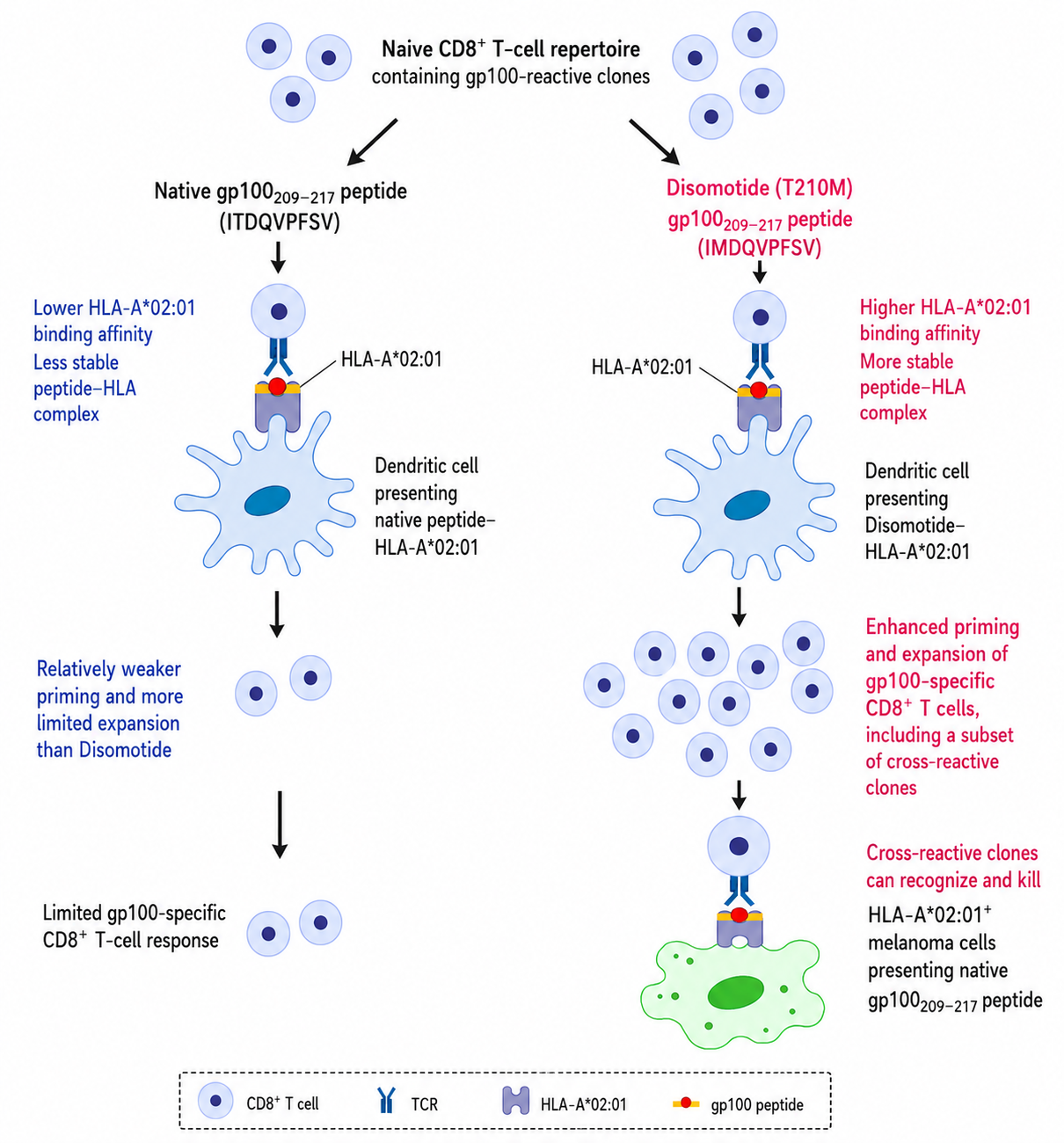
Figure 1 Mechanism of Disomotide-mediated enhancement of HLA-A*02:01 antigen presentation and CD8⁺ T cell responses
Table 4 Representative Peptide Vaccines and Antigenic Epitope Peptides
Category | Representative Peptide | CAS No. | Major Target | Main Application or Research Direction |
Multiepitope vaccine | Multimeric-001 | — | B cells and influenza-specific CD4⁺ and CD8⁺ T cells | Broad-spectrum influenza immunity and multiepitope vaccine design |
Tumor antigenic epitope peptide | Disomotide (G209-2M) | — | HLA-A2 and gp100-specific T cells | Melanoma antigen presentation and CTL-response research |
5 Peptide-Drug Conjugates and Targeted Delivery
5.1 Composition of PDCs and Payload Release
Peptide-drug conjugates generally consist of a targeting peptide, linker, and payload. The targeting peptide recognizes cell-surface receptors, tissue-specific molecules, or extracellular-matrix components; the linker controls circulation stability and payload release; and the payload may be a cytotoxic small molecule, nucleic acid, protein, imaging agent, or radionuclide. Linkers can be cleaved by lysosomal proteases, low pH, reducing environments, or specific enzymes. Insufficient linker stability can cause premature payload release, whereas excessive stability can limit effective intracellular release.
5.2 Peptide-Radionuclide Conjugates
Lutetium Lu 177 Dotatate consists of a somatostatin analog peptide, the DOTA chelator, and the radionuclide ¹⁷⁷Lu. It recognizes somatostatin receptors, particularly SSTR2, and delivers β radiation to receptor-overexpressing cells and is used in studies of peptide receptor-targeted radionuclide delivery.
5.3 Cell-Penetrating and Tissue-Targeting Peptides
(1) TAT Peptide
The TAT peptide contains a basic sequence enriched in arginine and lysine and can promote internalization of protein, nucleic acid, and small-molecule payloads.
(2) iRGD Peptide
iRGD initially binds αv integrins. After proteolytic cleavage exposes the CendR motif, the peptide further binds Neuropilin-1 and thereby enhances penetration into tumor tissues.
(3) Angiopep-2
Angiopep-2 interacts with LRP1-associated transport systems and is used in studies of blood-brain barrier transport and brain-targeted delivery.
Table 5 Products Related to Peptide Conjugation and Targeted Delivery
Category | Representative Product | CAS No. | Major Target | Main Application or Research Direction |
Peptide-radionuclide conjugate | Lutetium Lu 177 Dotatate | 437608-50-9 | SSTR2 and other somatostatin receptors | Receptor-targeted radionuclide delivery |
Cell-penetrating peptide | TAT Peptide (47-57) TFA | Cell membrane and endocytic systems | Delivery of proteins, nucleic acids, and small-molecule payloads | |
Tumor-penetrating peptide | iRGD Peptide | αv integrins and Neuropilin-1 | Tumor targeting, tissue penetration, and drug delivery | |
Brain-targeted delivery peptide | Angiopep-2 Hydrochloride | — | LRP1-associated transport system | Blood-brain barrier transport and brain-targeted delivery |
6 Other Receptor-Modulating and Functional Peptides
6.1 Vasoactive Peptides
Aviptadil is a synthetic form of vasoactive intestinal peptide and acts on VIP receptors to regulate vasodilation, smooth-muscle activity, and inflammation-associated signaling.
6.2 Chemokine Receptor-Antagonistic Peptides
Motixafortide is a cyclic peptide that antagonizes CXCR4 and interferes with the CXCL12-CXCR4 axis and is used in studies of hematopoietic-cell homing, cell migration, and the tumor microenvironment.
6.3 Viral Entry-Inhibitory Peptides
Bulevirtide is derived from the receptor-binding region of the hepatitis B virus large surface protein and binds the sodium taurocholate cotransporting polypeptide, thereby blocking the entry of HBV and HDV into hepatocytes.
6.4 Tissue-Repair Peptides
Selcopintide is a functional peptide derived from a fragment of the Copine-7 protein and can be used in studies of odontoblastic differentiation and dentin repair.
Table 6 Other Functional Peptides
Category | Representative Peptide | CAS No. | Major Target | Main Application or Research Direction |
Vasoactive peptide | Aviptadil | VIP receptors | Vasodilation, pulmonary signaling, and neuropeptide-function research | |
Chemokine receptor-antagonistic peptide | Motixafortide | CXCR4 | Hematopoietic-cell mobilization, cell migration, and tumor-microenvironment research | |
Viral entry-inhibitory peptide | Bulevirtide | 2012558-47-1 | NTCP | HBV and HDV entry and viral-receptor blockade research |
Tissue-repair peptide | Selcopintide Acetate | — | Odontoblastic differentiation-associated signaling | Dental-pulp cell differentiation and dentin-repair research |
7 Structural Optimization and Evaluation of Peptide Drugs
7.1 Stability Optimization
(1) Terminal Modification
N-terminal acetylation and C-terminal amidation can reduce recognition by certain exopeptidases and alter molecular charge and receptor affinity.
(2) Non-Natural Amino Acids
Introduction of D-amino acids, N-methyl amino acids, or other non-natural amino acids can improve proteolytic stability but may also alter conformation, solubility, and target selectivity.
(3) Cyclization
Head-to-tail cyclization, side-chain cyclization, disulfide-bond cyclization, and stapled structures can restrict peptide-chain conformation and improve binding ability and protease resistance.
7.2 Half-Life Extension
Fatty acid modification can increase peptide binding to albumin and reduce renal clearance. PEGylation, albumin-binding groups, and fusion-protein design can also prolong in vivo exposure, but they may reduce receptor-binding rates or tissue-penetration capacity.
7.3 Delivery Systems
Liposomes, polymeric nanoparticles, hydrogels, microspheres, and local sustained-release systems can reduce proteolytic degradation and regulate release rates. Delivery systems should be evaluated for drug-loading capacity, release kinetics, storage stability, and carrier biocompatibility.
7.4 Activity and Stability Evaluation
Peptide candidates require evaluation of target binding, receptor agonism or antagonism, enzyme activity, cellular function, and selectivity, together with stability testing in buffers, plasma, protease solutions, and tissue homogenates. For cell-penetrating peptides and PDCs, cell-surface adsorption, endocytic uptake, endosomal escape, and cytosolic release must be distinguished, and delivery efficiency cannot be determined solely from total cellular fluorescence.
7.5 Quality Control
Chemically synthesized peptides should be evaluated for molecular weight, purity, sequence, content, water, residual solvents, and counterions. Disulfide-containing peptides also require confirmation of disulfide-bond connectivity and folding isomers. Peptides intended for cellular and animal experiments should additionally be tested for endotoxin, sterility, solubility, and aggregation state.
Peptide drugs can achieve receptor modulation, ion-channel intervention, immune activation, and targeted delivery through sequence design, conformational restriction, and chemical modification. Peptide development requires integrated evaluation of target activity, proteolytic stability, in vivo exposure, tissue distribution, and formulation quality.
References
[1] Atsmon J, Kate-Ilovitz E, Shaikevich D, et al. Priming by a novel universal influenza vaccine (Multimeric-001): A gateway for improving immune response in the elderly population. Vaccine. 2014;32(44):5816-5823.
[2] Malonis RJ, Lai JR, Vergnolle O. Peptide-based vaccines: Current progress and future challenges. Chem Rev. 2020;120(6):3210-3229.
[3] Yang S, Linette GP, Longerich S, et al. Antimelanoma activity of CTL generated from peripheral blood mononuclear cells after stimulation with autologous dendritic cells pulsed with melanoma gp100 peptide G209-2M is correlated to TCR avidity. J Immunol. 2002;169(1):531-539.
[4] Houghton AN, Guevara-Patiño JA. Immune recognition of self in immunity against cancer. J Clin Invest. 2004;114(4):468-471.
[5] Gong L, Zhang Y, Zhao J, et al. Research advances in peptide–drug conjugates. Acta Pharm Sin B. 2023;13(10):4138-4158.
For more related articles, please see below:
[1] Peptide Basics
[3] Suitable for peptide synthesis
[4] Peptide Screening and Optimization
[6] The application of click chemistry in chemical ligation and peptide modification


 危险品化学品经营许可证(带存储)