
Selection of General Anesthetic Agents for Laboratory Animals
Selection of General Anesthetic Agents for Laboratory Animals
Selection of general anesthetic agents for laboratory animals should be centered on the experimental objective, animal species, procedure duration, analgesic requirement, monitoring conditions, and risk of data interference. Different anesthetic agents differ markedly in mechanism of action, anesthetic depth, analgesic capacity, recovery speed, respiratory and circulatory effects, and compliance requirements. Protocol design should not use “animal immobility” as the only criterion.
Keywords: laboratory animal general anesthesia; anesthetic agent selection; inhalation anesthesia; injectable anesthesia; isoflurane; Zoletil 50; propofol; species differences
1 Principles for Selecting General Anesthetic Agents
1.1 Selection According to Experimental Purpose
(1) Survival surgery
Survival surgery requires stable anesthetic depth, adequate analgesia, predictable recovery, and postoperative monitoring. Isoflurane is suitable for most survival surgeries when equipment conditions are available. Injectable or combined anesthesia can be used for specific species and procedural scenarios, but analgesia, heat support, and recovery observation must be provided. Sodium pentobarbital, Avertin, urethane, chloral hydrate, and ether are not appropriate as routine anesthetic agents for survival surgery.
(2) Short-term restraint and imaging examination
For short-term restraint, ultrasound, CT/MRI, and radiotherapy positioning, induction speed, recovery speed, and intergroup consistency are more important. Isoflurane is usually more suitable for repeated, batch, and short-duration procedures. Injectable anesthesia may be used when equipment is limited, but dose error and recovery variability are more likely to increase data fluctuation.
(3) Terminal procedures
Terminal procedures may use protocols with lower recovery requirements, but they must still comply with ethical approval, animal welfare, and personnel safety requirements. Sodium pentobarbital, Avertin, or urethane should only be used in terminal experiments with clear scientific justification, institutional approval, and veterinary supervision.
1.2 Excluding Drug Interference According to Experimental Endpoints
(1) Neuroscience and behavioral experiments
Neuroscience experiments need to control the effects of anesthetic agents on cerebral blood flow, neuronal excitability, electrophysiological signals, and behavioral recovery. Isoflurane, ketamine, urethane, and barbiturates may all alter neural activity. Anesthetic depth, exposure duration, body temperature, and detection window should be standardized during experiments.
(2) Cardiovascular and respiratory experiments
Cardiovascular experiments should control changes in blood pressure, heart rate, vascular tone, and cardiac output. Respiratory experiments should focus on respiratory rate, oxygen saturation, and blood gas status. Propofol, sodium pentobarbital, α2 receptor agonists, and inhalation anesthetics may all affect circulatory or respiratory parameters.
(3) Immune inflammation and metabolism experiments
Immune inflammation and metabolism experiments should standardize anesthetic agent, administration route, analgesic protocol, heat support, and sampling time. Hypothermia, postoperative pain, differences in anesthetic depth, and certain anesthetic agents themselves can alter IL-6, TNF-α, IFN-related factors, blood glucose, insulin, and energy metabolism.
Table 1 Selection Criteria for General Anesthetic Agents in Laboratory Animals
Selection Factor | Core Consideration | Protocol Significance |
Procedure purpose | Surgery, short-term restraint, imaging examination, or terminal procedure | Determines anesthetic depth, maintenance duration, and recovery requirements |
Animal species | Mouse, rat, rabbit, dog, pig, non-human primate | Determines drug sensitivity, administration route, and monitoring focus |
Experimental endpoint | Neuroscience, cardiovascular, metabolic, immune, or pharmacodynamic evaluation | Determines drug interference that should be avoided |
Analgesic requirement | Presence of incision, traction, bone manipulation, or postoperative pain | Determines whether local or systemic analgesia is required |
Equipment conditions | Availability of vaporizer, oxygen source, waste gas scavenging, and intubation capacity | Determines whether inhalation anesthesia is suitable |
Compliance requirements | Involvement of controlled drugs, restricted agents, or occupational exposure | Determines procurement, storage, recordkeeping, and approval requirements |
2 Common General Anesthetic Agents for Laboratory Animals
2.1 Isoflurane
(1) Principle and positioning
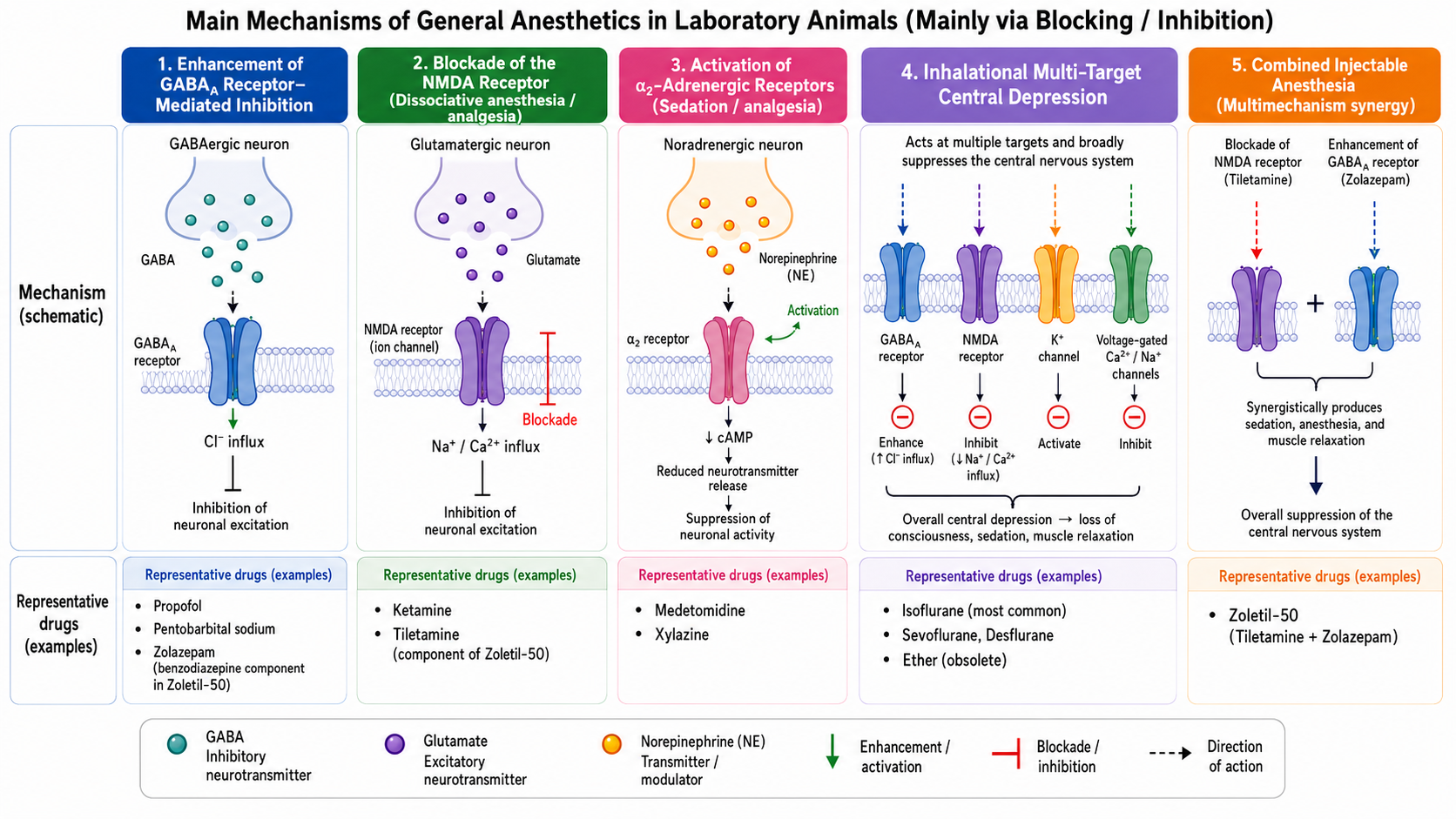
Isoflurane is a volatile inhalation anesthetic. It enters the bloodstream and central nervous system through the alveoli and produces general anesthesia by suppressing neuronal excitability. Its anesthetic depth can be continuously adjusted using a vaporizer, and induction and recovery are relatively rapid, making it one of the most commonly used options in laboratory animal inhalation anesthesia.
(2) Suitable animals and experimental scenarios
Isoflurane is suitable for short-term restraint, imaging examination, embryo transfer, tail/toe sampling, and many survival surgeries in rodents such as mice and rats. It is also suitable for repeated procedures requiring stable anesthetic depth and rapid recovery. Isoflurane can be used in neuroscience, cardiovascular, and respiratory experiments, but anesthetic concentration, oxygen flow rate, exposure duration, and heat support conditions must be standardized.
(3) Advantages and limitations
The core advantages of isoflurane are controllable depth, rapid recovery, and good intergroup consistency. Its main limitations are dependence on a vaporizer, oxygen source, induction chamber or nose cone system, and the need for waste gas scavenging. Isoflurane can also affect cerebral blood flow, blood pressure, respiration, and body temperature; it should not be regarded as an anesthesia protocol without physiological interference.
(4) Dose and monitoring points
Isoflurane concentration should not be defined as a fixed value in a general article. It should be determined according to animal species, equipment calibration, procedure duration, and institutional SOP. Experimental records should include induction concentration, maintenance concentration, oxygen flow rate, anesthesia duration, heating method, and recovery criteria.
2.2 Propofol
(1) Principle and positioning
Propofol is an intravenous anesthetic that mainly produces rapid induction of anesthesia by enhancing GABAergic inhibitory neurotransmission. It has rapid onset and rapid clearance and is suitable for intravenous induction, short-duration anesthesia, or as an induction agent before inhalation anesthesia.
(2) Suitable animals and experimental scenarios
Propofol is more suitable for animals such as dogs and pigs, in which intravenous access can be established more readily and respiratory monitoring conditions are available. It has operational value in large-animal experiments requiring endotracheal intubation, inhalation anesthesia maintenance, or short-duration intravenous induction. In rabbits, propofol is cleared rapidly, and when used alone, the duration of anesthesia is short; it is therefore not suitable as a stable maintenance protocol for long rabbit surgeries.
(3) Advantages and limitations
Propofol provides smooth induction, relatively rapid recovery, and short residual effects. Its main limitations are dose-related hypotension, respiratory depression, and transient apnea. It should be used cautiously in cardiovascular disease models, respiratory function studies, pregnant animals, and cesarean section-related experiments.
(4) Dose and monitoring points
Propofol should be used only when intravenous access, oxygen supply, respiratory monitoring, and emergency support conditions are available. Dose should be determined by a laboratory animal veterinarian according to species, body weight, administration route, target anesthetic depth, and procedure duration, and should not be directly extrapolated across species.
2.3 Zoletil 50
(1) Composition and principle
Zoletil 50 consists of tiletamine and zolazepam in a fixed ratio. Tiletamine is an NMDA receptor antagonist that provides the main anesthetic effect, while zolazepam provides sedation, anticonvulsant activity, and muscle relaxation. The combination is suitable for short-duration anesthesia, induction anesthesia, and restraint in some animals.
(2) Suitable animals and experimental scenarios
Zoletil 50 is more suitable for short-duration anesthesia or induction anesthesia in dogs, cats, non-human primates, and some rodents. It can be used as one injectable anesthesia option for short-term sampling, restraint before imaging, basic procedures in non-human primates, and certain short-duration procedures in small animals.
(3) Advantages and limitations
Zoletil 50 provides sedation, anesthesia, and muscle relaxation. In practice, it is often combined with xylazine or medetomidine to enhance anesthetic depth and reduce unstable responses to a single agent. Its anesthetic effect is not ideal in rabbits and guinea pigs. High doses or intramuscular injection may affect certain blood biochemical indicators; experiments involving liver and kidney function, metabolism, or blood biochemical endpoints should use it cautiously.
(4) Dose and monitoring points
When Zoletil 50 is combined with α2 receptor agonists, respiration, heart rate, body temperature, and recovery time should be closely monitored. Dose should be determined according to species, administration route, whether other sedative or analgesic agents are combined, and the degree of procedural trauma.
2.4 Medetomidine and Xylazine
(1) Principle and positioning
Medetomidine and xylazine are α2 receptor agonists that produce sedation, analgesia, and muscle relaxation. They are usually not used alone as general anesthetic agents. They are commonly combined with ketamine or Zoletil 50 to enhance anesthetic depth, improve restraint quality, and reduce the amount of a single anesthetic agent required.
(2) Suitable animals and experimental scenarios
α2 receptor agonists are suitable as part of combined anesthesia protocols requiring sedative and analgesic support. In rodents, dogs, cats, and some large-animal experiments, they can be combined with ketamine or Zoletil 50 according to veterinary protocols. Some protocols can use antagonists to promote recovery.
(3) Advantages and limitations
Medetomidine and xylazine can improve muscle relaxation and procedural controllability, but they can cause reduced heart rate, circulatory changes, decreased gastrointestinal motility, and increased blood glucose. They should be used cautiously in metabolism, cardiovascular, endocrine, and gastrointestinal function-related experiments. Mice, rabbits, and pigs differ markedly in sensitivity to α2 receptor agonists, and protocols cannot be directly extrapolated across species.
(4) Dose and monitoring points
Dose, combination regimen, and timing of antagonist use should be determined by a veterinarian according to animal species, surgical trauma, recovery requirements, and experimental endpoints. Monitoring should focus on heart rate, respiration, body temperature, blood glucose interference, and recovery quality.
2.5 Ketamine
(1) Principle and positioning
Ketamine is an NMDA receptor antagonist that produces dissociative anesthesia and analgesia. It is characterized by relatively good analgesia and comparatively mild respiratory depression, but some reflexes may remain during anesthesia, and animals may show increased muscle tone, increased salivation, and sympathetic activation.
(2) Suitable animals and experimental scenarios
Ketamine is commonly combined with α2 receptor agonists such as xylazine or medetomidine for short-duration anesthesia or induction anesthesia in dogs, cats, pigs, rabbits, non-human primates, and some rodents. Ketamine-based combination protocols are practical for short procedures in non-human primates, cats, and pigs. In rabbits and rodents, individual variability and assessment of anesthetic depth require close attention.
(3) Advantages and limitations
Ketamine has the advantage of relatively good analgesia and comparatively mild respiratory depression. Its limitations are that it can affect neural activity, sympathetic tone, cardiac output, salivation, and muscle tone. Corneal and laryngeal reflexes may remain, and the presence of reflexes alone should not be used to determine insufficient anesthesia. It should be used cautiously in neuroscience, behavioral, pain, and cardiovascular studies.
(4) Dose and monitoring points
Ketamine is a regulated drug, and procurement, storage, recordkeeping, and use must comply with institutional requirements. Specific dosing should follow approved protocols and veterinary guidance. Respiration, heart rate, secretions, muscle tone, and recovery-phase behavior should be monitored during use.
2.6 Sodium Pentobarbital
(1) Principle and positioning
Sodium pentobarbital is a barbiturate anesthetic that produces sedation and anesthesia by enhancing inhibitory neurotransmission in the central nervous system. It has a relatively long anesthetic duration and extensive historical experimental data, but its analgesic effect is weak and its safety margin is narrow. It is not suitable as a routine anesthetic agent for survival surgery.
(2) Suitable scenarios
Sodium pentobarbital is more suitable for terminal procedures, euthanasia, or special experiments requiring consistency with historical data. If used in survival experiments, there should be clear scientific justification, ethical approval, sufficient veterinary monitoring, and a matched analgesic protocol.
(3) Limitations and data impact
Sodium pentobarbital can markedly suppress respiration and circulation and affect blood pressure, cardiac output, blood gases, hepatic glucose metabolism, and insulin levels. Its use in cardiovascular, respiratory, metabolic, and neurological function studies can easily introduce systematic bias.
(4) Dose and monitoring points
Because of its narrow safety margin, sodium pentobarbital should not be used as a routine anesthesia option without monitoring conditions. When used, respiration, circulation, body temperature, and anesthetic depth should be closely monitored, and whether it is used in a terminal setting should be clearly defined.
2.7 Avertin
(1) Composition and positioning
The active component of Avertin is tribromoethanol, which was previously used for short-duration anesthesia in mice and rats. It has relatively rapid onset, short anesthetic duration, and fewer procurement restrictions, but it is now more appropriately regarded as a restricted protocol rather than a general anesthetic option.
(2) Suitable scenarios
Avertin is only suitable for ethically reviewed terminal anesthesia in rodents or a small number of short procedures. For short procedures such as embryo transfer, the feasibility of alternatives such as isoflurane should be prioritized.
(3) Main risks
Avertin solution has poor stability. After preparation and storage, its pH may decline and irritating or toxic metabolites may form. After administration, animals may develop abdominal inflammation, peritonitis, increased gastrointestinal secretion, ileus, respiratory depression, and cardiac depression. Its safety margin is narrow, and sensitivity differs substantially between individuals and sexes.
(4) Precautions
Avertin is not suitable for inflammation studies, abdominal studies, gastrointestinal function research, or routine survival surgery. If used, it should be freshly prepared, protected from light, recovery status should be observed, and veterinary care should be strengthened.
2.8 Urethane
(1) Action characteristics and positioning
Urethane can maintain stable anesthesia for a relatively long period and has historically been used mainly in terminal neurophysiology or electrophysiology experiments. Its advantage is long anesthetic duration, with relatively limited interference with certain neurotransmission processes under some conditions.
(2) Suitable scenarios
Urethane is only suitable for a small number of terminal experiments requiring long-term stable recording and no animal recovery. It should not be used for survival surgery.
(3) Limitations and data impact
Urethane has clear carcinogenic and occupational exposure risks. It can also affect blood pressure, blood glucose, abdominal status, and neuronal membrane excitability, and may cause ascites, secondary renal injury, and neuronal injury.
(4) Precautions
Before use, it should be confirmed that no alternative protocol is available, and preparation should be performed in a fume hood. Personnel must use personal protective equipment, and waste liquid and contaminated consumables should be handled as hazardous waste.
2.9 Chloral Hydrate
(1) Drug characteristics
Chloral hydrate was previously used for laboratory animal anesthesia, but it has weak analgesic effects and causes marked cardiac and respiratory depression at anesthetic doses. Its metabolites and tissue irritation confer relatively high safety risks.
(2) Main limitations
Chloral hydrate strongly irritates mucosa, muscle, and abdominal tissues and can cause inflammation, necrosis, hemolysis, hematuria, and liver and kidney injury. Its animal welfare risks and data interference are inconsistent with modern requirements for laboratory animal anesthesia.
(3) Use recommendation
Except for very rare special pharmacological experiments approved by ethics review, chloral hydrate should not be used as a general anesthetic agent for laboratory animals.
2.10 Ether
(1) Drug characteristics
Ether is an early inhalation anesthetic and is no longer suitable for routine laboratory animal anesthesia. It requires a high effective concentration, has a high blood-gas partition coefficient, leads to slow recovery, and is difficult to rescue after overdose.
(2) Main limitations
Ether is flammable and explosive, irritates the respiratory tract, increases respiratory secretions, and poses occupational safety risks to operators.
(3) Use recommendation
Modern laboratory animal anesthesia should prioritize controllable inhalation anesthetics such as isoflurane or veterinarian-reviewed injectable/combined anesthesia protocols. Ether should no longer be used as a routine option.
Table 2 Selection Table of Common General Anesthetic Agents for Laboratory Animals
Drug | CAS No. | Functional Positioning | Advantages | Key Limitations | Suggested Application |
Isoflurane | Controllable inhalation anesthesia | Adjustable depth, rapid induction and recovery, suitable for repeated procedures | Requires equipment and waste gas scavenging; may affect respiration and circulation | Prioritized for survival surgery, short-term restraint, and imaging examination | |
Propofol | Intravenous induction and short-duration anesthesia | Rapid onset, rapid clearance, smooth induction | Respiratory depression, hypotension, requires intravenous access | Use when oxygen supply and monitoring conditions are available | |
Zoletil 50 | Tiletamine hydrochloride: 14176-50-2; zolazepam hydrochloride: 33754-49-3 | Combined injectable anesthesia | Provides sedation, anesthesia, and muscle relaxation | Marked species differences; poor suitability in rabbits and guinea pigs | Optional for short procedures in dogs, cats, monkeys, and some rodents |
Medetomidine/xylazine | Medetomidine: 86347-14-0; xylazine: 7361-61-7 | Sedation, analgesia, and auxiliary combined anesthesia | Can enhance combined anesthetic depth; some protocols can be antagonized | Bradycardia, increased blood glucose, gastrointestinal effects | Use in combination with ketamine or Zoletil 50 |
Ketamine | Dissociative anesthesia and analgesia | Good analgesia and relatively mild respiratory depression | Reflexes may remain; interferes with neural and cardiovascular indicators | Often used as part of combined anesthesia | |
Sodium pentobarbital | 57-33-0 | Barbiturate anesthesia | Longer maintenance duration and extensive historical data | Weak analgesia, narrow safety margin, substantial physiological interference | Use for terminal procedures or specially approved experiments |
Avertin | Short-duration rodent anesthesia | Rapid onset and fewer procurement restrictions | Abdominal irritation, unstable solution, narrow safety margin | Limited to terminal or selected short procedures | |
Urethane | Long-duration terminal anesthesia | Can maintain relatively long stable anesthesia | Carcinogenic risk; unsuitable for survival surgery | Restricted use in selected terminal neuroscience experiments | |
Chloral hydrate | 302-17-0 | Traditional sedative anesthesia | No routine advantage at present | Weak analgesia, obvious tissue irritation and organ injury | Not recommended |
Ether | 60-29-7 | Early inhalation anesthesia | No routine advantage at present | Flammable/explosive, respiratory irritation, uncontrollable depth | Not recommended |
3 Anesthetic Selection for Different Laboratory Animal Species
3.1 Rats and Mice
(1) Preferred protocols
For short-term restraint, imaging examination, tail/toe sampling, embryo transfer, and most repeated within-group procedures in rats and mice, isoflurane inhalation anesthesia should be prioritized. Isoflurane provides rapid induction and recovery, adjustable anesthetic depth, and is suitable for experiments requiring batch processing and intergroup consistency. Injectable anesthesia may be used when equipment is limited or for specific terminal procedures, but animals must be weighed individually for dose calculation, and the same fixed injection volume should not be applied to all animals.
(2) Main risks
Rodents have small body mass, rapid metabolism, and large surface area relative to body weight. The most common anesthesia-related risks are hypothermia, dose error, and delayed recovery. Overdose of injectable anesthesia can rapidly cause respiratory depression, while prolonged inhalation anesthesia can also affect body temperature, respiration, and recovery status. Group-housed animals should not be returned to the cage before complete recovery, as lower-ranking individuals may be attacked by cage mates.
(3) Experimental model considerations
Metabolic experiments should avoid prolonged fasting and anesthetic protocols that markedly affect blood glucose. Avertin is not suitable for inflammation, abdominal, or gastrointestinal function studies. Neuroscience and behavioral experiments should standardize isoflurane exposure duration or avoid anesthetic agents that markedly affect neural activity. Rodents generally do not require prolonged pre-anesthetic fasting unless required by the experimental endpoint itself.
3.2 Rabbits
(1) Anesthetic challenges
Rabbits show large differences in sensitivity to anesthetic agents, poor respiratory tolerance, and technical difficulty in endotracheal intubation. Underlying respiratory infections can significantly increase anesthetic risk. Before anesthesia, respiratory rate, mental status, body weight, nasal discharge, and health history should be evaluated.
(2) Drug selection
Rabbit anesthesia should prioritize protocols that can be monitored, supplied with oxygen, and supported for respiration. Propofol is cleared rapidly in rabbits and has a short maintenance duration when used alone. Zoletil 50 has unstable anesthetic effects in rabbits. Sodium pentobarbital, Avertin, and chloral hydrate are not suitable as routine anesthetic options for survival surgery. For longer procedures, a laboratory animal veterinarian should design a combined anesthesia or inhalation maintenance protocol.
(3) Peri-anesthetic control
Low-body-weight rabbits should not undergo prolonged fasting, and water deprivation is usually unnecessary. The marginal ear vein is a commonly used venous access site, and single-site intramuscular injection volume should be controlled. Postoperatively, feeding, defecation, body temperature, pain, and gastrointestinal motility should be closely observed. After abdominal or intestinal procedures, fluid support, analgesia, and gastrointestinal support should be strengthened.
3.3 Miniature Pigs
(1) Anesthetic characteristics
Miniature pigs have relatively thick subcutaneous fat, and peripheral venous access is difficult to establish. During anesthesia, heart rate, circulatory status, and ventilation pressure require close attention. Their lung tissue is sensitive to mechanical ventilation pressure, and airway pressure should be strictly controlled during prolonged anesthesia or intubated ventilation.
(2) Drug selection
Miniature pigs commonly use intramuscular induction or intravenous support protocols. Neck or hind limb muscles can serve as intramuscular injection sites, while the ear vein can be used for intravenous administration. Propofol can be used for intravenous induction, isoflurane can be used for maintenance anesthesia, and ketamine-based combination protocols can be used for short induction or restraint. The sedative and analgesic effects of α2 receptor agonists such as xylazine may be insufficient in pigs and should not be used as the main basis for anesthesia.
(3) Model considerations
Cardiovascular models should avoid drugs that markedly alter heart rate, blood pressure, or vascular tone. Respiratory studies should record ventilation parameters, oxygen saturation, and respiratory rate. In drug metabolism, liver and kidney function, and inflammatory models, anesthetic protocol and sampling time should be standardized to reduce data shifts caused by anesthesia differences.
3.4 Dogs
(1) Pre-anesthetic assessment
Dogs allow broader flexibility in anesthesia protocol selection, but individual health status has a strong effect on risk. Before anesthesia, body weight, heart rate, respiratory rate, body temperature, mucous membrane color, capillary refill time, body condition, and health history should be recorded. For medium and major surgeries, intravenous access should be established for induction, fluid therapy, anesthesia maintenance, and emergency management.
(2) Drug selection
In dogs, propofol induction, isoflurane maintenance, or Zoletil 50-related injectable protocols can be selected according to procedure type. Injectable or combined anesthesia can be used for short procedures, while longer surgeries are more suitable for adjustable inhalation anesthesia maintenance. Experiments involving circulatory, respiratory, or metabolic endpoints should avoid protocols that strongly affect the relevant indicators.
(3) Preoperative and postoperative management
Dogs usually require preoperative fasting to reduce aspiration risk and should not be fed before full recovery. Survival surgery should include analgesia, heat support, and fluid management. Recovery monitoring should include respiration, body temperature, activity, pain manifestations, and wound status.
3.5 Non-Human Primates
(1) Protocol design principles
Anesthesia in non-human primates must simultaneously control animal welfare, personnel safety, and zoonotic risk. Drug selection should be individualized according to species, body weight, experimental type, procedure duration, and personnel experience, and should not directly copy protocols from rodents, dogs, or cats.
(2) Common choices
Ketamine is commonly used for short-term restraint or induction anesthesia in non-human primates. Zoletil 50 can also be used for certain short procedures or induction protocols. For longer procedures, animals can be transitioned to inhalation anesthesia maintenance after induction. When ketamine is used, secretions, muscle tone, retained reflexes, and recovery-phase behavior changes should be monitored.
(3) Records and protection
Anesthesia records should include administration route, induction time, anesthetic depth, vital signs, recovery time, and abnormal reactions. Operators should receive biosafety training and strictly follow procedures for personal protection, sharps management, and body fluid exposure response.
Table 3 Key Points for Anesthetic Selection in Different Laboratory Animal Species
Species | Preferred Protocols | Main Risks | Management Focus |
Rats/mice | Isoflurane; reviewed short-term injectable protocols | Hypothermia, dose error, delayed recovery | Individual weighing, heat support, shortened fasting, recovery observation |
Rabbits | Protocols that can be monitored, supplied with oxygen, and support respiration | Respiratory depression, difficult intubation, gastrointestinal stasis | Respiratory assessment, cautious fasting, postoperative gastrointestinal support |
Miniature pigs | Intramuscular induction, intravenous induction, or inhalation maintenance | Difficult venous access, arrhythmia, ventilation pressure risk | Heart rate monitoring, airway pressure control, access management |
Dogs | Intravenous induction, inhalation maintenance, or combined anesthesia | Individual health differences, aspiration, postoperative pain | Preoperative assessment, intravenous access, fluid therapy and analgesia |
Non-human primates | Individualized injectable induction or inhalation maintenance | Biosafety risk and large individual differences | Personnel protection, complete records, veterinary supervision |
4 Peri-Anesthetic Management and Experimental Data Control
4.1 Pre-Anesthetic Assessment
(1) Basic assessment
Before anesthesia, body weight, age, strain, sex, health status, dehydration, tumor burden, pregnancy, respiratory abnormalities, and experimental endpoints should be evaluated. For large animals and non-human primates, baseline heart rate, respiratory rate, body temperature, mucous membrane color, and necessary hematological indicators should also be recorded.
(2) Protocol adjustment
Animals that are debilitated, dehydrated, have severe respiratory abnormalities, excessive tumor burden, pregnancy, or a history of abnormal anesthetic recovery should not be directly assigned to routine protocols. A laboratory animal veterinarian should adjust drug choice, administration route, anesthetic depth, fluid therapy, heat support, and monitoring intensity according to risk. If necessary, the procedure should be postponed or canceled.
4.2 Anesthetic Depth and Analgesia
(1) Assessment of anesthetic depth
Anesthetic depth should be assessed by integrating respiratory rate, respiratory amplitude, heart rate, mucous membrane color, muscle tone, toe-pinch reflex, palpebral reflex, and response to surgical stimulation. Different drugs affect reflexes differently. During ketamine anesthesia, some reflexes may remain, and a single reflex should not be used to determine whether additional anesthetic is required.
(2) Analgesic support
General anesthesia does not replace analgesia. Survival surgery should include local anesthesia, intraoperative analgesia, or postoperative analgesia according to the degree of trauma. Insufficient analgesia can cause stress, increased inflammatory factors, reduced food intake, decreased activity, and abnormal behavior, directly affecting animal welfare and experimental data.
4.3 Control of Body Temperature, Respiration, and Circulation
(1) Body temperature
Hypothermia prolongs recovery time and alters drug metabolism, immune responses, and metabolic indicators. Rats, mice, rabbits, and animals undergoing long procedures should receive heat support throughout the procedure. Hair removal, alcohol disinfection, metal surfaces, open surgical fields, and ventilated environments all accelerate heat loss.
(2) Respiration and circulation
During anesthesia, thoracic movement, respiratory rate, mucous membrane color, oxygen saturation, heart rate, and recovery reflexes should be monitored. Propofol, sodium pentobarbital, inhalation anesthesia, and some combined anesthesia protocols may cause respiratory or circulatory depression. Long-duration surgery, high-risk species, and large-animal experiments should include oxygen supply, airway management, and emergency response conditions.
4.4 Recovery Management
(1) Recovery observation
Animals should recover in a warm, quiet, and observable environment. They should not be returned to cages or fed before complete recovery. Group-housed rodents should be returned to cages only after spontaneous activity has recovered. Dogs, pigs, and non-human primates should be protected from falls, aspiration, and biting of indwelling catheters.
(2) Recording indicators
Recovery records should include recovery time, body temperature, respiration, activity, food and water intake, pain manifestations, wound status, and abnormal behavior. Delayed recovery, persistent hypothermia, respiratory abnormalities, inability to eat, or obvious pain should trigger veterinary intervention.
4.5 Anesthetic Interference in Different Research Directions
(1) Neuroscience and behavioral research
Isoflurane, ketamine, urethane, and sodium pentobarbital can all alter neuronal excitability, cerebral blood flow, electrophysiological activity, pain response, and behavioral recovery. Neuroscience experiments should standardize anesthetic depth, exposure duration, body temperature, and detection time window.
(2) Cardiovascular and respiratory research
Propofol, sodium pentobarbital, α2 receptor agonists, and inhalation anesthetics can all affect blood pressure, heart rate, vascular tone, respiratory rate, and blood gas status. Cardiovascular and respiratory experiments should select protocols with low interference and record vital signs during anesthesia.
(3) Immune inflammation and metabolism research
Anesthetic agents, hypothermia, postoperative pain, and delayed recovery can alter IL-6, TNF-α, IFN-related factors, leukocyte infiltration, blood glucose, insulin, and energy metabolism. Immune inflammation and metabolism experiments should standardize anesthetic agent, administration route, heat support method, analgesic protocol, and sampling time.
Table 4 Key Points for Peri-Anesthetic Risk Control
Stage | Main Risks | Control Measures |
Before anesthesia | Debilitation, dehydration, respiratory abnormalities, excessive tumor burden | Preoperative assessment and protocol adjustment when necessary |
Induction phase | Struggling, excessive induction depth, apnea | Low-stress restraint; prepare oxygen and emergency support |
Maintenance phase | Hypothermia, respiratory depression, hypotension | Heat support, monitoring, shorten procedure duration |
Analgesia management | Postoperative pain, stress, increased inflammation | Provide local or systemic analgesia |
Recovery phase | Delayed recovery, aspiration, cage-mate aggression | Warm observation and return to cage only after full recovery |
Data interpretation | Intergroup bias caused by anesthesia differences | Standardize protocols and record key parameters |
Table 5 Key Points for Anesthetic Selection in Different Research Directions
Research Direction | Easily Affected Indicators | Selection Focus |
Neuroscience | Cerebral blood flow, electrophysiology, neurotransmitters, behavioral recovery | Standardize anesthetic depth and detection window |
Cardiovascular research | Blood pressure, heart rate, cardiac output, vascular tone | Avoid agents with strong circulatory depression |
Respiratory research | Respiratory rate, oxygen saturation, blood gas indicators | Provide oxygen and airway management |
Immune inflammation | Cytokines, leukocyte infiltration, stress response | Standardize anesthesia, analgesia, and sampling time |
Metabolism research | Blood glucose, insulin, body temperature, energy expenditure | Avoid agents with strong metabolic interference |
Pharmacodynamic evaluation | Drug metabolism, tissue perfusion, recovery status | Keep anesthetic conditions consistent |
Selection of general anesthetic agents for laboratory animals should simultaneously satisfy the experimental objective, species compatibility, anesthetic controllability, analgesic requirement, and data reliability. A truly executable anesthesia protocol should complete the procedure, reduce animal suffering, and minimize interference from anesthesia-related factors on key experimental indicators.
For more related articles, please see below:
[1] Anesthesia and execution of experimental animals
[2] Comparative experiments on the surface anesthetic effects of local anesthetics
[3] Experiments on the vertebral anesthetic action of procaine


 危险品化学品经营许可证(带存储)