
Skin Mechanism of Action of Pro-Xylane: From C-Xyloside Priming and CS/DS Chain Remodeling to the Dermal–Epidermal Junction
Skin Mechanism of Action of Pro-Xylane: From C-Xyloside Priming and CS/DS Chain Remodeling to the Dermal–Epidermal Junction
1 Source and Chemical Structure of Pro-Xylane
1.1 Pro-Xylane Is Synthesized from D-Xylose
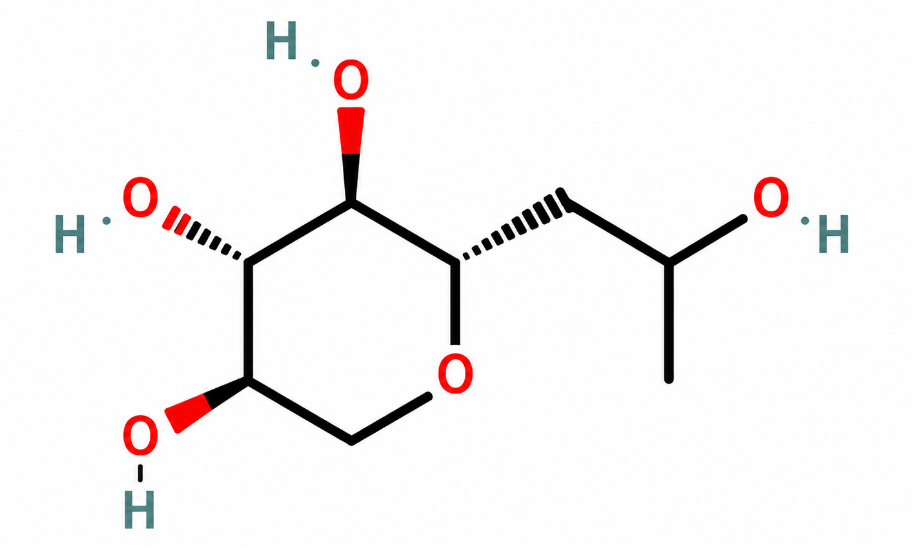
In the research literature, Pro-Xylane is commonly referred to as C-β-D-xylopyranoside-2-hydroxypropane and is also frequently abbreviated as C-Xyloside. Pro-Xylane™ is its trade or trademark name, whereas Hydroxypropyl Tetrahydropyrantriol is the name used in cosmetic ingredient lists.
D-Xylose, the starting material for Pro-Xylane, can be obtained from hemicellulose in beechwood and other plant-derived woods. Hydrolysis of xylan in wood releases xylose, which is then chemically converted into Pro-Xylane. Therefore, the description “plant-derived” refers to the origin of the xylose feedstock, whereas the final Pro-Xylane product is a synthetically prepared xylose derivative.[1]
The Pro-Xylane molecule consists of two parts:
① A polyhydroxylated tetrahydropyran ring that retains the stereochemical configuration of D-xylose;
② A hydroxypropyl side chain directly attached to the anomeric carbon of the sugar ring.
The sugar ring and side chain are connected through a carbon–carbon bond, which is the defining structural feature of its C-glycoside architecture.
1.2 Two-Step Synthesis of Pro-Xylane
The classical synthetic route uses D-xylose and acetylacetone as starting materials and proceeds through two steps: aqueous C-glycosylation and carbonyl reduction.[1]
The reaction process can be simplified as follows:
Step 1: C-Glycosylation
D-Xylose + Acetylacetone
→ Lubineau C-glycosylation under aqueous alkaline conditions
→ β-C-Xyloside ketone intermediate
Step 2: Carbonyl Reduction
β-C-Xyloside ketone intermediate
→ Reduction of the side-chain carbonyl group
→ Hydroxypropyl tetrahydropyrantriol
The first step establishes a carbon–carbon bond between the anomeric carbon of xylose and the side chain. The second step reduces the side-chain ketone to a secondary alcohol, forming the hydroxypropyl structure of Pro-Xylane. Reduction of the side-chain carbonyl group creates a new stereogenic center, and different reduction processes may produce different proportions of diastereomers.[1,2]
1.3 The C-Glycoside Structure Improves Molecular Stability
In conventional O-glycosides, the anomeric carbon of the sugar ring is linked to the aglycone through an oxygen atom:
O-Glycoside: Sugar ring—O—Aglycone
In Pro-Xylane, the linkage is formed directly through a carbon atom:
C-Glycoside: Sugar ring—C—Hydroxypropyl group
The carbon–oxygen glycosidic bond in O-glycosides may be hydrolyzed by the corresponding glycosidases, whereas the carbon–carbon bond in Pro-Xylane is not a substrate for commonly encountered glycosidases. The C-glycoside structure therefore improves the chemical and metabolic stability of the molecule while retaining the structural characteristics required for a β-D-xyloside to act as an acceptor in subsequent glycosyltransferase reactions.[1,3]
2 How the Xylose Linkage Region and Xyloside Primers Initiate Glycosaminoglycan Synthesis
2.1 Glycosaminoglycans Are Important Components of the Skin Extracellular Matrix
Glycosaminoglycans (GAGs) are linear polysaccharides composed of repeating disaccharide units. The principal GAGs in skin include:
① Chondroitin sulfate (CS);
② Dermatan sulfate (DS);
③ Heparan sulfate (HS);
④ Hyaluronan (HA).
With the exception of HA, most skin GAGs are covalently attached to core proteins to form proteoglycans (PGs).
The core protein determines the location of a proteoglycan within the tissue, such as at the cell surface, in the basement membrane, or in the dermal extracellular matrix. The GAG side chains provide hydration, spatial occupancy, and protein-binding functions. CS, DS, and HS contain carboxylate and sulfate groups and therefore carry a high density of negative charges under physiological conditions. These charges attract counterions and water and enable interactions with growth factors, cytokines, and matrix proteins.[3,4]
2.2 Proteoglycan Glycan Chains Begin at a Xylose-Containing Linkage Region
The chondroitin sulfate, dermatan sulfate, and heparan sulfate chains carried by proteoglycans are generally synthesized beginning with a xylose residue attached to a specific serine residue of the core protein.
Xylose is supplied by uridine diphosphate xylose. Uridine diphosphate is abbreviated as UDP, and UDP-xylose is an activated sugar donor that transfers xylose to the core protein under the catalysis of xylosyltransferase:
Core protein—Serine—OH + UDP-Xylose
→ Xylosyltransferase catalysis → Core protein—Serine—O—Xylose + UDP
After xylose attachment, the cell sequentially adds two galactose residues and one glucuronic acid residue to form the common tetrasaccharide linkage region:
Core protein—Serine—Xylose—Galactose—Galactose—Glucuronic acid
From this structure, the glycan chain may be further extended into chondroitin sulfate, dermatan sulfate, or heparan sulfate. Pro-Xylane itself contains a stable C-xyloside structure and can act as an exogenous glycosyl acceptor, bypassing the initial xylosylation of the core protein and initiating the synthesis of chondroitin sulfate/dermatan sulfate chains that are not covalently attached to a core protein.
After formation of the tetrasaccharide linkage region, the amino sugar incorporated next determines the direction of glycan synthesis:
① Incorporation of N-acetylgalactosamine directs the chain into the CS/DS biosynthetic pathway;
② Incorporation of N-acetylglucosamine directs the chain into the HS biosynthetic pathway.[3,4]
The CS/DS backbone is subsequently elongated and undergoes sulfation and uronic acid epimerization. When some D-glucuronic acid residues are converted into L-iduronic acid residues, the glycan chain gradually acquires the structural characteristics of DS.
HA is synthesized through a different pathway. It is directly polymerized by hyaluronan synthases at the cell membrane, is not attached to a core protein, and does not pass through the xylose-initiated tetrasaccharide linkage region. Therefore, the chains primarily initiated by Pro-Xylane as a xyloside primer are CS/DS-type chains rather than products of the HA biosynthetic pathway.
3 How Pro-Xylane Acts as a Primer for Glycosaminoglycan Synthesis
3.1 Pro-Xylane Provides an Exogenous Xyloside Acceptor
Normal proteoglycan synthesis requires xylose to be attached first to a serine residue of the core protein. Pro-Xylane already contains a stable β-C-xyloside structure, and its xylose moiety can directly accept subsequent sugar residues.
The principal process can be represented as follows:
Pro-Xylane [Xyl—C—Hydroxypropyl] + UDP-Galactose
→ Galactosyltransferase catalysis
→ Gal—Xyl—C—Hydroxypropyl + UDP
The linkage region is then further extended:
Xyl—C—Hydroxypropyl
→ Gal—Xyl—C—Hydroxypropyl
→ Gal—Gal—Xyl—C—Hydroxypropyl
→ GlcA—Gal—Gal—Xyl—C—Hydroxypropyl
→ CS/DS chain elongation
In this pathway, Pro-Xylane acts as both a glycosyl acceptor and a glycan-chain primer and does not need to be attached to a core protein. The newly formed chains are generally secreted extracellularly in a form that is not covalently linked to a core protein, while the xyloside primer structure remains at the reducing end.[3,4]
Pro-Xylane is not itself a complete glycosaminoglycan. Subsequent monosaccharides are supplied by intracellular nucleotide-sugar donors, while chain elongation, sulfation, and uronic acid epimerization are still carried out by the cell’s own enzymatic systems.
3.2 Cell Models Confirm Its Primer Activity
Researchers evaluated the effects of Pro-Xylane using xylosyltransferase-deficient CHO-745 cells. Xylosyltransferase activity in these cells is less than 5% of that in wild-type CHO-K1 cells, making them unable to complete normal initial xylosylation of core proteins. However, after the addition of Pro-Xylane, the cells were still able to synthesize and secrete sulfated GAGs.[3]
This result indicates that Pro-Xylane can bypass the initial xylosylation of the core protein and directly provide an acceptor for subsequent glycosyltransferase reactions.
In normal human epidermal keratinocytes, Pro-Xylane treatment also significantly increased sulfated GAGs in the culture medium, whereas cell-associated GAGs did not increase to the same extent. Enzymatic digestion and structural analyses showed that the increased secreted chains primarily belonged to CS/DS, with DS representing an important component.[3]
3.3 Pro-Xylane Primarily Initiates Free CS/DS Chains
In a three-dimensional reconstructed dermis model, Pro-Xylane treatment markedly increased metabolically labeled GAGs in the culture medium, and the newly formed free glycan chains were identified as CS/DS. The study did not observe direct initiation of free HS chains by Pro-Xylane.[4]
The principal characteristics of Pro-Xylane primer activity are summarized below:
Stage of Action | Main Characteristic |
Initiating structure | Stable β-C-xyloside |
Dependence on core protein | Independent of initial core-protein xylosylation |
Principal products | Free CS/DS chains |
Subsequent reactions | Chain elongation, sulfation, and epimerization performed by the cell |
HA synthesis | Not part of this xylose-containing linkage-region pathway |
4 How Pro-Xylane Remodels Glycosaminoglycans
Pro-Xylane not only increases the production of free CS/DS chains but also alters chain length, sulfation patterns, and the content and distribution of iduronic acid. Together, these structural parameters determine glycan hydration capacity, spatial conformation, and protein-binding characteristics.[4]
4.1 Increasing Glycan-Chain Number and Altering Chain Length
Studies using three-dimensional reconstructed dermis showed that Pro-Xylane treatment increased free GAGs in the culture medium by approximately 15-fold. This change occurred under specific reconstructed dermis experimental conditions, and the increase mainly involved Pro-Xylane-initiated CS/DS chains secreted into the culture medium.[4]
Newly synthesized CS/DS chains initiated by Pro-Xylane had a shorter average chain length. When exogenous xylosides provide a larger number of initiation sites, glycosyltransferases and nucleotide-sugar donors must participate in the elongation of a greater number of chains. The reduced average length of the newly synthesized chains may be related to the increased number of chain-initiation events and the distribution of biosynthetic resources among different nascent chains.
An increase in glycan-chain number together with a decrease in average chain length may affect diffusion rate, hydrodynamic volume, and protein-binding characteristics.
4.2 Altering Glycan Sulfation Patterns
N-Acetylgalactosamine residues in CS/DS can undergo O-sulfation at the 4- or 6-hydroxyl position. The position of the sulfate group determines the local charge distribution of the glycan chain and its protein-recognition characteristics.
Free CS/DS directly initiated by Pro-Xylane showed an increase in overall O-sulfation, mainly reflected by an increased proportion of monosulfated disaccharides and a decreased proportion of non-sulfated disaccharides.[4]
For CS/DS chains that remained attached to core proteins, Pro-Xylane treatment mainly altered the ratio of 4-O-sulfation to 6-O-sulfation:
Proportion of 4-O-sulfated disaccharides decreased
Proportion of 6-O-sulfated disaccharides increased
These changes did not markedly increase the total charge of proteoglycan-associated CS/DS but instead redistributed sulfate groups along the glycan chain.[4]
4.3 Altering the Distribution of Iduronic Acid
Some D-glucuronic acid residues in the CS backbone can be converted into L-iduronic acid by uronic acid C5-epimerase. Iduronic acid has greater conformational flexibility and can increase the local flexibility of the glycan chain while altering its interactions with growth factors, cytokines, and matrix proteins.
The effect of Pro-Xylane on iduronic acid varies according to the glycan-chain fraction. In a specific reconstructed dermis experiment, the proportion of iduronic acid in CS/DS secreted into the culture medium increased from approximately 25% to approximately 33%, and iduronic acid-containing disaccharides became more evenly distributed along the glycan chains. In contrast, the proportion of iduronic acid in tissue-associated CS/DS decreased from approximately 53% to approximately 45%, without the same degree of redistribution along the chain.[4]
Therefore, Pro-Xylane-induced changes in glycan structure need to be understood separately at the levels of secreted xyloside-initiated chains and tissue-associated chains. These changes include alterations in glycan-chain number, average chain length, sulfation position, and the content and distribution of iduronic acid.
5 How Glycosaminoglycan Changes Affect the Skin Matrix and Cellular Signaling
5.1 Maintaining Extracellular-Matrix Hydration and Spatial Volume
CS/DS contains carboxylate and sulfate groups, creating a high density of negative charges under physiological conditions. These negative charges attract counterions such as sodium ions and increase the local osmotic tendency to retain water, thereby forming a hydration shell around the glycan chains.
This process can be summarized as follows:
Negatively charged CS/DS → Attraction of counterions → Increased local water accumulation → Expansion of glycan hydrodynamic volume → Maintenance of extracellular spaces and matrix viscoelasticity
The dermal extracellular matrix is not composed solely of collagen fibers. Collagen primarily provides tensile strength, whereas GAGs and PGs form a continuous, water-rich matrix and contribute to collagen-fiber spacing, matrix responses to compression, and the diffusion of soluble molecules.
The increase and structural adjustment of Pro-Xylane-initiated CS/DS can affect the hydrated medium and molecular environment surrounding collagen fibers. This process occurs at the microscopic scale of the extracellular matrix and differs from the direct volumetric support produced by injectable fillers.
5.2 Regulating FGF-10-Dependent Keratinocyte Responses
Fibroblast growth factor 10 (FGF-10) participates in epithelial-cell growth, migration, and tissue repair. Effective binding between FGF-10 and its receptor requires an appropriate GAG environment.
In experiments using human keratinocytes, Pro-Xylane treatment promoted DS secretion. When Pro-Xylane and FGF-10 were present together, keratinocyte migration increased. Conditioned medium produced by Pro-Xylane-treated cells also enhanced FGF-10-dependent cell proliferation.[3]
In these experiments, Pro-Xylane alone did not show the same direct proliferative effect as FGF-10. Its action was associated with the modulation of growth-factor responses by newly generated DS.[3]
5.3 Modulating Growth-Factor Binding within the Matrix
GAGs interact with proteins through their carboxylate groups, sulfate groups, and sugar-ring conformations. Changes in sulfation position and iduronic acid distribution can therefore alter glycan affinity for proteins.
In reconstructed dermis experiments, Pro-Xylane treatment reduced the binding capacity of tissue-associated CS/DS for hepatocyte growth factor (HGF), indicating that changes in glycan fine structure can affect protein affinity. This result may be related to structural changes such as reduced 4-O-sulfation.[4]
The binding of GAGs to growth factors can influence the retention and availability of signaling molecules within the extracellular matrix. However, the study did not directly evaluate HGF diffusion within the tissue or changes in receptor signaling. Therefore, the hypothesis that Pro-Xylane promotes HGF diffusion by reducing its binding remains mechanistic speculation.
6 How Pro-Xylane Affects Proteoglycans and the Dermal–Epidermal Junction
6.1 Modulating Proteoglycan-Associated Glycan Chains
Pro-Xylane primarily initiates free CS/DS chains, but its effects also involve GAGs carried by the cell’s endogenous proteoglycans.
Reconstructed dermis studies showed that Pro-Xylane treatment altered the 4-O/6-O-sulfation ratio of proteoglycan-associated CS/DS. It also reduced O-sulfation in certain regions of proteoglycan-associated HS, with the changes mainly involving 6-O-sulfation.[4]
In a glucocorticoid-induced atrophic human skin model, Pro-Xylane treatment was also associated with restoration of syndecan-1, syndecan-4, and perlecan expression.[5,8]
Proteoglycan function is jointly determined by the core protein and GAG side chains:
① The core protein determines the location of the molecule;
② The GAG side chains provide hydration and protein-binding capacity;
③ Glycan-chain length, sulfation pattern, and uronic acid composition regulate specific biological functions.
6.2 Supporting the Formation of Dermal–Epidermal Junction-Related Structures
The dermal–epidermal junction (DEJ) is located between the epidermis and dermis and mainly includes:
① Laminin-332;
② The type IV collagen basement-membrane network;
③ Type VII collagen anchoring fibrils;
④ Perlecan;
⑤ Nidogen and cell-adhesion receptors.
The DEJ not only provides mechanical attachment between the epidermis and dermis but also participates in cell polarity, nutrient exchange, and signal transmission.
In a three-dimensional human reconstructed skin model, Pro-Xylane treatment increased the deposition of type IV collagen, type VII collagen, and laminin-5 and increased type VII collagen gene expression. Laminin-5 is an earlier name for what is now generally referred to as laminin-332.[6]
Glycosaminoglycans, proteoglycans, and basement-membrane proteins regulate one another. Based on the available evidence, the effects of Pro-Xylane on the DEJ may involve the following pathway:
GAG synthesis and fine-structural remodeling
→ Changes in proteoglycan function and the intercellular signaling environment
→ Potential support for the formation and deposition of basement-membrane and anchoring-structure-associated proteins
6.3 Human Histological Study
A randomized, placebo-controlled pilot study enrolled five postmenopausal women aged 60–75 years. Participants applied a placebo cream to one forearm and a cream containing 10% C-Xyloside to the other forearm twice daily for three months.[7]
Skin-biopsy results showed that the basement-membrane lamina densa in Pro-Xylane-treated areas was more uniform and regular, with fewer areas of basement-membrane duplication. Expression of α6 integrin and laminin-332 also increased.[7]
This study provided human histological evidence, but the sample size was small. The concentration used, application site, and specific formulation may all affect the results. The actual performance of commercial skincare products is also influenced by the effective active-content level, raw-material stereoisomer composition, formulation delivery, and duration of continuous use.
7 Mechanistic Summary and Evidence Boundaries
7.1 Core Mechanism of Action
Pro-Xylane is a stable C-xyloside. Its xylose moiety can act as an exogenous glycosyl acceptor, bypassing the initial xylosylation of core proteins and initiating the synthesis of chondroitin sulfate/dermatan sulfate chains that are not covalently attached to a core protein.
Based on available studies using cells, reconstructed dermis, and reconstructed skin, its principal actions can be summarized as follows:
Stable C-xyloside
→ Acts as an exogenous xyloside primer
→ Increases core-protein-independent CS/DS chain synthesis
→ Alters glycan-chain length, sulfation pattern, and iduronic acid composition
→ Changes extracellular-matrix hydration and protein-binding characteristics
→ Affects proteoglycans and structures associated with the dermal–epidermal junction
Pro-Xylane is not a direct supplement of glycosaminoglycans or collagen and is not directly converted into collagen. Its principal role is to participate in the initiation of glycosaminoglycan synthesis and to modulate the glycan chains formed by the cell and their associated matrix environment.
7.2 Major Research Evidence and Scope of Conclusions
Research Model | Main Observations | Conclusions Supported by the Evidence |
Xylosyltransferase-deficient cells | Sulfated GAGs were still synthesized and secreted after the addition of Pro-Xylane | Pro-Xylane can bypass initial core-protein xylosylation and act as an exogenous xyloside primer |
Human keratinocytes | Sulfated GAGs and CS/DS secretion into the culture medium increased | Pro-Xylane can initiate the synthesis of CS/DS chains that are not attached to core proteins |
FGF-10-related experiments | Keratinocyte migration and FGF-10-dependent proliferative responses increased | Newly generated DS may participate in regulating specific growth-factor responses |
Three-dimensional reconstructed dermis | Secreted GAGs increased, with changes in chain length, sulfation, and iduronic acid composition | Pro-Xylane not only increases glycan-chain initiation but can also alter GAG fine structure |
HGF-binding experiments | The in vitro binding capacity of tissue-associated CS/DS for HGF decreased | Changes in glycan structure can alter protein affinity, although the in vivo functional consequences remain unclear |
Three-dimensional reconstructed skin | Deposition associated with type IV collagen, type VII collagen, and laminin-332 increased | Pro-Xylane treatment is associated with increased formation of DEJ-related structures |
Human pilot study | The morphology of the basement-membrane lamina densa and certain junctional markers improved | Provides preliminary histological support from a small human study |
Available research supports the involvement of Pro-Xylane in CS/DS synthesis, GAG fine-structural modulation, proteoglycan changes, and the formation of DEJ-related structures. However, it does not establish that all of these processes are linked through a single, continuous causal pathway. Some of the key evidence comes from cell and reconstructed-skin models, while the human study had a small sample size and mainly evaluated histological and ultrastructural endpoints.
Therefore, Pro-Xylane-related changes in the matrix and DEJ may be associated with improvements in the appearance of skin plumpness, smoothness, or firmness. However, the actual cosmetic effects depend on the effective concentration of the raw material, stereoisomer composition, formulation delivery, application site, and duration of use and should not be inferred solely from in vitro changes in GAGs.
8 Chemicals Related to Pro-Xylane Synthesis and Glycosaminoglycan Mechanism Research
Table 1. Core Raw Materials, Key Intermediates, and Synthetic Reagents for Pro-Xylane
Category | CAS No. | Aladdin Cat. No. | Name | Specification or Purity | Product Features and Applications |
Base for C-glycosylation | 144-55-8 | Sodium bicarbonate | Anhydrous grade, reagent grade, high purity, ≥99.5% | Used for the aqueous C-glycosylation of D-xylose with acetylacetone, adjustment of the acid–base conditions of the reaction system, and comparison of reaction conditions. | |
Side-chain reagent for C-glycosylation | 123-54-6 | Acetylacetone | AR, ≥99% | Used to construct the carbon skeleton of the hydroxypropyl side chain of Pro-Xylane, conduct C-glycosylation reactions, and prepare the key ketone intermediate. | |
Carbonyl-reducing reagent | 16940-66-2 | S432207 | Sodium borohydride (explosives precursor) | purum p.a., ≥96% | Used for reduction of the side-chain carbonyl group in the Pro-Xylane ketone intermediate, formation of the hydroxypropyl structure, and investigation of diastereomeric composition. |
Core sugar raw material | 58-86-6 | D-Xylose | Moligand™, ≥99% | Starting material for the xylose-derived ring of Pro-Xylane; used in the construction of C-xylosides and studies of glycan-chain primer structures and glycosaminoglycan initiation mechanisms. | |
Key ketone intermediate | 439685-73-1 | 2-[2-Oxopropyl]tetrahydro-2H-pyran-3,4,5-triol | ≥95% | Used in the carbonyl-reduction step of Pro-Xylane synthesis, structural identification of the ketone intermediate, investigation of reduction stereoselectivity, and analysis of process-related impurities. | |
Pro-Xylane aqueous solution raw material | 439685-79-7 | Pro-Xylane | 28%–33% in water | Used in Pro-Xylane formulation research, skin-cell and reconstructed-skin models, glycosaminoglycan synthesis studies, and evaluations related to the dermal–epidermal junction. | |
Single-stereoisomer Pro-Xylane | 868156-46-1 | (S)-Pro-Xylane | ≥98% | Used to investigate the side-chain stereochemistry of Pro-Xylane, glycosaminoglycan-primer activity, cellular responses, and structure–activity relationships. | |
High-purity Pro-Xylane raw material | 439685-79-7 | Pro-Xylane | ≥90% | Used for structural identification, purity analysis, content determination, biological-activity evaluation, and analytical-method development for Pro-Xylane. |
Table 2. Monosaccharides and Activated Sugar Donors of the Glycosaminoglycan Linkage Region
Category | CAS No. | Aladdin Cat. No. | Name | Specification or Purity | Product Features and Applications |
Monosaccharide reference for the tetrasaccharide linkage region | 59-23-4 | D-(+)-Galactose | High purity, ≥99% | Used to study galactose attachment following xylose, the composition of the proteoglycan tetrasaccharide linkage region, galactosyltransferase reactions, and monosaccharide analysis. | |
Uronic acid structural reference | 6556-12-3 | D-Glucuronic acid | Moligand™, ≥98% | Used in structural studies of glycosaminoglycan linkage regions, chondroitin sulfate, dermatan sulfate, heparan sulfate, and hyaluronan. | |
Characteristic uronic acid of dermatan sulfate | 2073-35-0 | L-Iduronic acid | ≥98% | Used to study the characteristic structure of dermatan sulfate, glucuronic acid epimerization, glycan-chain flexibility, and iduronic acid distribution. | |
Amino sugar of chondroitin sulfate/dermatan sulfate | 1811-31-0 | N-Acetyl-D-galactosamine | ≥98% | Used to study the repeating disaccharide composition, glycan-chain elongation, sulfation, and qualitative and quantitative monosaccharide analysis of chondroitin sulfate and dermatan sulfate. | |
Amino sugar of heparan sulfate and hyaluronan | 7512-17-6 | N-Acetyl-D-glucosamine | ≥98% | Used for compositional analysis of heparan sulfate and hyaluronan, comparison of glycosaminoglycan types, and amino-sugar detection. | |
Chain-elongation donor for chondroitin sulfate/dermatan sulfate | 108320-87-2 | UDP-N-Acetyl-D-galactosamine disodium salt | ≥98% | Used in glycosyltransferase reactions involving chondroitin sulfate and dermatan sulfate, chain-initiation selection, and studies of glycan-chain elongation mechanisms. | |
Donor for proteoglycan xylosylation | 108320-89-4 | Uridine 5′-(trihydrogen diphosphate), P′-α-D-xylopyranosyl ester, disodium salt | ≥98% | Used to study xylosyltransferase activity, xylosylation of serine residues in core proteins, and the normal initiation pathway of proteoglycan biosynthesis. | |
Chain-elongation donor for heparan sulfate | 91183-98-1 | Uridine 5′-diphospho-N-acetyl-D-glucosamine sodium salt | ≥98% | Used to study heparan sulfate chain initiation and elongation, glycosyltransferase activity, and comparisons among different glycosaminoglycan pathways. | |
Activated glucuronic acid donor | 63700-19-6 | Uridine diphosphate glucuronic acid trisodium salt (UDPGA) | ≥98% | Used in construction of the tetrasaccharide linkage region, chondroitin sulfate/dermatan sulfate chain elongation, and glucuronosyltransferase reactions. | |
Activated galactose donor for the linkage region | 137868-52-1 | UDP-Galactose disodium salt | ≥95% | Used for galactosylation of the xylose moiety of Pro-Xylane and xylose residues on core proteins, formation of the tetrasaccharide linkage region, and evaluation of primer activity. |
Table 3. Reference Materials for Glycosaminoglycan and Extracellular-Matrix Structures
Category | CAS No. | Aladdin Cat. No. | Name | Specification or Purity | Product Features and Applications |
Glycosaminoglycan reference not involving the xylose-containing linkage region | 9067-32-7 | Enzymatically cleaved sodium hyaluronate oligomers | Molecular weight <10 kDa | Used to study hyaluronan oligomers, molecular-weight effects, hydration properties, and comparisons with the biosynthetic pathways of sulfated glycosaminoglycans. | |
4-O-Sulfated glycan-chain reference | 39455-18-0 | Chondroitin sulfate A sodium salt | ≥95% | Used to study the 4-O-sulfated structure of chondroitin sulfate, chondroitinase degradation, disaccharide composition, and protein-binding properties. | |
Heparan sulfate glycan-chain reference | 57459-72-0 | Heparan sulfate sodium salt | ≥98%, potency: 50–70 IU/mg | Used to study the structure and sulfation of proteoglycan-associated heparan sulfate, heparinase degradation, and growth-factor binding. | |
Dermatan sulfate glycan-chain reference | 54328-33-5 | Low-molecular-weight dermatan sulfate | ≥95% (HPLC), molecular weight: 8,000–13,000 | Used to study iduronic acid-related structures, low-molecular-weight glycan chains, chondroitinase B degradation, and the biological functions of dermatan sulfate. | |
General chondroitin sulfate reference | 9082-07-9 | Chondroitin sulfate sodium salt | ≥95% | Used to analyze the overall composition, molecular weight, degree of sulfation, enzymatic degradation products, and glycan-chain structure of chondroitin sulfate. | |
6-O-Sulfated glycan-chain reference | 12678-07-8 | Chondroitin sulfate C sodium salt | ≥90%, mixture of isomers, from sharks | Used to study the 6-O-sulfated structure of chondroitin sulfate, source-related differences, chondroitinase degradation, and comparison of 4-O/6-O-sulfation ratios. |
Table 4. Glycosaminoglycan-Degrading Enzymes and Reagents for Structural Analysis of Chondroitin Disaccharides
Category | CAS No. | Aladdin Cat. No. | Name | Specification or Purity | Product Features and Applications |
Broad-spectrum degrading enzyme for chondroitin sulfate/dermatan sulfate | 9024-13-9 | Chondroitinase ABC II | Bioactive, recombinant, ActiBioPure™, high-performance, EnzymoPure™, expressed in E. coli; ≥1,000 U/mg enzyme powder; ≥2,000 U/mg protein | Used for depolymerization of chondroitin sulfate and dermatan sulfate chains, identification of glycan-chain types, disaccharide-composition analysis, and studies of Pro-Xylane-initiated CS/DS chains. | |
Chondroitin sulfate-selective degrading enzyme | 9047-57-8 | Chondroitinase AC | Bioactive, recombinant, ActiBioPure™, high-performance, EnzymoPure™, ≥95% (SDS-PAGE), ≥100 U/mg enzyme powder; ≥200 U/mg protein | Used for degradation of glucuronic acid-containing chondroitin sulfate regions, differentiation between chondroitin sulfate and dermatan sulfate, and verification of glycan-chain composition. | |
Dermatan sulfate-selective degrading enzyme | 52227-83-5 | Recombinant chondroitinase B | Bioactive, recombinant, ActiBioPure™, high-performance, EnzymoPure™, ≥95% (SDS-PAGE), ≥100 U/mg enzyme powder; ≥200 U/mg protein | Used for degradation of iduronic acid-containing dermatan sulfate regions, identification of dermatan sulfate, and studies of iduronic acid-associated chain segments. | |
Heparan sulfate-selective degrading enzyme | 37290-86-1 | Heparinase III | Bioactive, recombinant, ActiBioPure™, high-performance, EnzymoPure™, ≥90% (SDS-PAGE), ≥3,000 U/mL for 50 U; ≥300 U/mL for 5 U and 10 U; expressed in E. coli | Used for selective depolymerization of heparan sulfate, analysis of proteoglycan-associated glycan chains, and differentiation from chondroitin sulfate/dermatan sulfate. | |
Fluorescently labeled 6-O-sulfated chondroitin disaccharide analytical reagent | 136132-72-4 | Fluorescently labeled chondroitin disaccharide Δdi-6S sodium salt (α-ΔUA-[1→3]-GalNAc-6S) | ≥95% | Used for peak identification of 6-O-sulfated disaccharides in chondroitinase digestion products, development of fluorescence-detection methods, and disaccharide-composition analysis. | |
4-O-Sulfated chondroitin disaccharide analytical reagent | 136144-56-4 | Chondroitin disaccharide Δdi-4S sodium salt | ≥95% | Used for structural identification and chromatographic peak confirmation of 4-O-sulfated disaccharides and comparison of 4-O/6-O-sulfation compositions before and after Pro-Xylane treatment. | |
Non-sulfated chondroitin disaccharide analytical reagent | 136132-69-9 | Chondroitin disaccharide Δdi-0S sodium salt | ≥95% | Used for structural identification and chromatographic peak confirmation of non-sulfated chondroitin disaccharides, evaluation of glycan-chain sulfation levels, and disaccharide-composition comparisons. |
Note: The products listed above are representative Aladdin research products. Additional product specifications, grades, and certificate-of-analysis information can be retrieved from the Aladdin website using the product name, CAS number, or catalog number.
References
[1] Cavezza A, Boulle C, Guéguiniat A, Pichaud P, Trouille S, Ricard L, Dalko-Csiba M. Synthesis of Pro-Xylane™: A New Biologically Active C-Glycoside in Aqueous Media. Bioorganic & Medicinal Chemistry Letters. 2009;19(3):845-849. doi:10.1016/j.bmcl.2008.12.037.
[2] Zhao Y, Li Y, Shang J, et al. Engineering a Carbonyl Reductase for High-Efficiency Synthesis of Optically Pure (S)-Pro-Xylane: An Alternative Synthetic Route. Journal of Agricultural and Food Chemistry. 2025;73(16):9759-9768. doi:10.1021/acs.jafc.5c00811.
[3] Muto J, Naidu NN, Yamasaki K, Pineau N, Breton L, Gallo RL. Exogenous Addition of a C-Xylopyranoside Derivative Stimulates Keratinocyte Dermatan Sulfate Synthesis and Promotes Migration. PLoS ONE. 2011;6(10):e25480. doi:10.1371/journal.pone.0025480.
[4] Vassal-Stermann E, Duranton A, Black AF, Azadiguian G, Demaude J, Lortat-Jacob H, Breton L, Vivès RR. A New C-Xyloside Induces Modifications of GAG Expression, Structure and Functional Properties. PLoS ONE. 2012;7(10):e47933. doi:10.1371/journal.pone.0047933.
[5] Pineau N, Carrino DA, Caplan AI, Breton L. Biological Evaluation of a New C-Xylopyranoside Derivative (C-Xyloside) and Its Role in Glycosaminoglycan Biosynthesis. European Journal of Dermatology. 2011;21(3):359-370. doi:10.1684/ejd.2011.1340.
[6] Sok J, Pineau N, Dalko-Csiba M, Breton L, Bernerd F. Improvement of the Dermal Epidermal Junction in Human Reconstructed Skin by a New C-Xylopyranoside Derivative. European Journal of Dermatology. 2008;18(3):297-302. doi:10.1684/ejd.2008.0392.
[7] Deloche C, Minondo AM, Bernard BA, Bernerd F, Salas F, Garnier J, Tancrède E. Effect of C-Xyloside on Morphogenesis of the Dermal Epidermal Junction in Aged Female Skin: An Ultrastructural Pilot Study. European Journal of Dermatology. 2011;21(2):191-196. doi:10.1684/ejd.2010.1225.
[8] Pineau N, Bernerd F, Cavezza A, Dalko-Csiba M, Breton L. A New C-Xylopyranoside Derivative Induces Skin Expression of Glycosaminoglycans and Heparan Sulphate Proteoglycans. European Journal of Dermatology. 2008;18(1):36-40. doi:10.1684/ejd.2008.0308.
For more related articles, see below:
Hyaluronidase: Unlocking a “Magic Enzyme” in Biomedicine
Trehalose: Physicochemical Characteristics, Manufacturing Processes, and Application Guidelines
Sources, Biological Functions, Isolation/Characterization, and Emerging Applications of Exosomes
Applicability Comparison of Vitronectin, Laminin and Fibronectin in Cell Culture Coating Systems
Ferulic Acid: Structural Features, Preparation Routes, and Key Points for Research Applications
Role of Sphingolipid Metabolic Remodeling in Apoptotic and Inflammatory Signaling
How to decipher the whitening code?
Niacin (Vitamin B3): Structural Features, Metabolic Roles, and Application Landscape
The "Six Key Checkpoints" of Skin Lightening
Tyrosinase: a key regulatory enzyme in melanin synthesis and its biological and applied significance
Enzymatic Hydroxylation Mechanism of Salicylate Conversion to Catechol


 危险品化学品经营许可证(带存储)