
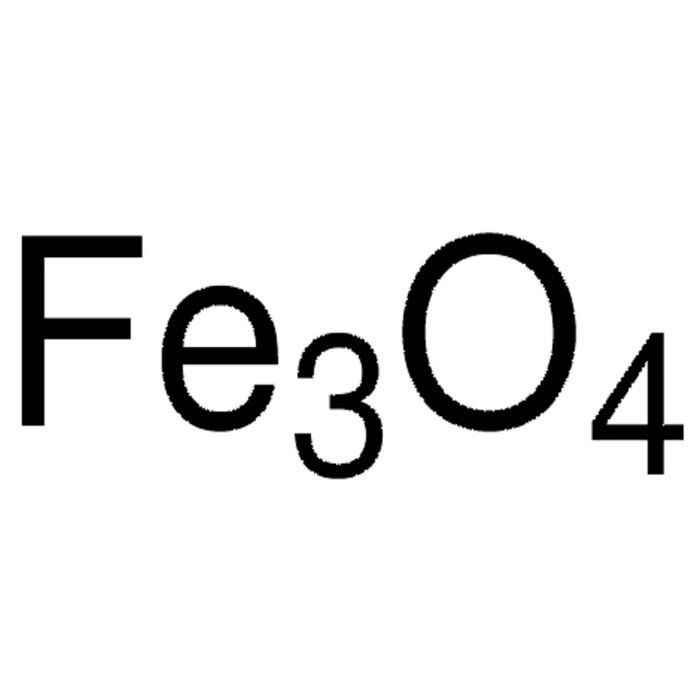
氧化铁(II,III)

CAS: 1317-61-9 货号: I431889 分子式: Fe3O4 分子量: 231.53 EC号: 215-277-5
有货
级别和纯度: ≥97% metals basis nanopowder, 50-100nm particle size (SEM)
别名
四氧化三铁|磁性氧化铁|黑色氧化铁
储存条件
室温
★
规格
库存
价格
数量
25g
I431889-25g
现货 Stock Image
¥489.90
100g
I431889-100g
现货 Stock Image
¥1,369.90
250g
I431889-250g
现货 Stock Image
¥2,762.90
请输入您要添加的产品数量

概述

单分散磁性纳米颗粒的化学合成 氧化铁(II,III)(Fe 3 O 4 )可用作罗丹明B的Fenton型氧化的非均相催化剂。 它可用作制造锂离子电池的负极材料。Fe 3 O 4 也可用于阴离子交换膜燃料电池中的氧还原反应(ORR)的催化。

Iron(II,III) oxide (Fe 3 O 4 ) can be used as a heterogeneous catalyst for the Fenton type oxidation of rhodamine B. It can be used as an anode material for the fabrication of lithium-ion batteries. Fe 3 O 4 can also be utilized in the catalysis of the oxygen reduction reaction (ORR) in the anion exchange membrane fuel cell. Chemical Synthesis of Monodisperse Magnetic Nanoparticles

规格

别名
四氧化三铁 | 磁性氧化铁 | 黑色氧化铁
英文别名
Ferrosoferric oxide | Iron oxide black | Magnetite | Ferric ferrous oxide
规格或纯度
≥97% metals basis, nanopowder, 50-100nm particle size (SEM)
英文名称
Iron(II,III) oxide
储存条件
室温
纯度
≥97% metals basis
名称和识别符
EC号
215-277-5
分子类型
小分子
分子量
231.53

高级数据

化学和物理性质
密度
4.8-5.1g/mLat 25°C (lit.)
熔点
1538℃
安全和危险性(GHS)
信号词
警告
危险声明

H314: 造成严重皮肤灼伤和眼损伤

预防措施声明

P264: 处理后要彻底洗手。

P280: 戴防护手套/穿防护服/戴防护眼罩/戴防护面具。

P363: 再次使用之前,请清洗受污染的衣物。

P301+P330+P331: 如误吞咽:漱口。不要诱导呕吐。

P303+P361+P353: 如皮肤(或头发)沾染:立即脱掉所有沾染的衣服。用水清洗皮肤/淋浴。

P304+P340: 如误吸入:将人转移到空气新鲜处,保持呼吸舒适体位。

P305+P351+P338: 如进入眼睛:用水小心冲洗几分钟。如戴隐形眼镜并可方便地取出,取出隐形眼镜。继续冲洗。

P405: 密闭存放

P501: 将内容物/容器送到批准的废物处理厂处理

质检证书(CoA,COO,BSE/TSE 和分析图谱)
C of A & Other Certificates(BSE/TSE, COO):
输入批号以搜索分析图谱:

通过匹配包装上的批号来查找并下载产品的 COA,每批产品都进行了严格的验证,您可放心使用!

找到3个结果

批号(Lot Number) 证书类型 货号
I2510038I2510038 分析证书 I431889
I2515770I2515770 分析证书 I431889
I2510039I2510039 分析证书 I431889
技术文档和文章
纳米粘土在材料与配方中的应用:分散机理、性能提升与产品选型
Applications of Nanoclay in Materials and Formulations: Dispersion Mechanisms, Performance Enhancement, and Product Selection
可用于化妆品的钛酸酯偶联剂TCA-KTTS:基本信息、应用特点及与130、105的区别
TCA-KTTS, a Titanate Coupling Agent Suitable for Use in Cosmetics: Basic Information, Application Characteristics, and Differences from 130 and 105
硅树脂的结构—性能关系:耐热、耐候与疏水机理及涂层性能解析
Structure–Property Relationship of Silicone Resins: Mechanisms of Heat Resistance, Weatherability, Hydrophobicity, and Coating Performance Analysis
蒙脱土如何合理改性?有机改性、无机改性与应用选型验证思路
How Should Montmorillonite Be Rationally Modified? Organic Modification, Inorganic Modification, and Application-Oriented Selection and Validation
日化色素的呈色机制、配方形态与选型应用逻辑
Color-Development Mechanisms, Formulation Forms, and Selection/Application Logic of Colorants in Personal Care Products
中性腻子为什么会出现锈点?铁源、水分迁移、氧化显色与防控要点
Why Do Rust Spots Appear on Neutral Wall Putty? Iron Sources, Moisture Migration, Oxidative Color Development, and Prevention Measures
传明酸在色斑护理中的作用机制:从纤溶酶系统到炎症促黑信号调节
Mechanism of Action of Tranexamic Acid in Pigmentation Care: From the Plasmin System to Regulation of Inflammation-Driven Pro-Melanogenic Signaling
此产品的引用文献
溶液计算器
