阿拉丁生产的 PBCV-1 DNA Ligase 是一种 ATP 依赖的 DNA 连接酶,能够高效催化与一条互补的 RNA 单链配对的两条相邻 DNA 单链的连接反应。这两条相邻的 DNA 链中,提供 3' 羟基的被称之为受体 DNA 链(Acceptor DNA),提供 5' 磷酸的被称之为供体 DNA 链(Donor DNA);在这个连接过程中需要一条互补的 RNA 链对两条 DNA 单链起 “夹板” 或 “支架” 的作用。PBCV-1 DNA Ligase 在连接点处可以耐受多种碱基对的组合,但当 5' 端磷酸化的 Donor DNA 与 “夹板” RNA 所形成的第一个碱基对是 dC/G 和 dG/C 时会产生部分抑制,当 Donor DNA 与 “夹板” RNA 所形成的第 1 和第 2 个碱基对都是 dC/G 或 dG/C 碱基对时,酶活性会被更进一步抑制。5' 磷酸化的 Donor DNA 的第一个碱基为 dA 或 dT 时连接效率较高;3' 端羟基化的 Acceptor DNA 的第一个碱基为 dT 时连接效率较高。该酶对于通过 RNA “夹板” 介导的 DNA 连接具有比 T4 DNA Ligase 更强的亲和力和力 (Km≈1nM),和随后的 PCR、qPCR 或滚环扩增 (rolling circle amplification) 等技术相结合,能够实现在复杂的混合物中超高灵敏度检测到低于纳摩尔级的特定目标 RNA。PBCV-1 DNA Ligase 的这种活性使得该酶可以用于包括各种 SNP 的 miRNA、mRNA 和非编码 RNA 的定性或定量检测,以及用于二代测序 (next-generation sequencing) 和分子诊断 (molecular diagnostics)。PBCV-1 DNA Ligase 对 ATP 的浓度要求比较宽泛,ATP 浓度为 10μM-1mM 时都可以有效发挥作用;对 pH 的耐受也比较高,在 pH6.5-pH8.9 的范围内都能很好地发挥作用。通常,当 Mg²⁺ 的浓度大于 5mM、pH 在 7.5-8.0 之间时,PBCV-1 DNA Ligase 具有较高的活性。该酶的活性可以通过提高反应温度至 37℃,补充 5mM Mn²⁺ 而得以增强;但当反应体系中的盐离子浓度超过 100mM 时,该酶活性即被抑制。
| 来源(Source) | 大肠杆菌重组表达 |
| 外观(Appearance) | 无菌液体 |
| 保存液(Storage Buffer) | 10mM Tris-HCl, 300mM NaCl, 1 mM DTT, 0.1 mM EDTA, 50% (v/v) Glycerol, pH 7.4, 25℃.
|
| 酶浓度(Enzyme Concentration) | 25 U/μl |
| 纯度(Purity) | 不含 DNA 内切酶和外切酶,不含 RNA 酶,不含磷酸酯酶。
|
| 活性定义(Activity Definition) | One unit is defined as the amount of enzyme needed to ligate (to 50% completion) 2 picomoles of a tripartite FAM-labeled DNA:RNA hybrid substrate in a 20 μl reaction at 25°C in 15 minutes in 1× Ligation Buffer.
|
组分表
P748845
| Component | 1250U
| 5KU
| Storage |
| P748845A | PBCV-1 DNA Ligase (25U/μl)
| 50µl | 200µl | -20℃. Avoid freeze/ Thaw cycle. |
| P748845B | 10× Reaction Buffer | 150µl
| 600µl | -20℃. Avoid freeze/ Thaw cycle. |
产品应用
基于探针法的 microRNA 等小 RNA 的检测:通过互补 RNA 序列进行 “夹板” 固定的单链 DNA 的连接;使用 DNA 探针进行连接达到检测特定 RNA 的目的;SNP 或可变剪接的检测;RASL-seq 分析。
产品优势
PBCV-1 DNA Ligase 在连接点处可以耐受多种碱基对的组合,但当 5' 端磷酸化的 Donor DNA 与 “夹板” RNA 所形成的第一个碱基对是 dC/G 和 dG/C 时会产生部分抑制。
使用说明
1. 杂合 DNA/RNA 双链底物的制备:
将两条单链 DNA 和一条与它们互补的单链 RNA 等摩尔数混合,推荐的终浓度为 20 μM,在 10–50 μM 范围内均可,90℃ 孵育 1 min,然后通过梯度降温至 25℃ 退火形成 DNA/RNA 杂合双链。推荐使用生产的 Annealing Buffer for RNA oligos (5×),并按照该产品使用说明进行退火反应,退火后的双链如果不立即使用,推荐在 -80℃ 保存。
2. 对于 DNA/RNA 杂合链中两条 DNA 链 nick 的连接,参考下表在冰浴中配制如下反应体系:
| Reagent | Volume | Final Concentration |
|---|
| DEPC-treated Water | 15 μl | - |
| 10× Reaction buffer | 2 μl | 1× |
| Nicked DNA/RNA Substrate (1 μM) | 2 μl | 0.1 μM |
| PBCV-1 DNA Ligase (25 U/μl) | 1 μl | 1.25 U/μl |
| Total Volume | 20 μl | - |
注:由于涉及 RNA 操作,需要严格按照 RNA 的操作规范进行,避免 RNase 污染,相关试剂和耗材需要确保是 RNase-free 的,或者是经过 DEPC 处理以去除 RNase 的。
3. 连接:25℃ 孵育 15–60 min。
4. 终止:65℃ 孵育 20 min;或加 EDTA 以灭活。
5. 保存:将反应后的样品放置于冰上以待短时间内使用或直接冻存于 -20℃。
注意事项:
1. PBCV-1 DNA Ligase 被一价阳离子所抑制,建议一些常见的盐如 NaCl、KCl 等在反应中应保持在 50 mM 以下。为了保持该酶的贮存稳定性,酶被提供在含有 300 mM NaCl 的储存缓冲液中。该酶被加入反应系统时,至少应该进行 6 倍的稀释,通常宜进行大于 10 倍的稀释。
2. PBCV-1 DNA Ligase 的反应温度建议在 16–37℃ 之间进行初次实验,建议反应温度可设为 25℃。该酶的连接反应时间通常可以在 10–60 min 之间,对于很多实验来说,推荐的连接反应时间为 15 min。
3. 在反应体系中 PBCV-1 DNA Ligase 的最终浓度建议在 100 nM–1 μM 之间。生产的 PBCV-1 DNA Ligase 的浓度约为 13 μM。建议在连接反应中将酶的浓度至少设为底物浓度的 2~3 倍。
4. 如果反应不能像预期的那样有效进行,建议延长孵育时间而不是将反应中酶的浓度增加至超过 1 μM。
5. 对于在标准 PBCV-1 DNA Ligase 反应缓冲液中连接效率低的底物,例如连接点处具有 G:C 碱基对的底物,建议将 ATP 的浓度调整到 10 μM 以提高连接效率。
6. 提高反应温度可以提高 PBCV-1 DNA Ligase 的活性和连接专一性;37℃ 反应可提高 microRNA 等小 RNA 的检测效果。
7. PBCV-1 DNA Ligase 连接效率会随着 “夹板” RNA 长度的减少(50 bp–20 bp)而逐渐降低,当 RNA “夹板” 长度小于等于 10 nt 时,连接效率基本为零。
8. 本产品仅限于专业人员的科学研究用,不得用于临床诊断或治疗,不得用于食品或药品,不得存放于普通住宅内。
9. 为了您的安全和健康,请穿实验服并戴一次性手套操作。
PBCV-1 DNA Ligase produced by Aladdin is an ATP-dependent DNA ligase that efficiently catalyzes the ligation of two adjacent DNA strands annealed to a complementary single-stranded RNA. Of these two adjacent DNA strands, the one providing a 3'-hydroxyl group is referred to as the acceptor DNA, and the one providing a 5'-phosphate group is referred to as the donor DNA. This ligation reaction requires a complementary RNA strand to act as a “splint” or “scaffold” for the two DNA strands. PBCV-1 DNA Ligase can tolerate a variety of base-pair combinations at the ligation junction. However, partial inhibition occurs when the first base pair formed between the 5'-phosphorylated donor DNA and the splint RNA is dC/G or dG/C. Enzyme activity is further inhibited when both the 1st and 2nd base pairs between the donor DNA and the splint RNA are dC/G or dG/C. Higher ligation efficiency is achieved when the first base of the 5'-phosphorylated donor DNA is dA or dT, and when the first base of the 3'-hydroxylated acceptor DNA is dT. This enzyme exhibits stronger affinity than T4 DNA Ligase for RNA splint-mediated DNA ligation (Km ≈ 1 nM). Combined with downstream techniques such as PCR, qPCR, or rolling circle amplification, it enables ultra-sensitive detection of specific target RNAs at sub-nanomolar levels in complex mixtures. This activity of PBCV-1 DNA Ligase allows its use in the qualitative or quantitative detection of miRNA, mRNA, and non-coding RNAs including various SNPs, as well as in next-generation sequencing and molecular diagnostics. PBCV-1 DNA Ligase has a broad requirement for ATP concentration and functions effectively from 10 μM to 1 mM. It also has high pH tolerance and performs well within the range of pH 6.5–8.9. Generally, PBCV-1 DNA Ligase shows high activity when the concentration of Mg²⁺ is above 5 mM and the pH is between 7.5 and 8.0. Its activity can be enhanced by increasing the reaction temperature to 37 ℃ and supplementing with 5 mM Mn²⁺. However, the enzyme activity is inhibited when the salt ion concentration in the reaction system exceeds 100 mM.
| Source | Recombinant expressed in Escherichia coli
|
| Appearance | Sterile liquid
|
| Storage Buffer | 10mM Tris-HCl, 300mM NaCl, 1 mM DTT, 0.1 mM EDTA, 50% (v/v) Glycerol, pH 7.4, 25℃.
|
| Enzyme Concentration | 25 U/μl |
| Purity | Free of DNA endonucleases, exonucleases, RNases and phosphatases.
|
| Activity Definition | One unit is defined as the amount of enzyme needed to ligate (to 50% completion) 2 picomoles of a tripartite FAM-labeled DNA:RNA hybrid substrate in a 20 μl reaction at 25°C in 15 minutes in 1× Ligation Buffer.
|
Component List
P748845
| Component | 1250U
| 5KU
| Storage |
| P748845A | PBCV-1 DNA Ligase (25U/μl)
| 50µl | 200µl | -20℃. Avoid freeze/ Thaw cycle. |
| P748845B | 10× Reaction Buffer | 150µl
| 600µl | -20℃. Avoid freeze/ Thaw cycle. |
Product Applications
Probe-based detection of small RNAs such as microRNAs: ligation of single-stranded DNA "splinted" by complementary RNA sequences; detection of specific RNAs via ligation using DNA probes; detection of SNPs or alternative splicing; RASL-seq analysis.
Product Advantages
PBCV-1 DNA Ligase can tolerate a variety of base-pair combinations at the ligation junction, but partial inhibition occurs when the first base pair formed between the 5'-phosphorylated donor DNA and the splint RNA is dC/G or dG/C.
Instructions for Use
1. Preparation of the hybrid DNA/RNA duplex substrate:
Mix two single-stranded DNA molecules and one complementary single-stranded RNA molecule in equimolar amounts. The recommended final concentration is 20 μM, with a working range of 10–50 μM. Incubate at 90°C for 1 minute, then gradually cool to 25°C to anneal and form the DNA/RNA hybrid duplex. It is recommended to use the supplied Annealing Buffer for RNA oligos (5×) and follow the product instructions for the annealing reaction. If the annealed duplex is not used immediately, it is recommended to store it at -80°C.
2. For the ligation of a nick between two DNA strands in a DNA/RNA hybrid, prepare the reaction mixture on ice according to the following table:
| Reagent | Volume | Final Concentration |
|---|
| DEPC-treated Water | 15 μl | - |
| 10× Reaction buffer | 2 μl | 1× |
| Nicked DNA/RNA Substrate (1 μM) | 2 μl | 0.1 μM |
| PBCV-1 DNA Ligase (25 U/μl) | 1 μl | 1.25 U/μl |
| Total Volume | 20 μl | - |
Note: Since RNA handling is involved, strict RNA protocols must be followed to avoid RNase contamination. All related reagents and consumables must be RNase-free or treated with DEPC to eliminate RNase.
3. Ligation: Incubate at 25°C for 15–60 min.
4. Termination: Incubate at 65°C for 20 min, or inactivate by adding EDTA.
5. Storage: Place the reacted sample on ice for short-term use, or store directly at -20°C.
Precautions
1. PBCV-1 DNA Ligase is inhibited by monovalent cations. Common salts such as NaCl and KCl should be kept below 50 mM in the reaction. For storage stability, the enzyme is supplied in a storage buffer containing 300 mM NaCl. When added to the reaction system, the enzyme should be diluted at least 6-fold, preferably more than 10-fold.
2. The recommended initial reaction temperature for PBCV-1 DNA Ligase is 16–37°C, with 25°C as the suggested setting. The ligation time is typically 10–60 min, and 15 min is recommended for most applications.
3. The recommended final concentration of PBCV-1 DNA Ligase in the reaction is 100 nM–1 μM. The supplied PBCV-1 DNA Ligase is approximately 13 μM. It is advised to use the enzyme at 2–3 times the substrate concentration.
4. If the reaction does not proceed efficiently as expected, extend the incubation time rather than increasing the enzyme concentration above 1 μM.
5. For substrates with low ligation efficiency in the standard PBCV-1 DNA Ligase reaction buffer (e.g., those with G:C base pairs at the ligation junction), adjusting the ATP concentration to 10 μM is recommended to improve ligation efficiency.
6. Increasing the reaction temperature enhances the activity and ligation specificity of PBCV-1 DNA Ligase. A reaction temperature of 37°C improves the detection of small RNAs such as microRNAs.
7. Ligation efficiency of PBCV-1 DNA Ligase gradually decreases as the splint RNA length is reduced (50 bp to 20 bp). Ligation activity is nearly abolished when the splint RNA length is ≤ 10 nt.
8. This product is for scientific research use by qualified personnel only. It is not intended for clinical diagnosis or treatment, food or pharmaceutical applications, and must not be stored in ordinary residential premises.
9. For your safety and health, please wear a lab coat and disposable gloves during operation.


 ZJ26F0434219

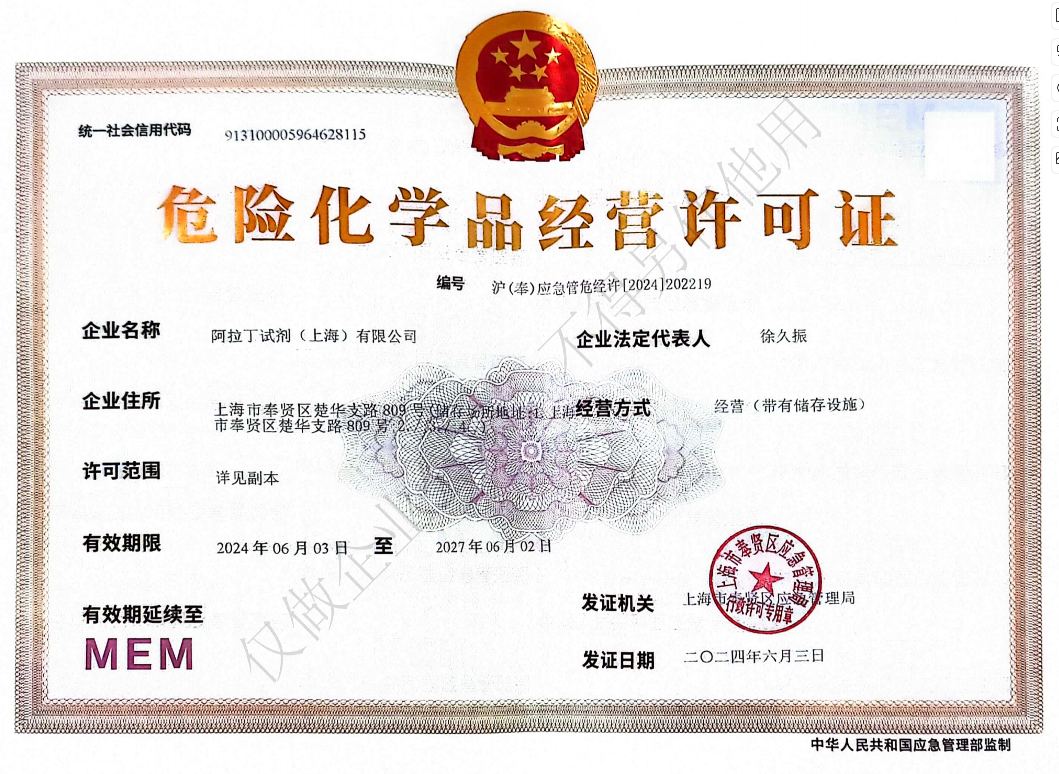 危险品化学品经营许可证(带存储)