
计算溶液所需的质量、体积或浓度。
为什么选择此级别
,适用于对基线干扰要求严格的色谱和分析工作流程。
储存与运输
-20°C储存。超低温运输 。请查阅批次 COA 获取详细规格。
质量文档
SDS、COA、产品数据表及规格说明书均可下载。可通过批号查询获取批次 COA。
文献证明
在色谱分析、有机合成和交叉偶联反应领域已被 41 篇同行评审文献引用。
概述
磷酸酶底物已用作血清样品、骨髓基质细胞和人间充质干细胞(hMSC)中碱性磷酸酶测定的底物。磷酸酶是一种发色底物,可用于碱性和酸性磷酸酶 ELISA 试验。它用于比色法检测 CTB 融合蛋白。产生黄色的可溶性最终产物,可以在 405 nm 处用分光光度法进行读数。可用 3 N NaOH 终止 pNPP 反应,并在 405 nm 处读数。该底物已用于确定人成骨细胞样 Saos-2 细胞裂解物中的碱性磷酸酶(ALP)活性。ALP 作为成骨细胞分化的早期标志物,该标志物在基质矿化开始之前表达。用于碱性和酸性磷酸酶ELISA法的发色底物。产生可溶性终产物,黄色,分光光度法在405nm处读取。pNPP反应能被3N NAOH终止,在405nm处读取。应用:
人们根据文献和蛋白质-蛋白质相互作用(PPI)数据库绘制了人磷酸酶-底物网络。根据基因表达数据,可以预测磷酸酶-底物激酶的可能网络。
Human phosphatase-substrate networks are mapped based on the literature and protein-protein interaction (PPI) database. Based on gene expression data, the possible network of phosphatase-substrate-kinase is predicted.
Application:Phosphatase is a chromogenic substrate for use with alkaline and acid phosphatase ELISA procedures. It is been used for the colorimetric detection of CTB fusion proteins. Produces a soluble end product that is yellow in color and can be read spectrophotometrically at 405 nm. The pNPP reaction may be stopped with 3 N NaOH and read at 405 nm.
Phosphatase substrate has been used as a substrate in alkaline phosphatase assay in serum samples, bone marrow stromal cells and human mesenchymal stem cells (hMSC).
The substrate has been used to determine the alkaline phosphatase (ALP) activity in human osteoblast-like Saos-2 cell lysates. ALP acts as an early marker of osteoblast differentiation that is expressed just before matrix mineralization begins.
Chromogenic substrate for use with alkaline and acid phosphatase ELISA procedures. Produces a soluble end product that is yellow in color and can be read spectrophotometrically at 405 nm. The pNPP reaction may be stopped with 3 N NaOH and read at 405 nm.
规格
产品名称
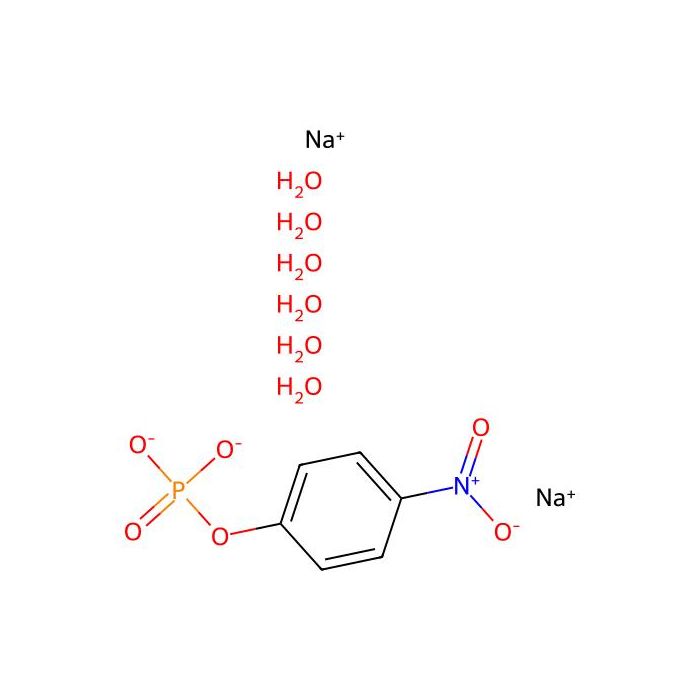
磷酸酶底物
规格或纯度
40 mg tablets
CAS编号和信息
333338-18-4
分子类型
小分子
储存与运输
物理形态
固体
浓度
40 mg tablets
储存条件
-20°C储存
运输条件
超低温运输
技术文档
高级数据
三维结构
交互式化学结构模型
质检证书(CoA,COO,BSE/TSE 和分析图谱)
C of A & Other Certificates(BSE/TSE, COO):
输入批号以搜索分析图谱:
技术文档和文章
此产品的引用文献
溶液计算器
产品仅提供给经过验证的企业、机构和合格的专业人员用于研发。不适用于人类、动物、诊断或治疗。
Copyright © 2023至今 上海阿拉丁生化科技股份有限公司 保留所有权利。


 危险品化学品经营许可证(带存储)