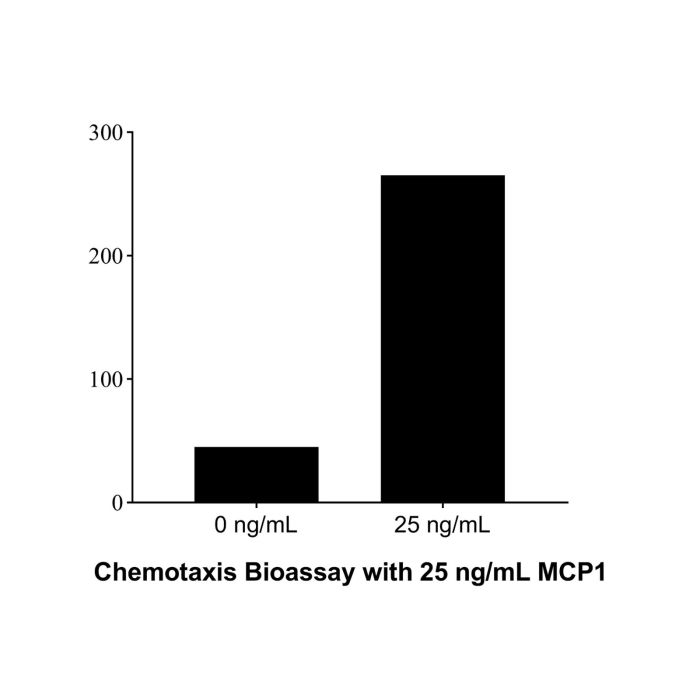
Measured by its ability to induce migration of THP-1 human myeloid leukemia mononuclear cells. The optimum chemotactic concentration of MCP1 is about 25 ng/mL.
Chemotactic factor that attracts monocytes and basophils but not neutrophils or eosinophils. Augments monocyte anti-tumor activity. Has been implicated in the pathogenesis of diseases characterized by monocytic infiltrates, like psoriasis, rheumatoid arthritis or atherosclerosis. May be involved in the recruitment of monocytes into the arterial wall during the disease process of atherosclerosis.
Measured by its ability to induce migration of THP-1 human myeloid leukemia mononuclear cells. The optimum chemotactic concentration of MCP1 is about 25 ng/mL.
Reconstitute in 10mM PBS (pH7.4) to a concentration of 0.1-1.0 mg/mL. Do not vortex.
储存条件
-80℃储存,避免反复冻融
运输条件
特低温运输
稳定性与储存
避免反复冻融循环。在 2-8℃ 下保存一个月。分装后在 -80℃ 下可保存 12 个月。
图片
Recombinant Human MCP1 Protein (rp148600) - Protein Bioactivity Measured by its ability to induce migration of THP-1 human myeloid leukemia mononuclear cells. The optimum chemotactic concentration of MCP1 is about 25 ng/mL.
Recombinant Human MCP1 Protein (rp148600) - SDS-PAGE 2.5μg/lane of Recombinant Human MCP1 Protein was resolved with SDS-PAGE under reducing (R) conditions and visualized by Coomassie® Blue staining, showing bands at 13.3&15.3 kDa.


 ZJ23F0800890


 危险品化学品经营许可证(带存储)