Protein Function:: CD30, also known as TNFRSF8, is a cell membrane protein of the tumor necrosis factor receptor (TNFR) superfamily. CD30 protein is expressed by activated, but not resting, T and B cells. CD30 can regulate proliferation of lymphocytes and may also play an important role in human immunodeficiency virus replication. As a regulator of apoptosis, CD30 protein induces cell death or proliferation, depending on the cell type, and has been shown to limit the proliferative potential of autoreactive CD8 effector T cells and protect the body against autoimmunity. CD30 protein expression is upregulated in various hematological malignancies, including Reed-Sternberg cells in Hodgkin's disease (HD), anaplastic large cell lymphoma (ALCL) and subsets of Non-Hodgkin's lymphomas (NHLs), and CD30 is also linked to leukocytes in patients with chronic inflammatory diseases, including lupus erythematosus, asthma, rheumatoid arthritis and atopic dermatitis (AD).
We recommend that this vial be briefly centrifuged prior to opening to bring the contents to the bottom. Reconstitute at 1.0 mg/mL in sterile distilled water. Stock solutions should be apportioned into working aliquots and stored at ≤ -20 °C. Further dilutions should be made in appropriate buffered solutions.
储存条件
-20°C储存,避免反复冻融
运输条件
超低温运输
稳定性与储存
在 -20°C 下可保存 1 年。避免冷冻/解冻循环。
图片
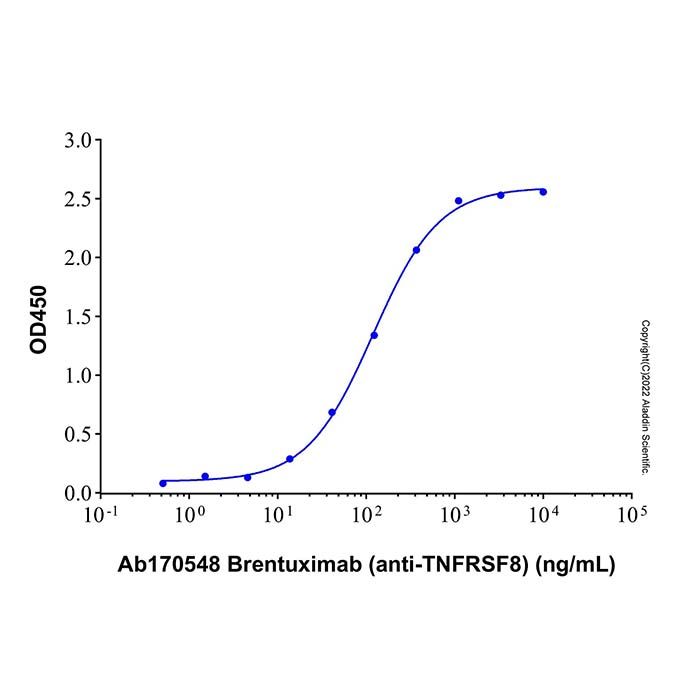
Recombinant Human CD30/TNFRSF8 Protein (rp169577) - ELISA Immobilized Recombinant Human CD30/TNFRSF8 Protein (rp169577) at 1.0 μg/mL can bind Brentuximab (anti-TNFRSF8) (Ab170548) with the EC₅₀ of 119.9 ng/mL.
Recombinant Human CD30/TNFRSF8 Protein (rp169577) - SDS-PAGE 3 μg/lane of Recombinant Human CD30/TNFRSF8 Protein was resolved with SDS-PAGE under reducing (R) and visualized by Coomassie® Blue staining, showing a band at 55.0-99.0 kDa under reducing conditions.

 ZJ24F0708050


 危险品化学品经营许可证(带存储)