无载体,生物活性,ActiBioPure™,His标签,≥95%(SDS-PAGE),expressed in E. coli; 见COA
生化机理
Adenosine kinase (ADK) converts adenosine into 5'-adenosine-monophosphate. ADK is therefore key in regulating the concentration of adenosine, an essential homeostatic and metabolic regulator in all living systems. Adenosine not only activates specific signaling pathways by binding to adenosine receptors but also is a primordial metabolite and regulator of numerous biochemical reactions that are related to metabolism and genetics. ADK dysfunction is involved in several pathologies, including diabetes, epilepsy, and cancer. For example, inhibiting ADK activity promotes the replication of primary insulin-producing beta cells in diabetic mouse, rat, and pig; mutation of ADK causes hypermethioninemia, a condition with an excess of methionine in the blood; ADK is also identified as a neuropathological marker of the epileptic brain. Given its significant roles in various diseases, ADK is a rational therapeutic target. ADK is widely expressed in all tissues, with elevated levels in placenta, liver, muscle and kidney. The enzymatic activity of recombinant human ADK is measured using a phosphatase-coupled method.
生物活性
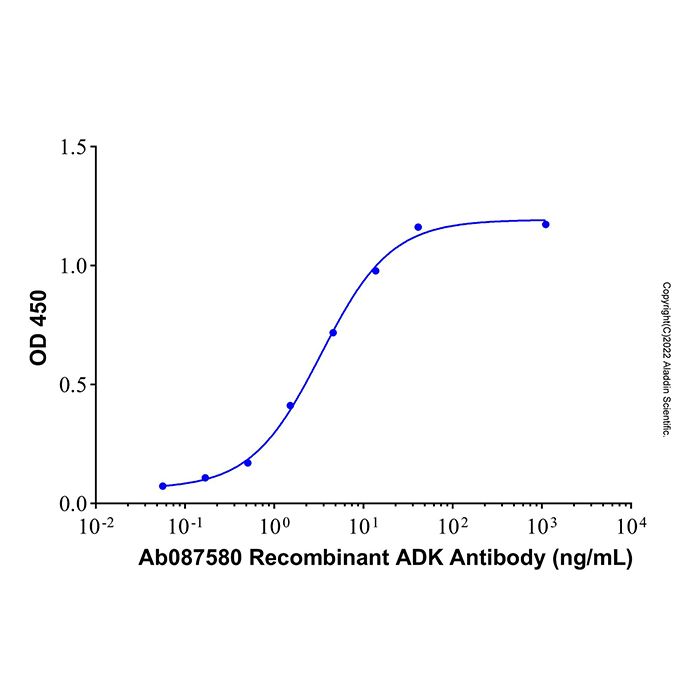
Immobilized Recombinant Human ADK Protein (rp184868) at 1.0 μg/mL can bind Recombinant ADK Antibody (Ab087580) with the EC50 of 3.4 ng/mL
45.0 kDa, under reducing conditions; 39.2 & 45.5 kDa, under non-reducing conditions.
分子类型
蛋白质
产品线
生物产品
储存与运输
物理形态
液体
浓度
expressed in E. coli; 见COA
储存条件
-20°C储存,避免反复冻融
运输条件
超低温运输
稳定性与储存
-20℃(12个月);收货后建议分装,避免反复冻融。
图片
Recombinant Human Adenosine Kinase/ADK Protein (rp184868) - Binding Activity
Immobilized Recombinant Human Adenosine Kinase/ADK Protein (rp184868) at 1.0 μg/mL can bind Recombinant ADK Antibody (Ab087580) with the EC50 of 3.4 ng/mL.
Recombinant Human Adenosine Kinase/ADK Protein (rp184868) - SDS-PAGE
3 μg/lane of Recombinant Human Adenosine Kinase/ADK Protein was resolved with SDS-PAGE under reducing (R) and non-reducing (N) conditions and visualized by Coomassie® Blue staining, showing the bands at 45.0 kDa under reducing conditions and 39.2 & 45.5 kDa under non-reducing conditions.
The two bands may correspond to two conformations under non-reducing conditions (PMID: 18026086).

 ZJ26F0433760


 危险品化学品经营许可证(带存储)