生化机理
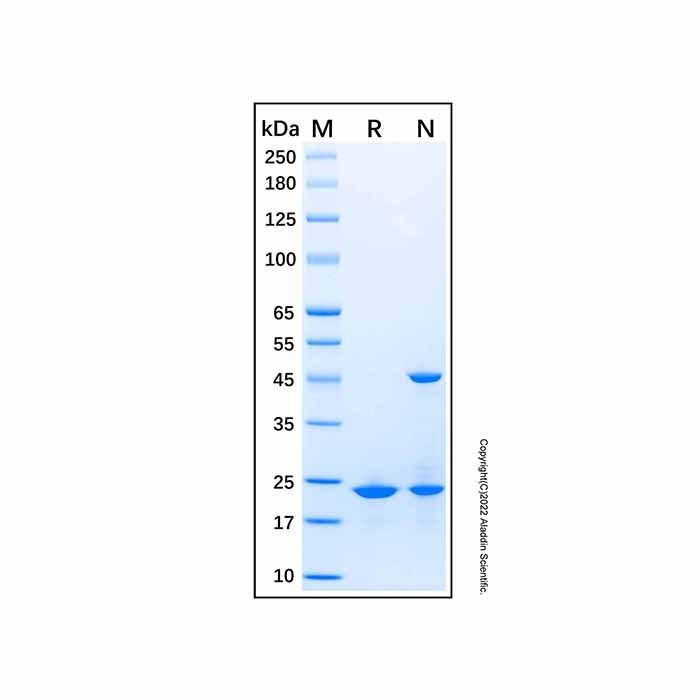
Epimorphin (EPIM), also known as syntaxin 2 (STX2), is a type IV transmembrane protein that is a member of the syntaxin family of t�SNARE (target�Soluble NSF Attachment REceptor) membrane fusion proteins. Intracellular Epimorphin functions as a vesicle fusion protein, but extracellular forms that are active in morphogenesis are also found. Human Epimorphin cDNA encodes 289 amino acids (aa) including a coiled�coil domain (aa 35 � 101), a potential cell�recognition sequence (aa 105 � 123), a sequence important for membrane transduction (aa 141 � 150), a t�SNARE domain (aa 191 � 252), and a C�terminal transmembrane domain (aa 265 � 288). Within aa 1 � 188, human Epimorphin shares 89%, 88%, 94% and 95% aa sequence homology with mouse, rat, bovine and porcine Epimorphin, respectively. Potential isoforms of 287 and 277 aa show C�terminal substitutions that do and do not contain hydrophobic sequences, respectively. Epimorphin has no signal sequence, but cell stress or Ca2+ influx induces plasma membrane crossing, with the assistance of annexin A2 and synapatotagmin�1. A soluble, extracellular 30 kDa form of Epimorphin is produced from the membrane–associated 34 kDa form by cleavage between E245 and H246. Intracellular 70 kDa and 150 kDa complexes are presumed to be dimers and tetramers, respectively. Epimorphin produced by mesenchymal cells influences morphogenesis of epithelia in the breast, kidney, intestine, lung, pancreas, liver, skin and intestines. For cells such as lung, mammary or pancreatic epithelia, soluble Epimorphin promotes tubulogenesis or hollow sphere formation in vitro, while epithelia plated on Epimorphin or Epimorphin�producing cells exhibit alpha v integrin�dependent adhesion and branching morphogenesis. Mice genetically lacking Epimorphin are sterile due to abnormal spermatogenesis and testicular development. Both endogenous and exogenous Epimorphin are shown to protect cells from oxidative stress.

 ZJ25F0116922


 危险品化学品经营许可证(带存储)