protein tyrosine phosphatase, non-receptor type 2 | PTP2 | PTPN2 | PTPTPTN2 | T-cell protein tyrosine phosphatase | T-cell protein-tyrosine phosphatase | TCELLPTP | TCPTP | TC-PTP | TCPTPEC 3.1.3.48 | tyrosine-protein phosphatase non-receptor type 2
规格或纯度
无载体,His标签,≥95%(SDS-PAGE),See COA
生化机理
T-cell protein tyrosine phosphatase (TC-PTP), also known as PTPT and PTPN2, is an enzyme that removes phosphate groups covalently attached to tyrosine residues in proteins. This enzyme has two C-terminal end splice variants with distinctly different subcellular localizations. The shorter 45 kilodalton isoform is exclusively nuclear in resting cells, but redistrubutes to the cytosol upon stimulation with growth factors and cellular stress. The longer 48 kilodalton isoform is exclusively found in the endoplasmic reticulum and seems to have distinctly different physiologic substrates from the smaller isoform. Although found in many cell types and tissues, TC-PTP is particularly prominent in hemopoietic cell types. Knockout mice lacking TC-PTP are born viable but die 3 to 5 weeks after birth of erythropoietic and lymphopoietic deficits, indicating a critical role for TC-PTP in bone marrow maturation. TC-PTP will dephosphorylate a wide range of phosphoproteins, such as p52Shc and receptors for EGF, Insulin and growth hormone. The recombinant protein lacks the C-terminal 100 amino acids that determine intracellular localization but is fully active.
Post-translational: Specifically phosphorylated in a cell cycle-dependent manner by cyclin-dependent kinases CDK1 and CDK2. Probably activated through phosphorylation by PKR.
Store at -20°C for 1 year. Avoid freeze/thaw cycle.
图片
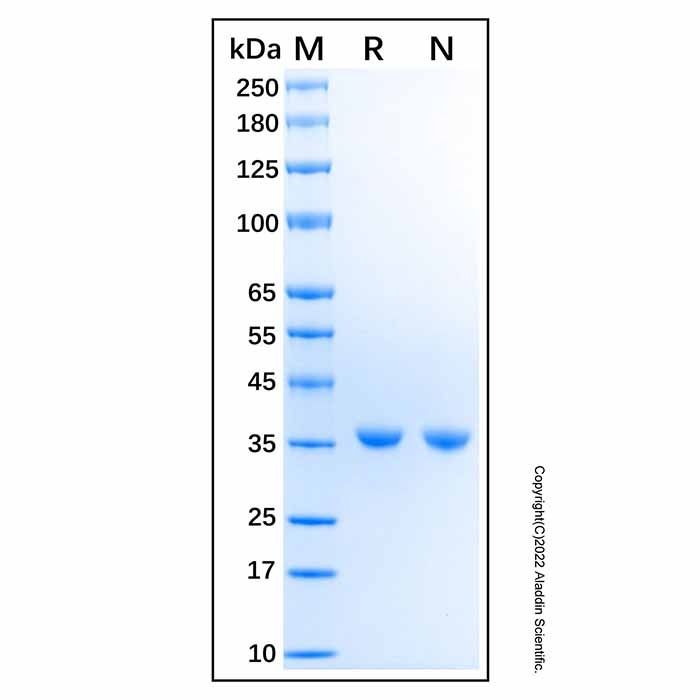
Recombinant Human TCPTP Protein (rp184965) - SDS-PAGE 3 μg/lane of Recombinant Human TCPTP Protein was resolved with SDS-PAGE under reducing (R) and non-reducing (N) conditions and visualized by Coomassie® Blue staining, showing a band at 35.6 kDa under reducing conditions and 35.5 kDa under non-reducing conditions.



 危险品化学品经营许可证(带存储)