Ribose-phosphate pyrophosphokinase 1 (PRPS1), also known as phosphoribosyl pyrophosphate synthase I, is a highly conserved, ubiquitously expressed enzyme from the ribose-phosphate pyrophosphokinase family that catalyzes the synthesis of phosphoribosylpyrophosphate (PRPP) from adenosine triphosphate (ATP) and ribose-5-phosphate (R5P). It is a crucial enzyme in the de novo synthesis and salvage of purines and biosynthesis of pyrimidine and pyrimidine nucleotides. PRPS1 is activated by inorganic phosphate and magnesium and can be allosterically inhibited by ADP and purines. Human PRPS1 is a 318 amino acid monomer that forms an active hexamer consisting of three homodimers arranged in a propeller-like shape. Each homodimer has an active site that binds both ATP and R5P as well as an allosteric inhibitor site. It has been well-established that many different mutations in the PRPS1 gene can lead to disease. Mutations can result in a gain of function with increased expression that leads to excess purine production present in PRS-I superactivity characterized by gout, hearing loss, hypotonia, and ataxia. Alternatively, mutations can result in loss of function with decreased expression present in nonsyndromic sensorineural deafness (DFN-2), Charcot-Marie-Tooth disease-5 (CMTX5), and Arts syndrome characterized by sensorineural hearing loss, optic atrophy, ataxia, neuropathy motor development delay, and intellectual disability. Mis-regulation of expression and mutation of PRPS1 expression has also been shown to promote proliferation in cancers including neuroblastoma, squamous cell carcinoma, and acute lymphoblastic leukaemia. Additionally, PRPS1 has been shown to be regulated through its phosphorylation state to play a role in DNA repair in the innate immune response and promote tumorigenesis.
Store at -20°C for 1 year. Avoid freeze/thaw cycle.
图片
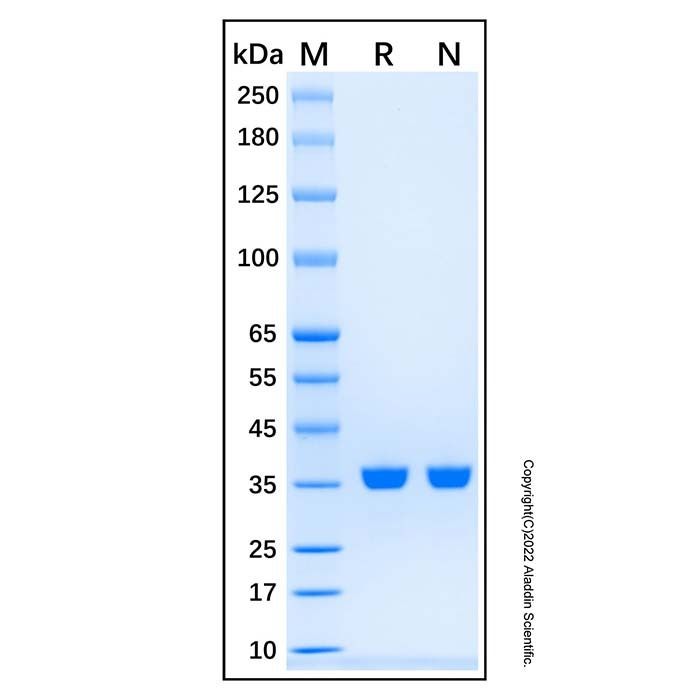
Recombinant Human PRPS1 Protein (rp188324) - SDS-PAGE 3 μg/lane of Recombinant Human PRPS1 Protein was resolved with SDS-PAGE under reducing (R) and non-reducing (N) conditions and visualized by Coomassie® Blue staining, showing a band at 36.3 kDa.

 ZJ24F1214742


 危险品化学品经营许可证(带存储)