PTS(6-pyruvoyltetrahydropterin synthase) belongs to the PTPS family. It catalyzes the elimination of inorganic triphosphate from dihydroneopterin triphosphate, which is the second and irreversible step in the biosynthesis of tetrahydrobiopterin from GTP. Tetrahydrobiopterin, also known as BH(4), is an essential cofactor and regulator of various enzyme activities, including enzymes involved in serotonin biosynthesis and NO synthase activity. Mutations in this gene result in hyperphenylalaninemia. PTS is involved in the biosynthesis of tetrahydrobiopterin, an essential cofactor of aromatic amino acid hydroxylases. PTS also catalyzes the transformation of 7,8-dihydroneopterin triphosphate into 6-pyruvoyl tetrahydropterin. Defects in PTS are the cause of BH4-deficient hyperphenylalaninemia type A (HPABH4A), also called 6-pyruvoyl-tetrahydropterin synthase deficiency (PTS deficiency) or hyperphenylalaninemia tetrahydrobiopterin-deficient due to PTS deficiency. HPABH4A is an autosomal recessive disorder characterized by depletion of the neurotransmitters dopamine and serotonin, and clinically by severe neurological symptoms unresponsive to the classic phenylalanine-low diet.
Phosphorylation of Ser-19 is required for maximal enzyme activity.
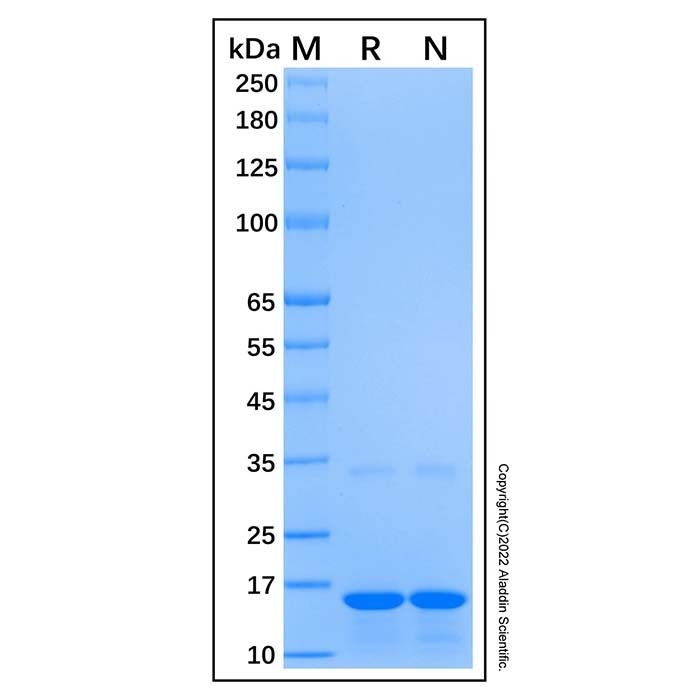
14.9 & 34.0 kDa, under reducing conditions; 15.0 & 33.2 kDa, under non-reducing conditions.
分子类型
蛋白质
产品线
生物产品
储存与运输
物理形态
液体
储存缓冲液
20mM Tris, 1mM DTT, 20% Glycerol, pH 8.0
浓度
见COA
储存条件
-20°C储存,避免反复冻融
运输条件
超低温运输
稳定性与储存
Store at -20°C for 1 year. Avoid freeze/thaw cycle.
图片
Recombinant Human PTS/PTPS Protein (rp188421) - SDS-PAGE 3 μg/lane of Recombinant Human PTS/PTPS Protein was resolved with SDS-PAGE under reducing (R) and non-reducing (N) conditions and visualized by Coomassie® Blue staining, showing a band at 14.9 & 34.0 kDa under reducing conditions and 15.0 & 33.2 kDa under non-reducing conditions.

 ZJ25F0116458


 危险品化学品经营许可证(带存储)