HDAC2 (Histone Deacetylase 2) is a Protein Coding gene. HDAC2 gene product belongs to the histone deacetylase family. Histone deacetylases act via the formation of large multiprotein complexes and are responsible for the deacetylation of lysine residues at the N-terminal regions of core histones (H2A, H2B, H3, and H4). This protein forms transcriptional repressor complexes by associating with many different proteins, including YY1, a mammalian zinc-finger transcription factor. Thus, it plays an important role in transcriptional regulation, cell cycle progression, and developmental events. Alternative splicing results in multiple transcript variants. HDAC2 is widely expressed in testis, endometrium, and other tissues. Diseases associated with HDAC2 include Pulmonary Disease, Chronic Obstructive, and Lung Disease.
Post-translational: S-nitrosylated by GAPDH. In neurons, S-nitrosylation at Cys-262 and Cys-274 does not affect enzyme activity, but induces HDAC2 release from chromatin. This in turn increases acetylation of histones surrounding neurotrophin-dependent gene promoters and promotes their transcription. In embryonic cortical neurons, S-Nitrosylation regulates dendritic growth and branching.
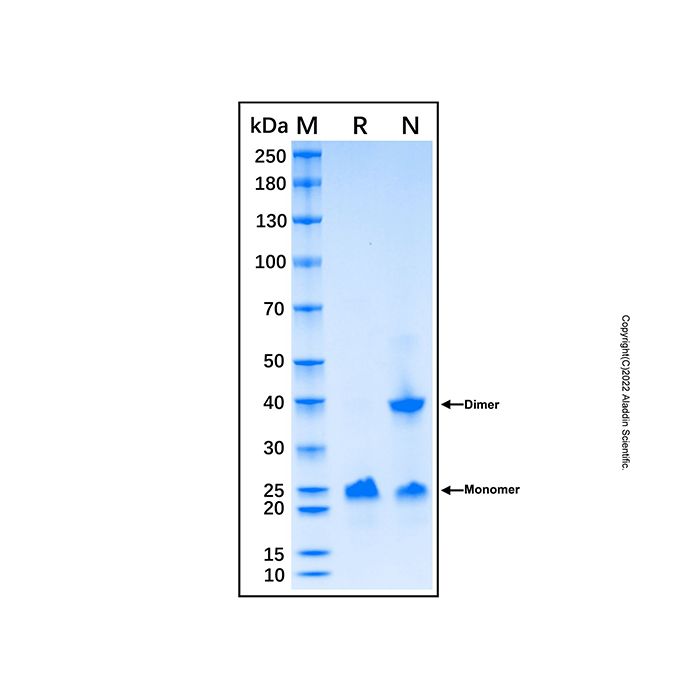
24.1 kDa, under reducing conditions; 23.3 & 38.6 kDa, under non-reducing conditions.
分子类型
蛋白质
产品线
生物产品
储存与运输
物理形态
液体
储存缓冲液
20mM Tris, 500mM NaCl, 5% Glycerol, pH 8.0
浓度
见COA
储存条件
-20°C储存,避免反复冻融
运输条件
超低温运输
稳定性与储存
-20℃(12个月);收货后建议分装,避免反复冻融。.
图片
Recombinant Human HDAC2 Protein (rp214399) - SDS-PAGE 3 μg/lane of Recombinant Human HDAC2 Protein was resolved with SDS-PAGE under reducing (R) and non-reducing (N) conditions and visualized by Coomassie® Blue staining, showing a band at 24.1 kDa under reducing conditions and 23.3 & 38.6 kDa kDa under non-reducing conditions. HDAC2 can exist as a homodimer or form heterodimers with HDAC1, and this interaction is crucial for its function in epigenetic regulation (PMID 11784859, PMID 20940255) .

 ZJ25F0927927


 危险品化学品经营许可证(带存储)