Neurofilament light polypeptide (NF-L), also known as 68 kDa neurofilament protein, and neurofilament triplet L protein, is an approximately 68 kDa member of the neuronal intermediate filament family that plays a role in the maintenance of neuronal caliber and possibly the pathogenesis of motor neuron diseases. Out of the three intermediate filament proteins (NF-L, NF-M, NF-H), NF-L is the most abundant. NF-L is a 542 amino acid (aa) cytoskeletal protein which consists of a 91 aa N-terminal head, a 304 aa alpha -helical rod, and a 147 aa C-terminal tail. Within the extracellular domains, human NF-L shares 95% and 96% sequence identity with mouse and rat NF-L, respectively.
Post-translational: O-glycosylated. Phosphorylated in the head and rod regions by the PKC kinase PKN1, leading to the inhibition of polymerization. Ubiquitinated in the presence of TRIM2 and UBE2D1.
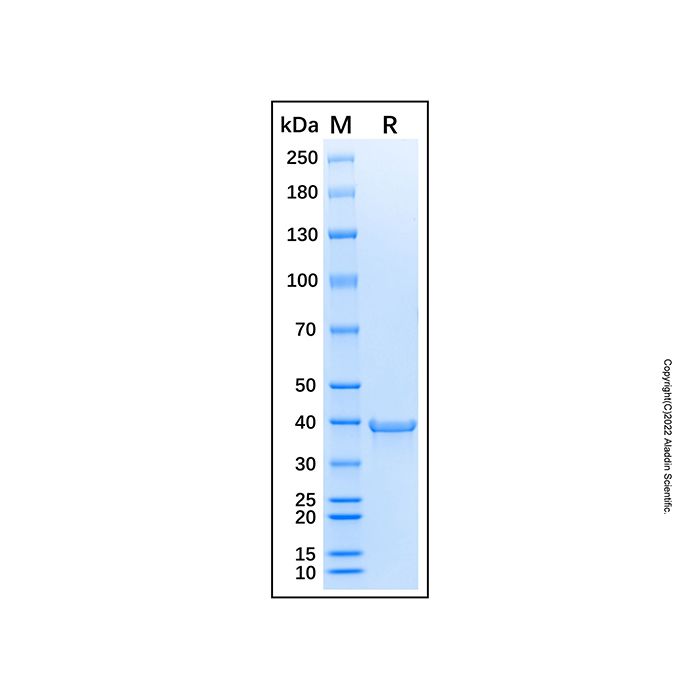
Recombinant Human NF-L Protein (rp214494) - SDS-PAGE 3 μg/lane of Recombinant Human NF-L Protein was resolved with SDS-PAGE under reducing (R) and visualized by Coomassie® Blue staining, showing a band at 38.3 kDa under reducing conditions.

 ZJ25F0622903


 危险品化学品经营许可证(带存储)