泛素是一种小分子多肽,其C端可与靶蛋白赖氨酸残基上的ε-氨基发生结合,该修饰过程称为单泛素化。泛素分子自身含有7个赖氨酸位点,后续其他泛素分子可依次连接在已结合的泛素上,形成泛素链,这一过程即为多聚泛素化。目前研究最充分的两类多聚泛素链分别依托48位赖氨酸(K48)和63 位赖氨酸(K63)连接而成。多聚泛素化具有多种生物学功能,其中以K48链连接为主的多聚泛素化通常介导靶蛋白经蛋白酶体途径降解;而K63链等则主要参与信号转导、DNA损伤修复、膜泡运输及免疫调节等非降解性调控过程。该修饰过程具备可逆性:去泛素化酶(DUBs)可降解、移除泛素链。泛素修饰的动态特性,给多聚泛素化蛋白的分离与功能研究带来极大阻碍,也导致目前大量蛋白质的泛素化状态尚不明确、研究不够深入。
基于已知具有与泛素结合亲和力的蛋白质结构域,开发了由酵母 DSK2 和人 Ubiquilin-2 来源结构域串联而成的泛素结合蛋白,用于鉴定泛素化蛋白质。泛素结合蛋白对多泛素链的结合亲和力比单个泛素结合相关结构域(UBA)大幅提升。此外,泛素结合蛋白对多泛素化蛋白质具有保护作用,使得在相对较低的丰度下也能检测到这些蛋白质。这些特性有效地“捕获”了处于多泛素状态的蛋白质。对K63连接和K48连接的四泛素链具有结合亲和力。即便不添加去泛素化酶、蛋白酶体专用抑制剂,该蛋白可通过空间位阻效应保护多泛素链,使其在细胞裂解及后续处理过程中免受去泛素化酶(DUBs)的切割及蛋白酶体的降解,从而有效规避了传统方法中依赖化学抑制剂所引入的细胞生理状态干扰。凭借高亲和力,可高效从细胞、组织、器官样本中分析多聚泛素化蛋白。带有亲和标签的泛素结合蛋白,可结合蛋白质免疫印迹技术完成泛素化蛋白的鉴定与分析。
产品特点:
1. 超高亲和力:对多聚泛素链的亲和力较单体UBA结构域大幅提升,高效捕获低丰度底物。
2. 灵敏度高:有效捕捉微量多聚泛素化蛋白,微弱泛素修饰信号均可稳定检出。
3. 精准识别:特异性识别多聚泛素链(K48/K63等),较常规泛素抗体对多聚泛素链具有更强的选择性结合能力。
4. 天然状态保护: 细胞裂解过程中,无需额外添加去泛素化酶及蛋白酶体抑制剂,即可保护多聚泛素化蛋白免受降解。经验证,在终浓度200 μg/mL时,其保护效果与添加抑制剂组相当或更优。对于特定实验需求,仍可酌情添加抑制剂以进一步保障泛素链完整性。
5.下游兼容性强:配备GST标签,适配Western Blot及质谱蛋白质组学鉴定。
Ubiquitin is a small polypeptide whose C-terminus can be conjugated to the ε-amino group of lysine residues on target proteins, a modification termed monoubiquitination. Ubiquitin itself contains seven lysine residues, allowing additional ubiquitin molecules to be sequentially linked to the already attached ubiquitin, forming polyubiquitin chains, a process known as polyubiquitination. To date, the two most extensively studied polyubiquitin chain types are those linked through lysine 48 (K48) and lysine 63 (K63). Polyubiquitination exerts diverse biological functions: K48-linked chains predominantly target proteins for proteasomal degradation, whereas K63-linked chains and others are primarily involved in non-proteolytic signaling events, such as signal transduction, DNA damage repair, vesicular trafficking, and immune regulation. This modification is reversible: deubiquitinating enzymes (DUBs) can remove ubiquitin chains, returning substrates to their unmodified state. The dynamic nature of ubiquitin modification poses a major challenge for the isolation and functional study of polyubiquitinated proteins, leaving the ubiquitination status of many proteins still poorly understood.
Based on known protein domains with ubiquitin-binding affinity, we have developed a ubiquitin-binding protein constructed by tandem fusion of domains derived from yeast DSK2 and human Ubiquilin-2 for the identification of ubiquitinated proteins. This ubiquitin-binding protein exhibits dramatically enhanced binding affinity for polyubiquitin chains compared to individual ubiquitin-associated (UBA) domains. In addition, it protects polyubiquitinated proteins, enabling detection even at relatively low abundance. These properties effectively "trap" proteins in the polyubiquitinated state. The protein binds to both K63-linked and K48-linked tetra-ubiquitin chains. Even in the absence of DUB and proteasome inhibitors, the protein provides a steric protection effect that shields polyubiquitin chains from DUB-mediated cleavage and proteasomal degradation during cell lysis and subsequent processing, thereby effectively avoiding the cellular physiological disturbances associated with chemical inhibitor supplementation in traditional methods. With its high affinity, the protein enables efficient analysis of polyubiquitinated proteins from cell, tissue, and organ samples. When equipped with affinity tags, the ubiquitin-binding protein can be used in conjunction with Western blotting for identification and characterization of ubiquitinated proteins.
Product Features:
1. Ultra-high avidity : Significantly enhanced binding to polyubiquitin chains over monomeric UBA domains, enabling efficient capture of low-abundance substrates.
2. High Sensitivity: Effectively captures trace amounts of polyubiquitinated proteins and enables stable detection of faint ubiquitination signals.
3. Precise identification: Specifically recognizes polyubiquitin chains (K48/K63, etc.), and has a stronger selective binding ability for polyubiquitin chains compared to conventional ubiquitin antibodies.
4. Native-state protection: During cell lysis, the protein protects polyubiquitinated species from degradation without the need for supplementary DUB or proteasome inhibitors. At a working concentration of 200 μg/mL, it has been validated to provide protection and enrichment efficiency comparable or superior to that achieved with inhibitor supplementation. For specific experimental requirements, inhibitors may still be added to further safeguard ubiquitin chain integrity if desired.
5. Broad downstream compatibility: Equipped with GST tag, it is compatible with Western Blot and mass spectrometry proteomics analysis.

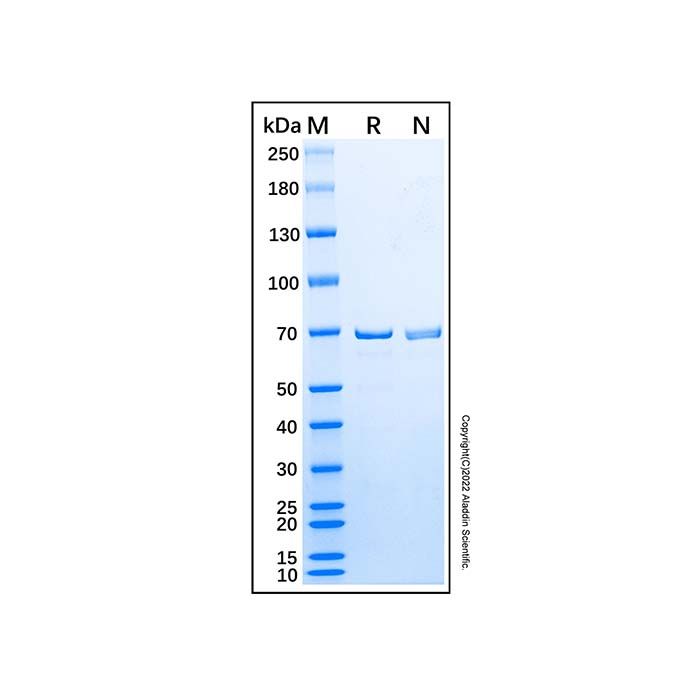
 ZJ26F0838751


 危险品化学品经营许可证(带存储)