土壤硝酸还原酶(S-NR)可催化土壤中硝酸盐还原为亚硝酸盐,是土壤硝态氮还原的关键酶,其活性可以反映土壤中硝酸盐的还原能力和微生物的代谢活性,根据土壤中硝酸盐的转化状况,可预测土壤的氮素供应能力和植物的氮素吸收能力,对合理施肥、降低氮素的损失等方面具有重要意义。
检测原理:土壤硝酸还原酶(S-NR)催化硝酸盐还原为亚硝酸盐,NO₃⁻ + NADH + H⁺ → NO₂⁻ + NAD⁺ + H₂O;产生的亚硝酸盐能够在酸性条件下, 与对–氨基苯磺酸及α-萘胺定量生成红色偶氮化合物;生成的红色偶氮化合物在540nm有最大吸收峰,可用分光光度法测定。
适用样本:土壤
注意:正式检测前,建议选择2-3个预期差异较大的样本进行预实验。
自备仪器和试剂
- 酶标仪或可见分光光度计(能测540nm处的吸光度)
- 96孔板或微量玻璃比色皿、可调节式移液枪及枪头
- 震荡仪、台式离心机、水浴锅
- 去离子水、PBS
操作步骤
1、试剂准备
试剂名称
| 试剂准备
| 注意事项
|
Reagent Ⅰ
| 即用型;使用时全程置于冰上
| 用不完的试剂-20℃分装保存1个月,禁止反复冻融
|
Reagent Ⅱ
| 临用前配制,48T加入10mL PBS,96T加入20mL PBS,充分溶解后使用,使用时全程置于冰上
| 用不完的试剂-20℃分装保存1个月,禁止反复冻融
|
Reagent Ⅲ
| 即用型,使用前平衡到室温
| 4℃保存(如出现结晶析出,60℃-90℃水浴溶解后使用)
|
Reagent Ⅳ
| 即用型,使用前平衡到室温
| 4℃避光保存
|
Standard
| 临用前配制,取0.1mL加蒸馏水定容至10mL,即为0.1μmol/mL标准液,现配现用,使用时全程置于冰上
| 用不完的Standard -20℃分装保存1个月,禁止反复冻融 |
2、样本制备
新鲜土样自然风干或37℃烘箱风干,过30-50目筛。
3、实验步骤
3.1 酶标仪或可见分光光度计预热30min,调节波长到540nm。可见分光光度计用去离子水调零。
3.2 操作表(下述操作在1.5mL离心管中操作):
试剂
| 测定管(μL)
| 对照管(μL)
| 标准管(μL)
| 空白管(μL)
|
风干土样(mg)
| 60
| 60
| 0
| 0
|
Standard
| 0
| 0
| 60
| 0
|
去离子水
| 0
| 225
| 0
| 285
|
Reagent Ⅰ
| 225
| 0
| 225
| 0
|
Reagent Ⅱ
| 75
| 75
| 75
| 75
|
混匀,37℃震荡24h后8,000g,25℃离心10min,取上清液用于检测。
上清液
| 130
| 130
| 130
| 130
|
Reagent Ⅲ
| 85
| 85
| 85
| 85
|
Reagent Ⅳ
| 85
| 85
| 85
| 85
|
3.3 混匀,室温显色20min,4,000g,25℃离心10min,取200μL上清液至微量玻璃比色皿或96孔板中,在540nm处测定吸光度,记为A空白、A标准、A测定、A对照, 计算ΔA测定=A测定-A对照、ΔA标准=A标准-A空白。
注意:空白孔和标准孔只需测定1次。每个测定管设一个对照管。实验之前建议选择2-3个预期差异大的样本做预实验。如果ΔA测定小于0.02可适当加大样本量。如果ΔA测定大于1.2可适当减少提取用样本量。
4、结果计算
注意:我们为您提供的计算公式,包括推导过程计算公式和简洁计算公式。两者完全相等。建议以加粗的简洁计算公式为最终计算公式。
单位的定义:每天每g土样中产生1μmol NO₂⁻的量为一个S-NR活力单位。
S-NR (U/g土样)=CStandard×ΔA测定÷ΔA标准×V总÷W÷T=0.5×ΔA测定÷ΔA标准
参数说明:
CStandard:标准管浓度,0.1μmol/mL;
V总:反应体系总体积,0.3mL;
T:反应时间,1d;
W:样本称重,0.06g。
5、结果展示

图1. 试剂盒测定土壤中硝酸还原酶的活性
注意事项
本产品仅供科学研究使用,不适用于临床诊断。为了您的安全和健康,请穿实验服并戴一次性手套操作。
Soil nitrate reductase (S‑NR) catalyzes the reduction of nitrate to nitrite in soil. It is a key enzyme in soil nitrate‑nitrogen reduction, and its activity reflects both the nitrate‑reducing capacity of the soil and the metabolic activity of microorganisms. Based on the conversion status of nitrate in soil, the nitrogen supply capacity of the soil and the nitrogen uptake capacity of plants can be predicted. This has important implications for rational fertilization and reducing nitrogen loss.
Detection Principle
Soil nitrate reductase (S‑NR) catalyzes the reduction of nitrate to nitrite: NO₃⁻ + NADH + H⁺ → NO₂⁻ + NAD⁺ + H₂O. The nitrite produced can quantitatively react with sulfanilic acid and α‑naphthylamine under acidic conditions to form a red azo compound. This red azo compound has a maximum absorption peak at 540 nm and can be determined by spectrophotometry.
Applicable Sample: Soil
Note: Before formal testing, it is recommended to perform a preliminary experiment with 2-3 samples expected to show significant differences.
Reagents, consumables and Equipments not provided
Microplate reader or visible spectrophotometer (capable of measuring absorbance at 540 nm)
96-well plate or micro-volume glass cuvette, Adjustable pipettes and tips
Shaker, Tabletop centrifuge, Water bath
Deionized water, PBS
Procedure
1. Reagent Preparation
Reagent Name
| Preparation
| Notes
|
Reagent Ⅰ
| Ready-to-use. Keep on ice throughout use.
| Unused reagent can be aliquoted and stored at -20°C for one month. Avoid repeated freeze-thaw cycles.
|
Reagent Ⅱ
| Prepare immediately before use. For 48T, add 10 mL PBS; for 96T, add 20 mL PBS. Dissolve completely and keep on ice throughout use.
| Unused reagent can be aliquoted and stored at -20°C for one month. Avoid repeated freeze-thaw cycles.
|
Reagent Ⅲ
| Ready-to-use. Equilibrate to room temperature before use.
| Store at 4°C. If crystallization occurs, dissolve in a 60-90°C water bath before use.
|
Reagent Ⅳ
| Ready-to-use. Equilibrate to room temperature before use.
| Store at 4°C protected from light.
|
Standard
| Prepare immediately before use. Take 0.1 mL and dilute to 10 mL with distilled water to obtain a 0.1 µmol/mL standard solution. Prepare fresh and keep on ice throughout use.
| Unused Standard can be aliquoted and stored at -20°C for one month. Avoid repeated freeze-thaw cycles. |
2. Sample Preparation
Air-dry fresh soil samples naturally or in a 37°C oven, then sieve through a 30-50 mesh screen.
3. Experimental Steps
3.1 Preheat the microplate reader or visible spectrophotometer for 30 minutes and set the wavelength to 540 nm. Zero the visible spectrophotometer with deionized water.
3.2 Operation Table (perform in 1.5 mL centrifuge tubes):
Reagent
| Test Tube (µL)
| Control Tube (µL)
| Standard Tube (µL)
| Blank Tube (µL)
|
Air-dried soil (mg)
| 60
| 60
| 0
| 0
|
Standard
| 0
| 0
| 60
| 0
|
Deionized Water
| 0
| 225
| 0
| 285
|
Reagent Ⅰ
| 225
| 0
| 225
| 0
|
Reagent Ⅱ
| 75
| 75
| 75
| 75
|
Mix well, shake at 37°C for 24 hours, then centrifuge at 8,000 g, 25°C for 10 minutes. Collect the supernatant for detection.
Supernatant
| 130
| 130
| 130
| 130
|
Reagent Ⅲ
| 85
| 85
| 85
| 85
|
Reagent Ⅳ
| 85
| 85
| 85
| 85
|
3.3 Mix well, develop color at room temperature for 20 minutes, centrifuge at 4,000 g, 25°C for 10 minutes. Transfer 200 µL of supernatant to a micro-volume glass cuvette or 96-well plate. Measure the absorbance at 540 nm, recorded as ABlank, AStandard, ATest, AControl. Calculate ΔATest = ATest - AControl and ΔAStandard = AStandard - ABlank. Note: The blank and standard tubes only need to be measured once. Each test tube should have a corresponding control tube. It is recommended to perform a preliminary experiment with 2-3 samples showing expected large differences before formal testing. If ΔATest is less than 0.02, appropriately increase the sample amount. If ΔATest is greater than 1.2, appropriately reduce the amount of sample used for extraction.
4. Calculation of Results
Note: We provide two formula sets: the derived calculation formulas and the simplified formulas. They are completely equivalent. The simplified formulas are recommended as the final calculation formulas.
Unit Definition: One unit of S‑NR activity is defined as the amount of enzyme that produces 1 µmol of NO₂⁻ per day per gram of soil.
S‑NR (U/g soil) = CStandard × ΔATest ÷ ΔAStandard × VTotal ÷ W ÷ T = 0.5 × ΔATest ÷ ΔAStandard
Parameter Description:
CStandard: Standard tube concentration, 0.1 µmol/mL;
VTotal: Total reaction volume, 0.3 mL;
T: Reaction time, 1 day;
W: Sample weight, 0.06 g.
5. Example Results
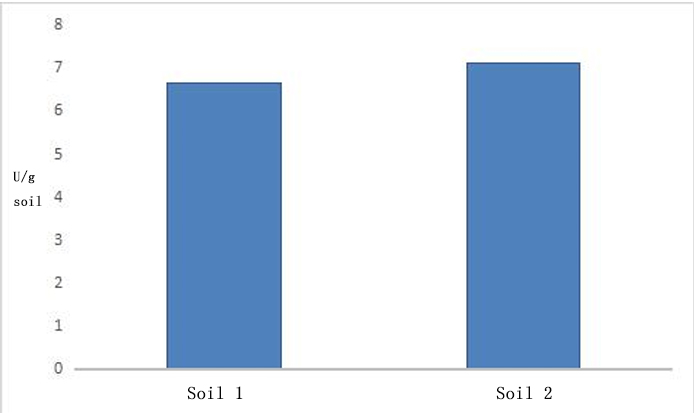
Figure 1. Soil nitrate reductase activity determined by the kit
Notes
This product is for scientific research use only and is not intended for clinical diagnosis. For your safety and health, please wear a lab coat and disposable gloves during operation.


 F2610355


 危险品化学品经营许可证(带存储)