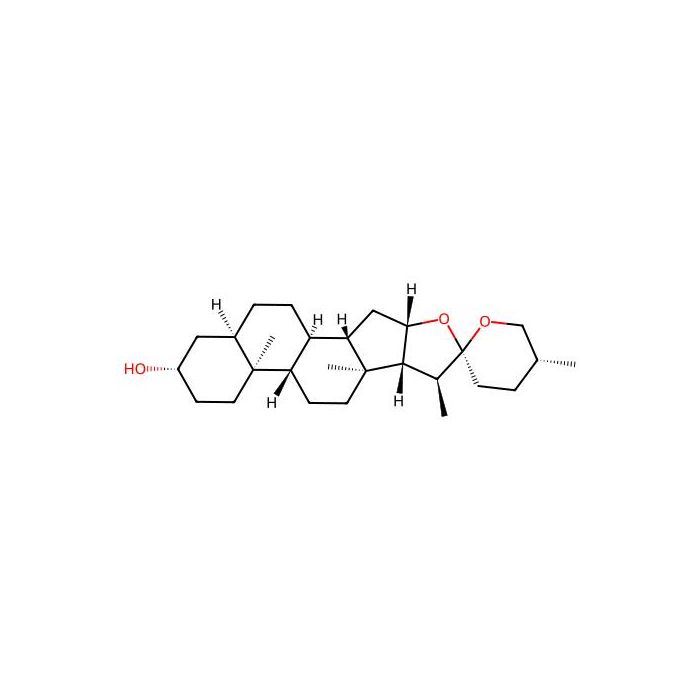
Smilagenin (SMI) is a small-molecule steroidal sapogenin from Anemarrhena asphodeloides and Pelargonium hortorum widely used in traditional Chinese medicine for treating chronic neurodegeneration diseases Smilagenin (SMI) improves memory of aged rats by increasing the muscarinic receptor subtype 1 (M1)-receptor densitySmilagenin (SMI) attenuates Aβ(25-35)-induced neurodegenerationvia stimulating the gene expression of brain-derived neurotrophic factor, may represents a novel therapeutic strategy for AD
In Vitro
Smilagenin (10 μM; 24 hours) increases SH-SY5Y cell survival compared with Aβ(25-35) intoxicated cells. Smilagenin (10 μM; 24 hours) increases neurotrophic factor (GDNF) and neurotrophic factor (BDNF) mRNA level by promoting CREB phosphorylation in 1-methyl-4-phenylpyridimium (MPP + ) treated SH-SY5Y cells. MCE has not independently confirmed the accuracy of these methods. They are for reference only. Cell Viability AssayCell Line: SH-SY5Y cells Concentration: 10 μM Incubation Time: 24 hours Result: Elevated the SH-SY5Y cell viability. RT-PCRCell Line: SH-SY5Y cells Concentration: 10 μM Incubation Time: 24 hours Result: Increased GDNF and BDNF transcription.
In Vivo
Smilagenin (intragastric administration; 10 or 26 mg/kg, once daily; 60 days) prevents the impairment of dopaminergic neurons in chronic MPTP/probenecid-induced mouse model. MCE has not independently confirmed the accuracy of these methods. They are for reference only. Animal Model: MPTP/probenecid-induced mouse modelDosage: 10 or 26 mg/kg Administration: Intragastric administration; 10 or 26 mg/kg; once daily; 60 days Result: Ameliorated locomotor ability of MPTP/probenecid-lesioned mice.

 F2608512


 危险品化学品经营许可证(带存储)