
计算溶液所需的质量、体积或浓度。
概述
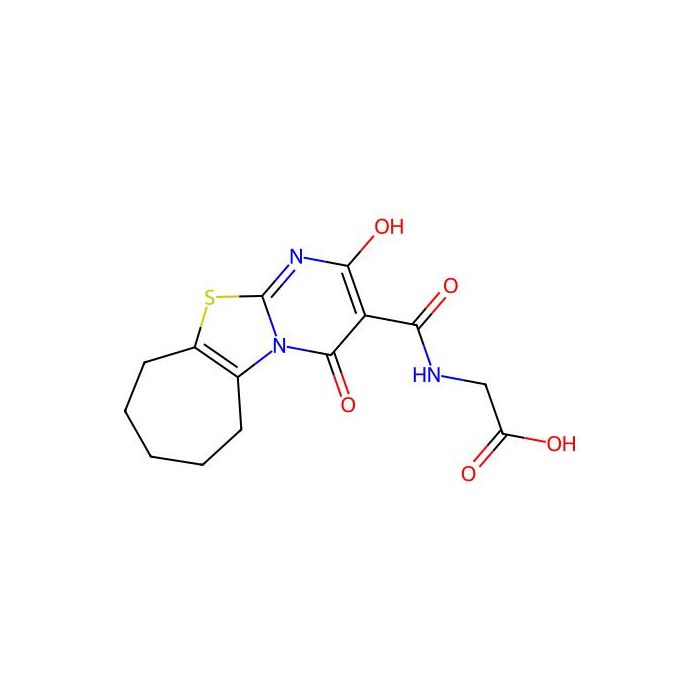
TRC160334 is a hypoxia-inducible factor (HIF) hydroxylase inhibitor. TRC160334 can be used for the research of ischemia/reperfusion injury
In Vitro
TRC160334 (100~400 μΜ; 4 hours; Hep3B cells) results in dose-dependent stabilization of nuclear HIF-1. TRC160334 (75~300 μM; 4 hours; Hep3B cells) results in dose-dependent transcriptional activation of HIF-1. TRC160334 shows a dose-dependent expression of HIF target genes such as EPO and adrenomedullin. MCE has not independently confirmed the accuracy of these methods. They are for reference only. Western Blot AnalysisCell Line: Hep3B cells Concentration: 100~400 μΜ Incubation Time: 4 hours Result: Resulted in dose-dependent stabilization of nuclear HIF-1.
In Vivo
TRC160334 (0.1 and 0.3 mg/kg; i.p.) significantly reduces serum creatinine and blood urea nitrogen . TRC160334 (0.3 and 0.6 mg/kg; i.p.) shows reducing trends for acute tubular necrosis . TRC160334 significantly reduces the rise in electrolyte excretion dose dependently. Preischemic treatment with TRC160334 results in a pronounced induction of HSP70 in kidneys by 6 hours while postischemic treatment with TRC160334 results in a pronounced induction of HSP70 in kidneys by 12 hours as compared with the respective vehicle control . MCE has not independently confirmed the accuracy of these methods. They are for reference only. Animal Model: Sprague-Dawley male rats (250–300 g) Dosage: 0.1 and 0.3 mg/kg Administration: I.p. Result: Significantly reduced serum creatinine and blood urea nitrogen. Animal Model: Sprague-Dawley male rats (250–300 g) Dosage: 0.3 and 0.6 mg/kg Administration: I.p. Result: Showed reducing trends for acute tubular necrosis.
Form:Solid
IC50& Target:HIF hydroxylase
规格
规格或纯度
≥95%
英文名称
TRC160334
生化机理
TRC160334 是一种缺氧诱导因子(HIF)羟化酶抑制剂。TRC160334 可用于缺血/再灌注损伤的研究。
储存条件
-20°C储存
运输条件
超低温运输
纯度
≥95%
名称和识别符
分子类型
小分子
SMILES
C1CCC2=C(CC1)SC3=NC(=C(C(=O)N23)C(=O)NCC(=O)O)O
Isomeric SMILES
C1CCC2=C(CC1)SC3=NC(=C(C(=O)N23)C(=O)NCC(=O)O)O
PubChem CID
分子量
337.35
高级数据
化学和物理性质
溶解性
DMSO : 25 mg/mL (74.11 mM; ultrasonic and warming and heat to 80°C)
质检证书(CoA,COO,BSE/TSE 和分析图谱)
C of A & Other Certificates(BSE/TSE, COO):
输入批号以搜索分析图谱:
溶液计算器
常见问题
本产品的纯度是多少?
本产品的化学纯度(含量)为 ≥95%。批次的具体数值以分析证书(COA)为准。
本产品应如何储存?
请于?20 °C条件下保存。需冷冻保存以维持规定的有效期。
本产品如何运输?
本产品采用保温箱配冰袋运输。收货后请立即拆包,并按上述储存条件保存。
本产品的 CAS 号、分子式和分子量是多少?
本产品的 CAS 号为 1293289-69-6,分子式为 C14H15N3O5S,分子量为 337.35 g/mol。
如何获取批次专用COA?
每个订单都会随附分析证书(COA),您也可以从账户订单历史中下载。如需订购前的COA,请联系您的客户代表,或使用PDP上的"申请COA"按钮——我们将提供代表性批次的COA。
产品仅提供给经过验证的企业、机构和合格的专业人员用于研发。不适用于人类、动物、诊断或治疗。
Copyright © 2023至今 上海阿拉丁生化科技股份有限公司 SSE:688179 保留所有权利。


 危险品化学品经营许可证(带存储)