
计算溶液所需的质量、体积或浓度。
Factor H Protein (Rat)
有货
PBS Only,高性能 级 提供 ≥90%(SDS-PAGE) 纯度,适用于对基线干扰要求严格的色谱和分析工作流程。
-80℃储存,避免反复冻融。特低温运输 。请查阅批次 COA 获取详细规格。
SDS、COA、产品数据表及规格说明书均可下载。可通过批号查询获取批次 COA。
在色谱分析、有机合成和交叉偶联反应领域已被 0 篇同行评审文献引用。
Rat (Rattus Norvegicus) Complement factor H (fH) is purified from normal ratserum. Factor H is an essential regulatory component of the alternative pathway of complement. It is critical for prevention of complement activation on host cells and tissues, especially the kidney. It has two functional activities: 1) it controls the formation and decay of thealternative pathway C3/C5 convertase (decay accelerating activity) and 2) it acts as a cofactor for factor I which proteolytically inactivates C3b when C3b is bound to factor H (cofactor activity). A C3b-binding protein, similar to factor H isolated from rat plasma, has been reported to be produced by rat platelets and functions as an immune adherence receptor for clearance of immune complexes in rodents (Alexander J.J. et al. (2001)).Factor H is a 155,000 Da protein composed of 20 homologous domains arranged like beads on a semi-flexible string. The N-terminal 5 domains bind to C3b and inhibit binding of factor B thus reducing the formation of C3/C5 convertase. Factor H also binds to preformed C3/C5 convertases (C3b,Bb and C3b,Bb,C3b) and causes rapid release of the catalytic subunit Bb (decay acceleration). These activities are essential for controlling the spontaneous activation of the alternative pathway amplification process in plasma. In addition, factor H controls the formation and decay of these enzymes when C3b is attached to the surface of particles. It is most effective on host cells and less effective on foreign particles for reasons described below. The alternative pathway of complement is constantly activating by “tickover” producing fluid phase C3b-like C3(H2O) and C3b. Factor H can bind to these proteins and act as a cofactor so that factor I (a serine protease that circulates in active form) can cleave their alpha chains producing inactive proteins (iC3b or iC3(H2O)). If C3b is not inactivated in this way it continues to form C3 convertases and consumes factor B and C3. If C3b is attached to surfaces it is converted to iC3b by factors H and I in a similar manner. Factor H is more effective when C3b resides on a host cell due to the presence of host markers recognized by factor H. Complement-mediated damage to the host is minimized due to host specific recognition by factor H.Factor H appears to regulate discrimination between potential pathogens and host cells and tissues by recognizing host markers. C3b attached to a surface can initiate the amplification cascade of the alternative pathway. Factor H prevents this on host cells and allows it to occur on surfaces that do not bear host-like markers. These host-specific structures are thought to be polyanionic clusters such as sialic acids and sulfated glycosoaminoglycans. Recognition of host markers occurs through multiple polyanion binding sites located in domains 6-20 of factor H. One site is located in domain 7 and a mutation in this domain (Y402H) is strongly associated with complement activation and tissue destruction in age-related macular degeneration (Zipfel, P.F. et al. (2006)). A tentative site is located in the domain 12-14 region and a very important site is located at the C-terminal in domains 19-20. This C-terminal site appears to be the main site that aids binding to host surfaces. Mutations affecting or located in these domains lead to activation of the alternative pathway of complement in inherited hemolytic uremic syndrome (Zipfel, P.F. et al. (2006)). This site appears to be the site involved in polyanion-dependent dimer and tetramer formation of factor H (Pangburn, M.K. et al. (2009)).
Physical Characteristics & Structure
The molecular weight of rat factor H has been reported to be about 150,000 to 155,000 daltons (Daha MR et al (1982); Demberg T et al., (2002); Alexander JJ et al., 2001)). Rat
factor H is 9.5% glycosylated (Demberg T et al., (2002). Analysis of purified rat Factor H by SDS/polyacrylamide gel electrophoresis (Invitrogen) under non-reduced
and reduced conditions shows a single band that migrates slightly ahead of human factor H (155,000 daltons). The extinction coefficient of rat Factor H (E1%/280nm = 16.82) is calculated based on its amino acid sequence using ProtParam and assumes all pairs of Cys residues form cystines (i.e. a pair of cysteine molecules are joined by a disulfide
bond). The calculated pI based on its amino acid sequence is 6.29. The normal plasma concentration of Factor H rat serum has been reported to be 238 + 21ug/ml by Demberg
T et al., (2002) while Daha MR et al (1982) have reported 244 + 21 ug/ml.
Function
See General Description above.
Assays
Functional assays of factor H measure either its decay accelerating activity or its factor I cofactor activity (Morgan, B.P. (2000)). A continuously monitored fluorescent
assay has been reported (Pangburn, M.K. et al. (1983)) which takes advantage of the approximately 8-fold drop in fluorescence of ANS (8-anilino-1-naphthalenesulfonic acid) in the presence of C3b when that C3b is converted to iC3b. Other functional assays of Factor H are described under the Assay section for human factor H .
The cofactor activity of purified rat factor H was determined using the convenient cofactor assay that measures the cleavage of purified C3b by SDS gels.
Four micrograms (4ug) of rat C3b was incubating with various amounts of rat factor H ranging from 0.1 to 1µg in the presence of 1µg human factor I in a total volume of 12 µL. The assays were set up on wet ice, then incubated for 15 min at 37oC at which time SDS sample buffer containing reducing agent were added to the tubes and the samples heated for 5 min. Analysis of SDS gels revealed > 90% cleavage of the alpha chain of rat C3b in the presence of > 0.02 ug rat factor H and 1 ug human factor I.
Function
The biological functions of factor H are described above in the General Description section.
Genetics
Rat factor H chromosome location 13. The NCBI Gene ID number for rat factor H: 155012 and UniProt accession number is Q91YB6.
Precautions/Toxicity/Hazards
This protein is purified from animal plasma/serum and therefore precautions appropriate for handling any animal blood-derived product must be used.
Hazard Code: B WGK Germany 3
MSDS available upon request.
References
Morgan, B.P. ed. (2000) Complement Methods and Protocols. (ISBN 0-89603-654-5) Humana Press, Inc., Totowa, New Jersey.
Pangburn, M.K. and Müller-Eberhard, H.J. (1983) Kinetic and thermodynamic analysis of the control of C3b by the complement regulatory proteins factors H and I.
Biochemistry 22:178-185.
Pangburn, M.K., Rawal, N., Cortes, C., Alam, M.N., Ferreira, V.P. and Atkinson, M.A. (2009) Polyanion-induced self-association of complement factor H. J. Immunol. 182:10611068.
Zipfel, P.F., Heinen, S., Jozsi, M. and Skerka, C. (2006) Complement and diseases: defective alternative pathway control results in kidney and eye diseases. Mol. Immunol. 43:97-106.
Demberg, T., Pollok-Kopp B, Gerke D, Gotze O. and Schlaf G. (2002) Rat complement factor H: molecular cloning, sequencing and quantification with a newly established
ELISA. Scand. J. Immunol. 56:149-160.
Daha MR and van Es LA. (1982) Isolation, characterization and mechanism of action of rat β1H. J. Immunol. 128: 1839-1843.
Alexander JJ, Hack BA, Cunningham PN and Quigg RJ. (2001) A Protein with characteristics of factor H is present on rodent platelets and functions as the immune adherence receptor. . J. Biol. Chem. 276: 32129–32135.


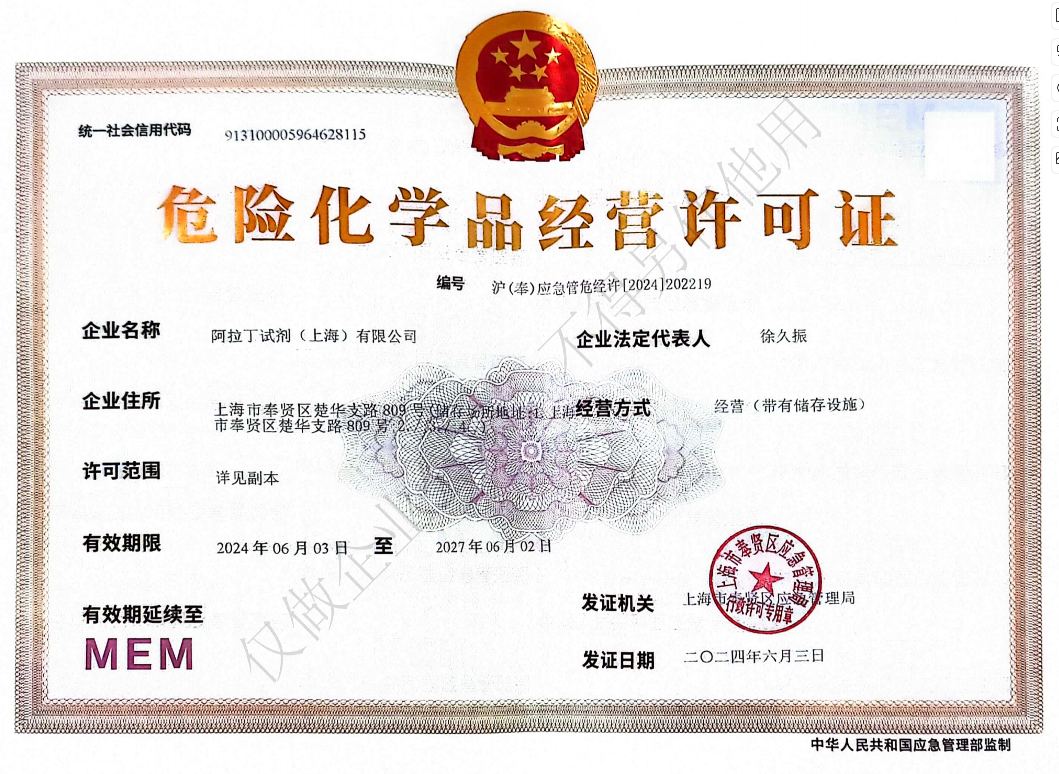 危险品化学品经营许可证(带存储)