The core of visible-light photoredox catalysis is that a photocatalyst absorbs visible light to form an excited state, which then drives redox cycles through single-electron transfer (SET) to generate highly reactive intermediates for bond construction and functional-group transformation under ...
The photoreaction undergoes a special molecular transformation to form a product that is not obtained through a thermal reaction. In recent years, the light reaction induced by visible light has been further developed. The light reaction in visible light does not require high-energy ultraviolet ...
Although the Markovian rule plays a key role in explaining the mechanism of olefin Addition reaction, and it has also been widely used in scientific research and practical production, there are very few kinds of addition products with anti Markovian rules obtained through catalytic processes.



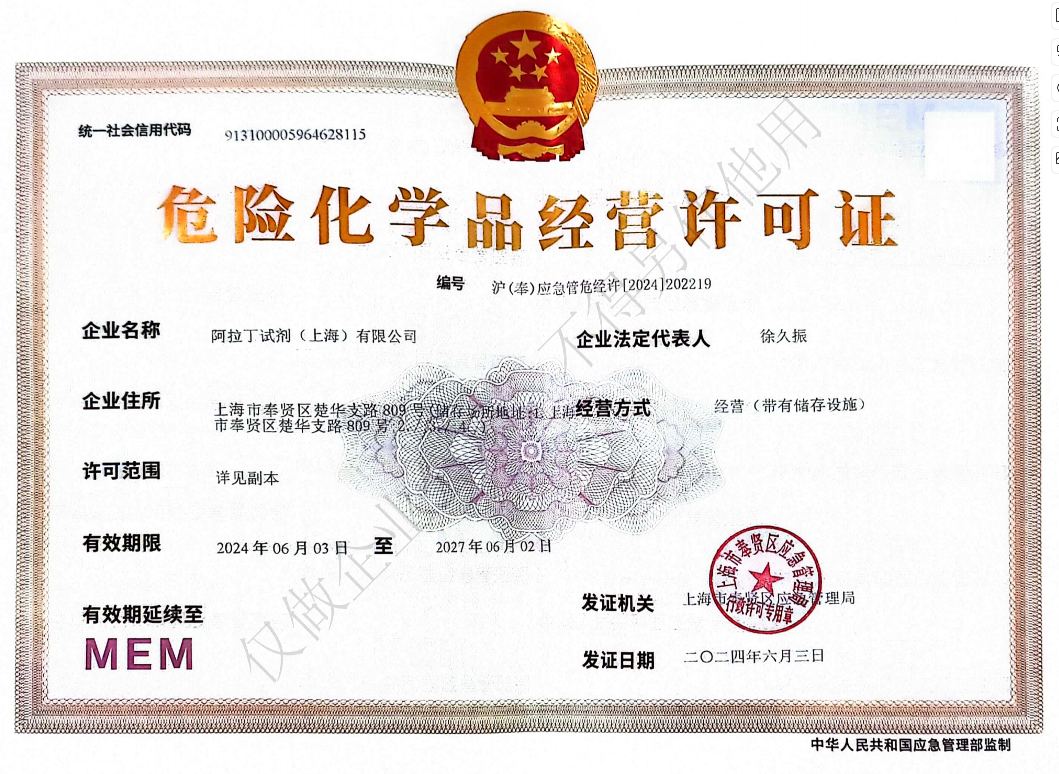 危险品化学品经营许可证(带存储)