
计算溶液所需的质量、体积或浓度。
为什么选择此级别
,适用于对基线干扰要求严格的色谱和分析工作流程。
储存与运输
-20°C储存,避免反复冻融。超低温运输 。请查阅批次 COA 获取详细规格。
质量文档
SDS、COA、产品数据表及规格说明书均可下载。可通过批号查询获取批次 COA。
文献证明
在色谱分析、有机合成和交叉偶联反应领域已被 0 篇同行评审文献引用。
概述
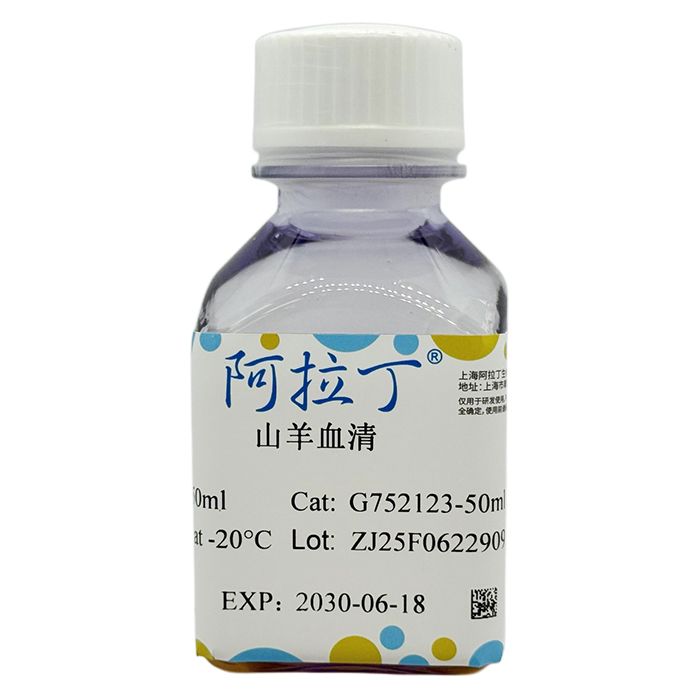
本山羊血清(Goat Serum)是阿拉丁自产的血清,可以用于细胞培养、免疫荧光和免疫组化时的封闭等。本山羊血清采自健康山羊,经无菌采集、批量混合,最终过3次0.1μm过滤分装而成。所有操作符合2010版GMP (Good Manufacturing Practices for Drug)生产标准。本产品无细菌、真菌、支原体及病毒污染,具有高质量和高稳定性。本山羊血清为纯天然制品,不含任何人为的添加成分,适用于科研或诊断试剂生产用。可以替代FBS用于大多数细胞系和原代细胞培养,也可用于病毒的培养和研究、鱼类细胞的培养、免疫反应中的封闭和稀释液的制备。不同血清产品的比较、选择和使用技巧,请参考http://www.aladdin-e.com/。本产品通过了阿拉丁的细胞培养和免疫染色(包括免疫荧光和免疫组化)封闭效果测试。
注意事项:
如果不能短期内使用完毕,解冻后请适当分装。血清结冰时体积会增加约10%,因此在分装血清时须使分装瓶预留一定体积空间,否则易导致分装瓶冻裂而发生污染。热灭活是指56℃,30分钟加热已完全解冻的血清。加热过程中需有规则地摇晃均匀。热处理的目的是灭活血清中的补体(complement)。除非必须,一般不推荐对血清进行热处理。因为热处理会造成血清沉淀物显著增多,而且还会影响血清的质量。补体参与的反应有:细胞毒作用、平滑肌细胞收缩、肥大细胞和血小板释放组胺、增强吞噬作用、促进淋巴细胞和巨噬细胞发生化学趋化和活化等。瓶装血清解冻需采用缓慢解冻法:把在-15~-40℃低温冰箱中保存的血清放入4℃冰箱中解冻约1天,待全部解冻后再分装。在解冻过程中每隔约2小时可轻轻摇晃均匀(尽量避免产生气泡),使温度与成分均一,减少沉淀的发生。切勿直接将血清从-20℃或更低温度进入37℃水浴解冻,这样因温度改变太大,容易造成蛋白质凝集而出现沉淀,从而使用血清的质量下降。血清中的絮状沉淀物主要是解冻后血清中纤维蛋白及4℃长时间保存后血清中的脂蛋白变性造成的,这些絮状物不会影响血清本身的质量,可不用处理。如果必须要处理,可400g离心5分钟去除。但不宜过滤去除,因为絮状物可能阻塞滤膜。经过热处理的血清中沉淀物会显著增多。有些沉淀物在显微镜下观察像“小黑点”,而且由于这些“小黑点”的布朗运动在显微镜下被放大,感觉是在游动,所以经常被误认为血清被微生物污染。通常这些小黑点不会影响细胞生长,但如果怀疑血清存在微生物污染,则应立即停止使用,更换另一批次的血清。可将适量血清用培养液稀释至10%浓度后培养1-3天,观察小黑点是否急剧增多,或取适量血清在LB平板上涂板培养观察是否产生菌落,以确定是否存在微生物污染。请勿将血清在37℃放置过长时间,否则血清会逐渐变浑浊,同时血清中的有效成分也会逐渐失活而影响血清质量。本产品仅限于专业人员的科学研究用,不得用于临床诊断或治疗,不得用于食品或药品,不得存放于普通住宅内。为了您的安全和健康,请穿实验服并戴一次性手套操作。相关产品: '],
If the serum will not be used up within a short period of time, dispense after thawing and store aliquot under appropriate conditions for long-term storage. The volume of serum will increase by 10% after freezing, so when dispensing serum into tubes, leave some space in the tube to avoid tube cracking during the freezing.After the serum is thawed completely, the serum can be heated at 56℃ for 30 minutes to inactivate the complement in serum. Unless necessary, heat-inactivation of the serum is not recommended for general use because heat treatment will result in precipitation of serum and decreasing of serum quality. Complement is involved in reactions such as cytotoxicity, contraction of smooth muscle cells, release of histamine from mast cells and platelets, enhancement of phagocytosis, and promotion of chemical chemotaxis and activation of lymphocytes and macrophages.The serum should be thawed slowly and gradually. Thaw the serum stored at -15~-40℃ in 4℃ refrigerator for approximately one day, and make aliquot after it is thawed thoroughly. During the thawing process, shake gently every 2 hours (avoid the formation of air bubbles) to homogenize the component and reduce the occurrence of precipitation. Do not thaw the serum stored at -20℃ or lower temperatures directly in a 37℃ water bath to avoid protein agglomeration and precipitation in serum due to large temperature changes.The floc-like precipitates in serum are mainly denatured fibrin and lipoproteins in serum after long-term storage at 4℃. These flocs do not affect the quality of the serum and can be left untreated. If necessary, the flocs can be removed by centrifugation at 400×g for 5 minutes. However, it is not advisable to remove by filtration as the flocs may block the filter membrane. The precipitates in the serum after heat inactivation will increase significantly. Some of these deposits look like "black dots" under the microscope and are often misinterpreted as microbial contamination because the Brownian motion of these "dots" is magnified under the microscope and appear to be swimming. Usually, these small black spots do not affect cell growth, but if microbial contamination of the serum is suspected, it should be immediately replaced with new serum. Users can dilute the serum with culture medium to 10% concentration and incubate for 1-3 days, and observe whether the small black dots increase sharply, or spread an appropriate amount of serum on LB plate to determine whether there is microbial contamination. Do not leave the serum at 37℃ for too long, as the serum will gradually become cloudy and lose some active ingredients, thus affecting the quality of the serum.This product is for R&D only. Not for drug, household, or other uses.For your safety and health, please wear a lab coat and disposable gloves during the operation.
规格
稳定性与储存
Store at -20℃ for 5 years. Upon receipt, it is recommended to aliquot. Avoid freeze/thaw cycle. Protect from light.
英文名称
Goat Serum
储存条件
-20°C储存,避免反复冻融
运输条件
超低温运输
产品线
生物产品
名称和识别符
分子类型
血清/血浆
技术文档
高级数据
化学和物理性质
敏感性
对光敏感
质检证书(CoA,COO,BSE/TSE 和分析图谱)
C of A & Other Certificates(BSE/TSE, COO):
输入批号以搜索分析图谱:
通过匹配包装上的批号来查找并下载产品的 COA,每批产品都进行了严格的验证,您可放心使用!
| 批号(Lot Number) | 证书类型 | 货号 |
|---|---|---|
 ZJ26F0433937 |
分析证书 | G752123 |
| ZJ26F0433936 |
分析证书 | G752123 |
| ZJ25F1129310 |
分析证书 | G752123 |
| ZJ25F0622909 |
分析证书 | G752123 |
| ZJ24F1114314 |
分析证书 | G752123 |
技术文档和文章
溶液计算器
常见问题
本产品应如何储存?
请于?20 °C条件下保存。避免反复冻融。建议按单次用量分装保存。
本产品如何运输?
本产品采用保温箱配冰袋运输。收货后请立即拆包,并按上述储存条件保存。
如何获取批次专用COA?
每个订单都会随附分析证书(COA),您也可以从账户订单历史中下载。如需订购前的COA,请联系您的客户代表,或使用PDP上的"申请COA"按钮——我们将提供代表性批次的COA。
产品仅提供给经过验证的企业、机构和合格的专业人员用于研发。不适用于人类、动物、诊断或治疗。
Copyright © 2023至今 上海阿拉丁生化科技股份有限公司 保留所有权利。


 危险品化学品经营许可证(带存储)