透明质酸酶 来源于牛睾丸

CAS: 37326-33-3 货号: H128644 EC号: 253-464-3
有货
级别和纯度: 生物活性 ? 生物活性级(Bioactive)—— 经验证在功能检测中保持生物活性。当分子须具有功能活性而不仅是纯度时使用。 ActiBioPure™ ? ActiBioPure™ —— 阿拉丁面向生物活性和重组产品的优质系列。当同时需要高纯度和保持生物活性时使用。 天然 ? 天然型(Native)—— 处于天然(非重组、非变性)形态的蛋白/生物分子。当需要天然结构和活性时使用。 高性能 ? 高性能级 —— 纯度和性能特性经过优化。适用于普通等级无法满足的灵敏分析。 EnzymoPure™ ? EnzymoPure™ —— 阿拉丁的高质量酶解决方案系列。当酶纯度和明确活性决定检测或工艺性能时使用。 ≥300 USP/NF units/mg dry weight
Accession #
Q5E985,Q8SQG8
生物活性
≥300 USP/NF units/mg dry weight
★
规格
库存
价格
数量
10KU
H128644-10KU
期货 Stock Image
¥363.90
50KU
H128644-50KU
现货 Stock Image
¥1,399.90
300KU
H128644-300KU
期货 Stock Image
¥5,399.90
请输入您要添加的产品数量
🧪

为什么选择此级别

ActiBioPure™,EnzymoPure™,天然,生物活性,高性能 级 ,适用于对基线干扰要求严格的色谱和分析工作流程。

🌡

储存与运输

-20°C储存。超低温运输 。请查阅批次 COA 获取详细规格。

📋

质量文档

SDS、COA、产品数据表及规格说明书均可下载。可通过批号查询获取批次 COA。

📚

文献证明

在色谱分析、有机合成和交叉偶联反应领域已被 20 篇同行评审文献引用。

概述


Testicular hyaluronidase is a glycoprotein containing 5% mannose and 2.7% glucosamine. Optimum pH range is 4.5-6.0. The enzyme catalyzes the hydrolysis of endo-N-acetylhexosaminic bonds of hyaluronic acid and chondroitin sulfate A and C (but not B), primarily to tetrasaccharide residues.
Hyaluronidase catalyzes the random hydrolysis of 1,4-linkages between 2-acetamido-2-deoxy-b-D-glucose and D-glucose residues in hyaluronate.
Characteristics of Hyaluronidase from Bovine Testes:
Specificity
Testicular hyaluronidase hydrolyzes the endo-N-acetylhexosaminic bonds of hyaluronic acid and chondroitin sulfuric acids A and C (but not B), primarily to tetrasaccharide residues. Monosaccharides are not liberated.
Composition
The enzyme is a glycoprotein containing 5% mannose and 2.17% glucosamine. The amino acid composition has been determined.
Characteristics of Hyaluronidase
Molecular Weight: Four subunits of 14,000 each and a total molecular weight of 55,000.
Optimal pH: 4.5 - 6.
Extinction Coefficient: extinction coefficient= approximately 8.
Inhibitors: Fe2+ and Fe3+ are inhibitory as are Mn2+ and Cu2+.
Stability: Hyaluronidase is stable for 1 - 2 years and the purified preparation for 6 - 12 months when stored at -20°C.
Stabilizers: Sodium chloride
Hyaluronidase Assay
Method
Hyaluronic acid is measured by its ability to form turbidity with an acid albumin solution. Turbidity is a function of hyaluronic acid concentration and can hence be related to enzyme activity. One unit is based on the change in absorbency (turbidity) at 540nm of an internal standard assayed concurrently with each lot.  Internal standard replaces USP/NF reference no longer available.
Reagents
1. 0.1 M Sodium phosphate buffer, pH 5.3 with 0.15 M sodium chloride (HSE buffer)
2. 0.5 M Sodium acetate buffer, pH 4.2
3. Albumin reagent: Prepare by dissolving 2.5 grams of bovine serum albumin, Fraction V in 250 ml of 0.5 M sodium acetate buffer, pH 4.2. Adjust pH to 3.0 with 2 N HCl and heat at 93°C for 30 minutes. Cool and adjust final volume to 1000 ml with 0.5 ml sodium acetate buffer, pH 4.2.
4. Standard: Prepare stock solutions of 1.0 and 0.5 mg/ml.
5. Hyaluronic acid (HA): Dissolve 10 mg Worthington hyaluronic acid in 25 ml 0.1 M sodium phosphate buffer: pH 5.3 with 0.15 M sodium chloride. Note: This solution can be prepared by allowing VHHA to dissolve overnight. Heating in a boiling water bath for 10 - 15 minutes is the preferred method if the material is not immediately soluble.
Enzyme
Prepare stock solution of enzyme at one mg/ml in 0.1 M sodium phosphate buffer pH 5.3 with 0.15 M sodium chloride. Immediately prior to use dilute further in the same buffer. For crude grade material concentrations of 0.01 - 0.05 mg/ml are recommended. For purified grade concentration of 0.001 - 0.01 mg/ml are recommended.
Procedure:
I. Standard Curve
Into a series of numbered tubes, pipette as follows:
Place all tubes in a boiling water bath for 5 minutes. Cool to room temperature. Add 9.0 ml of albumin reagent and allow to stand for 10 minutes. Read absorbance at 540 nm. Plot absorbance at 540 nm versus mg HA to form standard curve.
Hyaluronic acid should be soluble under the defined conditions and should produce a standard curve with a slope of 1.5 or greater.
II. Test Procedure
Pipette 0.5 ml of a 0.4 mg/ml hyaluronic acid solution into a series of test tubes. Incubate at 37°C for 4 - 5 minutes to achieve temperature equilibrium. Incubate one blank tube with one ml of 0.1 M sodium phosphate buffer, pH 5.3 with 0.15 M sodium chloride. At timed intervals add 0.5 ml of appropriately diluted enzyme or standard to respective tubes. Incubate each tube exactly 10 minutes and cool in an ice bath to room temperature. Add 9.0 ml of albumin reagent to each tube and incubate at room temperature for 10 minutes. Read A540 of each tube versus the blank.
Calculation
Determine the amount of hyaluronic acid remaining after digestion from the standard curve.
Calculate the amount of hyaluronic acid digested as follows:
mg HA digested = 0.2 mg - mg HA remaining

规格

产品名称
透明质酸酶 来源于牛睾丸
别名
玻璃酸酶 | 玻璃糖醛酸酶
英文别名
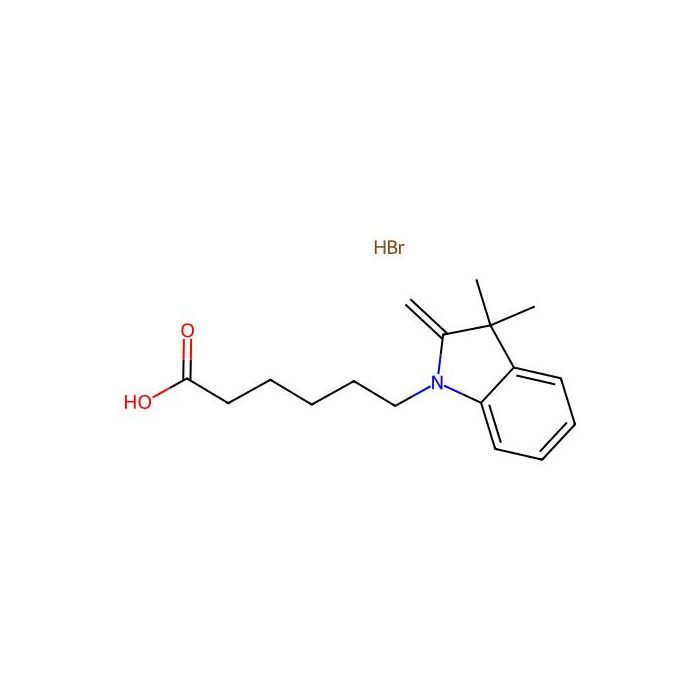
Hyaluronidase from Bovine Testes, | s4424 | Hyaluronoglucosaminidase | Hyaluronidase | 6-(3,3-dimethyl-2-methylideneindol-1-yl)hexanoic acid;hydrobromide | AKOS025293742 | chondroitinase | chondroitinase I | chondroitinase I | hyaluronoglucosidase | Hyalu
规格或纯度
生物活性, ActiBioPure™, 天然, 高性能, EnzymoPure™, ≥300 USP/NF units/mg dry weight
生化机理
透明质酸酶降解透明质酸,并被发现在癌症进展过程中受到不适当的调节。这些酶随机切割透明质酸,软骨素和硫酸软骨素中的β-N-乙酰己糖胺-[1→4]糖苷键。
生物活性
≥300 USP/NF units/mg dry weight
种属
牛(Bovine)
序列
Belongs to the glycosyl hydrolase 56 family.
Accession #
来源
天然
预测分子量
~55 kDa
作用类型
激活剂
CAS编号和信息
37326-33-3
酶学委员会编号
3.2.1.35
分子类型
酶
储存与运输
物理形态
冻干(Lyophilized)
浓度
≥300 USP/NF units/mg dry weight
复溶
Reconstitute in 0.1M sodium phosphate buffer, pH 5.3 with 0.15M sodium chloride.
储存条件
-20°C储存
运输条件
超低温运输
单位定义
One unit is based on the change in absorbency (turbidity) at 540nm of an internal standard assayed concurrently with each lot. Internal standard replaces USP/NF reference no longer available.

技术文档

📋 安全数据表 (SDS)

全面的危险、操作、储存及法规合规文件。

下载 SDS →

✅ 分析证书 (COA)

批次质量数据。输入批号以获取对应 COA。

查询 COA →

📊 产品数据表

产品规格和应用的快速参考摘要。

查看数据表 →

🔬 规格说明书

该级别的完整质量属性和验收标准。

查看规格说明 →

高级数据

三维结构
交互式化学结构模型


质检证书(CoA,COO,BSE/TSE 和分析图谱)
C of A & Other Certificates(BSE/TSE, COO):
输入批号以搜索分析图谱:

通过匹配包装上的批号来查找并下载产品的 COA,每批产品都进行了严格的验证,您可放心使用!

找到6个结果

批号(Lot Number) 证书类型 货号
L2215645 分析证书 H128644
L2501379 分析证书 H128644
L2515641 分析证书 H128644
L2410429 分析证书 H128644
D2402023 分析证书 H128644
L2215647 分析证书 H128644
技术文档和文章
透明质酸
Hyaluronan
纯净提取,智慧溶剂:天然提取试剂实践手册
Clean Extracts, Smart Solvents: The Natural Extraction Reagent Playbook
常见组织解离酶的原理与选择策略
Principles and Selection Strategies for Common Tissue Dissociation Enzymes
透明质酸酶:解锁生物医学领域的“魔法酶”
Hyaluronidase: Unlocking a “Magic Enzyme” in Biomedicine
组织消化与原代细胞分离中的广谱蛋白酶应用
Broad-Spectrum Protease Application in Tissue Digestion and Primary Cell Isolation
聚谷氨酸的保湿机制:从γ-谷氨酰结构到水合网络与表面成膜行为
Moisturizing Mechanism of Polyglutamic Acid: From the γ-Glutamyl Structure to Hydration Networks and Surface Film-Forming Behavior
此产品的引用文献
引用文献
1. Yidan Chen, Tiantian Feng, Xiaohong Zhu, Yuting Tang, Yao Xiao, Xiuhua Zhang, Sheng-Fu Wang, Dong Wang, Wei Wen, Jichao Liang, Huayu Xiong.  (2024)  Ambient Synthesis of Porphyrin-Based Fe-Covalent Organic Frameworks for Efficient Infected Skin Wound Healing.  BIOMACROMOLECULES,  [PMID:38720431] [10.1021/acs.biomac.4c00261]
2. Mengyao Qi, Yi Ke, Yifei Li, Peng Li, Huakuo Zhou, Xia Zhang, Jieshi Chen, Jun Meng.  (2024)  Au@Pt nanozyme-based smart hydrogel for visual detection of hyaluronic acid.  SENSORS AND ACTUATORS B-CHEMICAL,  [10.1016/j.snb.2024.137144]
3. Tao Meng, Zhengyu Zhao, Mengqiang Song, Rui Wang, Xu Xu, Min Yang, Weihua Li, Shiyong Song.  (2025)  Carboxybetaine modified chitosan as viscosupplementation for osteoarthritis therapy.  INTERNATIONAL JOURNAL OF BIOLOGICAL MACROMOLECULES,  [PMID:40090277] [10.1016/j.ijbiomac.2025.142155]
4. Yu Pang, Jie Lv, Chengcai He, Chengda Ju, Yulong Lin, Cong Zhang, Meng Li.  (2024)  Covalent organic frameworks-derived carbon nanospheres based nanoplatform for tumor specific synergistic therapy via oxidative stress amplification and calcium overload.  JOURNAL OF COLLOID AND INTERFACE SCIENCE,  [PMID:38330663] [10.1016/j.jcis.2024.01.217]
5. Siying Huang, Simeng Xiao, Xuehao Li, Ranran Tao, Zhangwei Yang, Ziwei Gao, Junjie Hu, Yan Meng, Guohua Zheng, Xinyan Chen.  (2024)  Development of Dual-Targeted Mixed Micelles Loaded with Celastrol and Evaluation on Triple-Negative Breast Cancer Therapy.  Pharmaceutics,  16  (9): (1174).  [PMID:39339211] [10.3390/pharmaceutics16091174]
6. Shiyi Yao, Hui Yuan, Luqi Yang, Yin Zhang, Hanyu Wang, Renxuan Li, Tingjun Ye, Wenguo Cui, Lei Wang.  (2025)  Downregulation of the PI3K/AKT/mTOR/MMP-13 pathway for promoting interface healing via lubricating microspheres.  Acta Biomaterialia,  [PMID:39761787] [10.1016/j.actbio.2025.01.001]
7. Jing Zhang, Yunfeng Zeng, Yongyuan Heng, Yu Shen, Ximeng Sun, Yijia Wang, Haiping Zheng, Ming Zeng, Ziyi Yu.  (2024)  Enzyme-Assisted Activation Technique for Producing Versatile Hydrogel Microparticle Scaffolds with High Surface Chemical Reactivity.  ADVANCED FUNCTIONAL MATERIALS,  [10.1002/adfm.202400858]
8. Jingnan Li, Chengyan Luo, Tingyu Sun, Yinglin Zhou, Xinchang Huang, Dezhou Wu, Xirui Luo, Chao Zeng, Huanan Li.  (2024)  Hypoxia-Specific Metal–Organic Frameworks Augment Cancer Immunotherapy of High-Intensity Focused Ultrasound.  ACS Nano,  [PMID:38949962] [10.1021/acsnano.4c02921]
9. Huiping Yang, Yinning Lin, Qian Mo, Zhaoquan Li, Fan Yang, Xinchun Li.  (2024)  Monitoring Enzymatic Reaction Kinetics and Activity Assays in Confined Nanospace.  ANALYTICAL CHEMISTRY,  [PMID:39024010] [10.1021/acs.analchem.4c01901]
10. Shuo Yu, Lu Zhang, Yanshen Yang, Meijuan Wang, Tingting Liu, Wenwen Ji, Yang Liu, Hao Lv, Yang Zhao, Xi Chen, Tinghua Hu.  (2024)  Polydopamine-Based Resveratrol-Hyaluronidase Nanomedicine Inhibited Pancreatic Cancer Cell Invasive Phenotype in Hyaluronic Acid Enrichment Tumor Sphere Model.  ACS Pharmacology & Translational Science,  [PMID:38633596] [10.1021/acsptsci.3c00304]
11. Xin Jin, Chengxiong Wei, Kai Li, Peinan Yin, Chengwei Wu, Wei Zhang.  (2024)  Polyphenol-mediated hyaluronic acid/tannic acid hydrogel with short gelation time and high adhesion strength for accelerating wound healing.  CARBOHYDRATE POLYMERS,  [PMID:39048222] [10.1016/j.carbpol.2024.122372]
12. Dandan Wei, Guanhua Jiao, Yinghua Tao, Liuxin Yang, Tao Liu, Fengya Jing, Tianzhu Zhang.  (2025)  Polypropylene Mesh Coated with Dual Cross-Linked Hyaluronic Acid/Polyvinyl Alcohol Composite Hydrogel with Antiadhesion and Angiogenesis Properties for Abdominal Wall Repair.  Advanced Materials Technologies,  [10.1002/admt.202401786]
13. Dandan Wei, Yulin Huang, Min Liang, Liuxin Yang, Guanhua Jiao, Yinghua Tao, Li Xu, Tianzhu Zhang, Zhenling Ji.  (2024)  Polypropylene mesh coated with hyaluronic acid/polyvinyl alcohol composite hydrogel for preventing bowel adhesion.  INTERNATIONAL JOURNAL OF BIOLOGICAL MACROMOLECULES,  [PMID:38705326] [10.1016/j.ijbiomac.2024.132061]
14. Chao-fan He, Tian-hong Qiao, Xu-chao Ren, Mingjun Xie, Qing Gao, Chao-qi Xie, Peng Wang, Yuan Sun, Huayong Yang, Yong He.  (2025)  Printability in Multi-material Projection-Based 3-Dimensional Bioprinting.  Research,  [PMID:40041038] [10.34133/research.0613]
15. Zhu Dan, Zhong Hanyan, Shi Jingzhan, Liu Qiang, Wang Yiping.  (2025)  Ratiometric surface-enhanced Raman scattering quantification of extracellular matrix metalloproteinase-2 activity for tumor diagnosis.  ANALYTICAL AND BIOANALYTICAL CHEMISTRY,  [PMID:39966175] [10.1007/s00216-025-05792-5]
16. Yingying Chen, Dan Zhu, Hanyan Zhong, Zhixing Gan, Shenfei Zong, Zhuyuan Wang, Yiping Cui, Yiping Wang.  (2024)  Ultrasensitive Detection of Matrix Metalloproteinase 2 Activity Using a Ratiometric Surface-Enhanced Raman Scattering Nanosensor with a Core–Satellite Structure.  ACS Applied Materials & Interfaces,  [PMID:38204415] [10.1021/acsami.3c15344]
17. Shangting Du, Lingyu Li, Junhao Kou, Tianyi Zhu, Zhenyi Song, Yonghua Zhan, Daocheng Wu, Wenhua Zhan.  (2025)  Blackberry-Like Doxorubicin Loaded Hyaluronic Acid/Zinc Phthalocyanine Loaded Mesoporous Silica Nanocomposites for Long-Term Tumor Photodynamic and Chemotherapy Synergistic Therapy.  International Journal of Nanomedicine,  [PMID:40692537] [10.2147/IJN.S530041]
18. Jiancong Ni, Xiaochun Xu, Bifang Yang, Liyang Liu, Weiqiang Yang, Xiaoping Chen, Guiping Chen, Qingxiang Wang, Zhenyu Lin.  (2025)  Indicator-Free Detection of Hyaluronidase Based on a Conductivity-Regulated Bipolar Electrochemiluminescence Platform.  ANALYTICAL CHEMISTRY,  [PMID:40827572] [10.1021/acs.analchem.5c03409]
19. Haojie Qiu, Jingyan Zhu, Kaikai Zhang, Xinnan Wang, Yaoting Chu, Feng Zhang, Xuefeng Yang.  (2025)  Dual Drug-Loaded Hyaluronate-Based Self-Adaptable Hydrogel for Diabetic Infected Wound Healing.  BIOMACROMOLECULES,  [PMID:40845349] [10.1021/acs.biomac.5c00712]
20. Wenjun Xue, Xiaoyu Kuang, Xuanzhen Meng, Boyu Sun, Zijun Zhao, Guizhao Liang.  (2025)  Identification and inhibition mechanism of novel collagen-derived hyaluronidase inhibitory peptides.  Food Bioscience,  [10.1016/j.fbio.2025.106263]
溶液计算器