
 C2514550
计算溶液所需的质量、体积或浓度。
硫酸角质素
有货
Moligand™ 级 提供 ≥90% 纯度,适用于对基线干扰要求严格的色谱和分析工作流程。
2-8°C储存。低温运输 。请查阅批次 COA 获取详细规格。
SDS、COA、产品数据表及规格说明书均可下载。可通过批号查询获取批次 COA。
在色谱分析、有机合成和交叉偶联反应领域已被 0 篇同行评审文献引用。
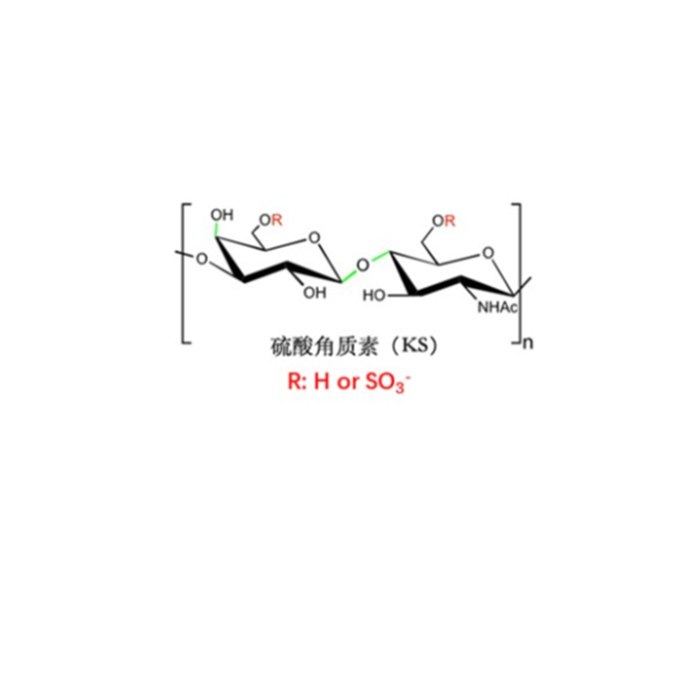
硫酸角质素(Keratin Sulfate,KS)是唯一一类不含糖醛酸的硫酸化GAGs,它由β-1,3糖苷键连接的重复二糖Galb1-4GlcNAc组成。在KS的生物合成过程中,糖基转移酶和硫酸基转移酶依次协同作用,将Gal和GlcNAc交替添加入到KS链还原末端的GlcNAc受体残基上,从而导致链的延长。Gal和GlcNAc在C6处都能发生硫酸化,但在GlcNAc上比Gal发生得更频繁。KS的硫酸化程度是不均匀的,包括不发生硫酸化的区域、在GlcNAc上发生单硫酸化的区域以及Gal和GlcNAc都发生硫酸化的高硫酸化区域。与其它GAGs一样,正是KS中这些可变的硫酸化区域决定了其与诸如生长因子、形态发生因子和细胞因子等配体的相互作用特性,并决定了含有KS的组织的功能特性。不同类型的KS可以从动物的角膜、软骨及蛋清中分离制备,但商品化的极少。
Keratin Sulfate (KS) is the only type of sulfated GAGs that do not contain glucuronic acid. It is composed of repeated disaccharides Galb1-4GlcNAc linked by β -1,3-glycosidic bonds. In the biosynthesis process of KS, glycosyltransferase and sulfate transferase work together to alternately add Gal and GlcNAc to the GlcNAc receptor residue at the reduced end of the KS chain, resulting in chain elongation. Both Gal and GlcNAc can undergo sulfation at C6, but it occurs more frequently on GlcNAc than on Gal. The degree of sulfation of KS is uneven, including areas where sulfation does not occur, areas where monosulfation occurs on GlcNAc, and high sulfation areas where both Gal and GlcNAc undergo sulfation. Like other GAGs, it is these variable sulfation regions in KS that determine their interaction characteristics with ligands such as growth factors, morphogenetic factors, and cytokines, and determine the functional properties of tissues containing KS. Different types of KS can be isolated and prepared from animal corneas, cartilage, and egg whites, but commercialization is extremely rare.


 危险品化学品经营许可证(带存储)