Isolated fab fragments can be used to bind antigen to antibody in solution or on the cell surface without causing the undesired complications of cross-linking and precipitation, or "patching" and capping," respectively.
Prepared from plasma shown to be non reactive for HBsAg, anti-HCV, anti-HBc, and negative for anti-HIV 1 & 2 by FDA-required tests.
规格
产品名称
免疫球蛋白G (IgG),Fab片段 来源于人血浆
别名
人IgG,Fab片段
英文别名
Human Immunoglobulin G | Human IgG Fab fragment | IGHG1 | IGHG2 | IGHG3 | IGHG4
Constant region of immunoglobulin heavy chains. Immunoglobulins, also known as antibodies, are membrane-bound or secreted glycoproteins produced by B lymphocytes. In the recognition phase of humoral immunity, the membrane-bound immunoglobulins serve as receptors which, upon binding of a specific antigen, trigger the clonal expansion and differentiation of B lymphocytes into immunoglobulins-secreting plasma cells. Secreted immunoglobulins mediate the effector phase of humoral immunity, which results in the elimination of bound antigens. The antigen binding site is formed by the variable domain of one heavy chain, together with that of its associated light chain. Thus, each immunoglobulin has two antigen binding sites with remarkable affinity for a particular antigen. The variable domains are assembled by a process called V-(D)-J rearrangement and can then be subjected to somatic hypermutations which, after exposure to antigen and selection, allow affinity maturation for a particular antigen. Mediates IgG effector functions on monocytes triggering ADCC of virus-infected cells.
Post-translational: Glycosylation on Asn-180 is required for interaction with Fc receptors and ability to activate the complement pathway. (Microbial infection) Deglycosylation on Asn-180 by S.pyogenes EndoS or Endos2 endoglucosidases prevents interaction between immunoglobulin-gamma (IgG) and Fc receptors, impairing ability to activate the complement pathway.

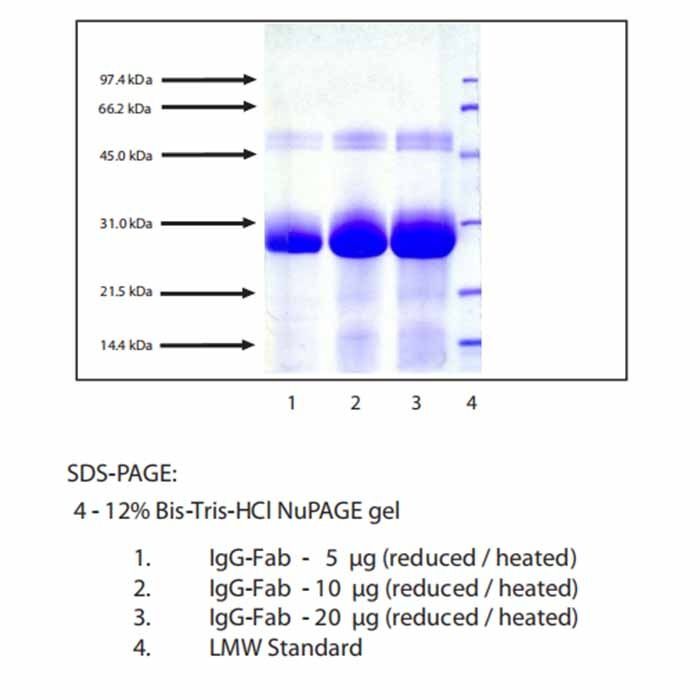
 ZJ26F0434039


 危险品化学品经营许可证(带存储)